


Choose a pedestal bath when you want the bowl above low planting and in view from your kitchen window or patio chair. Choose a ground bath for a shallow water spot in an open border. Before ordering, make sure you can empty and scrub the bowl without a struggle.
The cover is an AI-created comparison of two possible layouts. The low stone basin is a generic example; keep a pedestal bowl on its intended base.
Which one will be easier to keep clean?
Walk out to the spot with a watering can before you settle on a style. Can you get to it without stepping through a flower bed? Can you reach the inside of the bowl with a soft brush? Where will the old water go when you empty it? These are the jobs you'll keep doing after the novelty wears off.
A ground bath puts cleaning at ground level. With a pedestal, choose a bowl you can reach comfortably while standing beside it. If the bowl comes off for cleaning, check its empty weight and attachment. Lifting a bowl you struggle to handle wipes out the advantage of the taller stand.
Trace one whole water change, not just the trip to refill it. Work out how you'll remove the old water, reach the bottom with a brush, rinse the bowl and get fresh water back in. If a hose won't reach, check the route with an empty watering can first, including gates and steps. An easy refill doesn't help much if emptying the bowl is a struggle.
Ask the seller how that particular bath is emptied. Does the design have a drain, or does the bowl come off? If it comes off, how does it release, and what does the empty bowl weigh? A listing that says 'two pieces' doesn't answer those questions. Neither does the shipping weight for the whole package.
If bending down is uncomfortable and a raised bowl is too heavy to handle, look for a different basin or emptying method. Switching from a low bowl to a tall column won't solve the problem unless the daily job actually gets easier.
| What matters to you? | Ground bath | Pedestal bath |
|---|---|---|
| Seeing birds from a chair | Check whether plants or furniture hide the water | Check where the bowl sits in your view, not just the total height |
| Changing the water | Can you bend down, reach and empty it comfortably? | Can you empty it without struggling with a heavy bowl? |
| Keeping debris out | Look for soil, mower clippings and rainwater washing in | Look for branches, feeders or other debris sources above it |
| Moving it for winter | Check the basin's empty weight and storage needs | Check the bowl and base separately; detachable doesn't mean light |
When does a ground bath make sense?
A ground bath is a good choice for an open border you can reach easily and keep clear of low cover. Birds often find water near the ground in nature; the Cornell Lab of Ornithology notes that they seem to prefer baths set at ground level. Use an open gap where you can keep the bowl clean and see the ground around it.
Crouch down and look across the proposed spot. Can you see through the gap between the bowl and the nearest low shrubs? If a cat could stay hidden right up to the rim, move the water point somewhere more open. Keep pet cats indoors. Check the view at bird height as well as from the kitchen window. Our placement guide can help you check shade, nearby windows and the route birds would use if you are still unsure about the spot.
Then think about mowing, watering and rain. If grass clippings land there every time you mow, you'll be clearing them out of the bowl too. If rain washes soil or lawn treatments toward the spot, find another location. A sprinkler that keeps filling the bowl also makes it harder to control what water goes in.
For ground use, buy a basin designed to stand on its own. Keep a pedestal bowl on its matching base until the maker confirms it can be used separately when filled.
Look at the spot after an ordinary watering or rain, too. Does it stay firm, or do you see muddy water collecting where the bowl would sit? If the ground turns soft or uneven, choose another position or have the support prepared to the maker's requirements before filling the bath. A patch that looks fine on a dry afternoon may need a different plan once it's wet.
If keeping the ground around a low bath visible would mean crowding it into a path or cutting back plants you want to keep, try a different gap in the garden. A ground bath is useful only if the position works. You don't have to force one into a full flower bed just because the low look appeals to you.
When is a pedestal the better fit?
Choose a pedestal to bring the bowl above low planting or into view beside patio furniture. Mark its position, then sit in your usual chair and look from the kitchen window. Check that the bowl clears the chair arm and plants, and that you can reach it easily when you stand beside it.
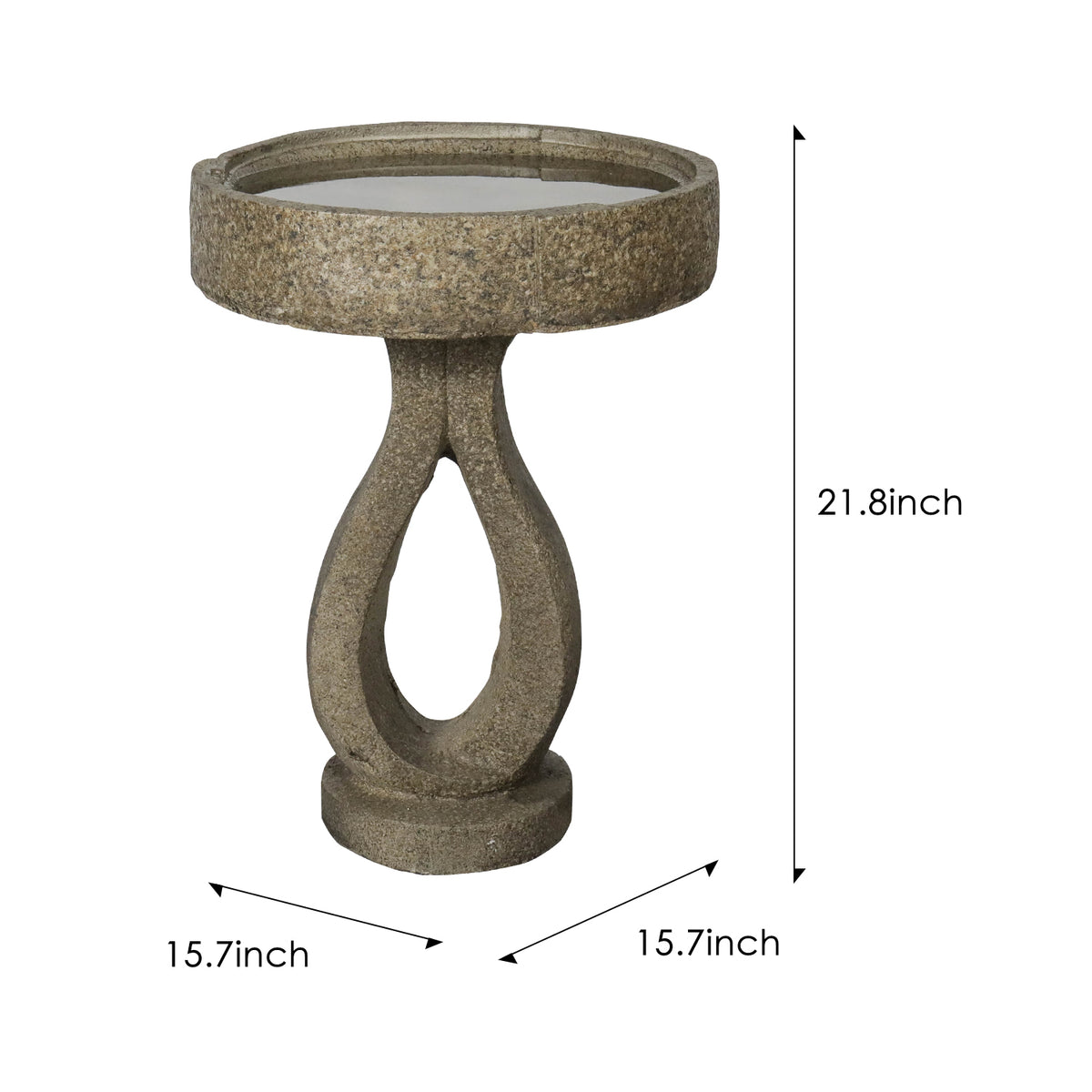
Our Open Loop pedestal bird bath is listed at 15.7 by 15.7 by 21.8 inches overall. Use those measurements to mark its outside outline beside a path or chair. For the viewing height, ask for the basin-rim measurement; for the water, ask for the usable basin depth. The overall dimensions describe the outside of the bath.
For the view test, ask for the basin-rim height if the listing only gives the tallest point. An ornament can stick up above the water. Mark the bowl's expected position on a piece of cardboard or another light marker, then sit in your normal chair.
Repeat the check from the window you actually use, with the chair, pots and other objects in their usual places. Try shifting the spot to bring a low bowl into view, and check whether a chair rail still blocks a raised one. Settle the sightline before choosing a column just for its height.
Next, walk past the marker and pull out the nearest chair. You need room to use the patio without brushing against the bath, plus somewhere to stand while you refill or scrub it. Decorative gravel around the base can look good, but the bath still needs the firm, level support described in its instructions.
Mark the bath's widest outline as well as its base size. The bowl needs clearance beside your chair even when the pedestal itself is narrow. Leave yourself a place to stand with a brush or watering can, where you can reach the far side without leaning across the bath.
Plan winter handling before you buy. For a bath you'll move indoors, check which pieces come apart, what each weighs empty and where you'll store them. A heavier bowl gives you more to carry, so choose one you can handle with the help or equipment its instructions call for.
Check the winter directions for both the bowl and base. Confirm whether they stay together, separate for storage or need a covered position. Our winter bird bath guide explains the cold-weather options. Use the directions for the bath you're buying to make the storage plan.
Does the bowl matter as much as the height?
Yes. Choose the basin for accessible shallow water, then choose the height that fits your yard. Get a clear photo of the inside and the water depth at the recommended fill level. Check the opening inside the decorative rim, not just the width of the whole bath.
Compare the inside opening, the slope into the water and the basin finish. Ask for a close-up if the listing doesn't show them clearly. Use the inside measurements and finish details for this part of the decision; keep the overall height for your view and reach checks.
Our bird bath size guide shows how to check outside width, basin opening, water depth and height. Compare the bowls first. Once you've found one you like and can care for, choose the support that puts it in the right place.
Would it help to have both?
Yes, if you have two suitable spots and time to care for both. Penn State Extension notes that adding a ground bath may attract birds beyond those using an elevated one. Offer the extra choice when you can keep a second bowl clean.
Start with one if you're still working out the care routine. Check it daily, replace the water every day or two and change it sooner when dirty. Once that feels manageable, see whether a second location offers something useful, such as a clear low water point away from the patio.
Check the second spot just as carefully as the first. Don't tuck a low bowl directly under another bath or a feeder where it catches falling debris. You'll need to keep the water fresh in both bowls; a pump or automatic top-up won't do the cleaning for you.
Can you just take the bowl off a pedestal?
Only if the maker says the bowl can be used that way. A bowl may lift off for cleaning but still need the pedestal during use. A recess or locking tabs underneath can stop it from sitting flat on the ground.
Look in the assembly instructions for a separate ground-use option. If you don't see one, send the seller the model name and ask: can this bowl stand on its own when filled, and what should support it? Until you have that answer, leave the matching base in place or choose a purpose-made ground bath.
Get a photo of the underside and the assembly page. Ask whether the ring underneath is a standing surface or a socket for the pedestal, and whether tabs or a fastener hold the bowl in place. Get the intended setup and removal steps for your exact model before handling the joint.
If you already own the bath, don't pull, twist or pry at the bowl to find out. Get the removal instructions first. A joint that comes apart one way can be damaged by treating it like a different fitting, and a heavy bowl is harder to control once it suddenly comes free.
Already have a bath? What would a change actually fix?
Keep a bath that is easy to care for and works in its spot. You don't need to replace it just because a different height looks more natural or more decorative. Name the problem first: you can't see the water, cleaning is awkward, the bowl keeps catching debris, or the support has become uneven.
If birds aren't visiting, don't assume the stand is the problem. Before buying a new one, check whether the water is clean, whether birds can reach shallow water and whether plants hide the approach. If birds already use the bath but you can't see them from indoors, that is a viewing problem; try the sightline check before changing the basin.
| What you notice | Check this first | What to change |
|---|---|---|
| The water disappears behind a chair or plants | The view from your normal seat and window | Try another position or compare the basin-rim height before choosing a different stand |
| A low bowl is awkward to clean | Your reach, water route and emptying method | Compare a more reachable bowl and a manageable empty weight; height alone is not enough |
| Soil or clippings keep getting into the bowl | Where rain, watering and mowing send debris | Move away from that source before assuming a taller bath will solve it |
| The bath leans or rocks | The supporting surface and the bowl-to-base connection | Leave it out of use until the support or assembly issue is sorted out; ask about the exact model if unsure |
What should you have confirmed before ordering?
Keep a short note with the two or three models you're comparing. For each one, write down the outside width, basin-rim height, base size, empty bowl weight, how it empties and its winter storage needs. Mark a missing answer as 'ask,' rather than substituting a number from another model or a photo.
When you compare concrete bird baths and modern bird baths, use that note to narrow the choice. Keep the models whose bowl you can reach, whose parts you can handle and whose outline fits beside the plants or furniture. Then choose the shape you enjoy looking at.
Missing a measurement? Send us the product name, a photo of the spot and the question you need answered: 'Will I see the bowl from this chair?' or 'Can I empty it without lifting it off the stand?' Ask us for those details before ordering, and use the answers to finish your choice.