

27 products
-

 Concrete Bird Bath Statue Classical Goddess 25 InchConcrete Bird Bath Statue Classical Goddess 25 Inch
- Regular price
-
$182.64 - Regular price
-
$209.90 - Sale price
-
$182.64
-

 Concrete Rustic Bird Bath Carved Trunk 24 InchConcrete Rustic Bird Bath Carved Trunk 24 Inch
- Regular price
-
$179.90 - Regular price
-
$199.90 - Sale price
-
$179.90
-

 Concrete Bear Bird Bath Cub Climbing Stump 23.6 InchConcrete Bear Bird Bath Cub Climbing Stump 23.6 Inch
- Regular price
-
$159.99 - Regular price
-
- Sale price
-
$159.99
-

 Concrete Stone Bird Bath Old Man Tree Face 24 InchConcrete Stone Bird Bath Old Man Tree Face 24 Inch
- Regular price
-
$179.12 - Regular price
-
$229.90 - Sale price
-
$179.12
-

 Concrete Bird Bath Garden Sunflower and Rooster 23 InConcrete Bird Bath Garden Sunflower and Rooster 23 In
- Regular price
-
$169.99 - Regular price
-
- Sale price
-
$169.99
-

 Concrete Pedestal Bird Bath Roman Fluted 24 InchConcrete Pedestal Bird Bath Roman Fluted 24 Inch
- Regular price
-
$179.99 - Regular price
-
- Sale price
-
$179.99
-

 Concrete Bird Feeder with Bird Bath Bear 18 InchConcrete Bird Feeder with Bird Bath Bear 18 Inch
- Regular price
-
$249.11 - Regular price
-
$289.90 - Sale price
-
$249.11
-

 Resin Bird Bath Tall Shell Basin Planter 32 InchResin Bird Bath Tall Shell Basin Planter 32 Inch
- Regular price
-
$88.99 - Regular price
-
$150.99 - Sale price
-
$88.99
-

 Resin Bird Bath Antique Bronze with Planter 28.25 InchResin Bird Bath Antique Bronze with Planter 28.25 Inch
- Regular price
-
$94.99 - Regular price
-
$154.99 - Sale price
-
$94.99
-

 Concrete Antique Bird Bath Ornate Pedestal 23.8 InchConcrete Antique Bird Bath Ornate Pedestal 23.8 Inch
- Regular price
-
$199.99 - Regular price
-
- Sale price
-
$199.99
-

 Resin Tall Bird Bath Feeder and Planter 44.5 InchResin Tall Bird Bath Feeder and Planter 44.5 Inch
- Regular price
-
$117.99 - Regular price
-
$166.99 - Sale price
-
$117.99
-

 Resin Bird Bath Green Verdigris Pedestal 27.25 InchResin Bird Bath Green Verdigris Pedestal 27.25 Inch
- Regular price
-
$95.99 - Regular price
-
$154.99 - Sale price
-
$95.99


The Numbers That Matter
- Compare by model Height
- Check the product diagram Basin dimensions
- Shallow and below the rim Water level
- Concrete and resin Materials
- Check daily; refresh when dirty Water care
- Drain and protect from freezing Freezing weather
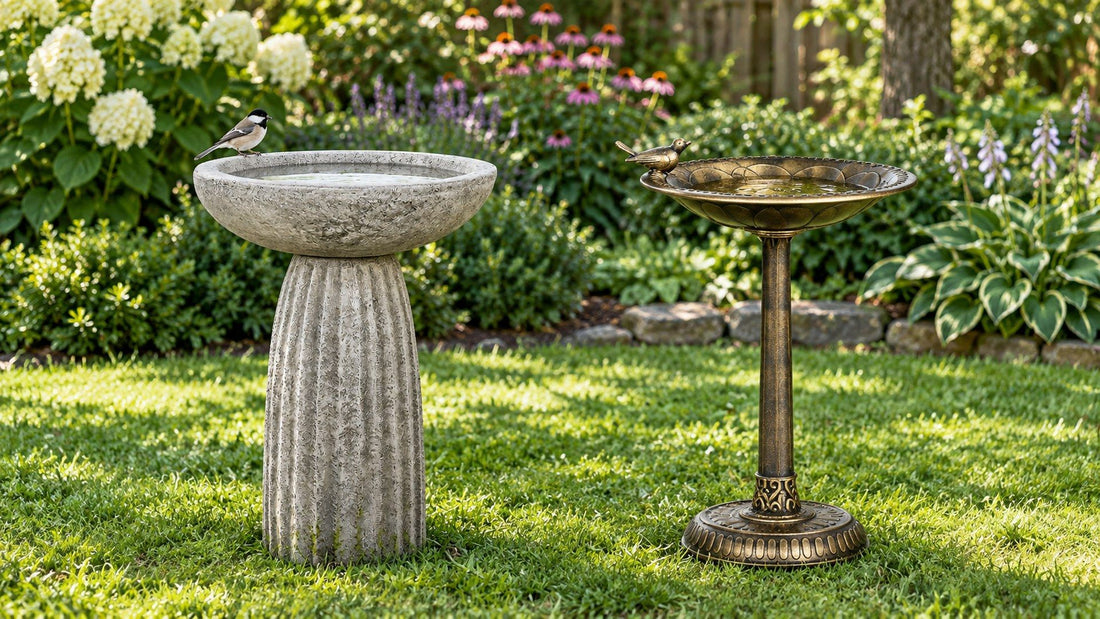
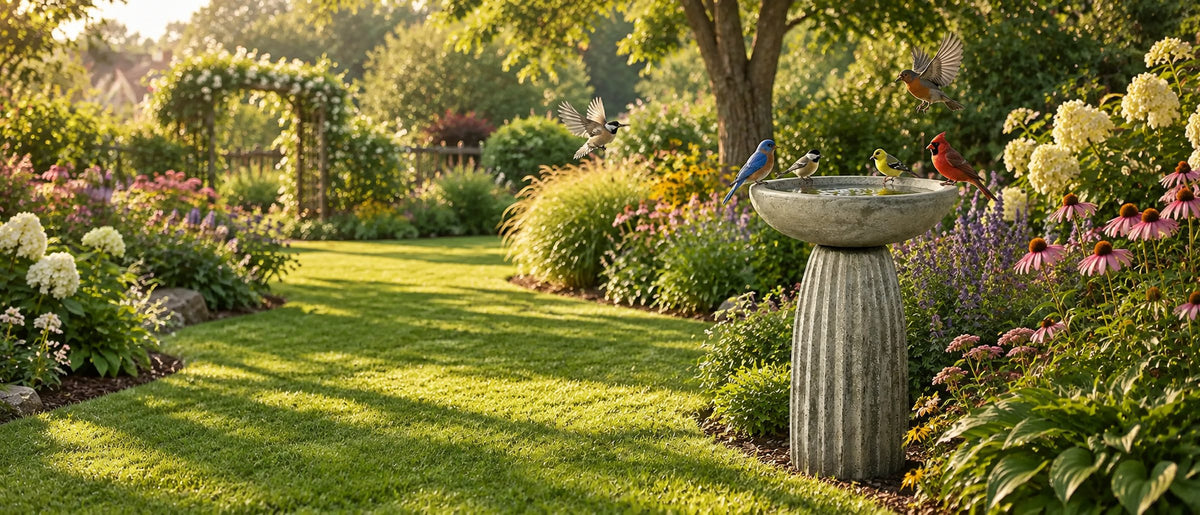
A Garden Corner Worth Looking At, and Birds That Show Up for It
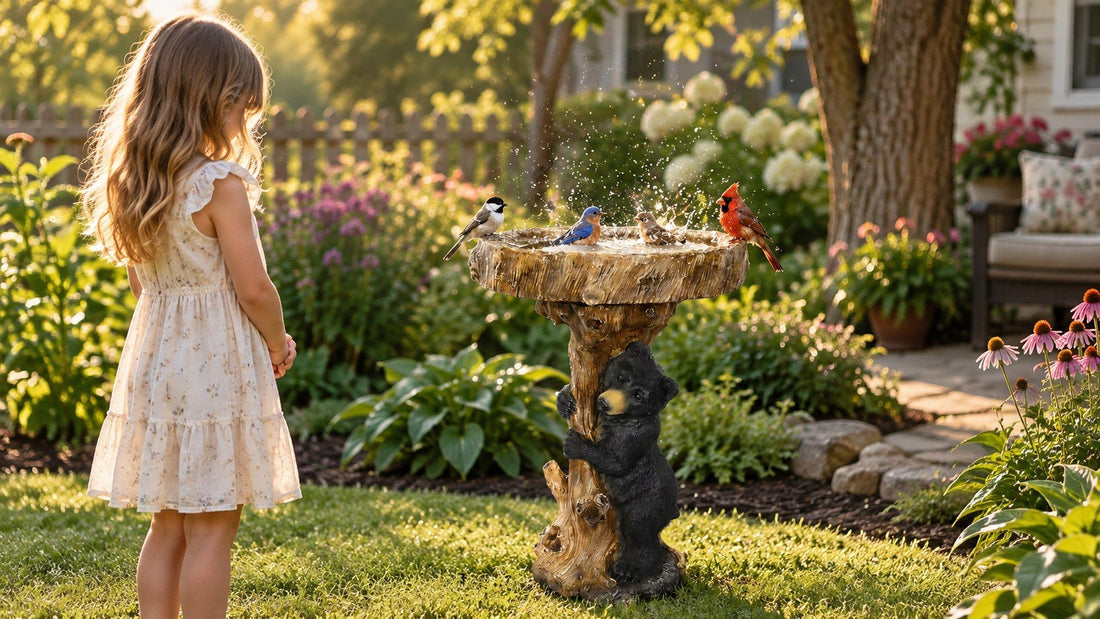
Choose a bird bath for your garden
Our collection includes concrete and resin bird baths in classical, tree-trunk, animal and sculptural designs. Some resin models also include a planter or feeder. Choose the design for your space, then check that model’s dimensions and assembly details.
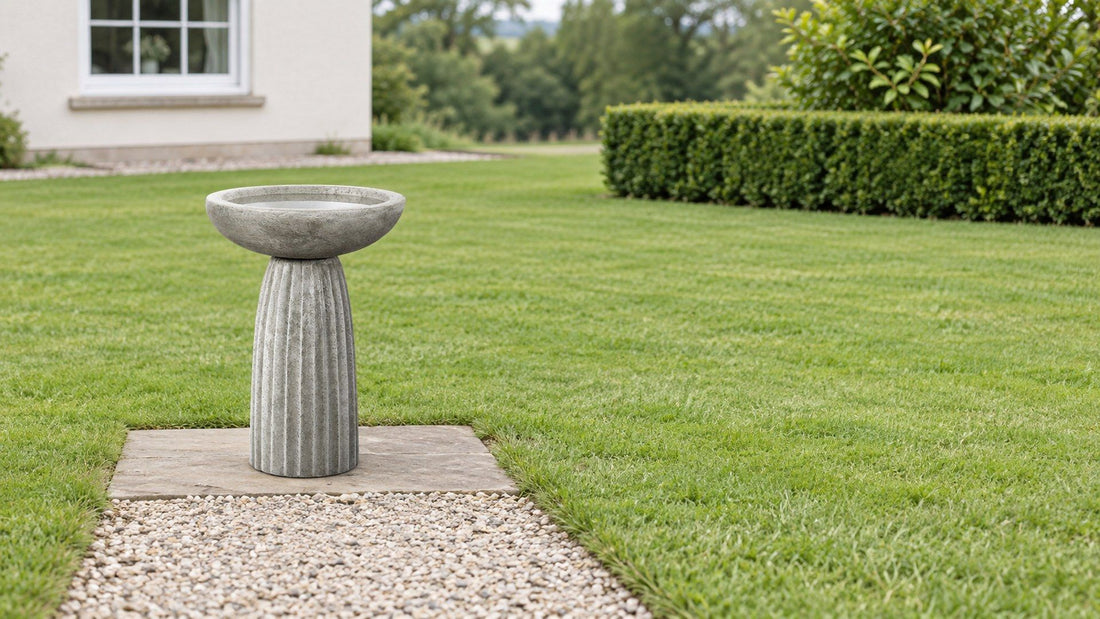
Compare height and basin size
Heights vary across the collection. The Bear Double Bowl is 18 inches tall, the Carved Trunk is 24 inches and the Classical Goddess is 25 inches. The Birdhouse Feeder and Planter stands 44.5 inches overall, including the roofed feeder; that is not the height of its water basin.
Read the dimension diagram for the model you choose. Overall width and depth may include the base or decorative features, so they should not be treated as usable basin dimensions. Add shallow water and keep it below the rim.
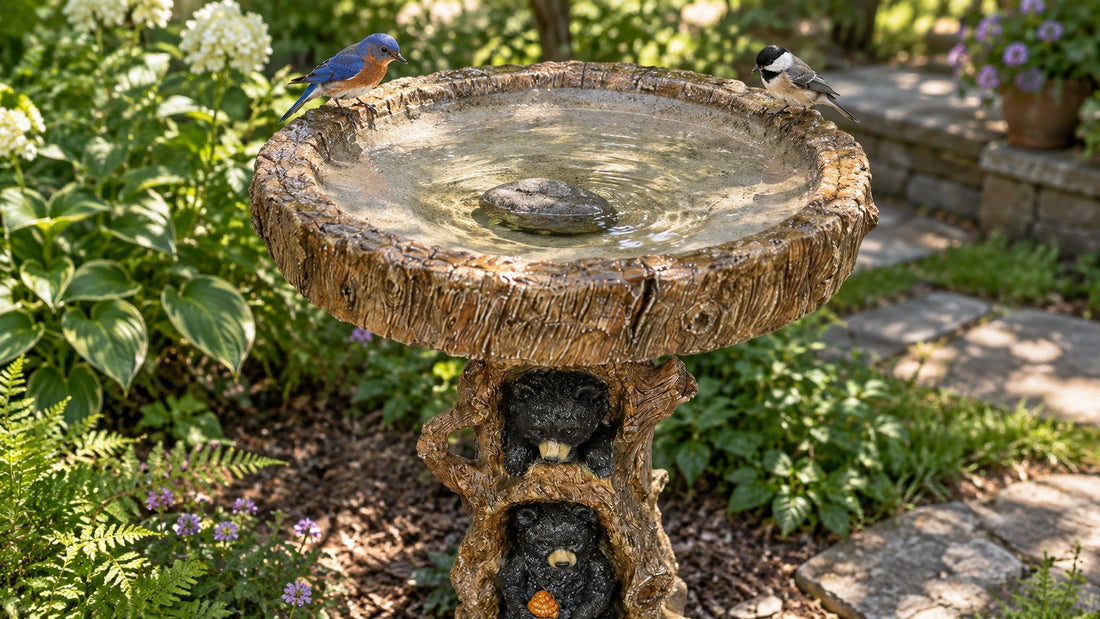
Concrete or resin
Both materials offer decorative garden designs. Weight and assembly vary by model. Use the weight on the selected product page where available, and do not assume every base can be filled or every bowl lifts off. We finish our bird baths with water-based paint; clean gently to protect the surface.
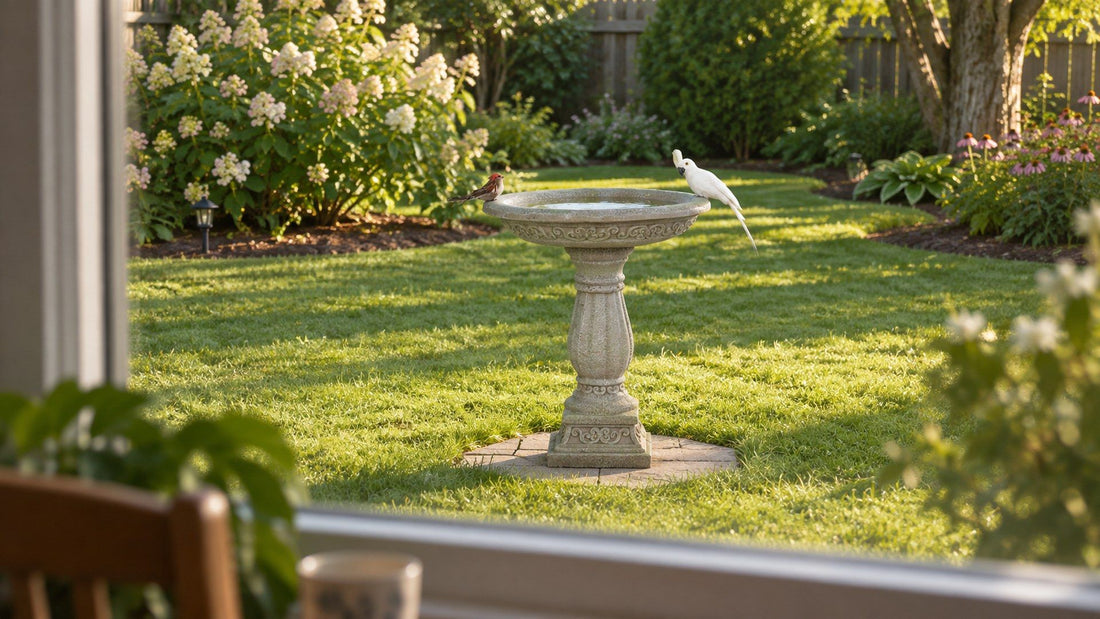
Placement and water care
Set the bird bath on firm, level ground where you can see it and reach it for cleaning. Nearby shrubs or branches offer birds a place to retreat. Check the water daily, refresh it when dirty or low, and rinse the basin regularly. Use a soft cloth or soft brush rather than abrasive tools.
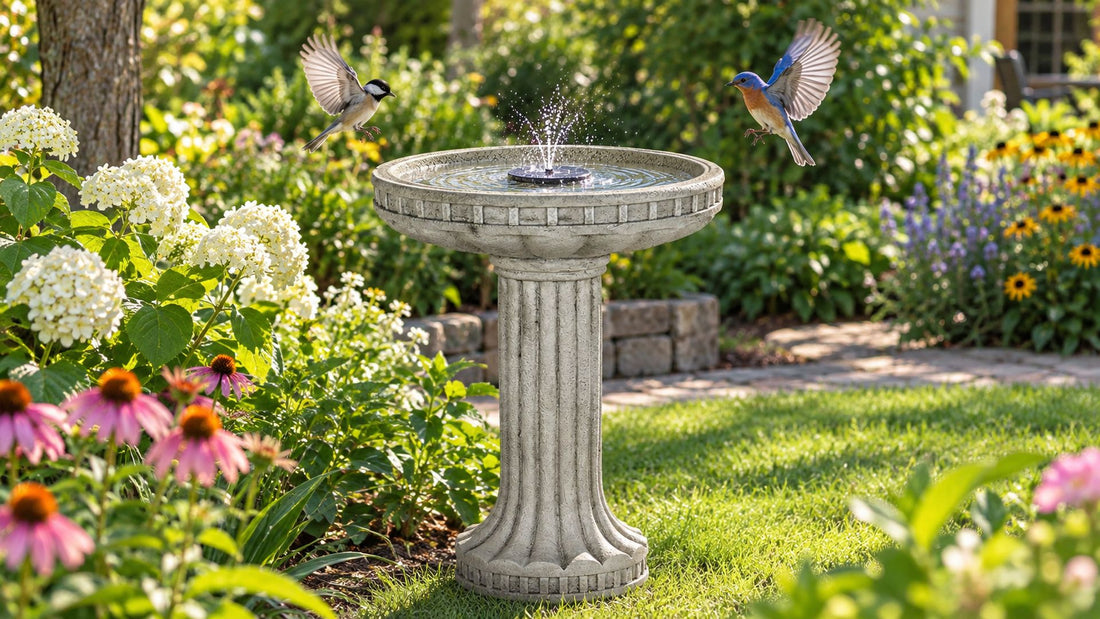
Adding a fountain pump
These are still-water bird baths and a fountain pump is not included. Before adding a pump, check its footprint, required water depth and spray pattern against the usable basin space. Compatibility varies by model; contact us with both models if you need help checking.
Before freezing weather
Drain the basin before water can freeze. Where practical, store the bird bath in a dry, sheltered place and prevent water from collecting inside. A cover alone does not guarantee frost protection.
Comparing Your Bird Bath Options
| Cast concrete | Resin | |
|---|---|---|
| Designs | Classical, sculptural and tree-trunk styles | Pedestal styles and models with planters |
| Dimensions | Check the selected model | Check the selected model |
| Weight and moving | Use the product weight where listed | Use the product weight where listed |
| Finish | Water-based painted finish | Water-based painted finish |
| Winter care | Drain and protect from freezing | Drain and store under shelter |
Browse by Material and Style
 01
01
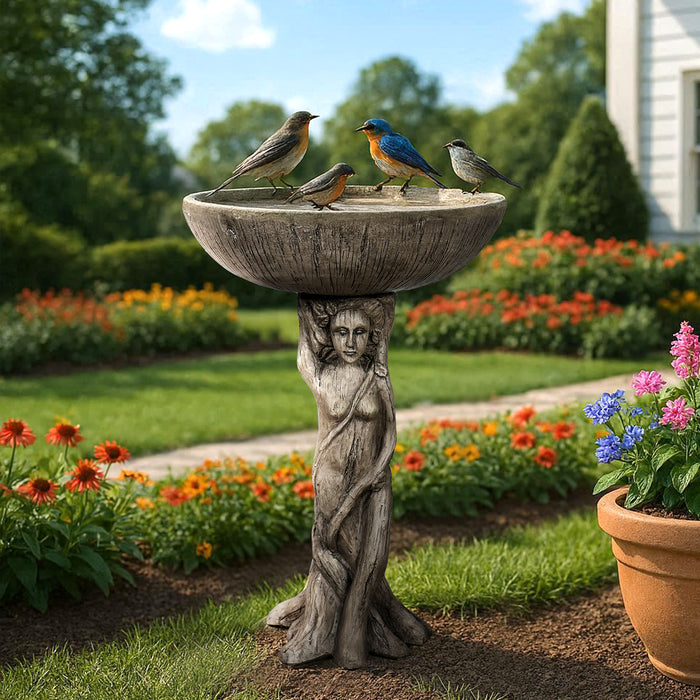
Concrete Bird Baths
Explore classical pedestals, sculpted figures and textured tree-trunk designs. Check each model’s dimensions and listed weight.
23 pieces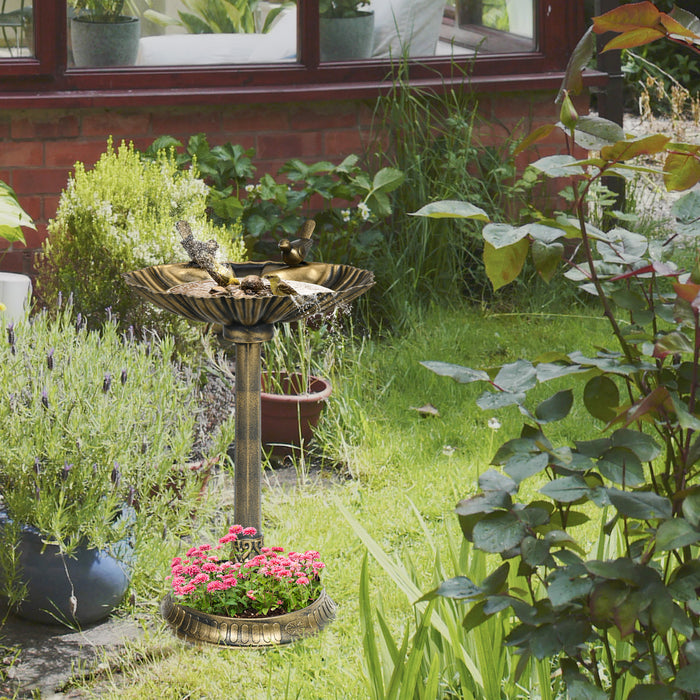 02
02
Resin Bird Baths
Browse pedestal designs and models with planters or feeders. Overall height may include decoration above the water basin.
4 pieces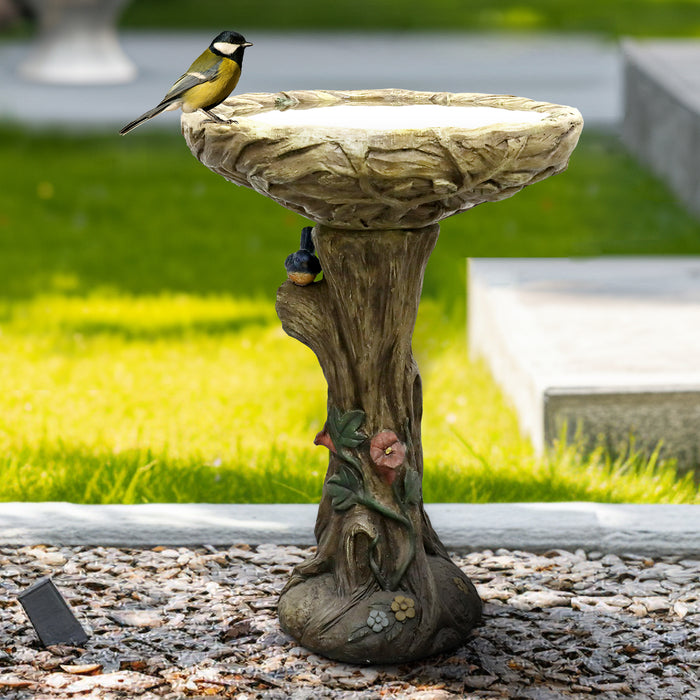 03
03
Tree Stump Bird Baths
Choose bark textures, carved trunks and woodland shapes. Compare the selected model’s height and basin diagram.
4 pieces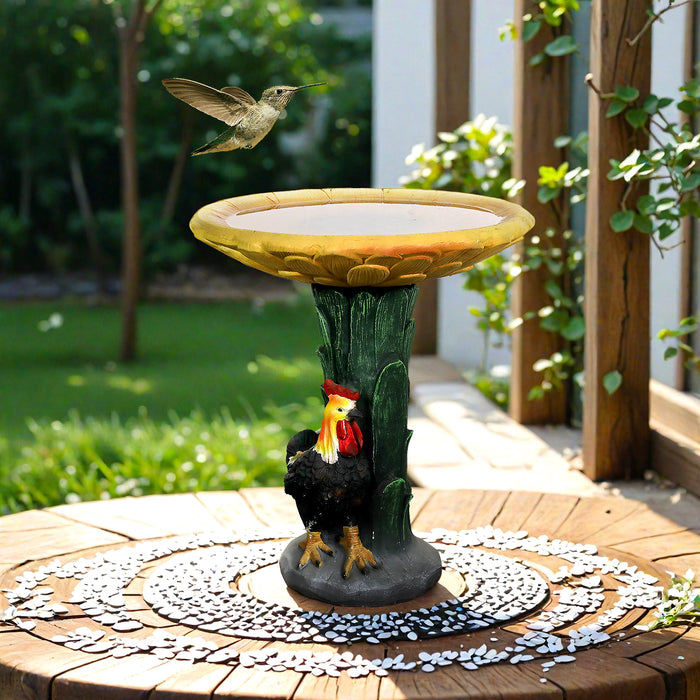 04
04
Animal Bird Baths
Find bear, frog and other animal designs for garden borders and patios. Compare the full product size before choosing a spot.
5 pieces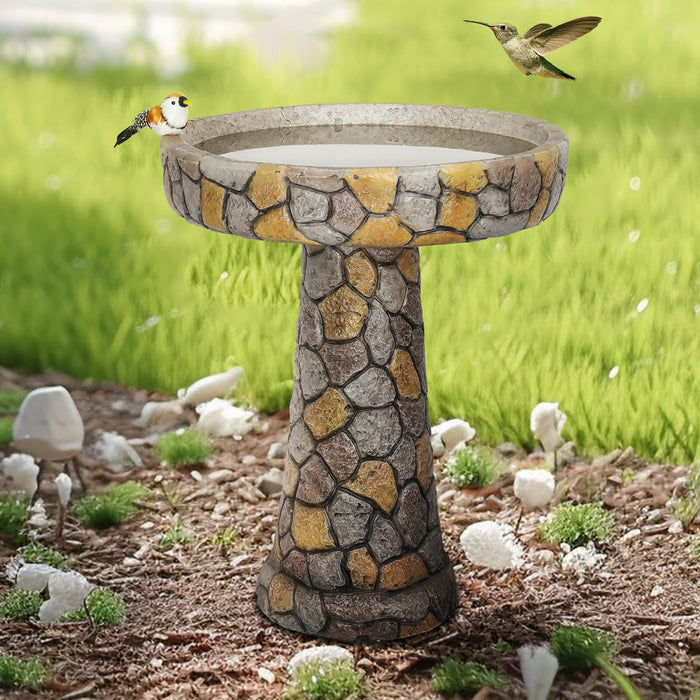 05
05
Modern Bird Baths
Browse clean shapes and sculptural pedestals for contemporary gardens. Use each model’s diagram to check its footprint.
6 pieces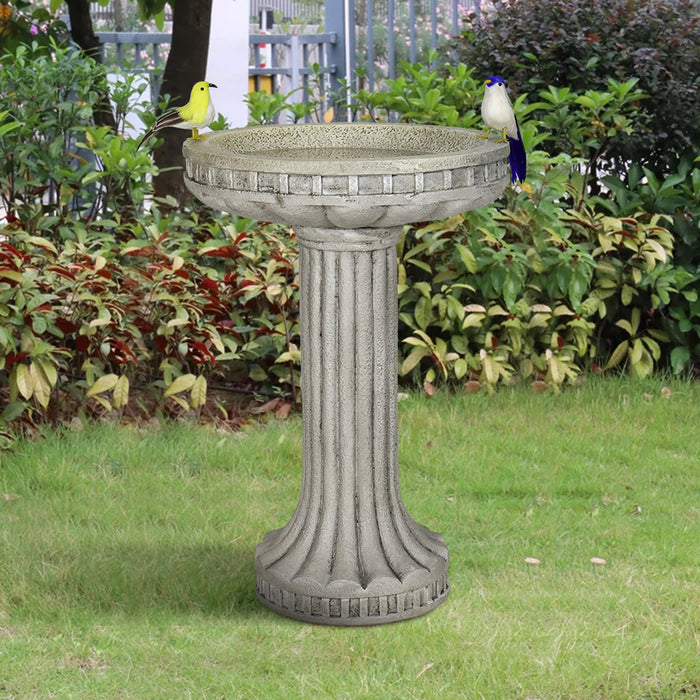 06
06
Ornamental Bird Baths
Explore decorative bowls and detailed pedestals. Choose the style you like, then check the dimensions on its product page.
9 pieces
Before You Order a Bird Bath
How tall should a bird bath be?
How deep should the water be?
Where should I put a bird bath?
How often do I change the water?
Can I turn a bird bath into a fountain?
Can a bird bath stay out through winter?
Related collections
Height, depth and position settled, the only question left is what it should look like standing there. That is where material and style come in, and we have given each of those its own page.