

01
Soften Overly Defined Edges
The uneven, natural contours ease the hard lines between lawn, paving, and planting, so the garden feels more relaxed.

6 products


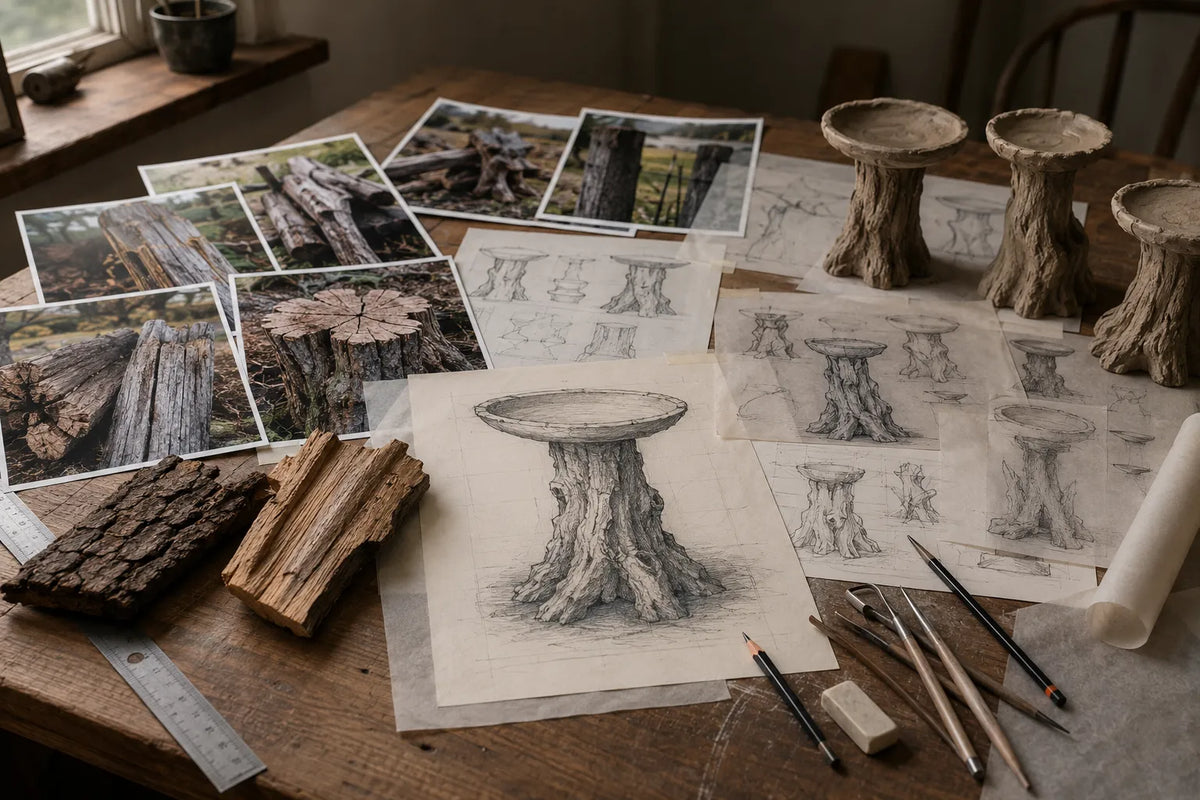
BEGINNING WITH WEATHERED WOOD ON OUR UNCLE'S FARM
Wandering around our uncle's farm, we kept finding wood in every condition. Branches broken in the wind with rough, uneven ends. Old logs by the shed gone gray after years of sun and rain. Fence posts full of cracks and knots, and worn stumps with roots spreading off in every direction. Nothing had been shaped on purpose, and yet no two pieces looked the same. That texture was not made to look old. It came from real weather, use, and time outdoors, and that is what we set out to carry into these bird baths.
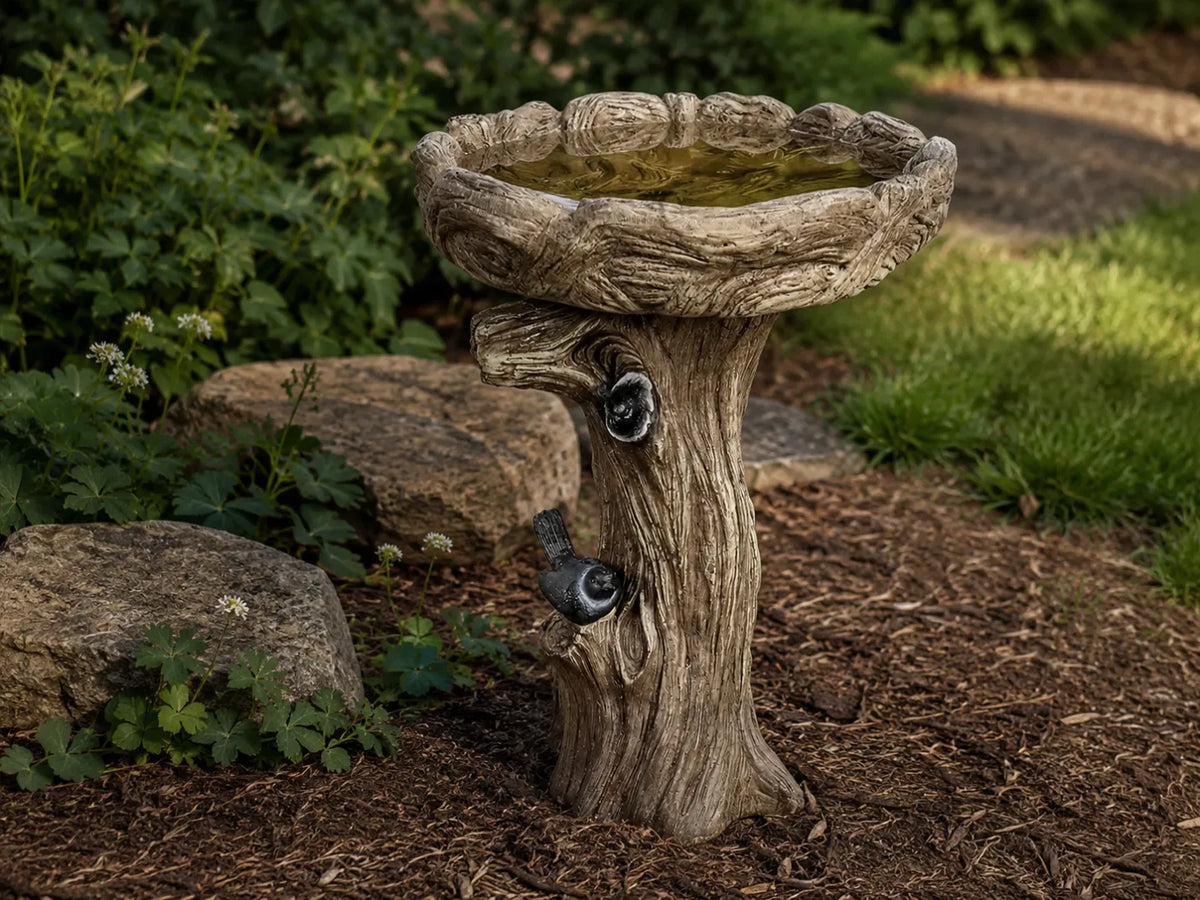
LET THE GARDEN FEEL LESS DELIBERATE
Lawns, paving, and neatly kept planting can look clean, but they can also make every edge feel a little too sharp. A rustic piece, with its bark, knots, and uneven contours, softens those lines. It ties the planting, soil, and stone together, so it reads less like an ornament you added and more like part of the garden. From a distance you see the natural shape first. Up close, the cracks, grain, and uneven details give you more to notice.
The uneven, natural contours ease the hard lines between lawn, paving, and planting, so the garden feels more relaxed.
The rough, natural texture echoes mulch, soil, stone, and foliage, so it blends in instead of standing apart.
The overall shape stays clear from across the garden, while the knots, cracks, and surface variation reward a closer look.
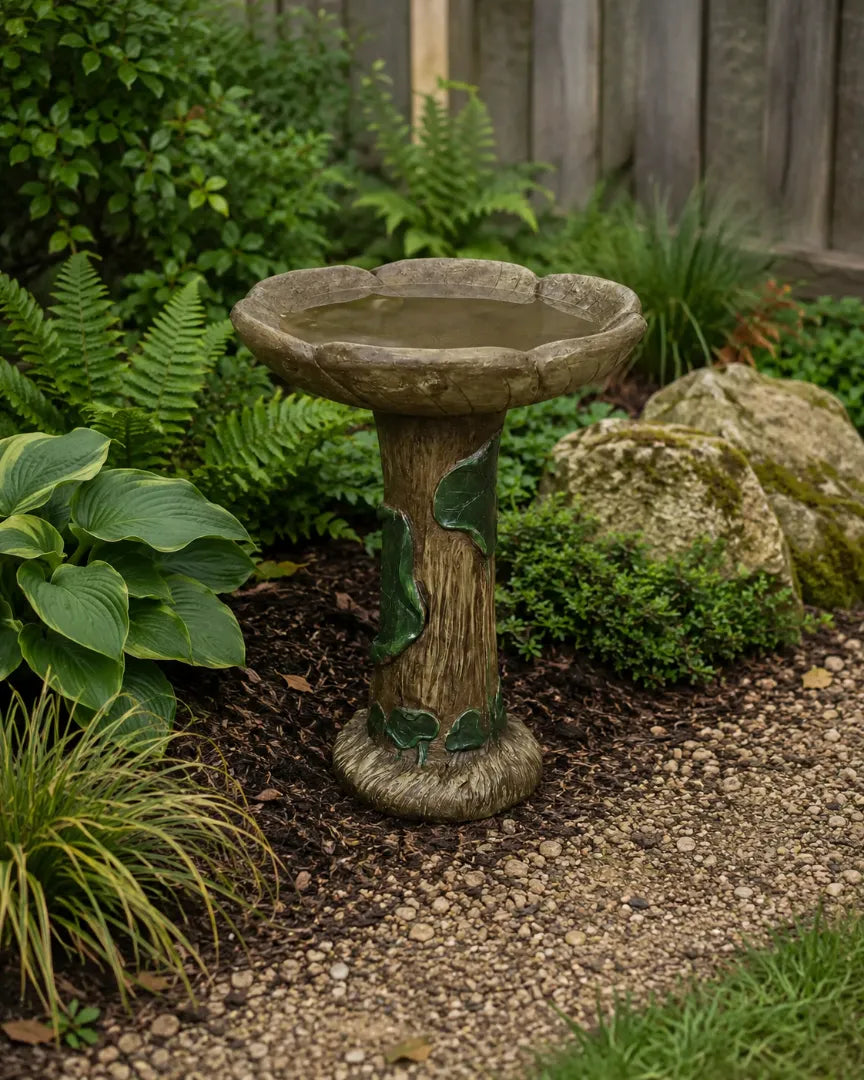
HOW TO STYLE A RUSTIC BIRD BATH
A rustic bird bath works well where lawn meets a mulched bed, under a lightly shaded tree, or near natural stone and a simple wood fence at the edge of the garden. Ferns, hostas, low shrubs, and loose ornamental grasses echo its natural shape while keeping the setting relaxed. Mulch, gravel, and a few uneven stones soften the join between the base and the ground. There is no need to pack plants tightly around it or pile on barrels, tools, and antique props. Rustic is about natural texture, not turning the whole corner into a staged farm scene.
The spot where lawn, planting, shade, or gravel meet gives the rustic shape a setting that suits it.
Ferns, hostas, low shrubs, and a bit of ornamental grass soften the shape without hiding the basin.
Natural stone, mulch, and a simple wood fence are usually enough. Piling on barrels, tools, and vintage bits just competes with the texture of the piece.
Naming
Most people arrive here typing tree trunk. Rustic is what the shelf is called.
A tree trunk bird bath, a bird bath on a tree stump, a wood log bird bath, a natural look bird bath. Four ways of asking for the same thing: a basin held up by something that looks like it grew there rather than something that was turned on a lathe.
None of it is wood. Every piece is cast concrete with bark, grain and knots cut into the mold, then hand painted and sealed. Real timber in a garden holds water, splits and rots. Concrete does the look without the ending.
Or something with a character on itThey are all trunks, and none of them are the same trunk. The difference is in what the mold was carved to hold.
Split bark
Deep vertical splits running the height of the column, in a moss toned finish, with two birds cast onto it. The most weathered looking of the group.
Stump with a knot hollow
A cut stump with a hollow worked into one side and a bird perched at the rim. Painted in two tones so the hollow reads dark from a distance.
Trunk with climbing vines
Vine, blossom and a cast bird wrapped around a smooth trunk. The one that suits a border already full of planting.
Timber and sunflower
A sunflower head as the basin, on a column cut like sawn timber. Farmhouse rather than forest, and the brightest thing on this page.
From across a lawn it reads as a cut trunk. Close up you can tell, and that is the honest answer. The bark relief is deep enough to throw a real shadow, which is what carries the illusion at distance, but the surface underneath is the same matte concrete as everything else here.
It gets better rather than worse. Painted bark tones sit in the grooves and lift on the high points, and once weather has worked on it for a season the two tones stop looking applied. A trunk piece two years in is the most convincing thing in most gardens.
Matching a piece to your gardenA turned column can stand alone on a lawn. A trunk cannot, and putting one out in the open is the usual mistake.
Against planting, not lawn
Set it where the base disappears into ferns, hosta or ground cover. A trunk with mown grass all around it looks placed. A trunk coming up out of leaves looks grown.
Dappled shade suits it
Under the edge of a tree canopy rather than in full sun. Broken light is what the bark relief was cut for, and shade slows algae in the basin as well.
Near real timber if you have it
A log edge, a stump you never dug out, a fence post. One real piece of wood nearby does more for the effect than anything else you can do.
Keep the sightline open
Tucked into planting is right, buried in it is not. Birds still need to see what is coming, so leave the rim clear on at least two sides.
On a trunk piece these are two different things, and only one of them is a problem.
Moss on the column is the point
Green settling into the bark grooves is what you are paying the mold to make possible. Leave it. Scrubbing the column is the one thing that undoes the whole effect.
The basin is the exception
Where the water sits, green is just green. Tip it, brush it, refill it. Nothing goes in the water, on this or on any bath.
Brush across the grain
If the rim needs work, run the brush along the carving rather than into it. Painted tones sit in those grooves and that is where the depth comes from.
November is one job
Empty it and turn it over before a hard freeze. Deep carving holds water in its own hollows, so tip the whole piece rather than just pouring out the bowl.

What makes a bird bath rustic in style?
It is the natural, weathered look and the less formal shape. Rough textures, uneven edges, knots, and grain patterns all read as rustic. The feel is relaxed and handmade rather than polished.
What is the difference between rustic and whimsical bird baths?
Rustic is about natural texture and a rugged, weathered, relaxed look. Whimsical is more about playful shapes and characters, like animals or storybook details. Rustic blends into a natural garden, while whimsical adds a bit of fun and surprise.
Do rustic bird baths only work in country gardens?
No. A rustic piece can also soften a tidy suburban yard, an informal flower bed, a shaded corner, or a plain lawn. The natural texture tends to warm up a space that feels a little too neat.
Are rustic bird baths made from real wood?
No. They are made to look like weathered wood, but they are not real wood. Check the individual product page for what each one is made of and how to care for it.
Do rustic bird baths need special cleaning?
Nothing unusual. Keep the water fresh and rinse the basin, and because the surface is textured, a soft brush helps clear debris from the grooves. Follow the care instructions that come with the piece.
How do I choose the right rustic bird bath for my garden?
Look at how natural or formal your garden already feels, and the materials already around it, like stone, mulch, or wood. Pick a shape and size that sits comfortably in that setting without crowding the spot.