

4 products
-

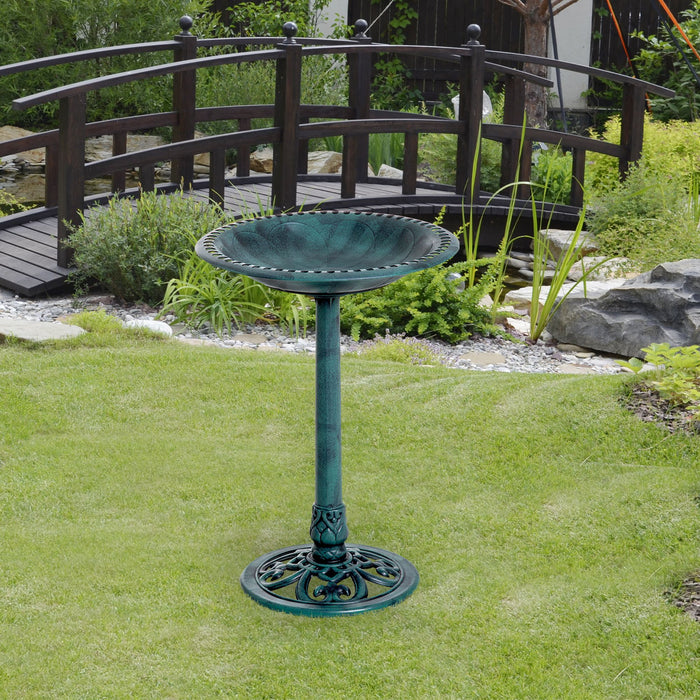
 Resin Bird Bath Green Verdigris Pedestal 27 InchResin Bird Bath Green Verdigris Pedestal 27 Inch
- Regular price
-
$95.99 - Regular price
-
$154.99 - Sale price
-
$95.99
-

 Resin Tall Bird Bath Feeder and Planter 44 InchResin Tall Bird Bath Feeder and Planter 44 Inch
- Regular price
-
$117.99 - Regular price
-
$166.99 - Sale price
-
$117.99
-

 Resin Bird Bath Antique Bronze with Planter 28 InchResin Bird Bath Antique Bronze with Planter 28 Inch
- Regular price
-
$94.99 - Regular price
-
$154.99 - Sale price
-
$94.99
-

 Resin Bird Bath Tall Shell Basin Planter 32 InchResin Bird Bath Tall Shell Basin Planter 32 Inch
- Regular price
-
$88.99 - Regular price
-
$150.99 - Sale price
-
$88.99


The Numbers That Matter
- 4.4 to 7.1 lb Weight
- 27 to 44 in Height
- 2 in at the deepest Water depth
- 3 of 4 With a planter
- 2 pieces, unattached Ships as
- None Anchors needed
A Resin Bird Bath Goes Where Concrete Cannot
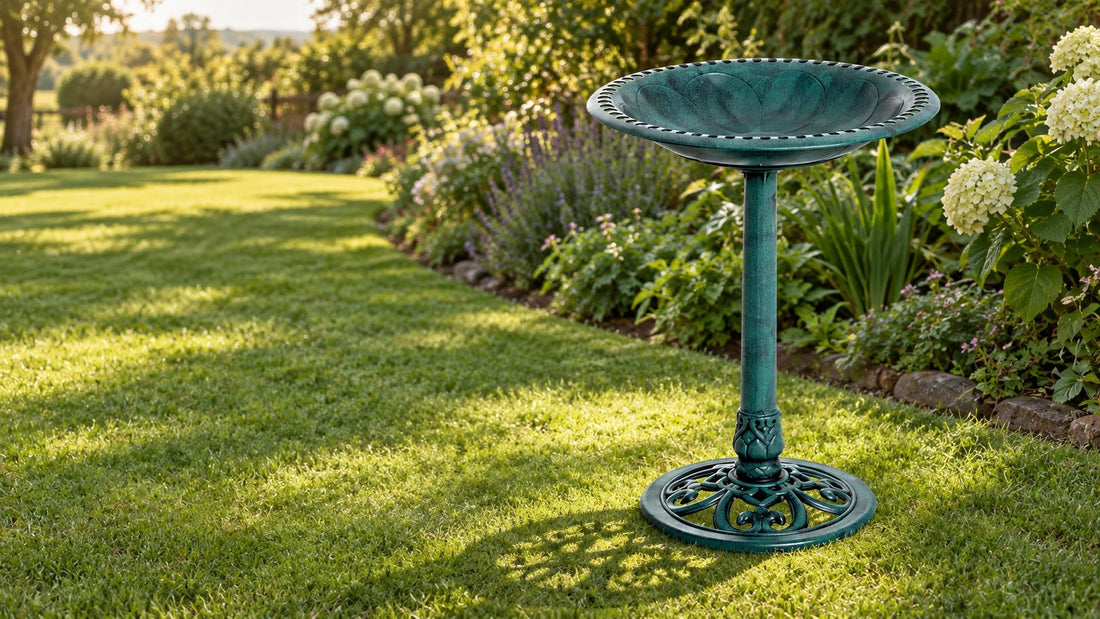
What a resin bird bath actually is
Resin is a cast material, poured into a mold the same way concrete is, which is why the detail holds up: the beading on a rim, the pierced fleur de lis in a base, the ribs of a shell basin. What changes is what comes out of the mold. A piece this size lands between four and eight pounds instead of sixty.
That is the entire trade, and it is worth being plain about which way it cuts. You give up the mass that keeps a concrete bath planted in an exposed spot. You get a bird bath one person can carry out, set down, and move again next month.
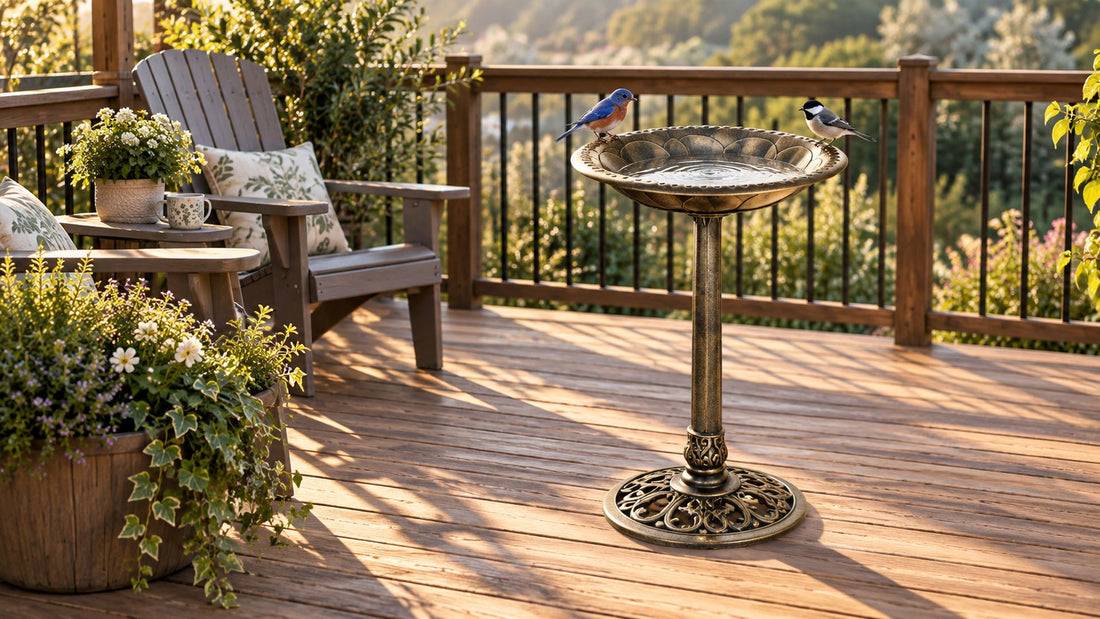
Four pounds, and where that matters
A bird bath for a deck is the clearest case. Timber decking has a load limit and a sixty pound pedestal on a small span is a real question, while five pounds is not. The same goes for a roof terrace, a balcony, a landing, a fire escape you have made into a garden.
It matters just as much in a garden you do not own. A concrete piece is something you leave behind. This goes in the car. A patio bird bath that can be picked up is also a bird bath you can move out of the way for an evening and put back the next morning.
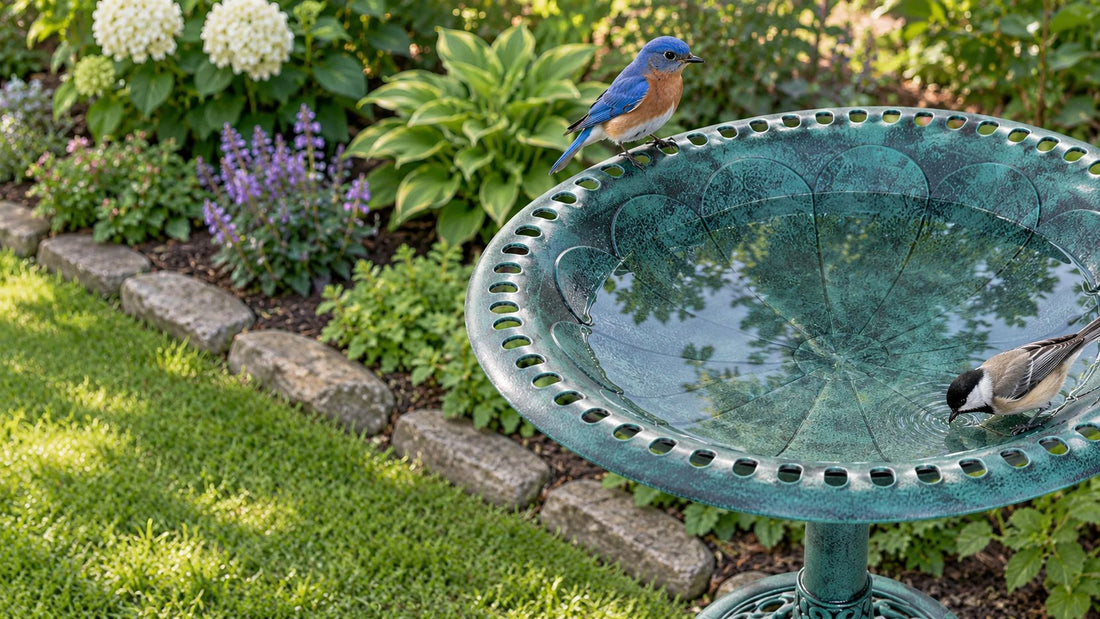
The bowl did not change
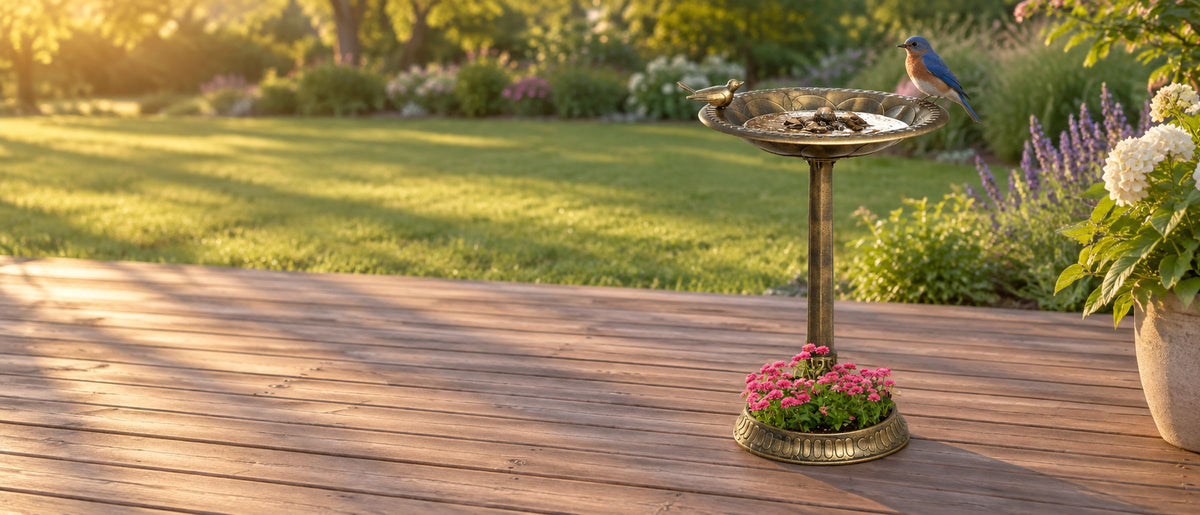
None of this touches what a bird actually needs. The bowls here hold about two inches of water at the deepest point, which is the depth songbirds stand in rather than swim in, and the rims are wide and flat enough to land on and grip.
So the lighter piece is not a lesser bath. It is the same working bowl on a base you can pick up, which is why it is worth saying plainly that birds have no opinion about what the pedestal is made of.
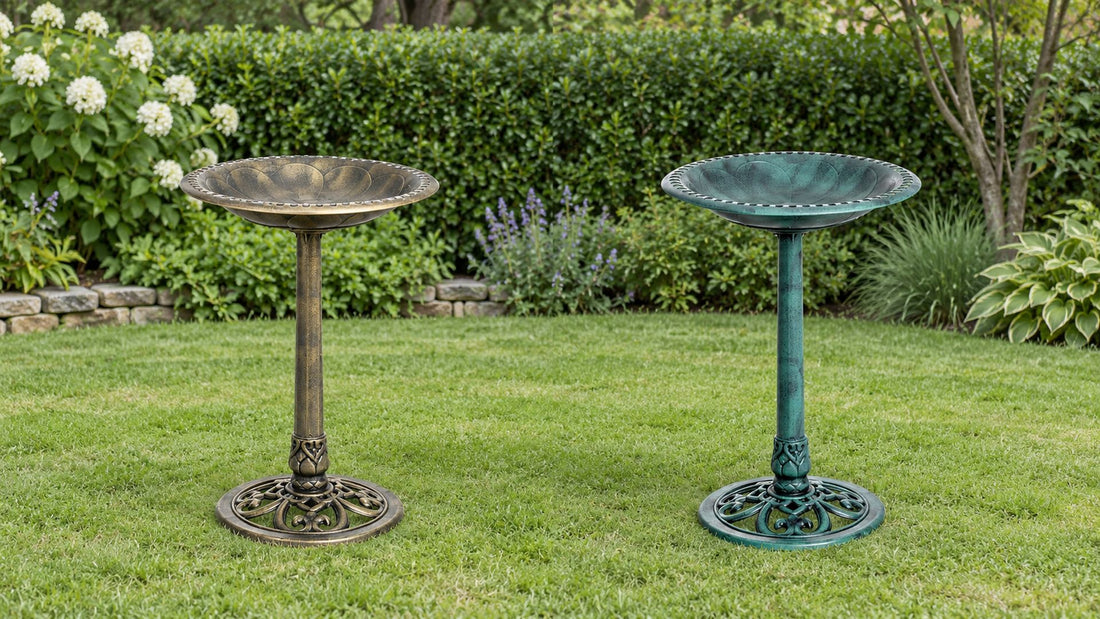
Antique bronze and verdigris
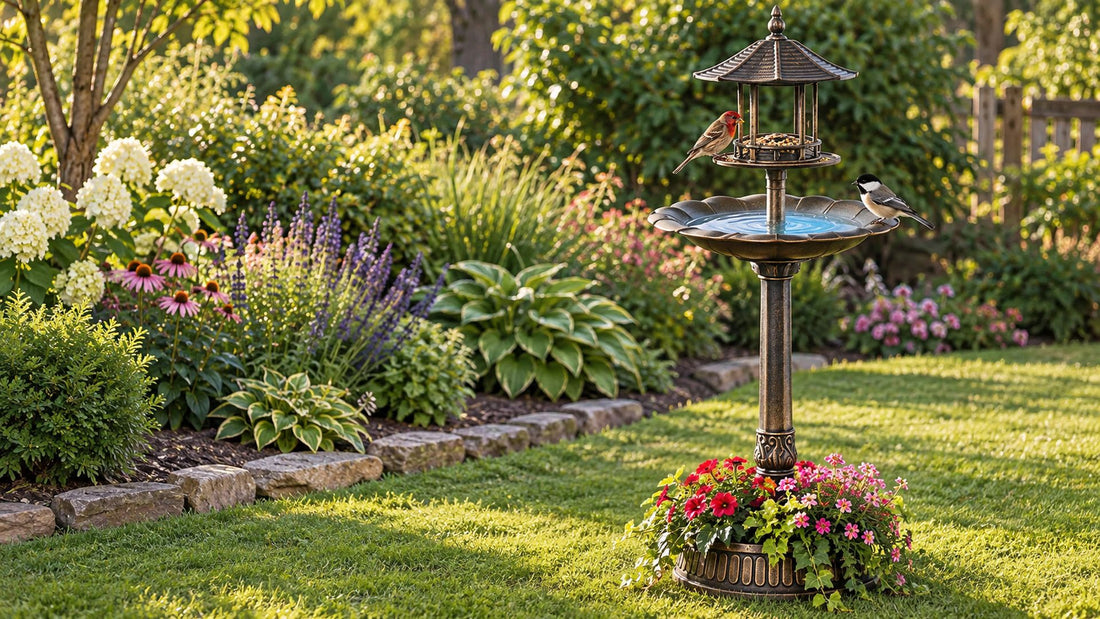
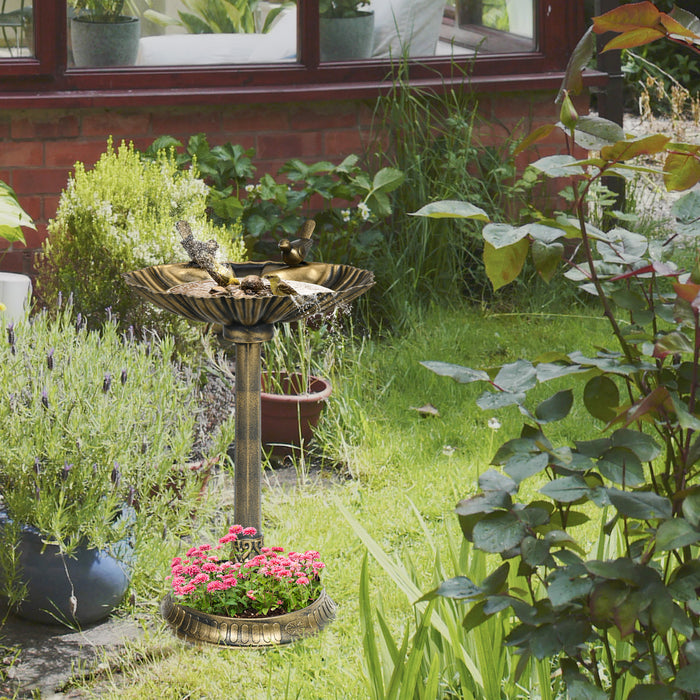
The finishes here read as metal rather than stone. A bronze bird bath on this page is a warm mid brown with the cast relief picked out lighter, so the detail reads from across a lawn rather than only up close, and the tall three in one carries the same finish over a taller column.
The green bird bath is the more unusual one. Most verdigris is bronze with green worked into the recesses, which reads as a treatment applied to a surface. The verdigris on the fleur de lis pedestal runs through the whole piece top to base, so it looks like one material rather than a finish laid over one.
The ones that also hold a plant
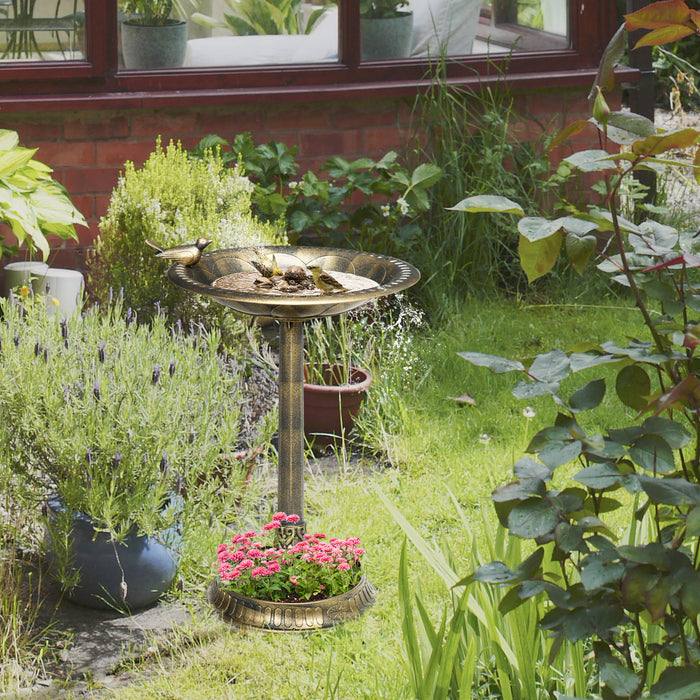
Three of the four have a planter cast into the base. That is not decoration, it is a second job in the same footprint: water at the top for the birds, something growing at the bottom. Trailing plants suit it, and a nursery pot dropped straight into the recess makes it easy to change by season.
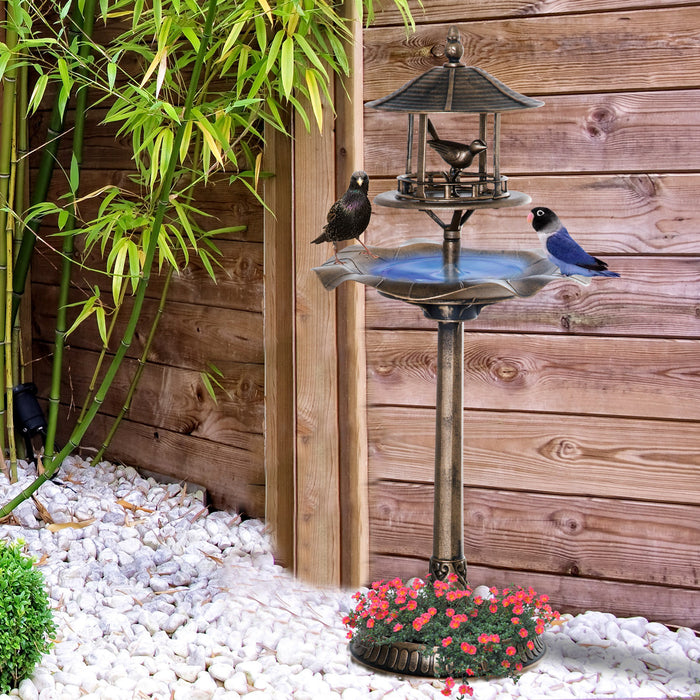
The tall one goes further. At 44 inches it is a bird bath, a feeder and a planter stacked in one column, which is the reason for the height. If you have been looking at a bird bath and feeder as two separate purchases, this is the one to look at. The shell bird bath is the other shape worth singling out, a fluted basin on a slim pedestal that takes up very little ground.
Wind, winter and where to put it
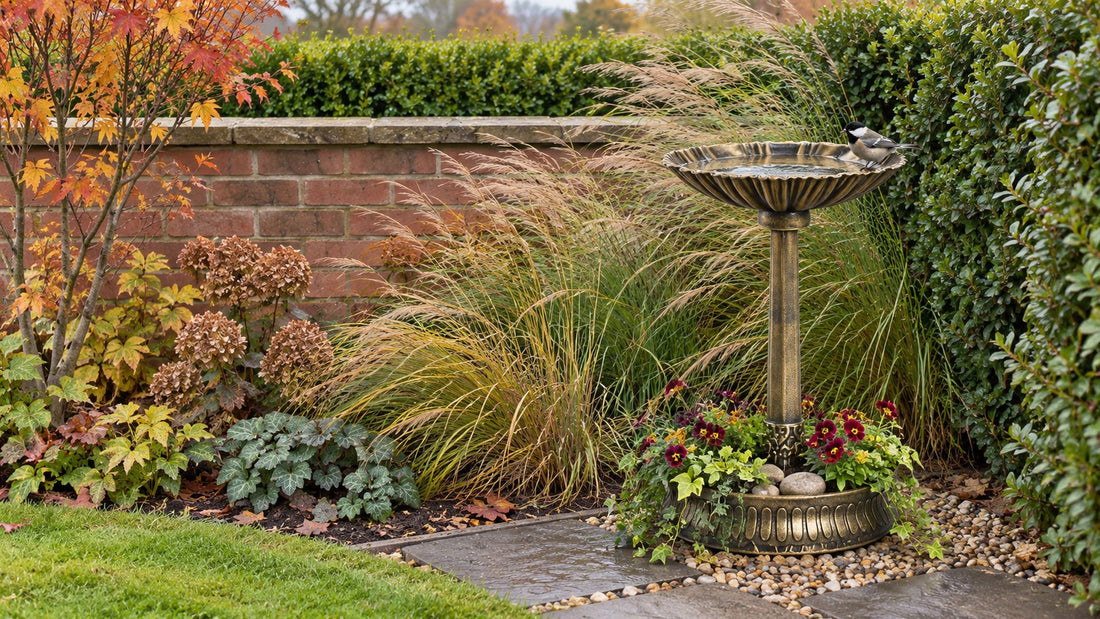
Light means you have to think about wind, and the fix is ordinary. Weight the base with sand or stones, or put the piece where a wall, a hedge or a rail breaks the gusts. In a sheltered corner it needs nothing at all.
Winter is simpler than it is for concrete. Drain the bowl before the first hard frost so nothing is sitting in it when it freezes, then carry the piece into the garage or a shed. Placement follows the usual rule either way: about ten feet from a shrub or low branch so birds have a perch on the way in, and in the sightline of a window you actually sit by.
Comparing Your Resin Bird Bath Options
| Resin | Cast concrete | |
|---|---|---|
| Weight | 4 to 8 lb | 60 to 140 lb |
| Where it goes | Balcony, deck, roof terrace, rented garden | Lawn, border, gravel, courtyard |
| Moving it | One person, one hand | A two person lift |
| Winter | Carry it into the garage | Drain and cover it in place |
| Finish | Cast detail in antique bronze and verdigris | Cast stone texture that gains patina |
| Standing firm | Weight the base with sand or stones | Holds by its own mass |
What four pounds changes
 01
01
Four pounds goes where concrete cannot
A balcony with a load limit, a timber deck, a roof terrace, a rented garden. Concrete goes in none of those and these go in all of them.
 02
02
Three of the four grow something
The base is a planter, so the piece holds water at the top and a plant at the bottom. One footprint doing two jobs.
 03
03
One piece doing three jobs
The tall one is a bird bath, a feeder and a planter in a single column, which is the whole reason it stands 44 inches.
 04
04
The bowl is the same bowl
Two inches of water at the deepest point and a rim wide enough to land on. Weight and styling change, what a bird needs does not.
Before You Order a Resin Bird Bath
Will a resin bird bath blow over
Is resin as good as concrete for the birds
Can it stay outside all winter
What is the difference between the bronze and the verdigris
Can the planter base actually be planted
Related collections
Guides and how tos
If the spot can take the weight and you want a piece that settles in and stays, the concrete bird baths are the other half of this.