

23 products
-

 Concrete Bird Bath for Garden Fluted Flare 24.4 InchConcrete Bird Bath for Garden Fluted Flare 24.4 Inch
- Regular price
-
$169.99 - Regular price
-
- Sale price
-
$169.99
-

 Concrete Bird Bath Garden Sunflower and Rooster 23 InConcrete Bird Bath Garden Sunflower and Rooster 23 In
- Regular price
-
$169.99 - Regular price
-
- Sale price
-
$169.99
-

 Concrete Bear Bird Bath Cub Climbing Stump 23.6 InchConcrete Bear Bird Bath Cub Climbing Stump 23.6 Inch
- Regular price
-
$159.99 - Regular price
-
- Sale price
-
$159.99
-

 Concrete Bird Baths Two Cubs and Honeycomb 23.6 InchConcrete Bird Baths Two Cubs and Honeycomb 23.6 Inch
- Regular price
-
$159.99 - Regular price
-
- Sale price
-
$159.99
-

 Concrete Bird Bath Statue Classical Goddess 25 InchConcrete Bird Bath Statue Classical Goddess 25 Inch
- Regular price
-
$182.64 - Regular price
-
$209.90 - Sale price
-
$182.64
-

 Concrete Frog Bird Bath Lily Pad Basin 25 InchConcrete Frog Bird Bath Lily Pad Basin 25 Inch
- Regular price
-
$174.52 - Regular price
-
$199.90 - Sale price
-
$174.52
-

 Concrete Bird Feeder with Bird Bath Bear 18 InchConcrete Bird Feeder with Bird Bath Bear 18 Inch
- Regular price
-
$249.11 - Regular price
-
$289.90 - Sale price
-
$249.11
-

 Concrete Stone Bird Bath Old Man Tree Face 24 InchConcrete Stone Bird Bath Old Man Tree Face 24 Inch
- Regular price
-
$179.12 - Regular price
-
$229.90 - Sale price
-
$179.12
-

 Concrete Rustic Bird Bath Carved Trunk 24 InchConcrete Rustic Bird Bath Carved Trunk 24 Inch
- Regular price
-
$179.90 - Regular price
-
$199.90 - Sale price
-
$179.90
-

 Concrete Contemporary Bird Bath Open Loop 21.8 InchConcrete Contemporary Bird Bath Open Loop 21.8 Inch
- Regular price
-
$159.99 - Regular price
-
$179.99 - Sale price
-
$159.99
-

 Concrete Bird Bath Contemporary Twin Cutout 21.8 InchConcrete Bird Bath Contemporary Twin Cutout 21.8 Inch
- Regular price
-
$149.99 - Regular price
-
$189.99 - Sale price
-
$149.99
-

 Concrete Pineapple Bird Bath Classical Pedestal 24.8 InchConcrete Pineapple Bird Bath Classical Pedestal 24.8 Inch
- Regular price
-
$169.99 - Regular price
-
$199.99 - Sale price
-
$169.99


The Numbers That Matter
- Varies by model Assembled weight
- 18–25.5 in Listed height range
- Varies by model Bowl width
- Two-piece assembly Ships as
- Follow model instructions Finish care
- Follow model instructions Installation
A Cast Stone Bird Bath That Stays Where You Put It
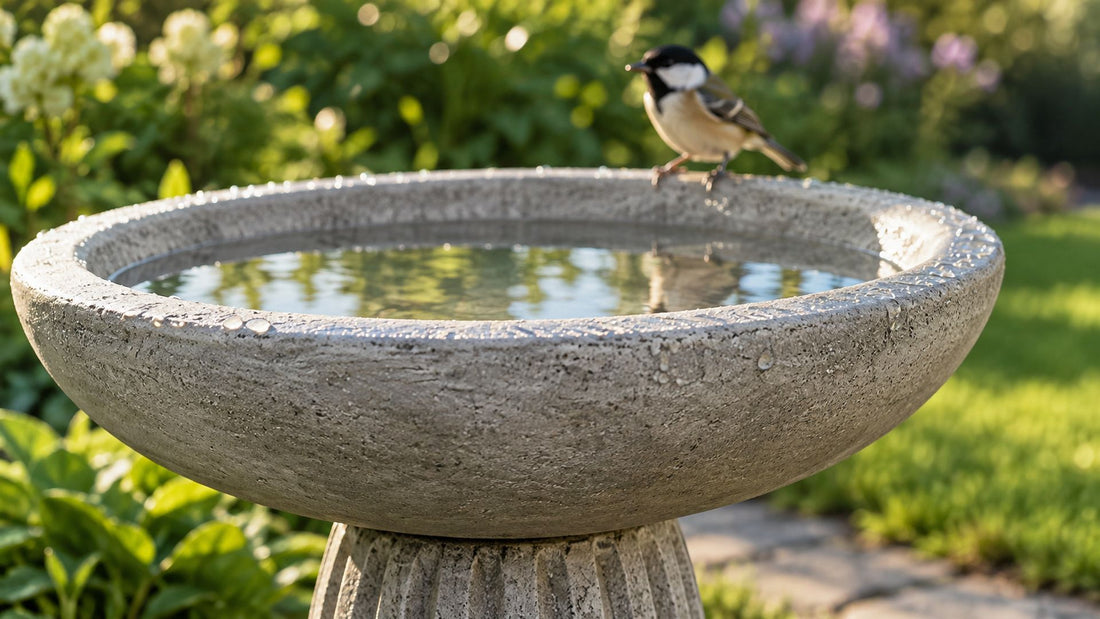
Our cast concrete bird baths
We cast these bird baths in molds to create the pedestal shapes, bowl details and surface textures. They are made from concrete rather than carved natural stone. We apply water-based paint before they leave our factory.

Concrete and cement bird baths
Cement is one ingredient in concrete. Shoppers often use “cement bird bath” and “concrete bird bath” for this type of garden product. The bird baths in this collection are cast concrete.
Weight and positioning
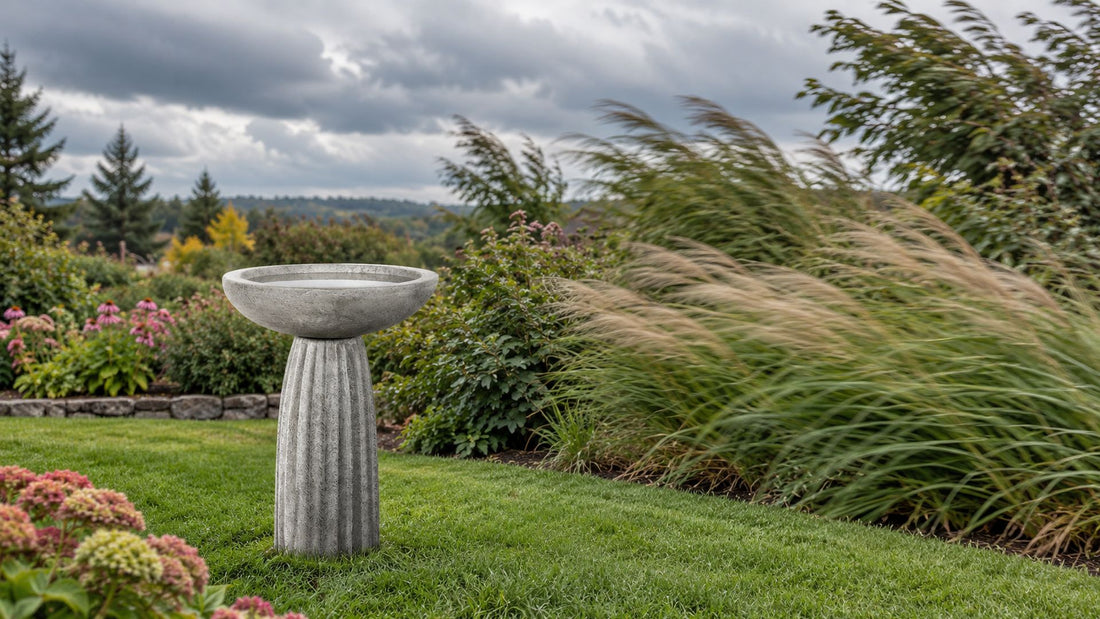
Weight varies by model. Check the listed product weight before planning how to move or position the bath; contact us if a weight is not listed.
Choose a level, stable location before moving the bath. Follow the assembly instructions for the model you choose and use help when lifting components that are too heavy or awkward to handle comfortably.
From a small concrete bird bath to a large one
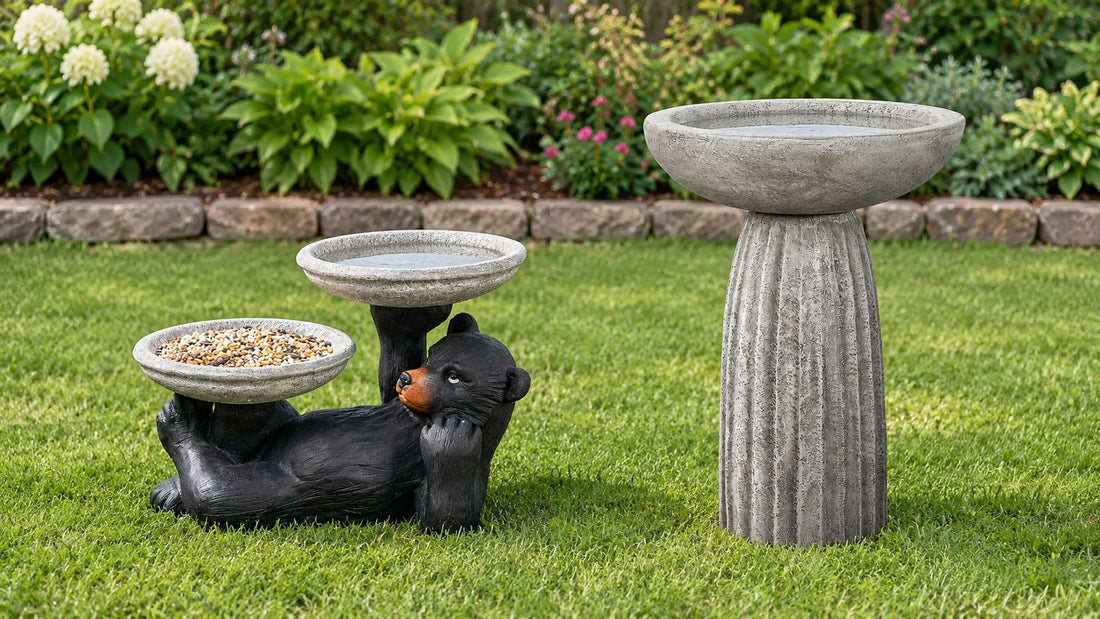
Listed heights in this collection range from 18 to 25.5 inches. A small concrete bird bath, such as the 18-inch double-bowl bear model, can suit a border or patio where a lower design fits the space.
For a taller concrete bird bath, compare the pedestal models listed from 21.8 to 25.5 inches. Check each model’s listed height and basin dimensions separately; a taller bath does not necessarily have a wider bowl.
Caring for the painted finish
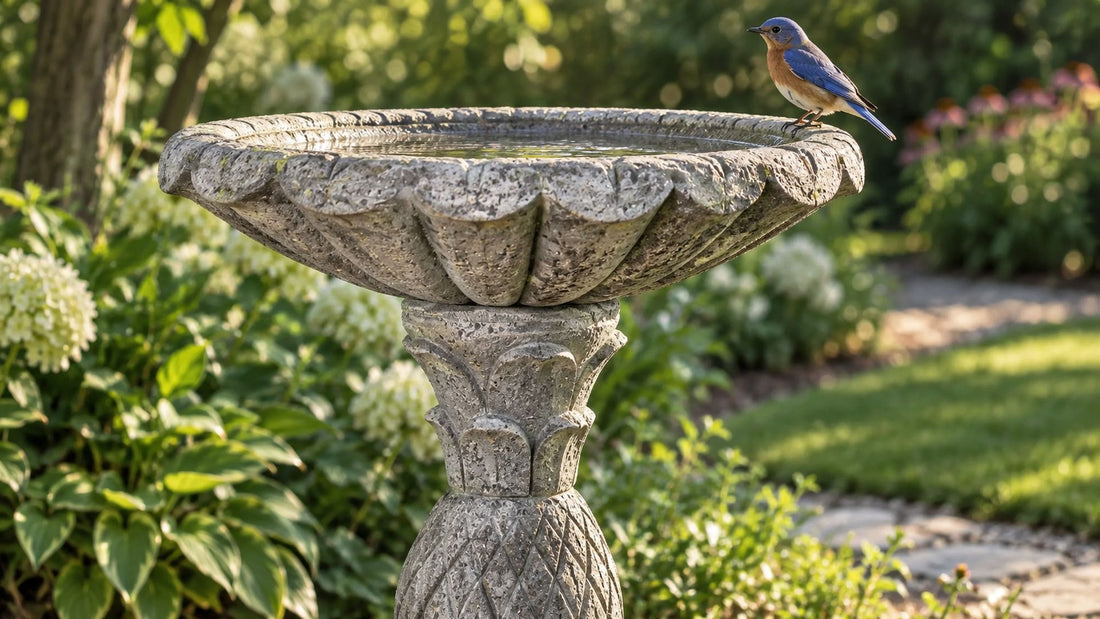
We finish our bird baths with water-based paint before they leave our factory. Use a soft cloth or soft brush for routine cleaning. For light mineral marks, we recommend gently wiping the surface with a mixture of white vinegar and water, then rinsing thoroughly. Avoid abrasive scrubbing. If marks remain, contact us before using a stronger cleaner or applying a new coating.
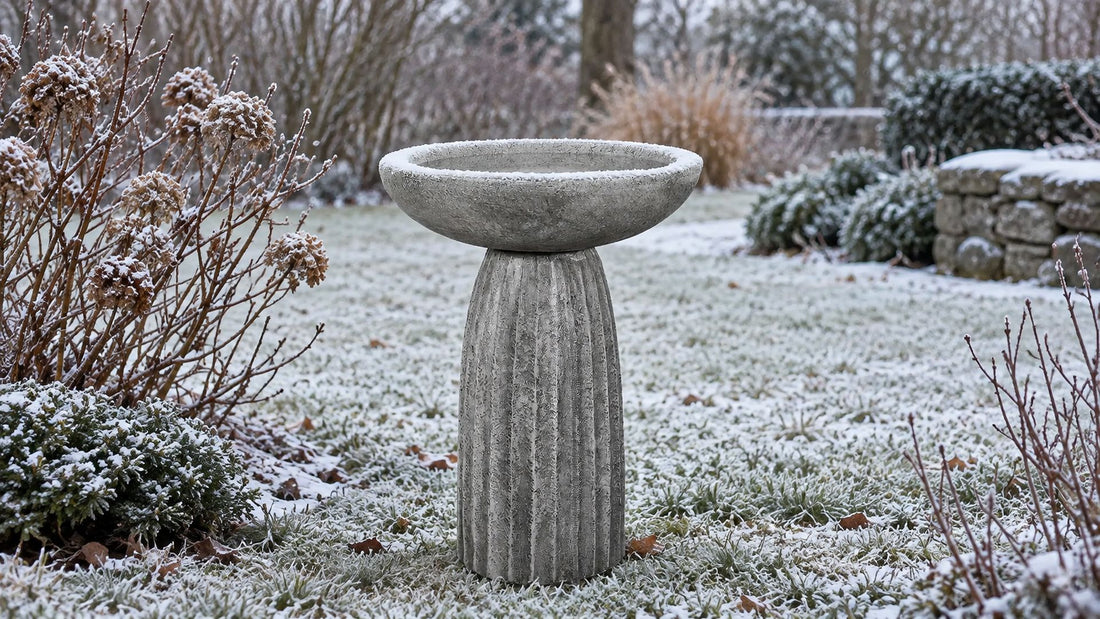
Winter, and what actually cracks concrete
Freezing water can damage concrete, including when moisture remains within the material. Drain the basin before freezing weather and follow the winter-storage instructions for your model. Draining alone does not guarantee protection from freeze damage.
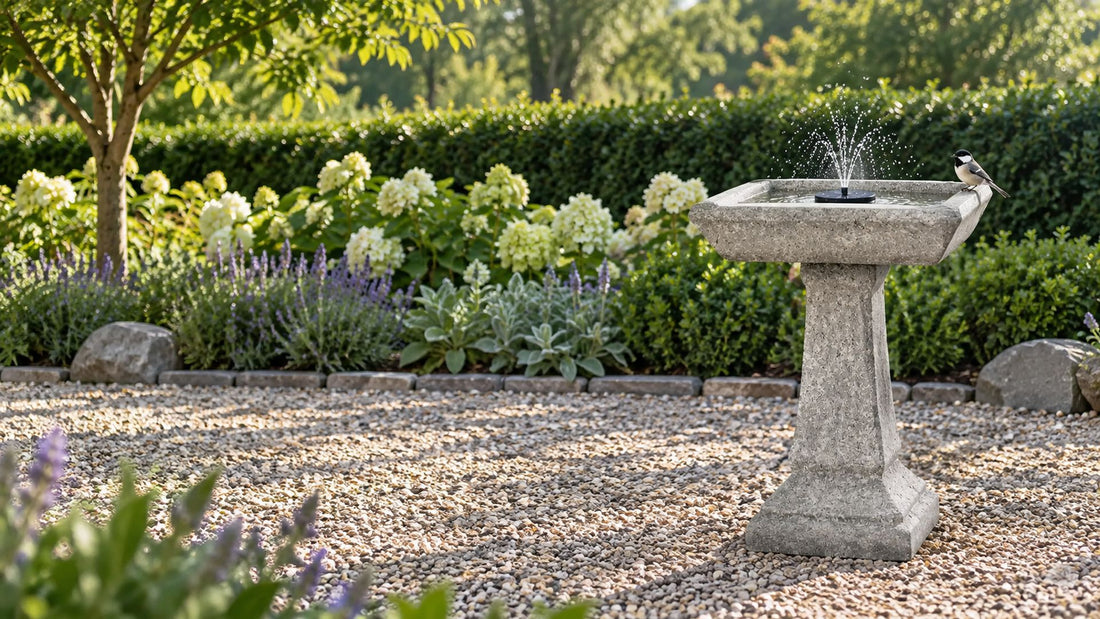
Turning one into a bird bath fountain
Before adding a solar pump, check its required water depth, footprint and spray height against the basin’s usable dimensions. Compatibility depends on the individual bird bath and pump. Follow the pump manufacturer’s operation and winter-storage instructions.
Comparing Your Concrete Bird Bath Options
| Cast concrete | Resin | |
|---|---|---|
| Material | Cast concrete | Molded resin |
| Designs | Classical pedestals, sculptural and tree-trunk designs | Pedestal designs and models with planters |
| Weight | Check the selected model’s listed weight | Check the selected model’s listed weight |
| Placement | Use a firm, level surface and follow the model’s assembly instructions | Use a firm, level surface and follow the model’s assembly instructions |
| Finish | Water-based painted finish | Water-based painted finish |
| Winter care | Drain and protect from freezing | Drain and store in a sheltered, frost-free place |
Browse Concrete Bird Baths by Style
 01
01
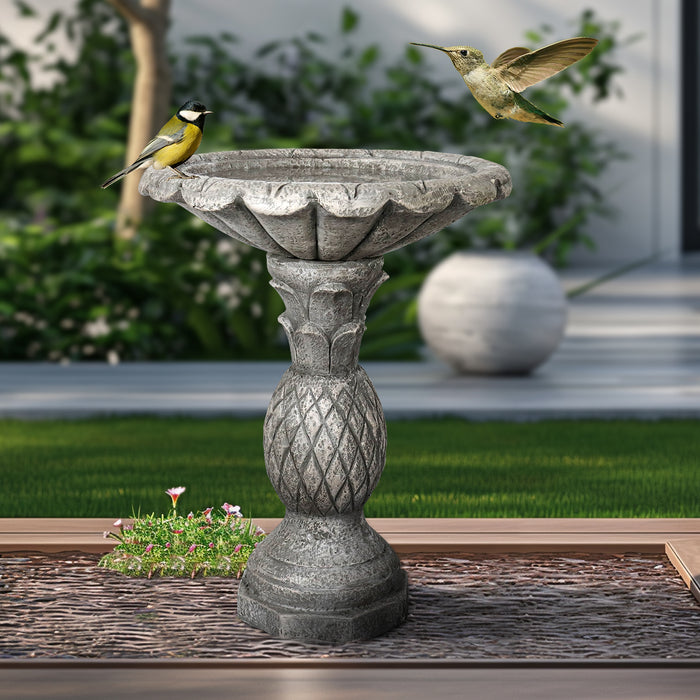
Ornamental concrete bird baths
Fluted pedestals, classical figures and scrolled rims, for a formal bed or the end of a path.
9 pieces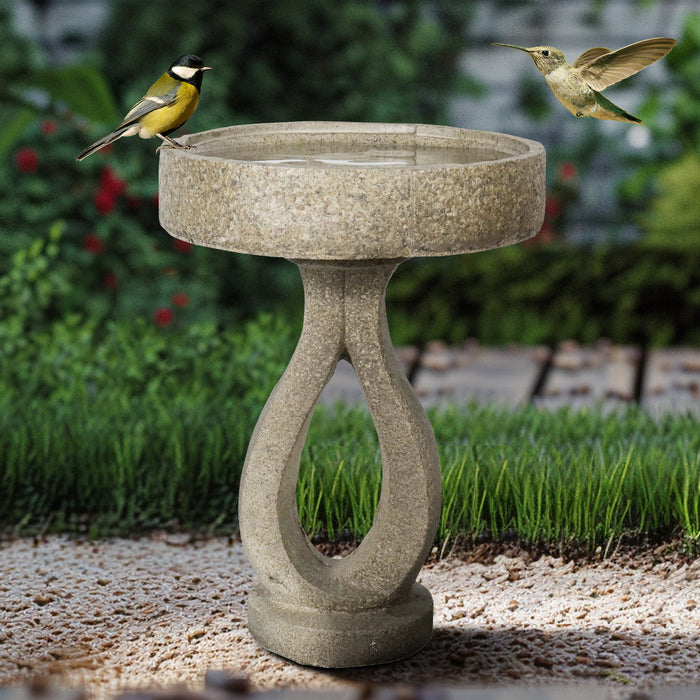 02
02
Modern concrete bird baths
Plain surfaces and clean geometry for a contemporary garden, a courtyard or the edge of a patio.
6 pieces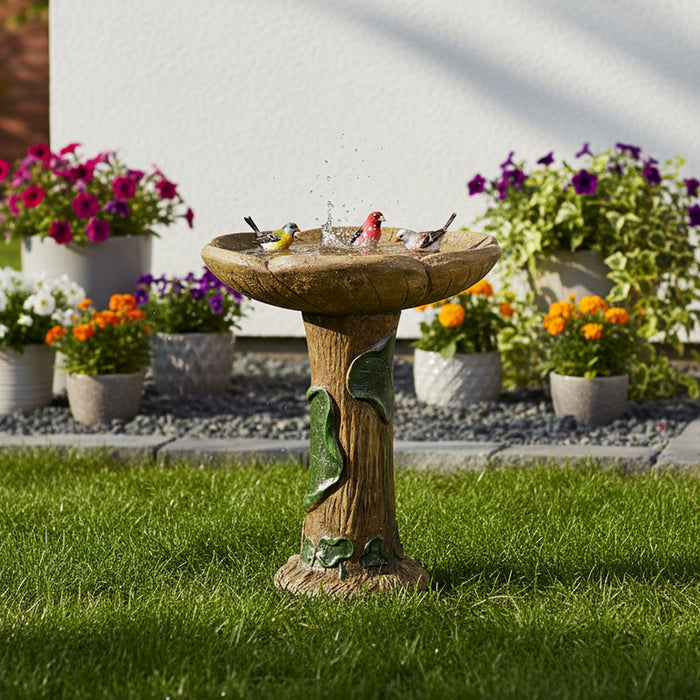 03
03
Rustic concrete bird baths
Carved trunk and bark texture cast in concrete, at home in a woodland border or a cottage bed.
6 pieces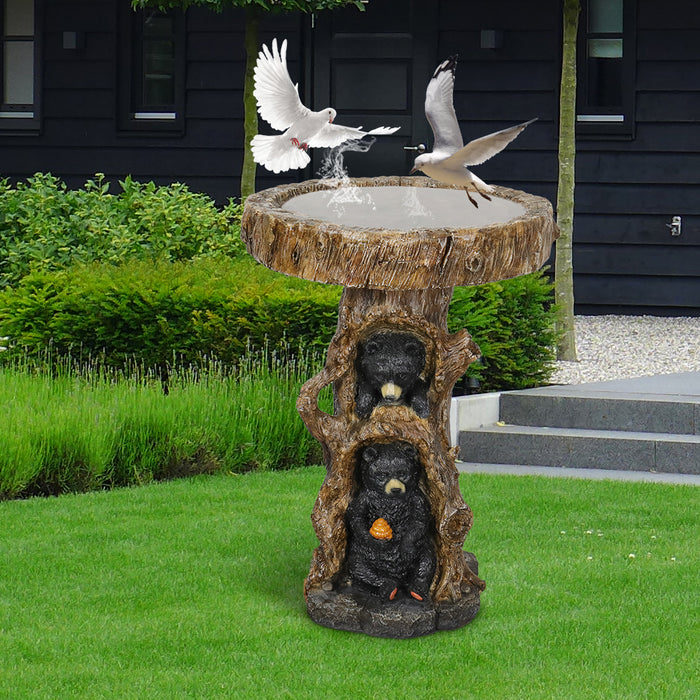 04
04
Animal concrete bird baths
Bears, frogs and songbirds cast into the base, for the garden people stop and look at.
5 pieces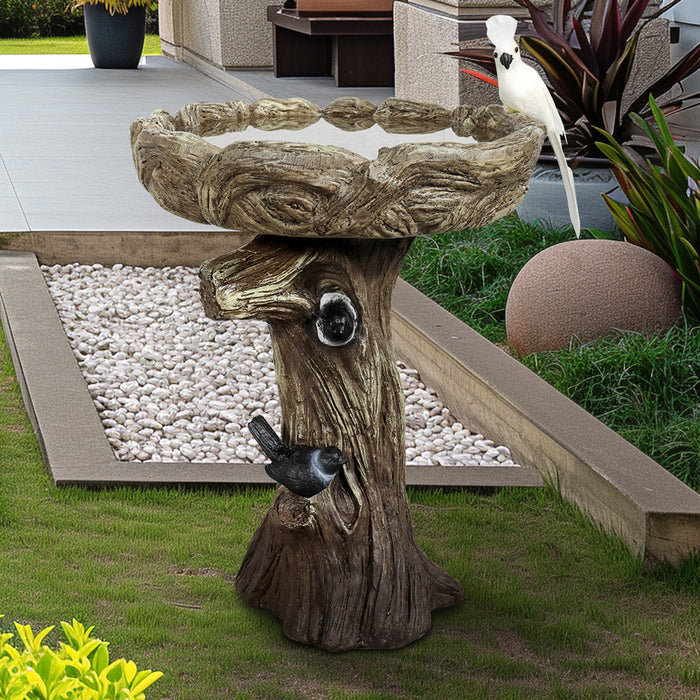 05
05
Tree stump bird baths
A cast stone stump with the rings and bark worked in, so the bath reads as part of the planting.
4 pieces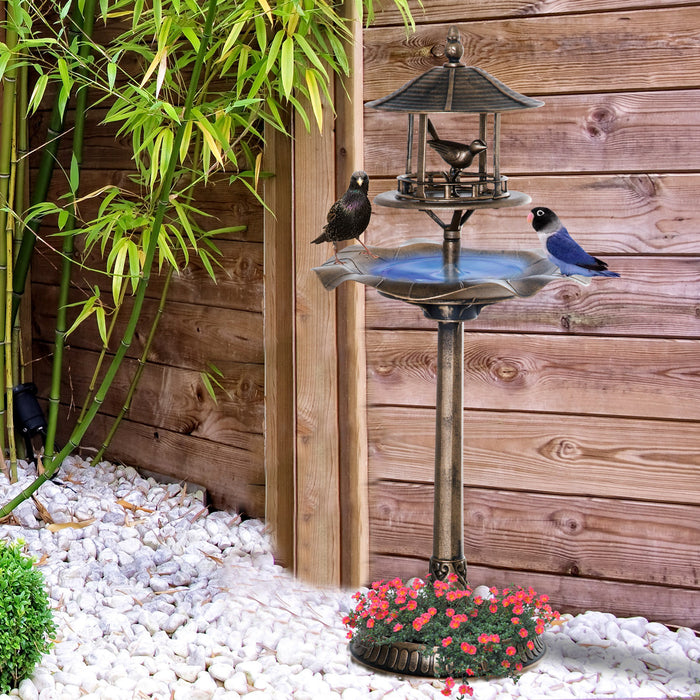 06
06
Prefer something lighter
Explore our resin bird baths, including pedestal designs and models with planters. Compare each model’s dimensions and listed weight.
4 pieces
Before You Order a Concrete Bird Bath
Will a concrete bird bath crack in winter?
Is concrete the same as cement?
Why does a white film appear on the surface?
How often does concrete need resealing?
Do I need to anchor it down?
What size concrete bird bath should I get?
Related collections
Guides and how tos
Prefer a resin design? Explore our resin bird baths and compare the size, shape and features of each model.