

Sort by

5 products

Filter and sort
Filter and sort

5 products

5 products

Why the Eye Finds Them First

A Familiar Figure Gives the Garden a Clear Center

A garden is full of competing lines, the planting, the lawn, the paths. A frog, a rooster, or a bear gives your eye one clear place to land. And because the animal is built into the basin or pedestal, it reads as part of the garden, not an ornament stuck on afterward.

THE POSE DOES THE WORK

The Pose Gives It Movement

A bear climbing a trunk or a frog holding up a leaf-shaped basin has movement in it, even when the garden is still. From across the yard the silhouette catches your eye. Up close, the animal's expression and the surface detail give you more to look at.

Styling Animal Bird Baths

Match the Setting to the Animal

An animal design already carries the garden corner. Pair it with planting and ground materials that suit it, and leave enough room that the figure stays easy to see.

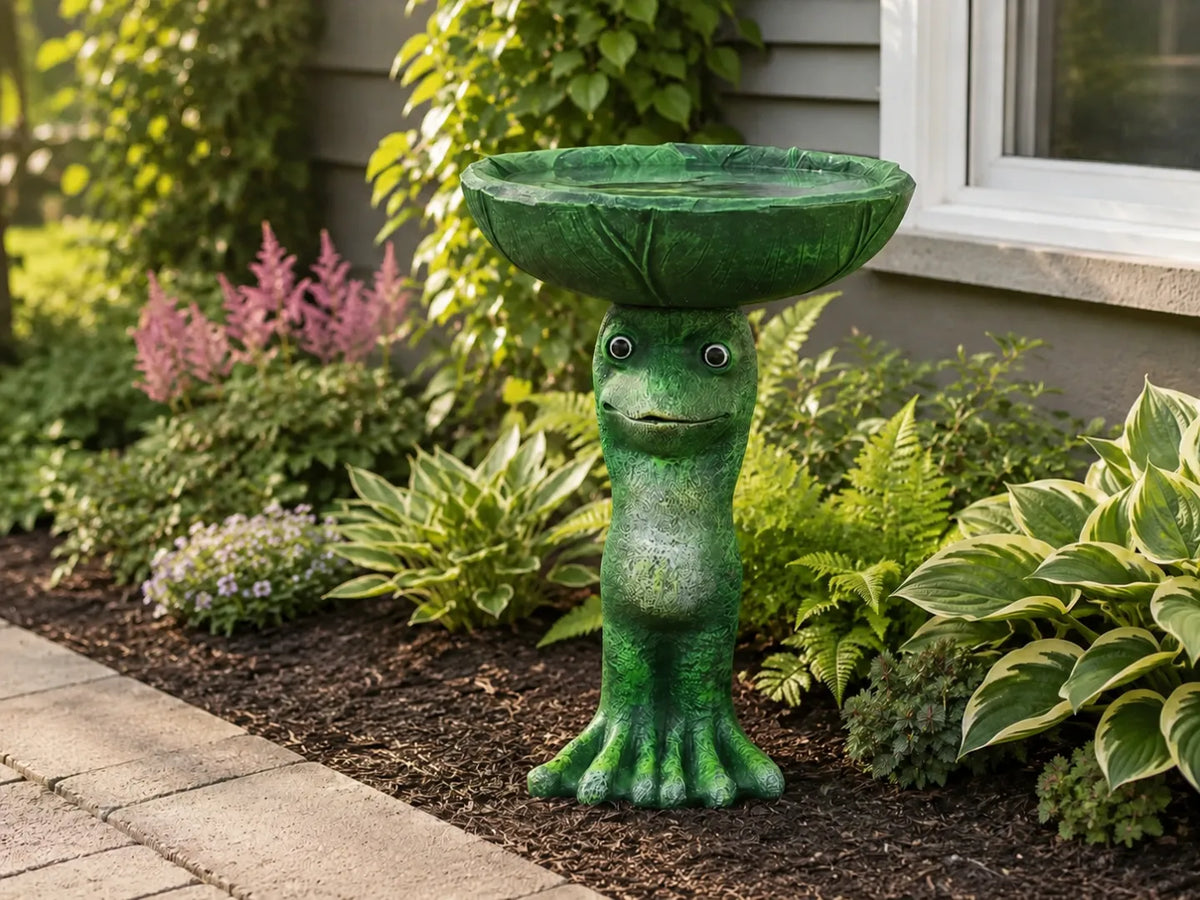
Green frog bird bath placed beside ferns, hostas, and soft garden planting.

Frog Designs

Light, Fresh, and Close to the Planting

Frog and lily-pad designs sit well beside ferns, hostas, low grasses, and softer planting. Keep the taller foliage behind or to the side so the basin and the frog stay in view.

Works well beside: shaded beds, garden paths, patio edges, and layered foliage.

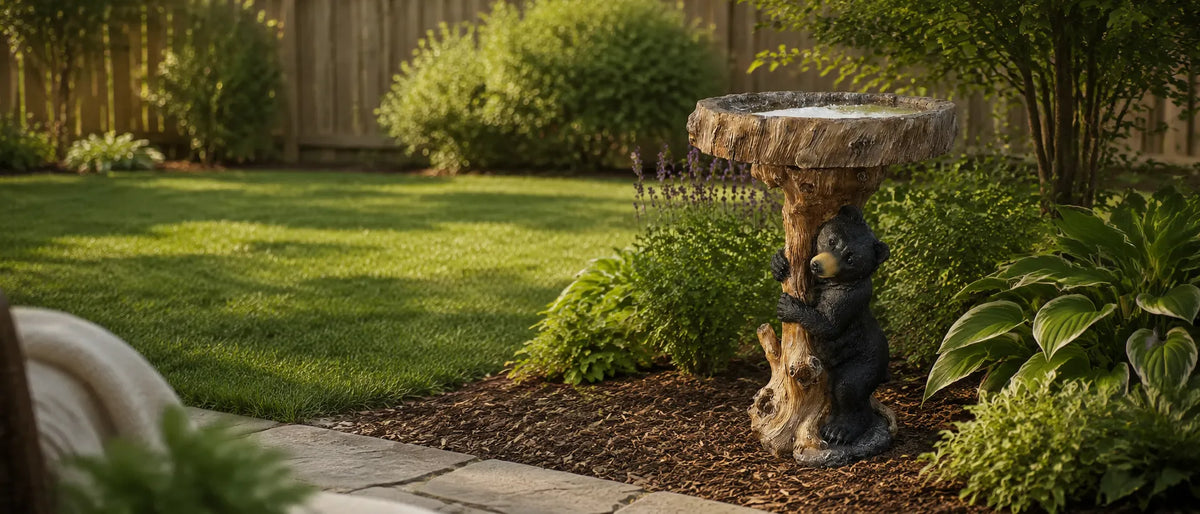
Bear bird bath placed beside mulch, natural stone, shrubs, and a lawn edge.

Bear Designs

Grounded and More Sculptural

Bear designs go naturally with mulch, stone, shrubs, and the edge of a lawn. The heavier silhouette can hold a corner on its own, so there is no need to crowd it with more animal ornaments.

Works well beside: lawn edges, woodland planting, natural stone, and deeper beds.

What is here

Bears, a Frog, a Rooster

Nobody searches for an animal bird bath. They search for the animal.

Bear bird bath, black bear bird bath, concrete frog bird bath. People come to this shelf with a creature already in mind, usually one that means something to them or to the person they are buying for. So it is worth listing what is actually cast here.

Two bear pieces, a frog, a rooster on a sunflower, and one bear that feeds as well as waters. All cast concrete, all hand painted and sealed, all built so the creature holds the water rather than standing next to it.

Or the same look without a creature
Material Cast concrete The creature is cast in, not fixed on after
Height 15 to 24 in The low one is the feeder and bath together
Finish Hand painted Colored by hand over concrete, then sealed
Water depth About 2 in The creature sits below the water line, never in it
Assembly Two pieces No tools, about five minutes

Each creature, and what it is doing

None of these is an ornament parked beside a bowl. In every case the animal is structural, and the pose is the design.

01

Cub climbing a stump

A black bear cub halfway up the column, with a bird already perched at the rim above it. Read from a distance it is a stump. Read up close it is a story.

02

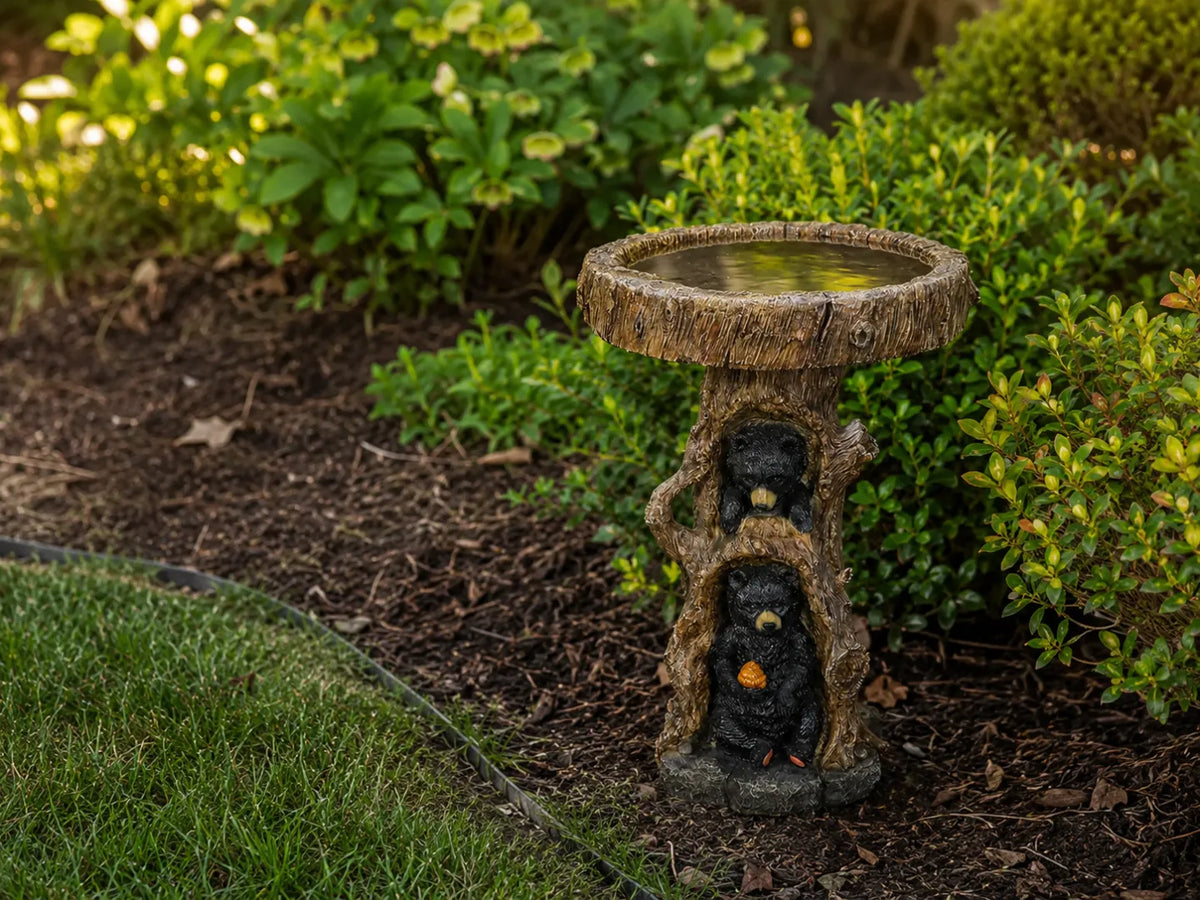
Two cubs and a honeycomb

A hollow trunk with two cubs seated at the base and a honeycomb between them. The busiest of the group and the one children stop at.

03

Frog carrying a lily pad

A standing frog holding the basin overhead, painted green. The lily pad is the bowl, which makes it the most literal shape here and the one that suits a pond edge.

04

Rooster on a sunflower

A sunflower head as the basin with a rooster cast onto the stem. Farmhouse rather than woodland, and the only one with real color in it.

The one that feeds as well as waters

One piece here is a double bowl: a bear holding a bath on one side and a feed tray on the other, at fifteen inches rather than the usual twenty three. It is the shortest thing on the page because it is meant to be read close, from a step or a path edge rather than across a lawn.

Two things worth knowing before you pick it. Seed hulls blow into water, so face the tray away from the bath and downwind if you can. And a combined piece brings ground feeders in closer than a bath alone, which is the point for some gardens and the problem in others.

Placing a bath and a feeder together

Hand painted, and what that means outdoors

Every piece on this page is colored by hand and then sealed. That buys you something and it costs you something.

01

No two are identical

Color goes on by hand and gets pulled back off the raised detail, so fur, feather and bark all sit slightly differently piece to piece. That is the method working, not a fault.

02

Full sun softens it

Painted color fades where a plain gray piece would simply weather. Partial shade keeps it longer, and it is the same spot that keeps the water cleaner anyway.

03

Rinse, do not scrub

Water and a soft brush on the painted surfaces. No bleach and no pressure washer, both of which take the color out of the detail before they take off anything you wanted gone.

04

Repainting is possible

Years in, a touch up is a normal thing to do. What matters is what you use and where you put it, because nothing goes on the inside of a basin that birds then stand in.

Matching the creature to the corner

A figure reads best when the setting agrees with it. Four quick pairings.

01

Bears want trees

Both bear pieces are built on trunks. Put them where there is bark somewhere in the frame, even if it is only a fence post or a log edge.

02

The frog wants damp

A pond edge, a bog bed, hosta and fern. Anywhere the planting already looks like it holds water.

03

The rooster wants open ground

Gravel, a path, a vegetable bed, a fence. It is a farmyard figure and it looks wrong tucked into shade.

04

Keep them apart

If you own more than one, put them in different parts of the garden. Found separately they each stay a small event. Lined up together they turn into a shelf.

Common Questions

Animal Bird Baths FAQ

A few practical things to consider before choosing a design and finding its place in the garden.

What is an animal bird bath?

An animal bird bath incorporates a recognizable animal into the basin, pedestal, support, or complete sculptural form. The figure may support the water basin, appear along the rim, or become part of a larger garden scene.

How do I choose the right size and shape?

Start with the distance from which you will usually see it. Taller designs and stronger animal silhouettes work well across lawns and larger planting beds. Smaller, more detailed designs are easier to appreciate beside patios, paths, porches, and compact flower beds.

Where should an animal bird bath be placed?

Choose flat, stable ground where the bird bath remains visible without being hidden by tall planting. A position near a lawn, garden path, patio edge, or flower bed usually provides a clear approach for birds and a good view from the areas you use most.

Will an animal bird bath make my garden look childish?

It does not have to. Keep the surrounding materials restrained and allow one animal design to remain the focus. Natural planting, mulch, stone, and a little open space help the feature feel intentional rather than overly themed.

How should detailed animal features be cleaned?

Empty old water and remove loose debris regularly. Use clean water, a soft brush, and mild soap when needed, then rinse thoroughly. Avoid abrasive tools that may damage sculpted details or the surface finish, and follow the care instructions on the individual product page.

Can an animal bird bath stay outside during winter?

Winter care depends on the product material and construction. Before freezing weather, drain the basin completely, clean and dry the product, and follow the storage or protection instructions on its product page. Do not allow standing water to freeze inside the basin.