

01
Give the Garden Its Own Personality
The planting might look like a lot of other gardens, but one recognizable sculpted detail makes the corner feel personal.

6 products


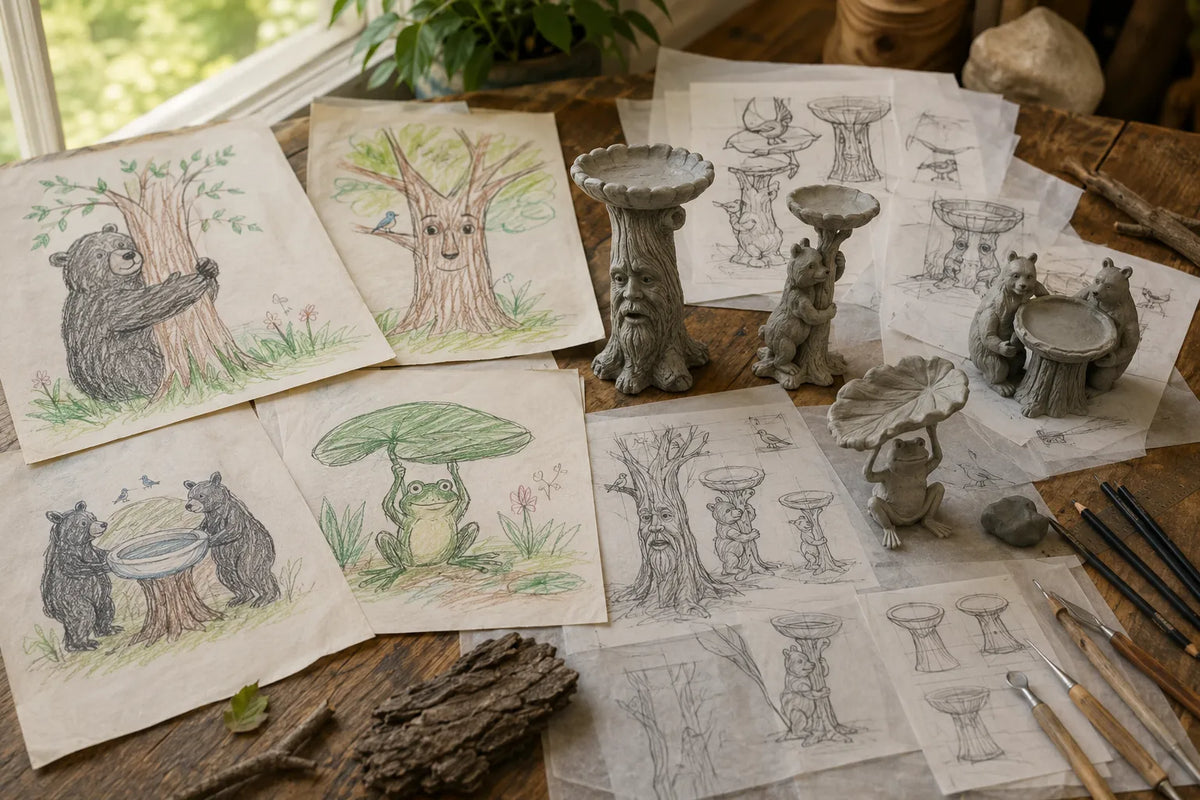
SOMETIMES INSPIRATION BEGINS WITH A SIMPLE DRAWING
This collection started with a few drawings by Theo's niece and nephew. Kids do not worry much about proportion when they draw. A bear wraps itself around a tree trunk, a frog hides under a leaf while holding the whole shape over its head. Those playful sketches got us looking at natural forms a little differently. Later, out in the garden, we kept noticing knots and markings in the bark that already looked like faces and characters, and we shaped that into the bird baths.
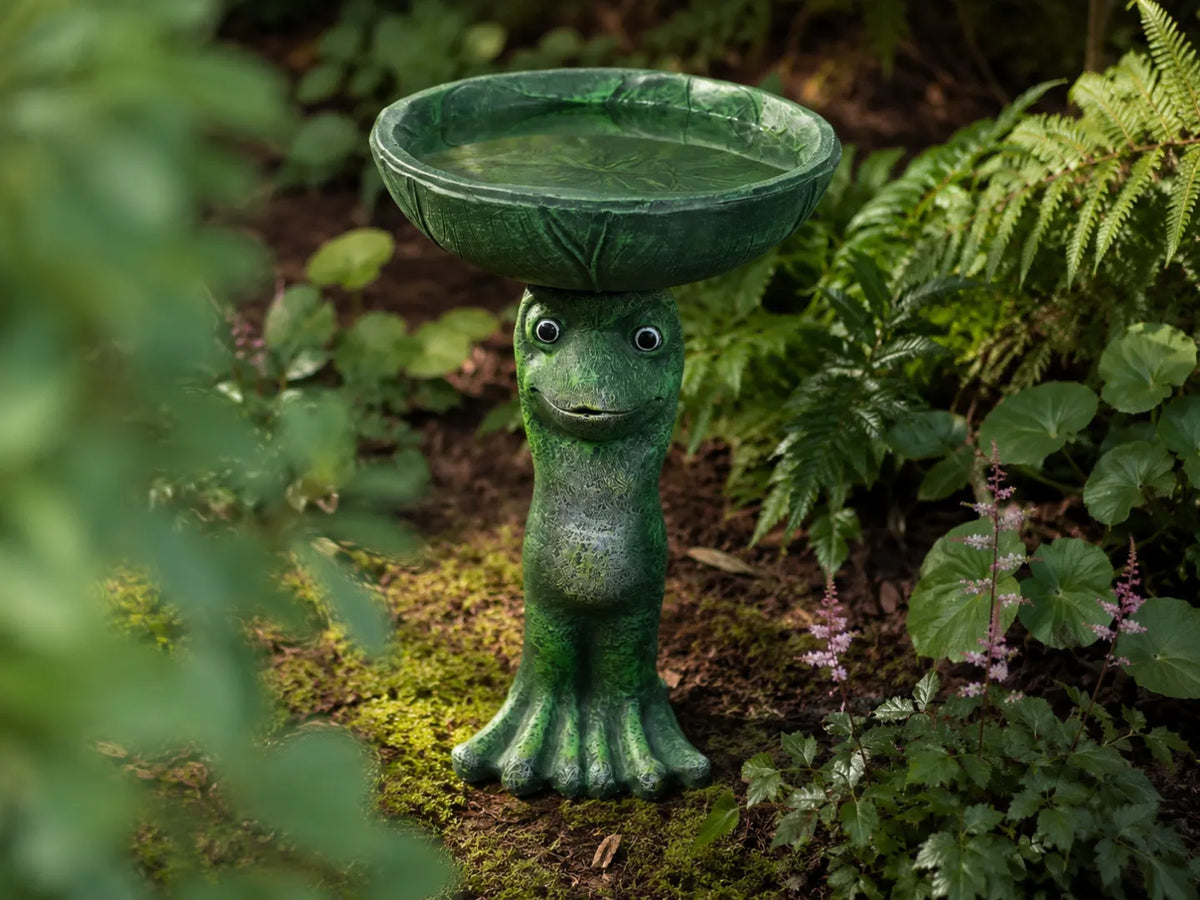
A SMALL SURPRISE FOR AN ORDINARY CORNER
Some gardens already have plenty of planting but still miss the one detail you actually remember. A small character tucked into a tree trunk, a leaf, or an animal shape gives the space its own personality. It does not shout for attention, it just gives you something to notice.
The planting might look like a lot of other gardens, but one recognizable sculpted detail makes the corner feel personal.
The story does not have to land all at once. Seeing the whole shape first and finding the smaller character later makes it more fun to look at over time.
One feature with a story does more than a dozen small ornaments. It adds interest while keeping the garden calm and natural.
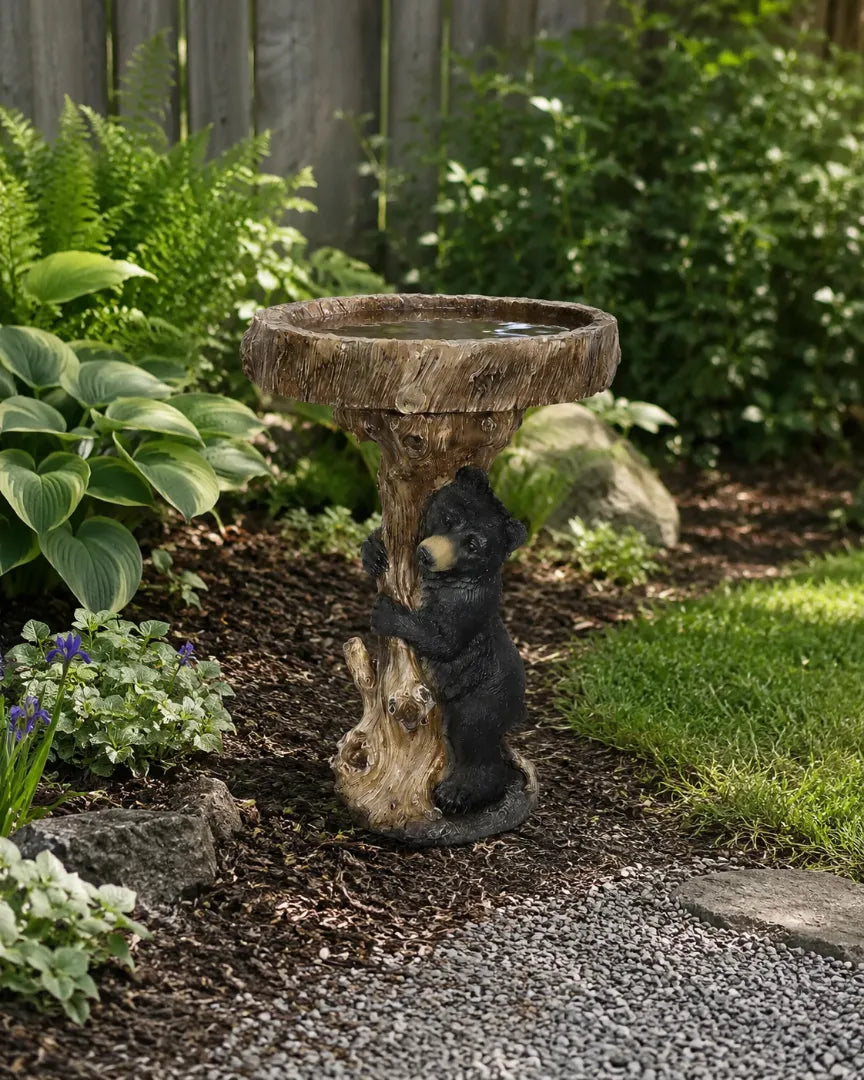
LET THE STORY BELONG IN THE GARDEN
A whimsical bird bath works best where planting meets open ground, at the edge of a mulched bed, under a tree, at a lawn corner, or on a quieter side of the patio. Ferns, hostas, low groundcover, and a few natural stones sit well with its woodland-inspired shape. There is no need to build a whole fairy-tale scene around it.
A planting corner, a shaded tree edge, or a view from the patio lets the sculpted details show themselves a bit at a time.
Ferns, hostas, low groundcover, and a few woodland flowers soften the shape without competing with it.
Skip the crowd of novelty ornaments. A little open space makes the piece feel more personal and more considered.

Naming
People look for this shelf under half a dozen words. They all mean the same shelf.
Whimsical, quirky, unusual, unique, decorative, novelty. Different words, one want: a bird bath that is worth looking at when no bird is on it. A plain pedestal disappears into a border. These do not.
Statue, figurine and sculpture turn up too, and those are the more literal ones. Every piece here has a subject cast into it, an animal or a face or a figure, and the basin is part of that sculpture rather than a bowl set on top of one.
Or start plain, with classicThe subject is not stuck on the side. In every case it is doing the work of holding the water up.
Bears
A cub climbing a stump, and a pair sharing a honeycomb. The animal is the pedestal, which is why they read as one object rather than an ornament next to a bowl.
A frog on a lily pad
The pad is the basin. It runs shallow at the edge and dips in the middle, which happens to be exactly the profile small birds want.
A face in the bark
An old man worked into a tree trunk. It reads as trunk first and face second, so it sits in a woodland corner without announcing itself.
A figure
A classical goddess holding a scalloped bowl. Proof that decorative does not have to mean cartoon, and the one here that suits a formal border.
The fair question about any novelty piece. The short answer is no, with one thing to watch.
The basin stays a full dish
On every one of these the water sits in an open bowl. The bear, the frog and the figure are all below it or beside it. Nothing stands in the water.
Depth does not change
Two inches at the middle, running out to nothing at the edge, the same as a plain pedestal. A subject on the base does not make the dish deeper.
A rim is still a rim
Sculpted edges have the same width to grip. Birds land on these the way they land on anything else with a solid lip.
The one thing to watch
Detailed carving traps water in its own hollows. In November turn the whole piece over, not just the basin, or ice finds those pockets first.
A decorative piece earns its keep by being the only one doing that job.
One in a sightline
A single character reads as a focal point. Two you can see at once reads as a collection, and a collection stops being a surprise.
Give it a plain background
A fence, a hedge, a wall. Set against busy mixed planting the silhouette disappears and the detail goes with it.
Match the subject to the corner
A bear or a tree face wants trees near it. A classical figure wants something straighter, a path edge or a clipped border.
Let the rest stay quiet
Whimsy works in a garden that is otherwise plain. It is the one loud note, not the theme.
A plain dish you wipe out in one pass. A sculpted one has fur, bark and folds in it, and green settles into those before it settles anywhere else. An old toothbrush handles the detail in a minute. Nothing stronger is needed or wanted.
Where a piece is hand painted, treat the color the way you would treat paint on anything outdoors. Rinse it, do not scrub it, and keep bleach and pressure washers away from it. Fading is normal on a garden piece and most owners come to like where it lands.
The full cleaning methodWhat makes a bird bath whimsical in style?
It is the sense of character and story. Recognizable figures like animals, plants, and faces, often with natural texture, come together into a small visual story. The feel is playful and full of personality rather than plain or formal.
Will a whimsical bird bath make my garden look childish?
Not if you place it with a little restraint. Use one character piece as the main feature and keep the planting around it natural. That reads as charm and personality, not a playroom.
Where should I place a whimsical bird bath?
It works well where planting meets open ground, at the edge of a bed, under a tree, at a lawn corner, or a quieter part of the patio. Somewhere you pass often, so the details get noticed.
What plants pair well with whimsical bird baths?
Ferns, hostas, low groundcover, and a few woodland flowers suit the sculpted, natural shapes. Keep the planting soft so it frames the character instead of hiding it.
Should I surround it with other animal or fairy garden decorations?
Better not to. One character with a story goes further than a crowd of ornaments. A little open space keeps it feeling considered rather than cluttered.
How do I choose between a tree face, bear, or frog design?
Go with the character you enjoy, and think about the spot. A taller piece can anchor a bed or a tree base, while a smaller, low design suits a quiet corner where the details can be seen up close.
Do whimsical bird baths only work in woodland gardens?
No. A whimsical piece can add personality to a plain lawn, a flower bed, a patio corner, or a small backyard. It brings the character, and the garden around it can stay simple.
Are all whimsical bird baths made from the same material?
No. Whimsical designs come in more than one material, so check the individual product page for what each one is made of and how to care for it.
How should I clean a whimsical bird bath with detailed carving?
Empty the water and rinse it out, and use a soft brush to reach into the carved details where debris collects. Skip harsh cleaners and abrasive pads, and follow the care instructions that come with the piece.
Can the sculpted details remain visible when surrounded by plants?
Yes, as long as you keep the planting low and a little back from the piece. Soft, low greenery frames the character, while dense planting right up against it will hide the detail that makes it worth having.