

More Shape Without the Same Mass
Open centers, curved structures, tall columns, and deeply molded surfaces can create visual scale without always requiring the weight of a solid cast form.

63 products


Why Resin
Resin is not chosen simply because many designs are easier to handle. It allows the structure, surface, and water route to be developed together.
Open cutouts, curved walls, narrow columns, stacked ledges, pottery inspired forms, and detailed garden scenes can create a strong visual presence without giving every design the mass of a solid cast fountain.
Open centers, curved structures, tall columns, and deeply molded surfaces can create visual scale without always requiring the weight of a solid cast form.
Multiple basins, channels, ledges, and openings allow water to pour, fall, curtain, or move gradually through the complete design.
Molded surfaces allow stone, slate, pottery, timber, and ornamental details to remain visible across more than one side of the fountain.
Many resin fountains stay light enough to move without much effort, giving you more flexibility as planting, furniture, and garden use change. Actual product weight varies.
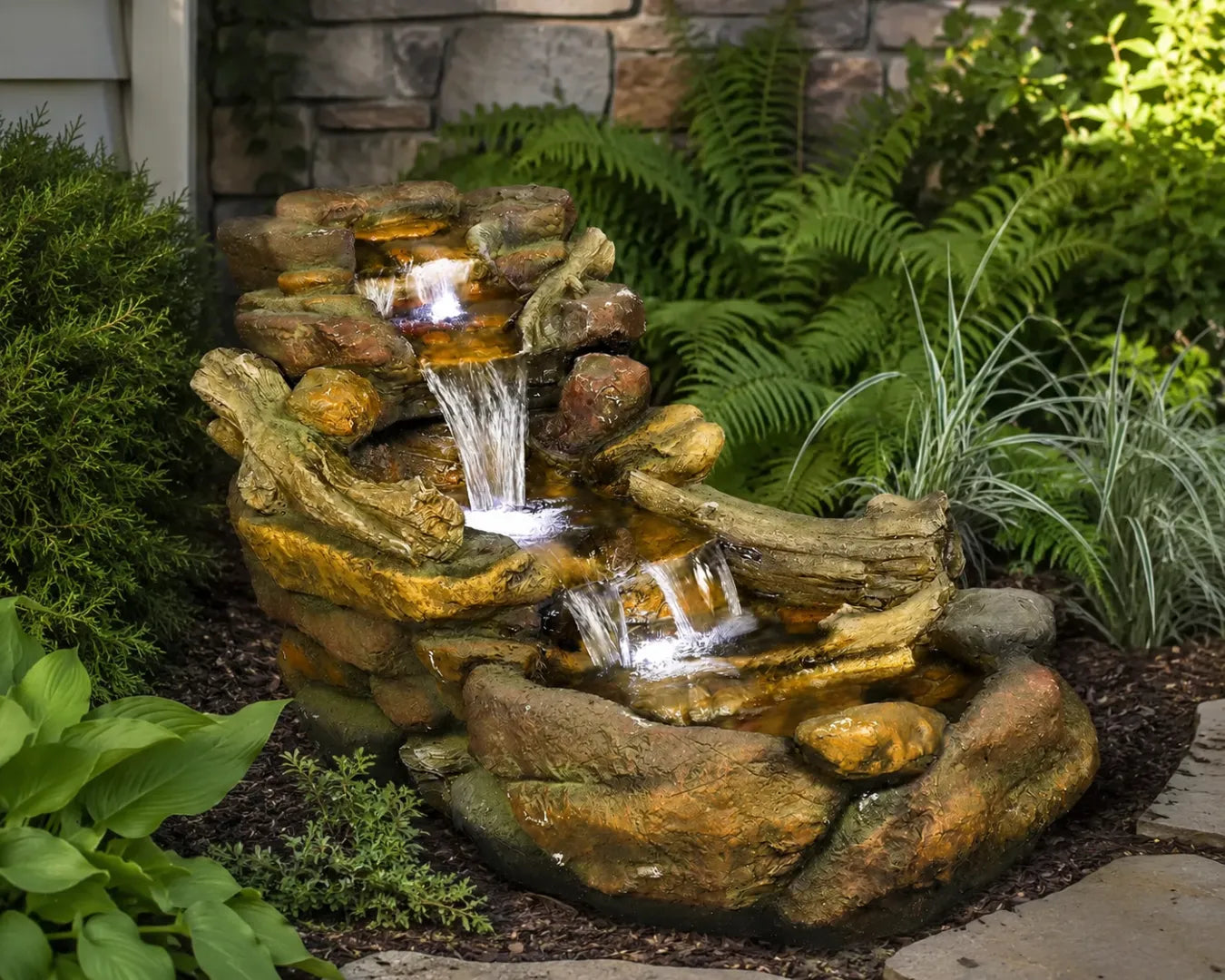
From Inspiration to Water Movement
Every design begins with something familiar, such as a broken rock ledge, a weathered vessel, a piece of timber, a split slate surface, or an architectural opening.
Our designers decide which details make the original reference recognizable and which proportions need to change. They then plan where the water begins, how long it remains visible, how one drop connects to the next, and where it returns to the reservoir.
The aim is not to make resin pretend to be stone, timber, or pottery. It is to preserve what gives the reference its character while creating a water route that feels natural to the complete form.
The silhouette and most recognizable details remain clear, even when proportions are adjusted for a working fountain.
Each basin, ledge, channel, and opening is placed so the water can be seen moving through the design rather than disappearing immediately.
The reservoir, pump, cord route, maintenance access, and lighting where included are considered alongside the visible shape.
Choose the Form
Some forms settle naturally into planting, while others bring a clearer architectural shape or a more recognizable garden character. Start with the form that suits the setting, then compare its size and features.

Layered stone, driftwood, and creek inspired forms sit naturally beside foliage, mulch, gravel, and garden borders.

Vessels, jars, and stacked pottery inspired forms bring a familiar silhouette to patios, entrances, and planted container areas.

Open circles, clean columns, and defined channels give moving water a clearer architectural frame.

Hand pumps, barrels, birdhouses, and garden scenes add a more recognizable character to porch and fence side spaces.
Placement and Care
Resin fountains are often easier to position than heavier cast designs, but the final location still affects stability, water visibility, cord routing, cleaning, and seasonal care. Check the individual product dimensions, assembled weight, power requirements, and care instructions before installation.
Allow room for the full base, projecting bowls or branches, visible water movement, and comfortable access for filling and cleaning.
Place the fountain on a firm, level surface that can support its filled weight. Soft soil, loose mulch, and uneven ground may allow the base to settle or lean.
Keep the outlet, cord route, pump access, and reservoir easy to reach. Maintain the recommended water level and unplug the pump before cleaning or adjustment.
Drain the fountain completely before freezing temperatures and follow the product instructions for removing the pump, covering the fountain, or moving it into protected storage.
Finish Support
The protective outdoor finish helps reduce the effects of everyday sunlight, moisture, dust, and routine cleaning. If qualifying peeling, flaking, or abnormal color loss occurs within three years of normal residential outdoor use, contact us for review.
Normal weathering, gradual color variation, hard-water deposits, scratches, chemical damage, and freeze damage are not included.
Outdoor Placement
Place the fountain on a flat, level, hard surface. In more exposed locations, use the included anchoring hardware where provided and move or secure the fountain before strong winds or severe weather.
Finish, lighting, pump configuration, anchoring options, and cold-weather care requirements vary by product. Review the individual product page before installation.
What are the advantages of a resin fountain?
Resin allows more freedom in shape, molded texture, openings, and water routes, and many designs stay light enough to reposition as the garden changes. For a side by side look at how the materials compare, see the material section on the main outdoor fountains page.
Are resin fountains easy to move?
Many resin designs are light enough to reposition, but actual weight varies considerably. Drain the fountain completely, disconnect the pump, and follow the product instructions before moving it. Lift from the structural base rather than decorative edges or upper sections.
Will a resin fountain look like plastic?
A well developed molded surface can reproduce the visual character of layered stone, weathered timber, pottery, slate, or aged metal. The aim is not to disguise the material, but to preserve the recognizable form, texture, and color variation of the original inspiration.
Review the close up product images if surface appearance is important to your decision.
Will the finish fade in sunlight?
The protective outdoor finish helps reduce the effects of everyday sunlight, moisture, dust, and routine cleaning. Some gradual weathering and color variation are normal with outdoor use.
Qualifying peeling, flaking, or abnormal color loss within three years of normal residential outdoor use may be reviewed under our 3 Year Limited Finish Support. Normal weathering, hard-water deposits, scratches, chemical damage, and freeze damage are not included.
How stable is a resin fountain in windy weather?
There is no single wind rating that applies to every resin fountain. Stability depends on the product’s height, base size, shape, weight, water capacity, placement surface, and exposure.
Place the fountain on a flat, level, hard surface. Use anchoring hardware where it is provided, and move or secure the fountain before strong winds or severe weather.
Can a resin fountain remain outdoors during winter?
Do not allow water to freeze inside the fountain, pump, tubing, or reservoir. Before freezing temperatures arrive, drain the fountain completely and follow the individual product instructions for removing the pump, covering the fountain, or moving it into protected storage.
Does every resin fountain include a pump and lighting?
Pump and lighting configurations vary by product. Some fountains include integrated LED lighting, while others focus only on water movement. Review the individual product page to confirm the included pump, lighting, cord, transformer, and other components.
How much assembly is required?
Assembly varies by design. It may include joining fountain sections, connecting the pump and tubing, positioning lighting, filling the reservoir, and adjusting the water flow.
Review the product dimensions and assembly instructions before choosing the final location, especially for taller or multi-section designs.
How can I adjust the sound of the water?
Water sound is influenced by the height of each drop, the number of water levels, the flow setting, the water level in the reservoir, and nearby walls or hard surfaces.
Where adjustable flow is included, begin with a lower setting and increase it gradually. Maintaining the recommended water level also helps the fountain operate more consistently.
How often should I add water and clean the fountain?
Check the water level regularly, especially during warm, dry, or windy weather. Evaporation and splash can lower the reservoir more quickly than expected, and the pump should not be allowed to run dry.
Remove leaves and debris as needed, unplug the pump before cleaning, and use gentle cleaning methods that are suitable for the product’s finish. Avoid abrasive tools and strong chemicals unless the product instructions specifically allow them.