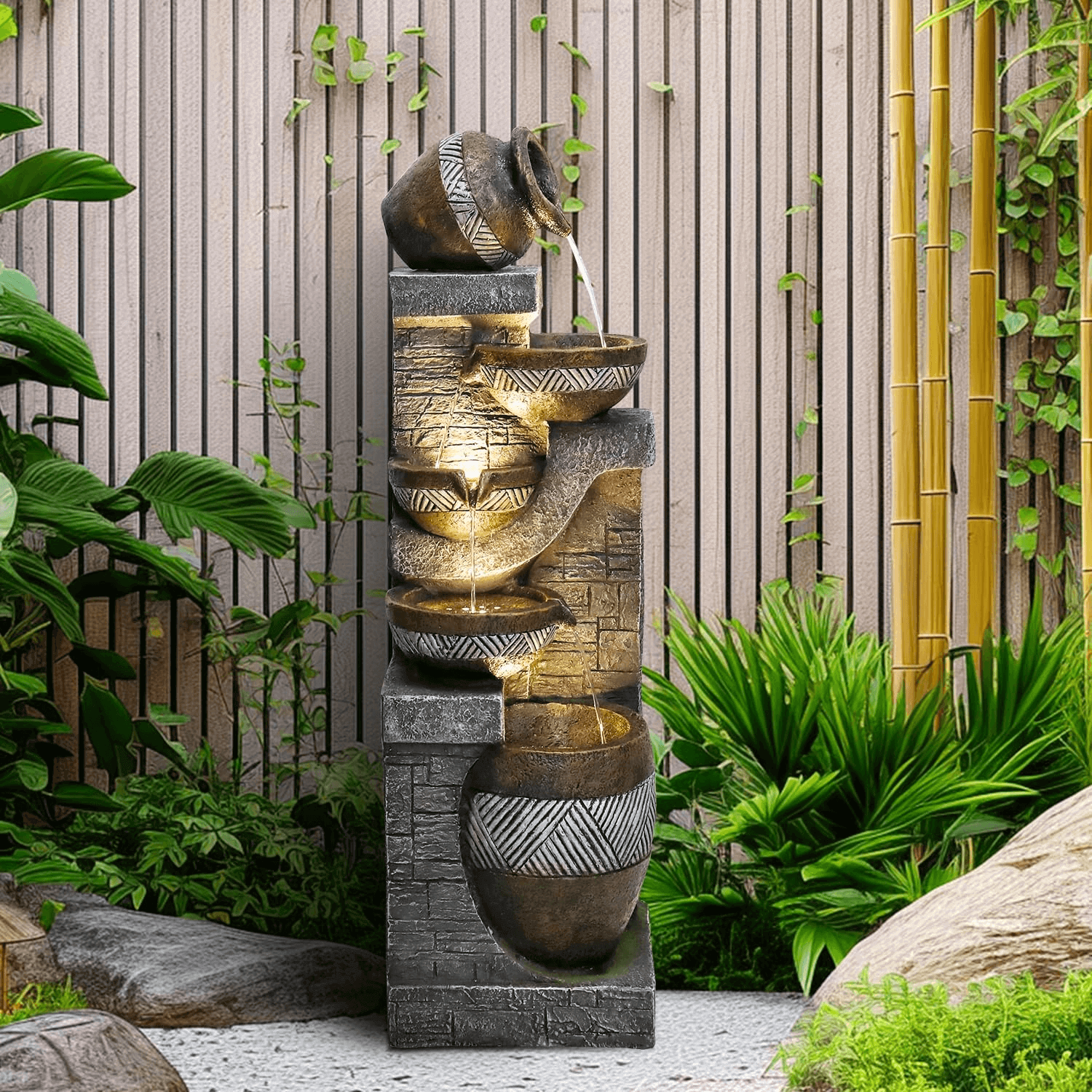


In garden design, open, sunny areas are often the visual focal points of a landscape. Placing a fountain or bird bath here creates a stunning centerpiece, with water sparkling in the light. However, many ecological guides recommend placing water sources in the shade. This is primarily to control two physical variables: Algae Growth Rate and Water Temperature.
Does this mean a full-sun location is strictly off-limits? Objectively, no. As long as we understand the thermophysical properties of materials and the mechanics of water circulation, it is entirely possible to maintain a healthy avian ecosystem in the sun.
1. The Physics of Material: The Role of Thermal Mass
Not all bird baths perform the same way under direct solar radiation. The difference lies in the material's Specific Heat Capacity and Mass.
-
Low Thermal Mass Materials (Metal, Resin, Thin Ceramic): These materials are often thin or highly conductive. In direct sunlight, they react rapidly to temperature changes. Solar energy is quickly absorbed and transferred through the basin wall to the water, causing water temperatures to spike dangerously high within a short period.
-
High Thermal Mass Materials (Fibre Reinforced Concrete - FRC, Thick Stone): Our Garden bird baths are engineered with thick-walled FRC. This material possesses significant Thermal Mass. Much like a thick stone building stays cool in summer, the dense walls of an FRC basin act as a "thermal battery." They absorb heat slowly, significantly delaying the rise in water temperature. This physical buffering effect keeps the water safer for birds, even during the midday peak.
2. Dynamics of Circulation: Intermittent vs. Continuous
Sunlight fuels photosynthesis, which accelerates algae growth. The most effective way to combat algae without chemicals is to disrupt surface tension and increase oxygenation—in other words, keep the water moving.
There is a trade-off between two common power sources:
-
Solar Powered (Convenience-Oriented): Solar pumps offer the advantage of being wire-free. However, physically speaking, they are dependent on solar intensity. During cloudy days, early mornings, or late evenings, the flow often stops. Algae growth is a biological process that continues 24/7; intermittent stagnation provides a window for algae to attach and bloom.
-
Electric Powered (Stability-Oriented): Standard electric pumps provide continuous 24-hour circulation. In a high-evaporation environment like full sun, continuous flow is superior. It not only physically prevents algae spores from settling but also utilizes Evaporative Cooling. As water constantly turns over and contacts the air, heat is released, actively cooling the water volume. For maintaining water quality in harsh light, continuous power offers a higher safety factor.
3. Water Volume: The Depth Buffer
In addition to material, the volume of water is a critical variable. Physics dictates that a smaller body of water heats up faster than a large one.
-
Shallow Pan Designs: While Safe for birds, basins with less than 1 inch of water have almost no thermal buffer in the sun.
-
Reservoir Designs: A more robust solution is a fountain design that features a deeper central reservoir with shallow edges for bathing. The larger volume of water takes much longer to heat up, stabilizing the overall temperature, while the shallow rim remains accessible for small birds.
4. Best Practices: Managing the Microclimate

If you choose to place your bird bath in a full-sun zone, we recommend the following scientific maintenance practices:
-
Create a Microclimate: Plant low-growing, broad-leafed plants (like Hostas or Ferns) around the base of the pedestal. This vegetation shades the concrete base from ground-reflected heat, helping to keep the entire structure cooler from the bottom up.
-
Routine Refresh: regardless of material, the sun accelerates evaporation. We recommend topping off or refreshing the basin with cool water every evening.
-
Vigorous Cleaning: Since sunlight promotes biological activity, regular scrubbing is essential. FRC material is durable enough to withstand scrubbing with a stiff brush, unlike delicate glazed or painted finishes.
(Conclusion)
Placing a bird bath in full sun is a test of material and engineering. By selecting High Thermal Mass FRC materials and ensuring continuous, stable water circulation, you can overcome environmental challenges. This allows you to enjoy a vibrant, sparkling garden centerpiece while providing a thermally stable and reliable habitat for your local wildlife.