

A Clear Beginning
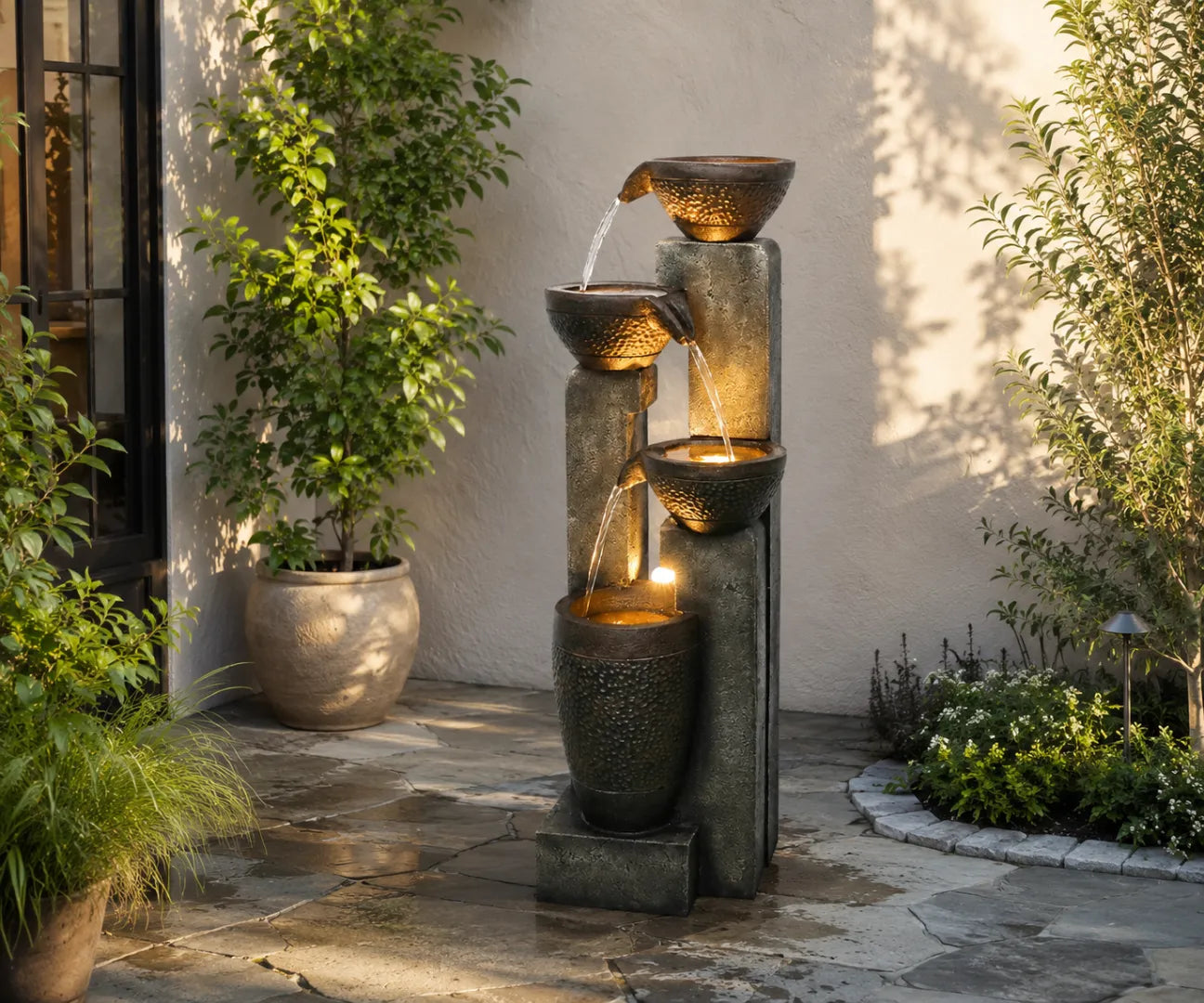
The upper vessel makes the beginning of the water route easy to see and gives the eye a natural place to start.

7 products


THE WATER ROUTE
The movement begins at the highest vessel. Water crosses the rim, falls into the pot below, and continues through each level until it reaches the reservoir at the base.
Because the entire route remains open to view, the fountain gives a quiet patio corner something that keeps changing. Sunlight catches each short fall during the day, while the built-in lights make the vessels and main points of movement easier to see after dusk.
Choose the height and number of vessels according to where you will usually see the fountain. Taller designs create a clearer focal point from a window or patio seat, while more compact forms are easier to enjoy at close range.
The upper vessel makes the beginning of the water route easy to see and gives the eye a natural place to start.
Several short drops keep water visible across the full fountain instead of concentrating all the movement near the base.
Water gathers in the lower reservoir before the pump returns it to the top and begins the same journey again.
Water movement and sound vary with the fountain design, water level, pump setting, and viewing distance.
CHOOSE BY SILHOUETTE
Pottery fountains can appear tall and layered, slim and architectural, or curved and sculptural. Compare the amount of visual detail, the ground width, and the distance from which you will usually see the fountain.

A sequence of patterned vessels creates the strongest vertical presence. Water and decorative detail remain visible from top to bottom, even when the fountain is viewed across a wider patio.
Open patios, courtyard walls, deeper planting beds, and longer viewing distances.
VIEW FOUNTAIN
A narrow line of pots and bowls keeps several short drops visible without spreading across the ground. It brings height and movement to spaces where floor width is limited.
Entrances, narrow walls, garden paths, patio edges, and compact outdoor corners.
VIEW FOUNTAIN
Curved supports and offset bowls make the fountain feel more like contemporary garden sculpture while preserving a water route that remains easy to follow.
Light walls, contemporary patios, ornamental grasses, and restrained planting.
VIEW FOUNTAINProduct dimensions, weight, finish, and water movement vary by design. Review the individual product page before choosing a final location.
PLACEMENT IN DAILY LIFE
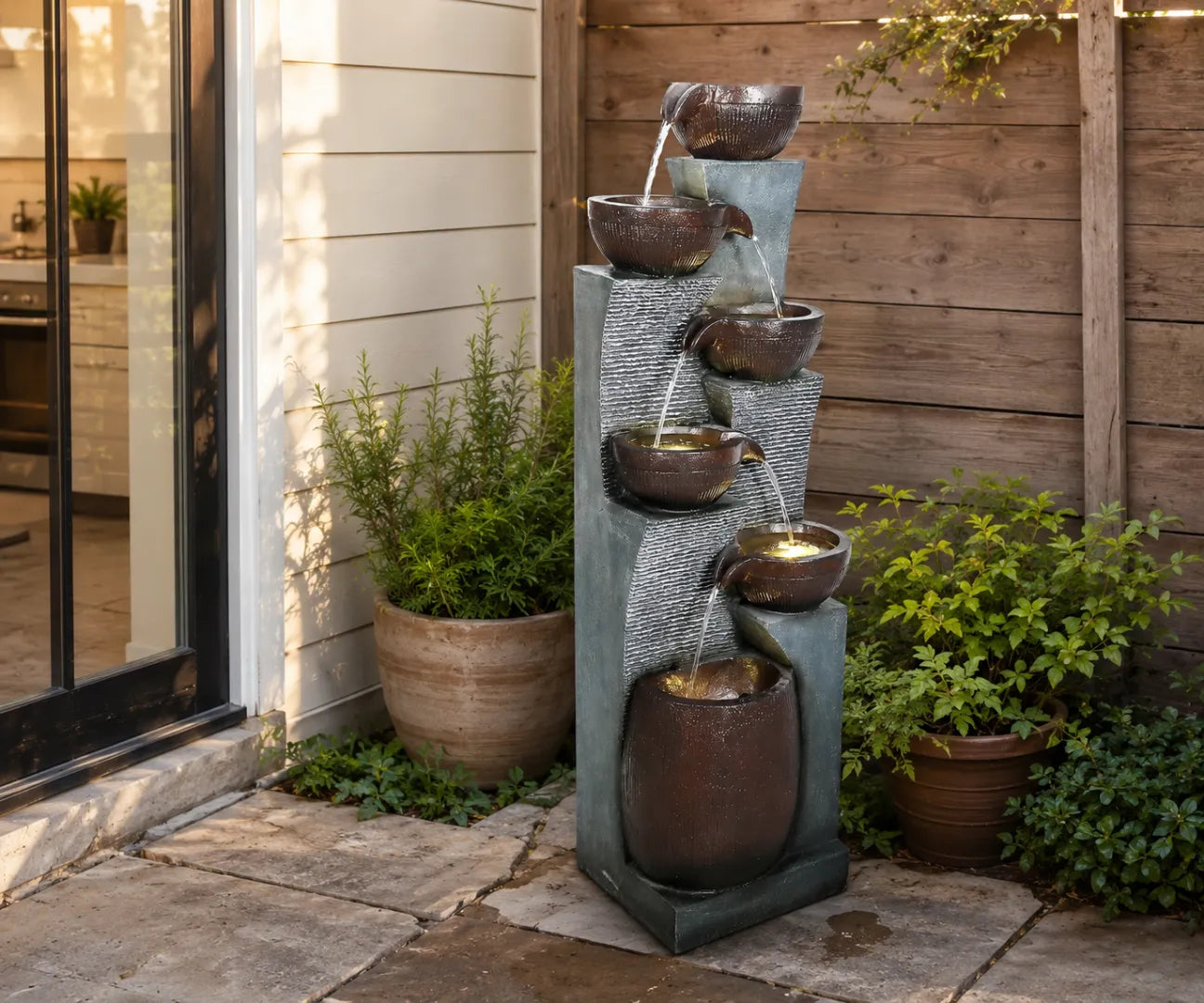
An urn fountain does not need to sit at the farthest edge of the garden. Place it near a patio seat, beyond a kitchen door, or beside a path you use every day, and the movement of the water becomes part of ordinary outdoor life.
A wall, fence, or planting bed gives the taller pottery silhouette a clear background. Keep the front relatively open so the water can be followed from the highest vessel through each level and back toward the base.
Leave enough room for adding water, cleaning the vessels, and reaching the pump. Before choosing the final position, confirm that the ground is flat and stable and that a suitable outdoor power source is within reach.
From a window, patio seat, or entrance, the complete silhouette and main water route should remain easy to see.
Allow planting to approach the base and sides without covering the vessel rims, falling water, or lower reservoir.
Leave enough working space to add water, remove debris, and reach the pump when routine care is needed.
BEFORE THE WATER STARTS
The fountains in this collection include a recirculating pump and built-in lighting. Water returns from the lower reservoir to the highest vessel, so no permanent water line is required.
Cord length, switch arrangement, assembly, and operating instructions vary by product. Review the individual product page and included instructions before installation.
The pump returns water from the lower reservoir to the highest vessel, allowing it to continue through the complete pottery route.
Fill the reservoir before use and add water as it evaporates. The fountain does not require a permanent connection to a water line.
Lighting makes the main points of falling water easier to see after dusk. Pump and light controls may vary between fountain designs.
Confirm the outlet position and cord length before placement. Connect the fountain according to its instructions and applicable outdoor electrical requirements.
MATERIAL AND FINISH
The vessels, supports, spill edges, and lower reservoir are designed to work as one complete water feature. Many designs use molded resin or composite materials to reproduce aged clay color, carved detail, and stone-like texture without requiring several separate pottery pieces.
Urns, pots, and bowls give the fountain a warmer and less formal presence than a traditional stone pedestal.
Patterned bands, aged clay tones, and varied surface texture create details that become more visible at close range.
The edge of every vessel becomes part of the water route, making the pottery form functional as well as decorative.
Pottery describes the visual character of the collection. Review the product specifications for the actual construction material.
Weight varies between designs and affects carrying, positioning, and how carefully the final location should be prepared.
Cleaning methods, surface care, and freezing-weather protection depend on the material and finish of the specific fountain.
Choose the pottery character you want to see, then confirm the material, weight, and care details on the individual product page.
ROUTINE CARE
Urn fountains divide water across several vessels, outlets, and rims. Regular attention to the water level and the complete route helps prevent individual drops from becoming weak or moving away from their intended path.
Disconnect the fountain from power before cleaning it, accessing the pump, or performing maintenance. Follow the care instructions supplied with the individual product.
Heat and wind can increase evaporation. Check the reservoir regularly and maintain the minimum water level required by the pump instructions.
Leaves, seeds, and small debris can collect along vessel rims and outlets. Check the entire route whenever one section of water begins to change direction.
Hard-water deposits may become visible on darker vessels, carved surfaces, and around the lights. Use the cleaning method recommended for the specific material and finish.
Before freezing weather, disconnect the power, empty the reservoir, and allow the fountain to dry. Storage and protection requirements depend on the material and individual product instructions.
FIND THE FORM THAT FITS
Choose the height your space needs, the pottery character you prefer, and the number of visible drops you want to follow from a patio, entrance, or planted corner.
SHOP URN FOUNTAINSCOMMON QUESTIONS
Review the material, water system, placement, sound, and seasonal care before choosing the fountain and its final position.
Not necessarily. Pottery and urn describe the form and surface character of the collection. Many designs use molded resin or composite materials to reproduce clay color, carved texture, and an aged finish. Check the specifications on the individual product page for the actual material.
Usually not. The pump returns water from the lower reservoir to the highest vessel so it can continue circulating. Fill the reservoir before use and add water as it evaporates.
Water normally gathers in a reservoir at the base or in the lowest vessel before the pump returns it to the top. The exact reservoir design and access point vary by fountain.
Sound depends on the number and height of the drops, the water level, the pump setting, and the surrounding space. Several short drops are generally more noticeable than a gentle bubbling design, but the final sound varies by product and placement.
Some designs are suitable for both indoor and outdoor use. Before placing one indoors, confirm the product instructions, available power, floor protection, dimensions, and the possibility of occasional water droplets.
When the fountain is level and correctly filled, water should follow the intended route back to the reservoir. Wind, water level, and pump settings can change the flow, so place it on a surface that can tolerate occasional moisture.
There is no fixed schedule. Heat, dry air, wind, and the amount of exposed water affect evaporation. Check the reservoir regularly and do not allow the water level to fall below the pump requirement.
Before freezing weather, turn off and disconnect the fountain, drain the reservoir, and allow the product to dry. Whether it should be covered or stored indoors depends on the material and the instructions for the specific fountain.