

A Clear Silhouette
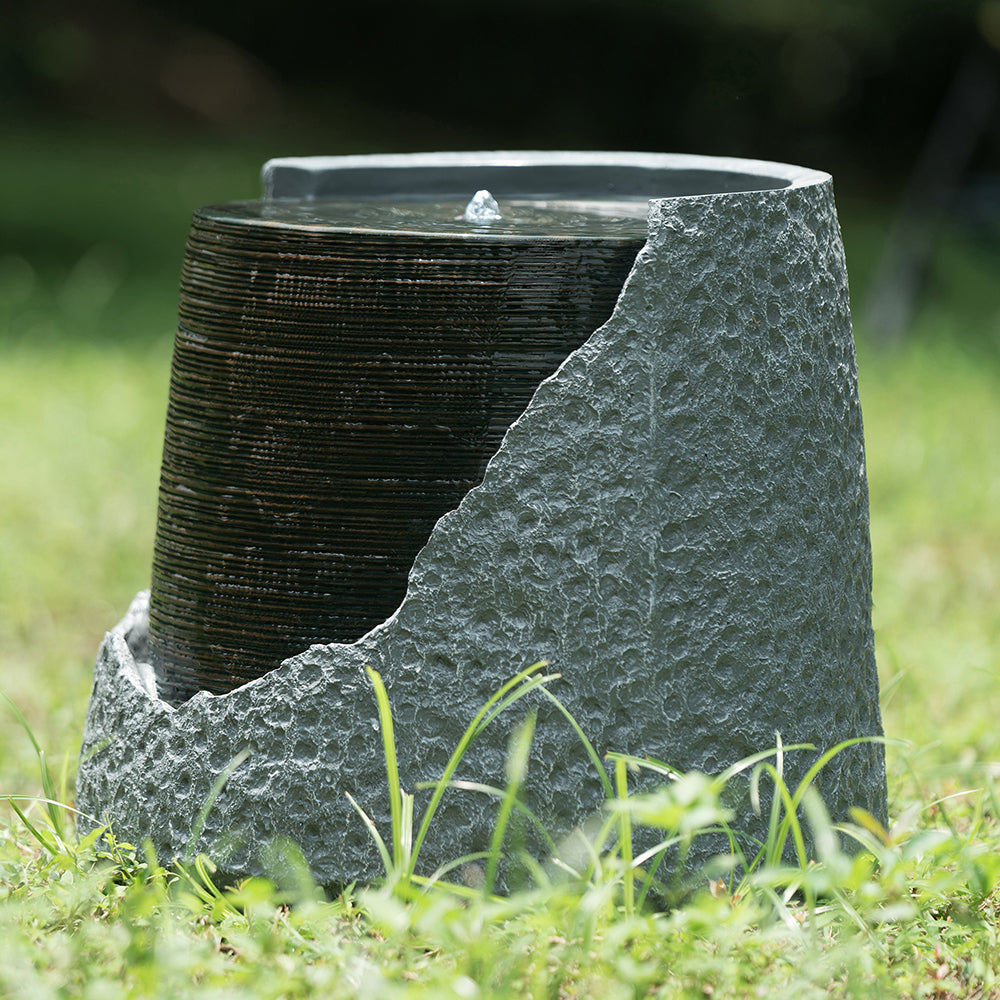
Circles, columns, walls, and stacked basins remain easy to understand from the main viewing distance.

26 products




What Makes It Modern
A modern fountain is not defined by a gray finish alone. Its character comes from proportion, negative space, and the way water is guided through the structure.
From a distance, the silhouette should remain clear. Step closer and the relationship between each opening, ledge, basin, and water drop begins to appear. A balanced design should still feel complete when the pump is off. Once the water begins moving, the flow adds another layer without hiding the original form.
Circles, columns, walls, and stacked basins remain easy to understand from the main viewing distance.
Openings and restrained outlines allow planting, a wall, or the sky to remain visible, helping the fountain feel present without making a smaller space feel crowded.
Water follows edges, channels, and measured drops, making movement part of the geometry rather than a separate decoration.
Shape and Placement
Consider the main viewing direction, the open space around the fountain, and whether the setting needs height, width, or a more open profile.

Let the Background Remain Visible
Open forms frame planting, a wall, or the sky while preserving some visual space through the center of the design.

Add Height with a Narrower Footprint
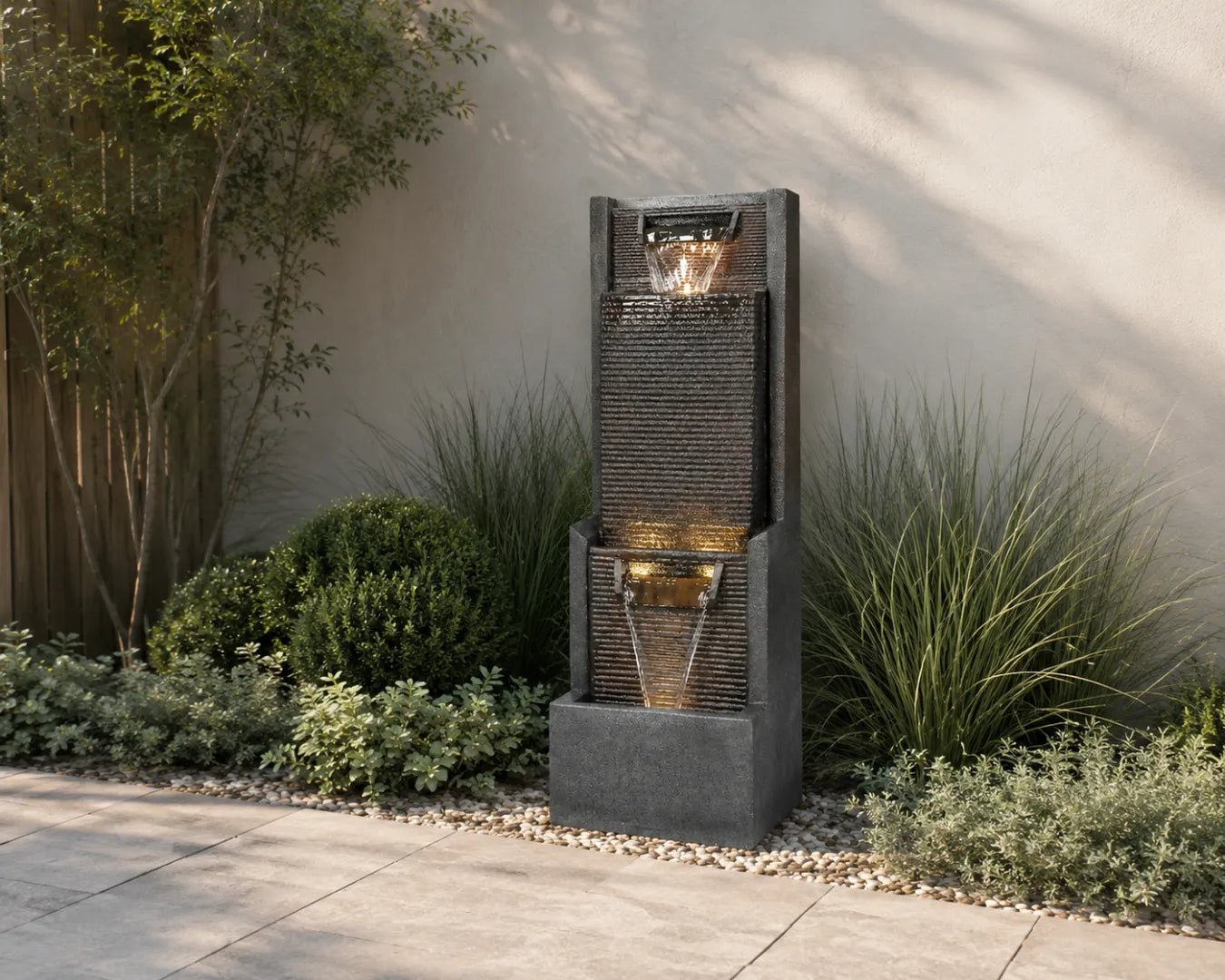
Staggered vertical panels create height and a clear upward rhythm while keeping the base relatively compact.

Create a Strong Front-Facing View
Wall forms organize water across a clear vertical surface and work naturally against an exterior wall, fence, or restrained planting background.

Add Depth with Layered Basins
Stacked and offset basins create a layered silhouette with a clear visual rhythm from top to base.
Review the complete width, height, base dimensions, assembled weight, and primary viewing direction before choosing a final location.
Placement in the Garden
The transition between paving and planting often gives a modern fountain the support, visibility, and surrounding softness it needs.
Choose the patio, window, doorway, or path from which the fountain will be seen most often. Turn the main water movement toward that view and consider what will remain visible through any open sections.
Use a flat, level, firm surface that can support the fountain when filled. Plan the outlet, cord route, pump access, filling space, and cleaning access before setting the final position.
Use low grasses, groundcover, and restrained greenery to soften the base without covering the bowls, openings, lights, lower water levels, or complete silhouette.
Everyday Use
Similar modern silhouettes can feel very different once they are placed, filled, illuminated, and used every day. Review the product details before choosing a final location.
Measure More Than the Base
Compare the complete height, width, depth, base dimensions, and assembled weight. Use the main viewing distance to judge whether the silhouette will feel clear, too small, or too dominant.
Decide Whether the Water Should Remain Visible
Integrated lighting can reveal the water route and surface texture after daylight fades. Lighting color, number, position, and included components vary by product.
Plan Routine Access Before Installation
Consider the outlet, cord route, water supply, reservoir opening, and pump location together. Leave enough room to add water, remove debris, reach the pump, and clean the surrounding surface.
Prepare for Everyday Use and Seasonal Change
Maintain the recommended water level, remove debris as needed, and unplug the pump before cleaning. Before freezing temperatures, drain the fountain and follow the product-specific care instructions.
Material, finish, weight, lighting, pump configuration, assembly, and cold-weather care vary by product. Review the individual product page before installation.
Find Your Fountain
Compare the scale, water movement, lighting, material, and placement needs of each design before making your final choice.
What makes an outdoor fountain feel modern?
A modern fountain is defined by more than a gray or black finish. Its character usually comes from clear proportions, restrained surface detail, open space, and a water route that follows the structure.
Circles, panels, columns, and stacked basins can all feel modern when the overall silhouette remains easy to understand.
Which modern fountain shape should I choose?
Open rings and cutouts preserve more of the background view. Vertical panels and columns add height without always requiring a wide footprint. Wall forms create a strong front-facing composition, while stacked bowls make each stage of the water route easier to follow.
Start with the main viewing direction and the amount of space available around the complete fountain.
Can a modern fountain work in a small patio?
Yes, if the complete dimensions and surrounding clearance suit the space. Narrow vertical forms and open designs may preserve more visual space than wide, solid silhouettes.
Measure the full height, width, depth, and base rather than relying only on the product photograph.
Do modern fountains look good from every direction?
It depends on the design. Open rings, columns, and some stacked forms can remain visually clear from several angles. Wall and panel fountains usually have a stronger front-facing view.
Check the back, sides, cord route, and main water direction before deciding where the fountain should face.
How loud is a modern outdoor fountain?
Sound depends on the water route rather than the visual style alone. Multiple drops and stacked basins can create a more layered sound, while wall flows and bubblers may create a more continuous or restrained sound.
Flow setting, water level, drop height, nearby walls, and hard paving can all affect what you hear.
Does a modern fountain need electricity?
Many outdoor fountains use a recirculating electric pump, while power configurations vary by product. Review the product page to confirm the included pump, cord, transformer, plug requirements, and any other electrical components.
Plan the outlet and cord route before installation.
Do all modern fountains include lighting?
No. Some designs include integrated LED lighting that highlights the water route or surface after sunset, while others do not include lighting.
Check the number, position, color, and included lighting components on the individual product page.
What surface should a modern fountain stand on?
Use a flat, level, firm surface that can support the fountain when it is assembled and filled. Uneven ground can affect stability and may also cause overflow designs to distribute water unevenly.
Soft soil, loose mulch, and unstable surfaces may require additional preparation.
Does a modern fountain come in different materials?
Modern designs are offered in more than one outdoor material, each with a slightly different weight, finish, and care routine. For a side by side comparison, see the material section on the main outdoor fountains page, and review the individual product specifications before deciding.
How much assembly is required?
Assembly varies by design. It may include joining fountain sections, connecting the pump and tubing, positioning lights, filling the reservoir, and adjusting the water flow.
Larger or multi-section fountains should be assembled in or near their final location.
How often should I add water and clean the fountain?
Check the water level regularly, especially during warm, dry, or windy conditions. Evaporation and splash can lower the reservoir, and the pump should not be allowed to run dry.
Remove leaves and debris as needed, unplug the pump before cleaning, and follow the care instructions for the product’s material and finish.
Can a modern fountain remain outside during winter?
Do not allow water to freeze inside the reservoir, pump, tubing, bowls, or channels. Before freezing temperatures arrive, drain the fountain completely and follow the product-specific instructions for removing the pump, covering the fountain, or moving it into protected storage.
Are tall modern fountains stable in windy weather?
Stability depends on the fountain’s height, base size, shape, weight, water capacity, placement surface, and exposure. There is no single wind rating that applies to every modern fountain.
Place the fountain on a flat, level, hard surface and move or secure it before strong winds or severe weather. Use anchoring hardware where it is included and permitted by the product instructions.