

Technical Report | 2026 Ecological Assessment
Ecological Impact and Thermodynamic Assessment of Bird Bath Placement in Full Sun
Introduction: The Hydro-Thermal Equilibrium
In urban and suburban landscape design, the configuration of bird baths is a critical intervention for enhancing biodiversity. Water is not merely a physiological necessity; it is a vital medium for feather maintenance, thermoregulation, and social interaction. However, the decision to place a bird bath in Full Sun involves complex trade-offs that can transform a sanctuary into a lethal "hot soup" trap if not managed scientifically.
1. Solar Radiation and Water Thermodynamics
The primary challenge of full-sun placement is the rapid heat exchange process. Due to their shallow design, bird baths exhibit low thermal capacity and extreme sensitivity to direct radiation.
1.1 Physical Mechanisms
Bird baths typically maintain a depth of 1.5 to 2 inches (3.8 to 5 cm). This creates an extremely high Surface Area to Volume ratio (SA:V), leading to thermal instability. The rate of temperature change can be expressed by the following thermodynamic model:
• m/c: Water mass / Specific heat capacity
• α/A: Absorption coefficient / Surface area
• Isolar: Solar irradiance
• h: Convection coefficient
• Twater - Tair: Temperature gradient
Physically, with a tiny mass (m) and massive surface area (A), the solar energy input (Isolar) dominates, causing a basin in full sun to reach dangerous heat levels in 7 to 26 minutes—levels that would take 3 hours to reach in the shade.
1.2 Physiological Thresholds
- 86°F (30°C) Warning Line: Avian water intake begins to drop significantly as the cooling efficiency of the water decreases.
- 111°F (44°C) Total Refusal: When water approaches the avian body temperature (approx. 106°F), it can no longer absorb metabolic heat. At 111°F, birds face a lethal metabolic spiral as they use Gular fluttering to cool down but find no cool water to replenish lost fluids.
2. Microbial Dynamics and Public Health Risks
Solar intensity dictates the evolution rate of microbial communities within the basin.
2.1 Algal Blooms and Biofilm
High PAR (Photosynthetically Active Radiation) triggers rapid algal blooms. Beyond aesthetics, algae creates a slippery Biofilm, increasing the risk of birds slipping or drowning, while decomposition depletes oxygen and creates repellent odors.

2.2 Pathogens and the "UV Paradox"
While UV radiation can damage pathogen DNA, its effectiveness in a bird bath is neutralized by Turbidity. Suspended organic matter (feathers, dust, algae) limits UV penetration. The bacterial growth spurred by the sun’s heat far outweighs the disinfection provided by its light.
Pro Strategy: UV is most effective during the "Dry Phase." Emptying the bath and letting it sun-dry for 15–30 minutes after cleaning is the most scientific use of solar radiation.
3. Behavioral Ecology: The 10–15 Foot Rule
Bathing is the moment of a bird's lowest defense. Wet feathers increase weight and disrupt aerodynamics, reducing takeoff speed.
3.1 Evolutionary Equilibrium
Birds balance the need for cover with the need for clear sightlines. This results in the 10–15 Foot Rule (3–4.5 meters): If the bath is too close to cover, cats can ambush. If it is too far (in an open sunlit area), the bird lacks the flight buffer to escape an aerial predator like a hawk.

3.2 "Bathing" vs. "Sunning"
Birds need sun to heat feathers to 140°F–160°F to kill parasites, but they need cool water for drinking. Landscape designers should provide shaded water adjacent to sunlit perches.
4. Material Properties Comparison
Selecting the right material is a balance of thermal inertia and hygiene. For professionals seeking long-term ecological stability, we recommend our **[curated collection of thermally-efficient bird bath basins](YOUR_PRODUCT_COLLECTION_URL)**, featuring hand-picked limestone and basalt designs optimized for high-heat environments.
| Material | Thermal Response | Maintenance |
|---|---|---|
| Stone/Concrete | High Thermal Inertia; stays cooler longer. | Porous; prone to biofilm. |
| Metal (Copper) | Extreme heating; high conductivity. | Antimicrobial; easy to clean. |
| Ceramic/Glass | Fast heating; easy to clean. | Excellent hygiene; fragile. |
5. Management Interventions
5.1 Solar Fountains and Circulation
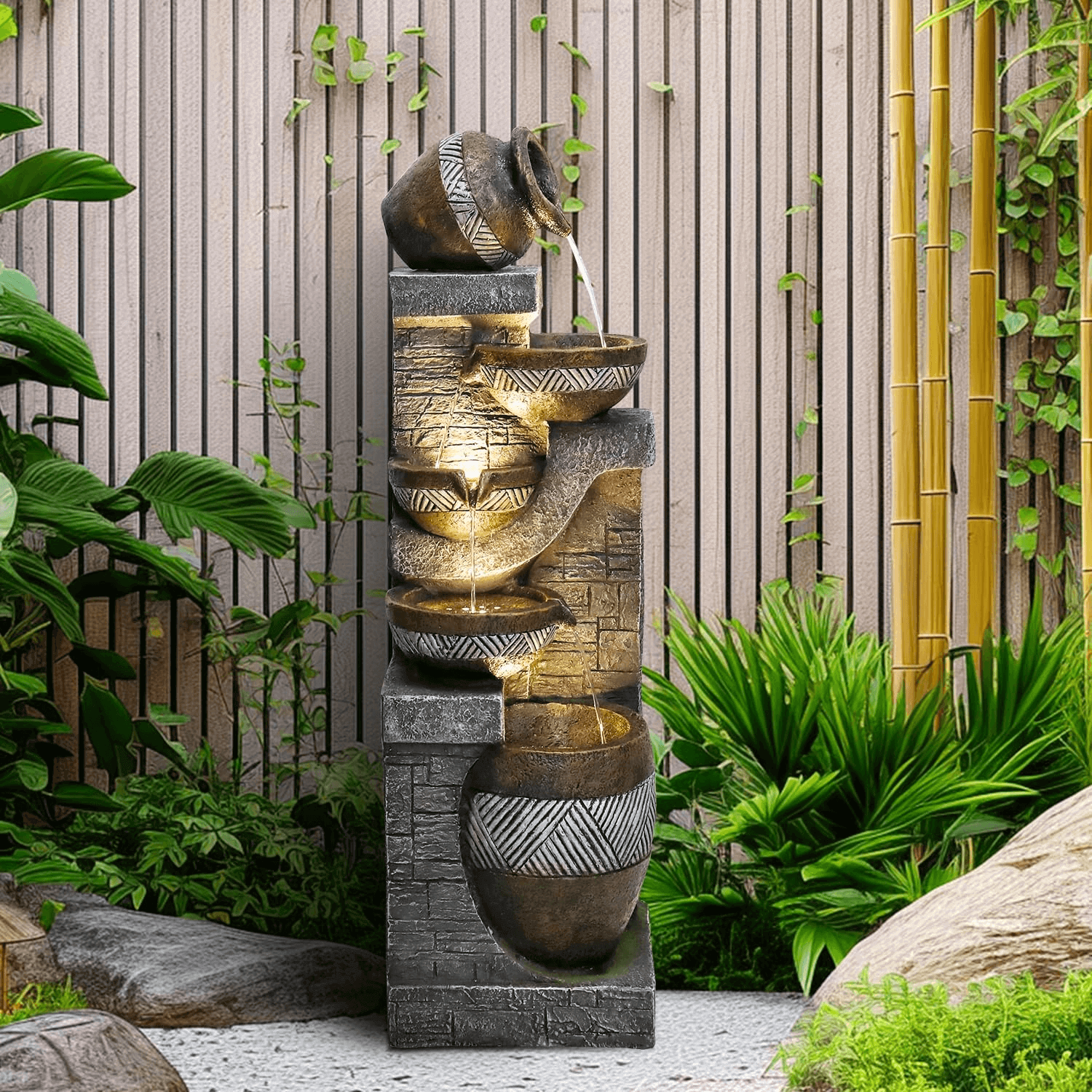
Moving water attracts birds and aids in evaporative cooling. Use solar pumps with detached panels to keep the basin shaded. Moving water also increases dissolved oxygen and discourages mosquito larvae. For a technical deep-dive on maintaining water safety without harmful chemicals, refer to our **[Mosquito-Free Sanctuary: The BTI Safety Protocol](YOUR_BTI_ARTICLE_URL)** to ensure your avian oasis remains larvae-free.
Conclusion: The Skin Perception Rule
The conclusion regarding full-sun placement is contextual. In summer, full sun creates ecological traps. In winter, full sun is a vital energy source for preventing ice.
The Golden Rule: If a human can feel the sun "stinging" their skin at the bird bath's location, the water is already too hot for avian safety. Moving the bath to dappled shade ensures a robust sanctuary.