

Anatomy of a Birdbath
In landscape architecture, the structural layout of a birdbath dictates its "ecological footprint." Whether a bath features an integrated pedestal or requires an external foundation significantly impacts its durability against environmental stressors—such as high winds—and its accessibility to different bird species. Understanding these structural nuances is vital for maintaining a stable and safe avian habitat.
Table of Contents
1. Pedestal vs. Ground: Structural Archetypes
Birdbaths are generally categorized into five basic types, primarily defined by their connection to the earth and the presence of a dedicated support column.
| Design Type | Base Structure | Source of Stability | Best Use Case |
|---|---|---|---|
| Pedestal | Vertical column/stand | Material Mass | Small songbirds; high-cat-risk areas |
| Ground Bath | Basin only | Ground friction | Doves, Quails; mimics natural puddles |
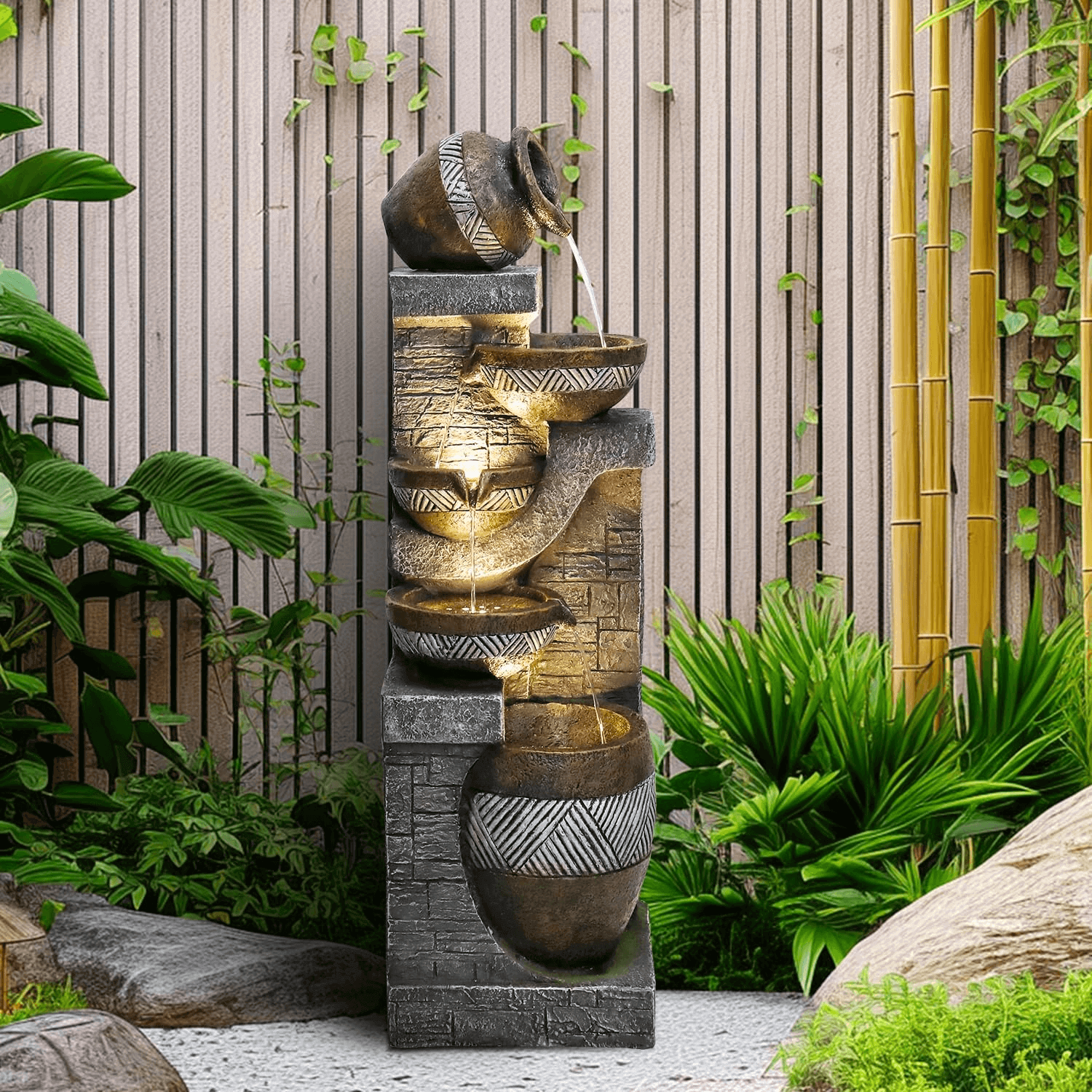
| Tiered Fountain | Multi-layered base | Gravity & Water mass | Garden focal points; auditory attraction |
| Hanging/Wall | Chains or Brackets | Physical Fasteners | Balconies; decks; small patios |
2. The Two-Piece Setup: Mechanics & Notches
Traditional birdbaths, especially those crafted from cast concrete, are often designed as two separate components. This is a deliberate fusion of physics and practicality:
- The Notch/Socket: High-end basins feature a central recess on the underside that locks onto the pedestal. This interlocking mechanism prevents the bowl from sliding during high winds or heavy bird landings.
- Maintenance Efficiency: Modularity allows you to remove the basin for scrubbing and dumping water without moving the 100-lb anchored base.
- Architectural Synergy: Pedestals come in various geometries (Square, Fluted, Tapered) to match styles from Romanesque to Mid-Century Modern.
3. Functional Roles: Height and Predator Safety
A bird with wet feathers is heavy and slow. An elevated pedestal (2 to 3 feet high) provides a crucial "escape window." If a predator attacks from below, the height allows the bird to dive-start its flight, gaining momentum faster than it could from a ground-level position.
Elevation also acts as a visual "lighthouse." Sunlight reflecting off a raised water surface is significantly easier for migrating birds to spot from high altitudes than a puddle hidden in the lawn.
4. Engineering Stability: Anchoring and Heavy Bases

Height provides safety but introduces the risk of tipping. Engineering stability requires a focus on the center of gravity:
- Mass as Ballast: Concrete baths (30–150 lbs) offer inherent stability. For lighter resin models, always fill hollow pedestals with sand or gravel to lower the center of gravity.
- Ground Stakes: Lightweight models often include L-shaped ground stakes to pin the base into the soil.
- Concrete Footing: For narrow pedestals, professionals cast a circular underground concrete footing (using Quickrete) to provide a wider, rock-solid foundation.
5. Foundations and Improvised Base Materials
Placing a heavy pedestal directly on raw soil is rarely ideal. Over time, moisture and frost heave will cause the bath to tilt.
- Landscape Pavers: Placing a 12x12 stone paver beneath the pedestal distributes weight and prevents it from sinking into the grass.
- Gravel Beds: A 2-inch deep gravel base offers the best drainage and prevents the pedestal from sitting in standing water.
- Natural Stumps: A level tree stump provides a rustic base that blends into woodland gardens, provided the top is perfectly level.
Expert Tip: Always use a level during installation. An unlevel birdbath results in uneven water depths, which can make birds feel insecure as they cannot find a predictable "safe depth" to stand in.