


If you can add only one thing to your yard, choose a bird bath when clean, accessible water is the missing resource and you can keep it fresh. Choose a bird feeder when you want to offer a particular food to birds already in your area and can manage the food, feeder and ground beneath it. Neither choice wins in every garden.
Begin with the resource you can provide well in your actual space. For example, a planted yard with foraging birds and no maintained water source points toward a bath. A yard with an existing water station and a suitable place to offer seed may have more use for a feeder. In either case, leave room in the plan for regular care.
Start With What Your Yard Already Offers
Before ordering either item, look at the yard during your normal day. Are birds already feeding among seed heads, berries or insects? Is there a dependable place to drink? Is the only available corner a busy walkway? These observations give you a better starting point than buying both products at once.
The Cornell Lab’s Creating a Garden for Birds begins with the same broad assessment: food, water and shelter. A feeder can supplement food, while suitable planting also contributes to the garden. A bath fills a different role. Our recommendation to add the missing resource first is a practical way to use that assessment, rather than a tested ranking of the two products.
Bird Bath vs. Bird Feeder at a Glance
| Decision | Bird bath | Seed feeder |
|---|---|---|
| What you provide | Fresh water for drinking and bathing. | Supplemental food selected for the birds you want to observe. |
| A useful first choice when… | Food and planting are present, but maintained water is missing. | You have a suitable feeding location and want to offer a specific food. |
| Ongoing supplies | Fresh water and finish-compatible cleaning supplies. | Bird food, dry storage and feeder-compatible cleaning supplies. |
| Care to plan for | Daily water checks, frequent replacement and basin cleaning. | Food checks, feeder washing and cleanup beneath the station. |
| Space to allow | A stable base plus room to reach, empty and clean the basin. | A suitable mount plus access to the feeder and falling-debris area. |
| What it cannot promise | Visits from every species or a fixed number of birds. | Visits from birds that do not use that food or feeder design. |
This comparison focuses on an ordinary still-water bath and a seed feeder. Nectar feeders have a different food and cleaning routine; a hummingbird project needs its own plan.
When a Bird Bath Makes Sense First

Water is worth considering when birds already forage in the garden but there is no maintained drinking or bathing spot. You do not have to start buying seed to offer water. The Cornell Lab notes that a bird bath may attract birds that do not eat seeds or visit seed feeders. That broadens the possible visitors; it does not prove that a bath will bring more birds than a feeder in your yard. Read Cornell’s birdbath guidance.
A bath is also a straightforward place to begin if you would rather maintain water than store bird food. Be honest about access, though. Carrying fresh water across a large garden and emptying a basin in awkward planting can make a simple routine difficult. Choose a position you can service without balancing over plants or furniture.
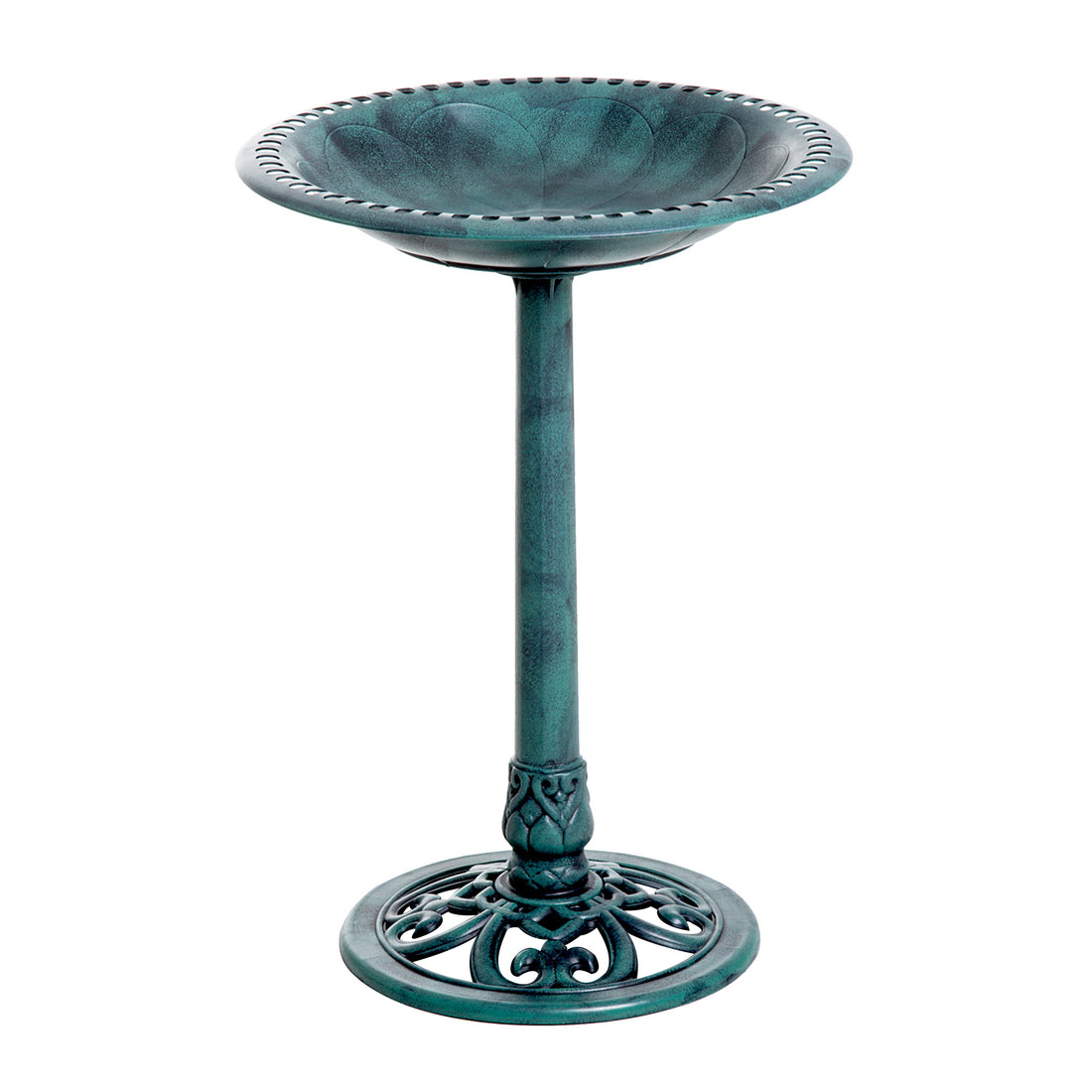
The green model pictured here is our Fleur-de-lis verdigris pedestal bird bath, a resin still-water design. Its listed height is 27.25 inches and basin outer width is 19.75 inches. Those measurements describe the product, not the depth of water to add. A pump is not included. Compare the model’s basin, support and care requirements before choosing its place.
When a Bird Feeder Makes Sense First
Start with a feeder if offering food is the specific activity you want. Perhaps you already watch seed-eating birds nearby and would like to observe how they feed. Choose the food and feeder together: the openings, perches, weather protection and cleaning access all matter.
Cornell’s guide to feeder types explains the trade-offs among trays, hoppers, tubes and other designs. A roof can help protect food from weather; feeder construction also affects which birds can reach it and how easily it can be cleaned. A bigger seed reservoir does not remove the need to inspect what is inside.
Include the space below it in your decision. You need to see and remove dropped food and waste, not just reach the lid. If the only mounting point would leave debris in a water basin or an inaccessible planted corner, settle that layout problem before buying.
Compare Purchase Price and Ongoing Care
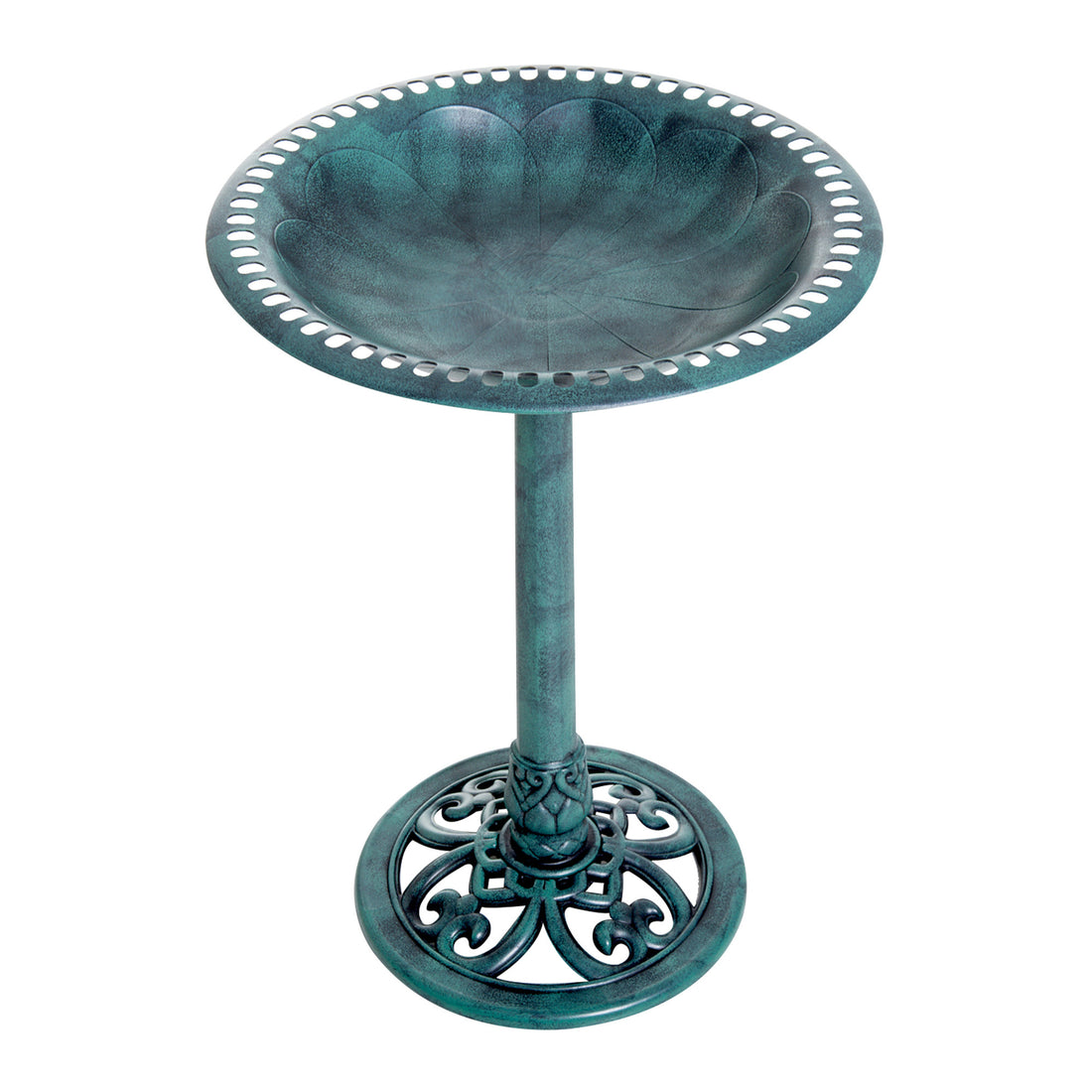
For a bird bath, plan a daily look at water level and cleanliness. For our painted bird baths, replace the water every day or two and sooner when it is dirty. Gently brush away dirt or film and rinse thoroughly. Our bird bath cleaning guide explains the finish-compatible routine; ordinary cleaning is different from disease-related disinfection.
For seed or suet feeders, Project FeederWatch recommends washing every week or two, more often with heavy use or wet weather, and allowing the feeder to dry before refilling. It also calls for cleaning waste from the area underneath. Use the method suitable for the actual feeder, rather than transferring a feeder-cleaning recipe to a painted bird bath. See FeederWatch’s current care guidance.
The running costs differ too. A still-water bath needs fresh water and cleaning supplies. A feeder adds a continuing food purchase and somewhere to keep that food dry. Prices and use vary, so there is no useful universal monthly total. Compare the actual models and the routine you expect to maintain.
If regular care is not realistic right now, start with suitable planting and habitat instead of leaving either station unattended. FeederWatch explicitly suggests native gardens as an alternative when feeder cleaning cannot be kept up. A busy schedule is a reason to change the plan, not to buy a larger container and stop checking it.
If You Eventually Add Both, Plan Two Serviceable Stations
You do not need to add the second item immediately. First find out whether the initial station is easy to clean and whether the position works. When you add the other resource, keep the water outside the area where food, husks and droppings land. Do not hang a feeder directly over the bath.
There is no single separation distance that keeps every bath clean. Watch where debris actually travels, including on windy days, and adjust the arrangement. A two-bowl or combined decorative product still needs this check; separate bowls alone do not establish that food cannot reach the water. See our bird bath and feeder placement guide for the layout details.
Both stations also need an approach birds can use without crowding people or pets. Consider nearby cover and reflective windows as part of the whole setting. If sick birds appear or a local wildlife notice changes the advice, follow current local guidance rather than treating either station as automatically suitable to keep in use.
Three Common Questions Before You Choose
Will a bird bath attract more birds than a feeder?
There is no dependable universal winner. Water may interest birds that do not use seed feeders, while a well-chosen feeder can offer food used by particular local birds. Habitat, season, the setup and regular care all affect visits. Choose a useful resource rather than a promised head count.
Can I use one bowl for seed and water?
Do not mix seed into drinking and bathing water. If a product can be used for either purpose, choose one use and maintain it accordingly. If you switch uses, empty and clean it first. For simultaneous food and water, plan separate stations that keep feeding debris out of the bath.
Does the first bird bath need a fountain pump?
No. You can begin with a maintained still-water bath. Moving water is an optional addition, not a replacement for water changes or cleaning. Our pictured verdigris model is supplied as a still-water bird bath; adding a pump would require checking its fit and working-water requirements against the actual basin.
Choose the first addition by the gap in your yard and the work you can sustain. If water is the missing piece, browse our bird baths and compare the individual model’s dimensions, basin and care notes before ordering.