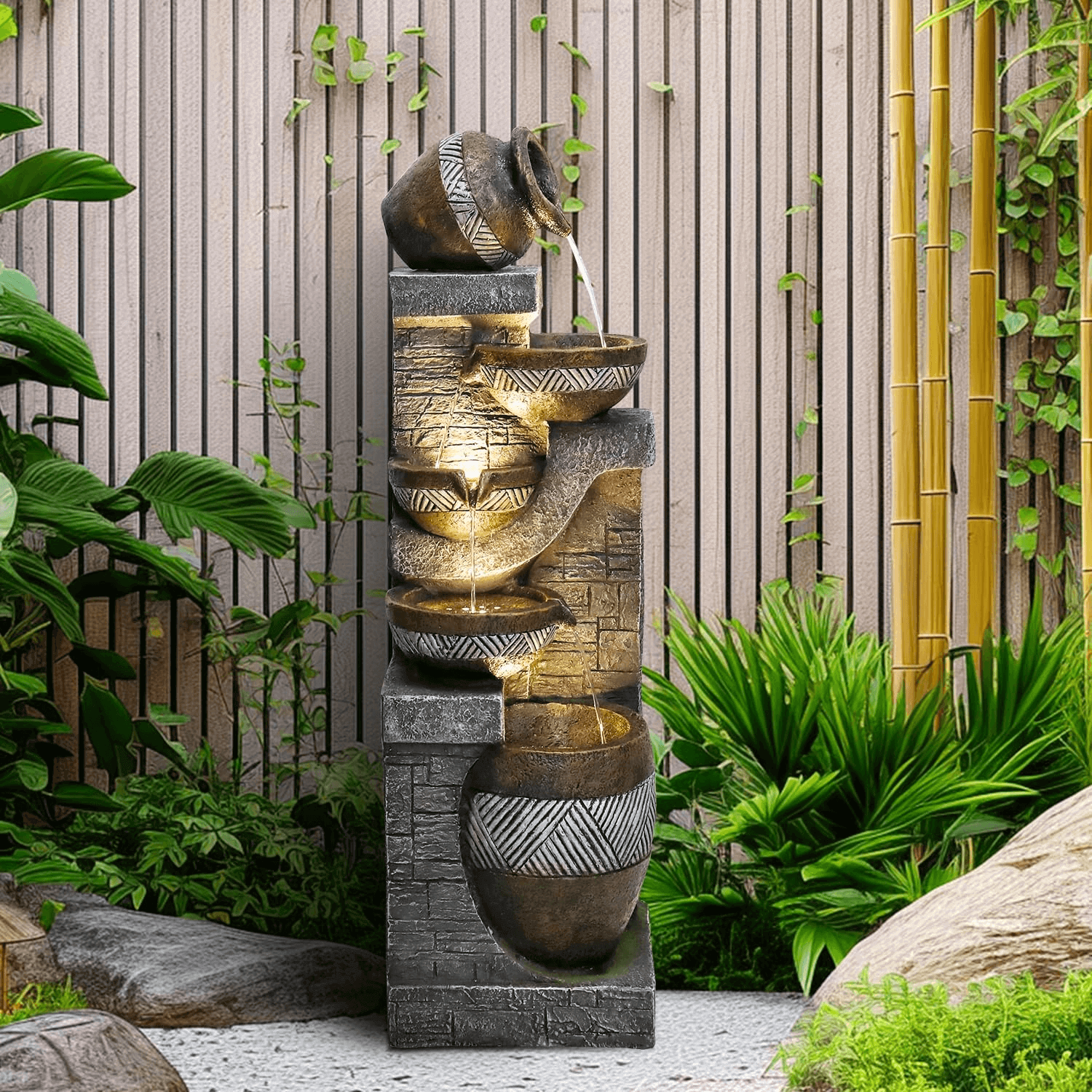



If you're currently thinking about making a Do It Yourself Bird Bath (self-made bird bath), you are certainly not alone. Many garden enthusiasts want to provide a clean, safe, and attractive little haven for the birds, but they don't want to spend too much money, nor do they want to purchase a cheap bird bath that is difficult to clean and prone to algae growth.
The good news is: you can absolutely make a beautiful and practical Bird Bath yourself. Also, if you want it to be more durable, sturdier, and worry-free, we have several professional-grade bird baths ready for you to choose from. This article breaks down all the steps simply; just follow them.
Why Traditional DIY Bird Baths Often Fail (You May Have Experienced These Issues)
- Materials Are Not Durable → Cracking in High Heat, Fragile in Winter
Many people use terracotta bowls or shallow plastic trays, but these materials simply won't last more than 1–2 seasons.
- Water Is Too Deep or Too Shallow → Birds Are Wary
Birds' preferred depth is 1–2 inches. If it's too deep, they will be afraid; if it's too shallow, it defeats the purpose.
- Lack of "Moving Water" → Algae Growth, Mosquito Visits
Birds instinctively prefer moving water, and still water gets dirty too easily.
- Insufficient Stability → Tipped Over by a Gust of Wind
Especially versions that use an inverted flowerpot as a base—they look nice but are not safe.
If you have made a DIY Bird Bath before but the birds haven't come, these are usually the problems.
The Simplest, Safest DIY Bird Bath Method (2025 Upgrade)

Step 1: Prepare the Materials (Very Easy to Find)
- A shallow dish (glass, ceramic, or metal are all fine)
- A sturdy base (inverted flowerpot, wooden log, stone pile, or tree stump will all work)
- Gravel/Pebbles (for the birds to perch on)
- Optional: A small solar fountain pump (highly recommended)
Note: To ensure bird health, please avoid using toxic coatings or chemical materials, especially on the basin surface and base.
Why Shallow?
Because birds like water that is 1–2 inches deep, allowing them to drink and bathe without fearing falling in.
Step 2: Assemble the Base (Aim for Stability)
|
Base Option |
Stability |
Appearance |
Notes |
|
Inverted Terracotta Pot |
☆☆☆ |
☆☆☆☆☆ |
Nicest looking but requires weighing down |
|
Wooden Log / Stump |
☆☆☆☆☆ |
☆☆☆ |
Stable, natural style |
|
Stacked Large Stones |
☆☆☆☆☆ |
☆☆☆☆☆ |
Best for a rustic aesthetic |
The sturdier the base, the more confident the birds will be in approaching it.
Step 3: Add the Shallow Dish + Gravel
Spread a thin layer of gravel/pebbles on the bottom of the dish—just enough. Its function is:
- Anti-slip
- To help small birds perch steadily
- To naturally filter out large particles of debris
Step 4 (The Key Step): Add Moving Water
If you are willing to spend an extra $10–$15, adding a small solar fountain pump will significantly boost its attraction. Why?
- Birds naturally prefer "water that moves"
- Reflections and sound will attract them
- Prevents mosquitoes from laying eggs on the water surface
- The water quality is cleaner, and the water change cycle is longer
If you only opt for a static water bird bath, that is fine, but you must change the water more frequently.
Step 5: Choose a Location the Birds Love
Birds prefer:
- Partial shade/Partial sun
- Not too far from branches (for escaping predators)
- But not too close to shrubs (to prevent predators from lurking)
The best position in most gardens is: an open corner in the late afternoon sun.
Professional Recommendations (For Durability + Stability)
If you desire a weather-resistant + sturdy + long-term outdoor Bird Bath, eliminating the hassle of yearly maintenance, we recommend the following:

The concrete material + sturdy base is ideal for long-term garden placement. You do not need to worry about cracking or tipping in winter or summer.

This is an excellent choice combining natural style + decorative look + bird attraction—the tree-trunk design is more reminiscent of a natural water source, making it easier to attract birds.
Realistic User Stories
Case 1:
"I placed mine in a semi-shady corner of the garden, and three different species of birds arrived within a week. I even recorded a video for my family. Honestly, it was more therapeutic than I imagined."
Case 2:
"I made a DIY version first, but while it looked nice, it wasn't sturdy enough; it kept tipping over even in a light breeze, leading to repeated clean-ups. Birds were wary. In the end, I bought the 23.8"H model. It is so much sturdier; I didn't have to move it all summer."
Case 3:
"Initially, I just wanted this to be an experience for the kids, but after installing the solar fountain, birds visit almost daily. The first thing my child does after school now is check on the birds."
Expert Advice
- Reference from Ornithology Experts: The ideal water depth is 1–2 inches.
- According to North American Bird Association Data: Bird visitation rates increase by 2–3 times with moving water.
- Experience Summary: Resin is more suitable for outdoors than terracotta because it is crack-resistant, lightweight, and weather-proof.
- Cleaning Frequency: Change the water every 2–3 days in summer; this can be extended in winter.
- Design Tip: Birds need an "escape route," so a shallow basin design is safer than a deep one.
FAQ Section
- Do I need to change the water daily?
No, if you use a pump. If it's still water, change it every 2–3 days.
- Is deeper water better?
No, birds are afraid of deep water. Keep it controlled at 1–2 inches.
- I live in a high-temperature area, will my DIY Bird Bath crack?
Terracotta might. Your basin is indeed prone to cracking if it undergoes prolonged sun exposure, rain, and alternating hot and cold temperatures.
- Do I need to add a pump to a professionally bought Bird Bath?
It's not mandatory, but adding one genuinely attracts more birds, and the water stays cleaner.
- What's the difference between a DIY and a bought Bird Bath?
DIY: Cheap, fun, but not necessarily durable.
Bought: Sturdy, attractive, worry-free, and will last for years.
- Can I place the bird bath very close to a tree?
Do not place it too close; avoid giving cats and predators a place to hide.
If you want to try the DIY route first, you can follow the steps above now, and birds will visit soon.
If you want to buy a ready-made product, we have many options that are weatherproof and will save you 90% of the maintenance time.