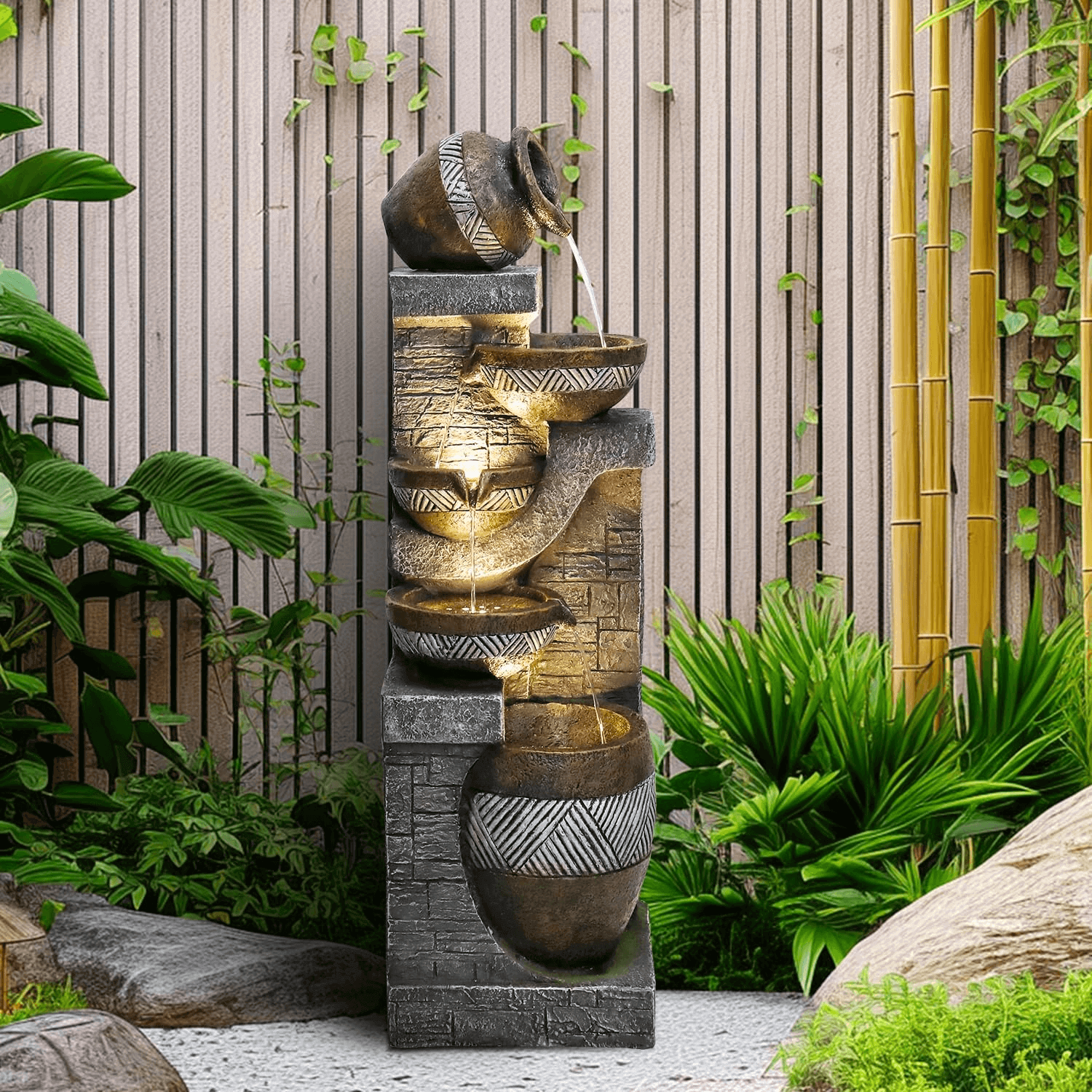


Nothing ruins a relaxing summer evening in the garden faster than the high-pitched whine of a mosquito. When homeowners consider buying large outdoor fountain, a common fear holds them back. They worry that adding water to their yard is like rolling out a red carpet for pests.
The most frequent question we hear is: "Do outdoor fountains attract mosquitoes?".
The short answer is: Not if you use them correctly. In fact, a well-maintained fountain can actually deter mosquitoes. Here is the science behind why, and how to keep your garden bug-free.
1. The Science: Moving Water vs. Stagnant Water
To understand the risk, you need to understand the mosquito life cycle.
-
The Requirement: Mosquitoes must have stagnant, still water to lay their eggs.
-
The Larvae: Once hatched, mosquito larvae (wrigglers) need to hang from the surface of calm water to breathe through a siphon tube.
-
The Fountain Effect: A running outdoor fountain
creates constant surface tension, ripples, and splashing. This turbulence makes it physically impossible for mosquitoes to lay eggs. If any larvae do end up there, the moving water drowns them because they cannot surface to breathe.
Key Takeaway: As long as your pump is running, your fountain is a "No Fly Zone" for mosquitoes.
2. When Do Fountains Become a Problem?

Mosquitoes only become an issue in two specific scenarios:
-
The Pump is Off: If you turn your fountain off to "save electricity" (which we don't recommend—see our Electricity Cost Guide), the water becomes still. Within 24-48 hours, it can become a breeding ground.
-
Splashing Puddles: If your fountain splashes too much
, it can create small, stagnant puddles on the ground around the basin. These puddles are where the mosquitoes will breed, not the fountain itself.
3. How to Bug-Proof Your Fountain (3 Steps)
Even if you are careful, you might want extra insurance. Here is how to guarantee a bite-free summer.
Step A: Run It 24/7
The simplest solution is the best one. Keep the water moving. The cost of running a pump is pennies a day, which is cheaper than buying bug spray.
Step B: The Magic of "Mosquito Dunks" (Bti)
If you must turn your fountain off, or if you have pockets of slow-moving water, use Bti (Bacillus thuringiensis israelensis).
-
What is it? Often sold as "Mosquito Dunks" or "Bits," this is a naturally occurring bacteria.
-
How it works: It is toxic only to mosquito larvae.
-
Safety: It is completely safe for birds, dogs, cats, and wildlife. You can drop a dunk in your basin and forget about it for 30 days.
Step C: Keep It Clean
Algae and decaying leaves provide food for larvae. Regular cleaning [Cleaning Guide] removes the food source, making your fountain less attractive to pests.
4. FAQ: Common Questions About Fountains & Bugs
Here are quick answers to the most common search queries regarding outdoor fountains and insects.
Q: Do outdoor fountains attract mosquitoes?
A: No, not if the water is moving. Mosquitoes require stagnant, still water to lay their eggs. A running fountain disrupts the water surface, preventing breeding.
Q: How do I keep mosquitoes out of my water fountain?
A: The most effective method is to run your pump 24/7 to keep the water agitated. For extra protection, add a "Mosquito Dunk" (Bti) to the water, which biologically kills larvae but is safe for pets and birds.
Q: Does moving water stop mosquitoes?
A: Yes. Moving water drowns mosquito larvae because they cannot attach to the surface to breathe. It also prevents adult mosquitoes from landing to lay eggs in the first place.
Conclusion
Don't let the fear of bugs stop you from enjoying a stone outdoor fountain. By keeping the water flowing and using safe treatments like Bti, you can enjoy the soothing sound of water without the itch.