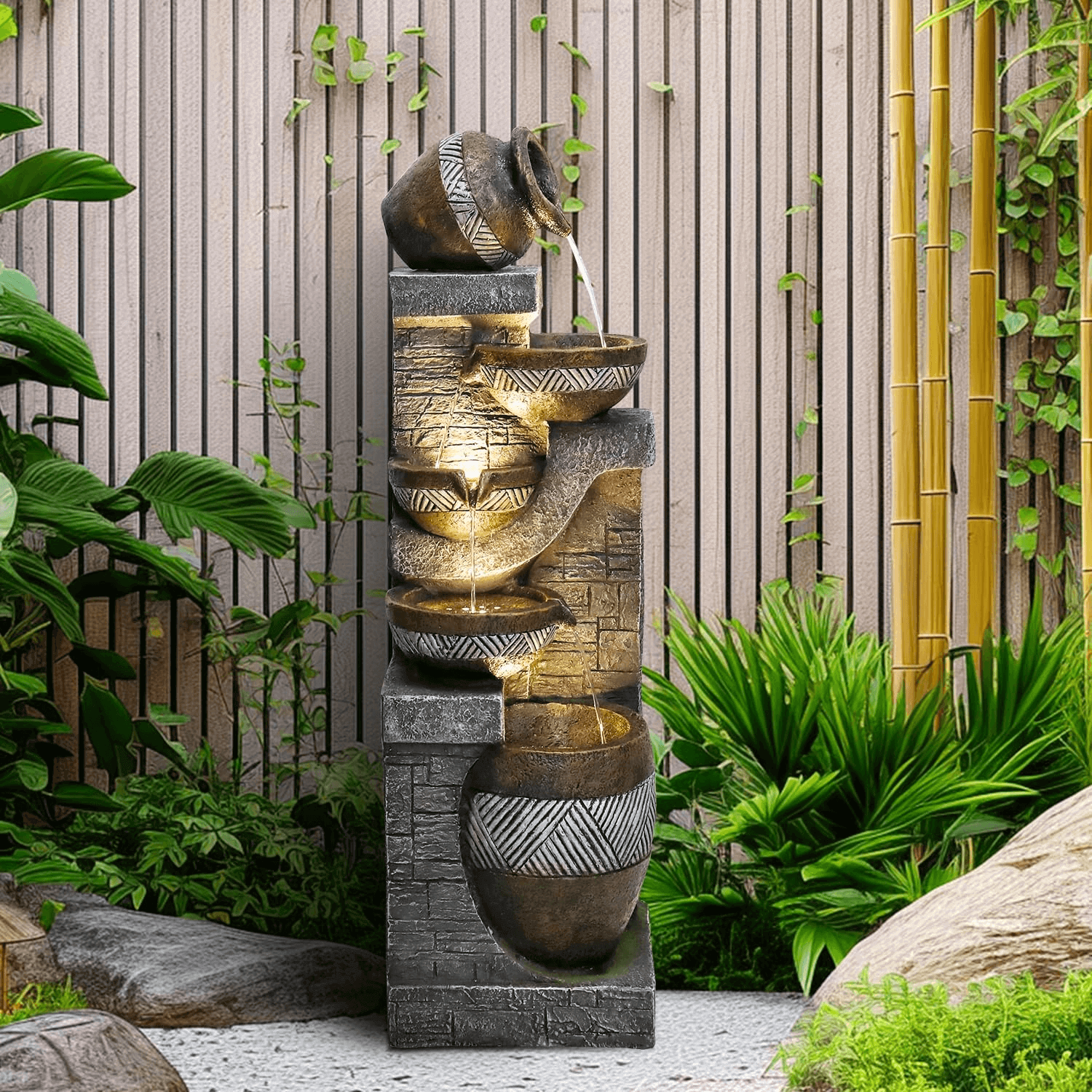


Every spring, I get emails from heartbroken customers: "My bird bath split in half!"
For many people who buy cheap cement bowls from big-box stores, this is a yearly ritual. As a result, a myth has spread: "Concrete bird baths aren't durable; they will crack in winter."
As an industry veteran, I am here to bust that myth. Quality concrete can last for generations—but only if you know how to take care of it.
Concrete is like a hard sponge. If you don't understand its physics, winter will destroy it. But if you master two simple skills—Sealing and Winterizing—your bird bath will stand as strong as Roman architecture.
Today, we answer your most pressing questions: Will it crack? Does it need to be sealed? And how do you waterproof it like a pro?
1. The Science: Why is Winter the Enemy?
To prevent cracking, you first need to understand the "Freeze-Thaw Cycle."
Concrete is naturally porous. It has millions of microscopic capillaries that absorb water.
-
The Recipe for Disaster: When water soaks into these pores and the temperature drops below freezing, that water turns to ice and expands by about 9%.
-
The Internal Explosion: This expansion creates massive internal pressure. If that pressure exceeds the concrete's tensile strength, micro-cracks form. After a winter of repeated freezing and thawing, those micro-cracks become giant splits, and your basin breaks.
> Note: Our [Concrete Bird Bath Collection] is made from high-density Fibre Reinforced Concrete (FRC), which is far more resistant to freezing than standard cement. However, even the best material needs proper maintenance.
2. The Diagnosis: Does Your Bird Bath Need to Be Sealed?
Many customers ask: "Does a new concrete bird bath need to be sealed?" or "How often should I reseal it?"
Stop guessing. Do the simple "Water Drop Test":
-
Pour a spoonful of water onto the dry surface of your bird bath.
-
Observe:
-
If the water beads up (like dew on a lotus leaf), your seal is intact. No action needed.
-
If the spot darkens and the water absorbs into the surface, the concrete is drinking the water. You must seal it immediately!
-
Rule of Thumb: Plan to reseal your bird bath every 1-2 years.
3. The Fix: How to Seal a Concrete Bird Bath
This is an easy weekend DIY project. Please ensure you choose a "Water-based, Non-toxic Masonry Sealer" to ensure it is absolutely safe for birds.
Step 1: Deep Clean Before you waterproof, you must remove dirt and algae. If you seal over dirt, the sealer won't stick.
-
Method: Scrub the basin with a mixture of white vinegar and water. The vinegar gently removes mineral deposits.
-
Critical: Let the bath dry in the sun for at least 24 hours. The concrete must be bone-dry before sealing.
Step 2: Apply the Sealer Using a paint brush or a sprayer, apply the sealer evenly.
-
How much? Apply two coats. The first coat will be absorbed; the second coat forms the protective barrier.
-
Don't miss the bottom: Many people only seal the inside of the bowl. Don't forget that the base and the underside absorb moisture from the ground and air too!
Step 3: Cure Let it sit in a dry place for 24-48 hours. Do not fill it with water until it is fully cured and has no smell.
4. The Winter Protocol (How to Winterize)
Even if you have perfectly sealed your bird bath, in regions with freezing winters (like the Northern US or Canada), you must follow a winter protocol.
1. Drain It (Crucial) Never let water freeze inside the bowl. Ice is powerful enough to crack steel pipes; it will certainly crack a stone bowl.
2. Elevate It Do not leave the base sitting directly on bare soil. The ground freezes and heaves during winter. This uneven movement can snap a pedestal. Place your bird bath on a paver or a concrete slab.
3. Cover or Flip
-
Best Option: If you can lift it, move the unit into a garage or shed.
-
Next Best Option: If it is too heavy (it is concrete, after all), flip the bowl over on the pedestal so it cannot collect snow or water. Then, cover the entire unit with a heavy-duty tarp and secure it with bungee cords. This prevents moisture from entering the pores.
Conclusion
A Concrete Bird Bath is not a disposable plastic toy; it is a garden investment.
If you are willing to spend 15 minutes every two years to apply a sealer, and drain it before the snow falls, your bird bath will reward you with decades of beauty.
Don't let this winter be its last. Go to your backyard and do the "Water Drop Test" today!