



Resin Stacked Stone Rock Waterfall Outdoor Fountain with LED
- Regular price
-
$1,499.99 - Regular price
-
- Sale price
-
$1,499.99
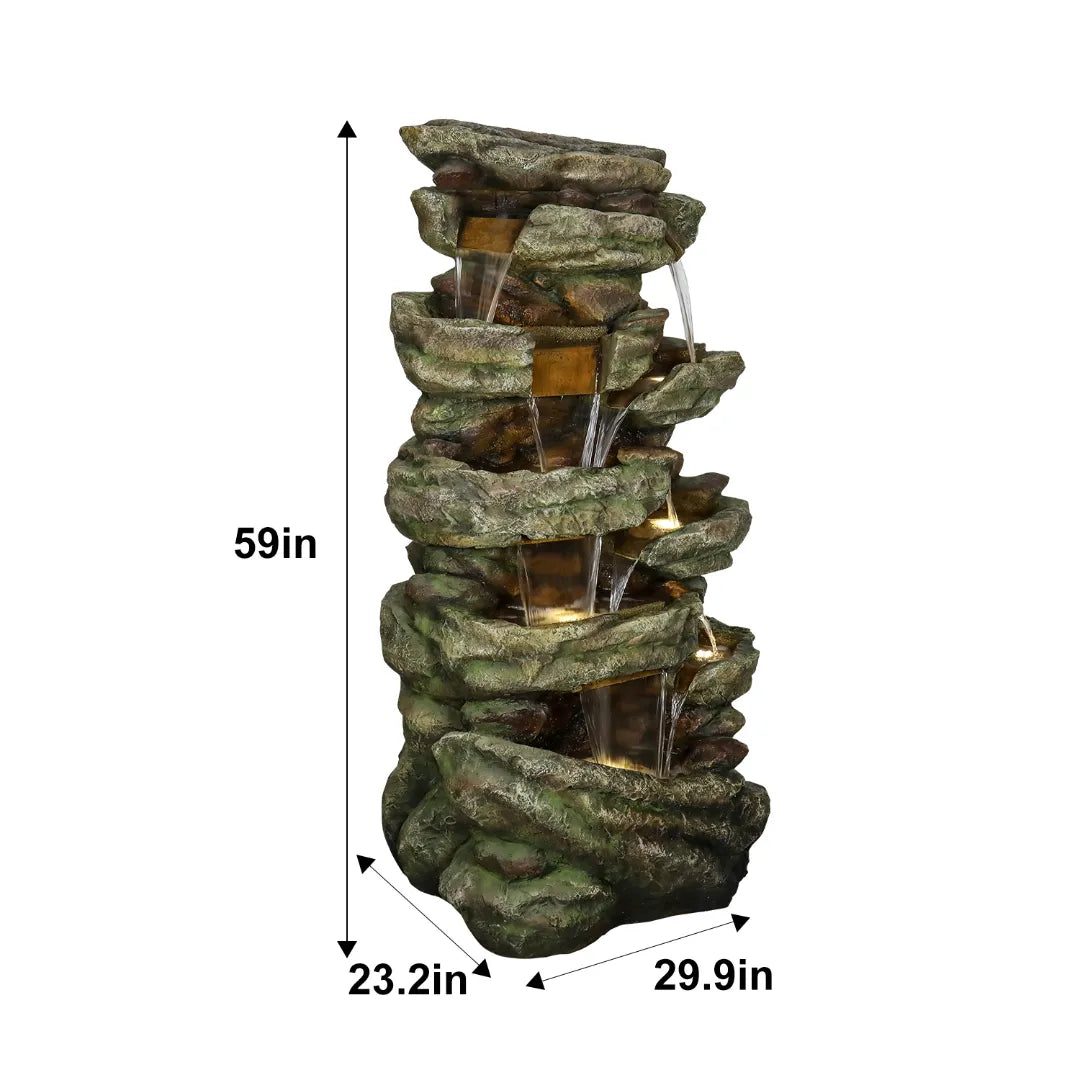
- 59 in. tall
- Tiers seat together, assemble in place
- Natural earth tones with green in the crevices
Couldn't load pickup availability
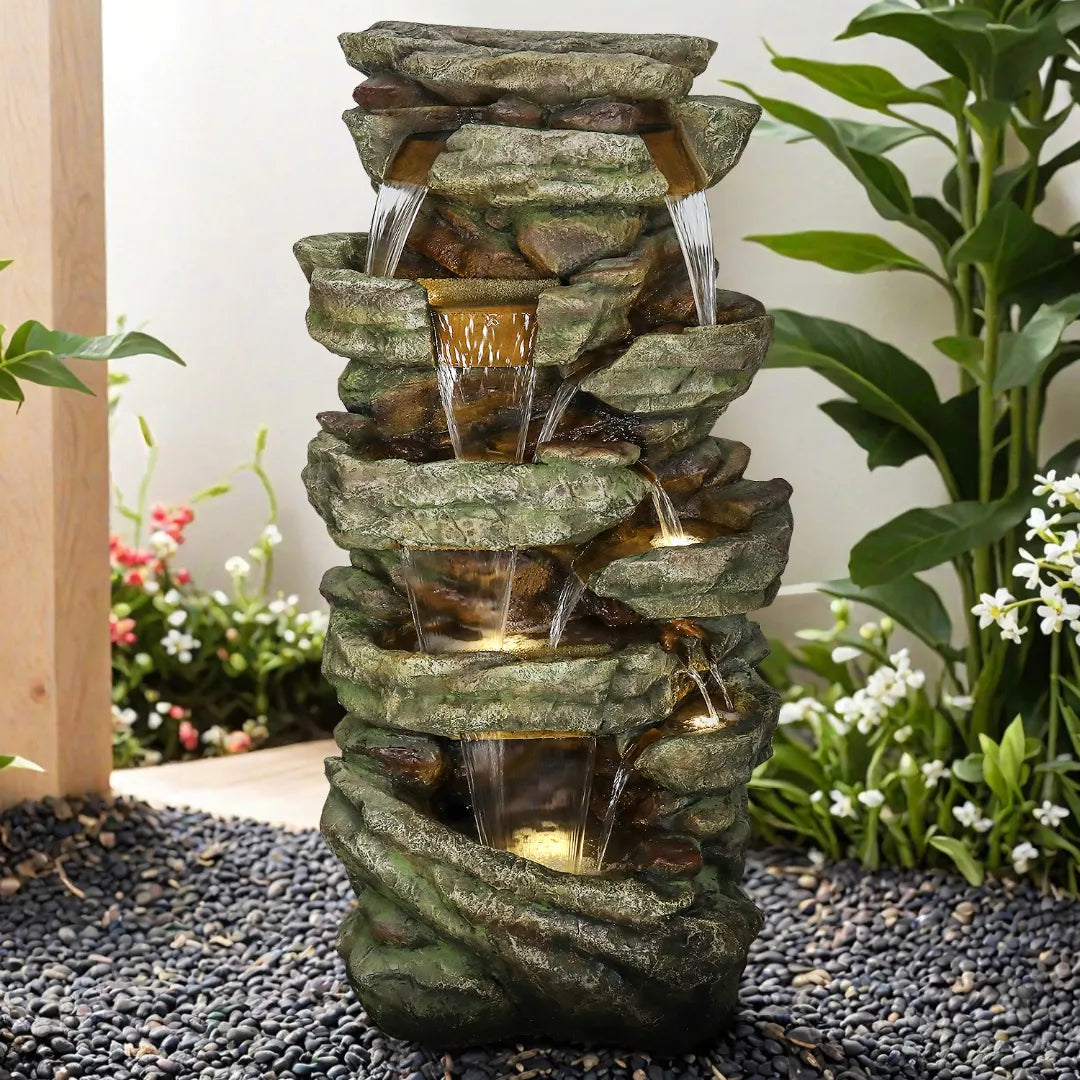
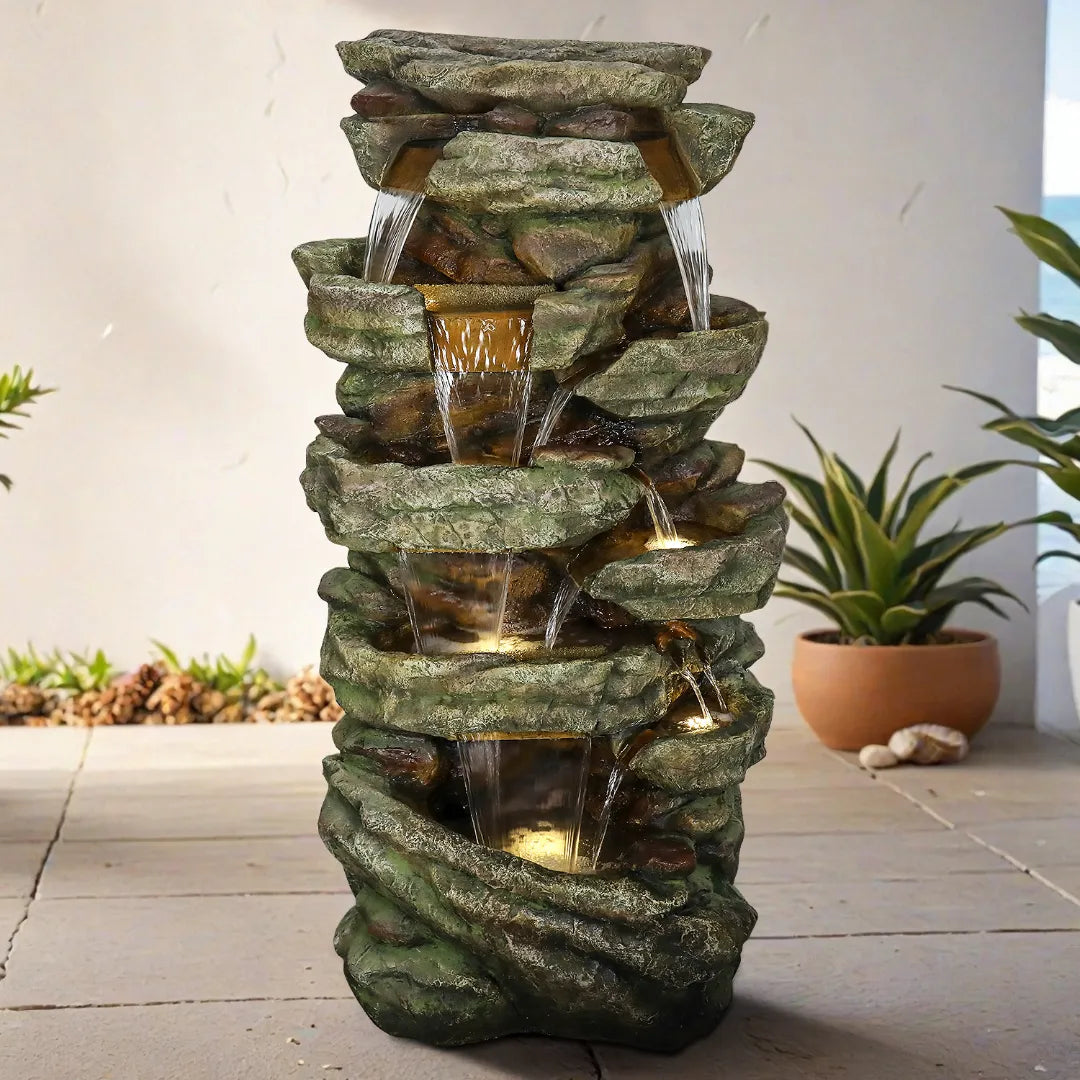
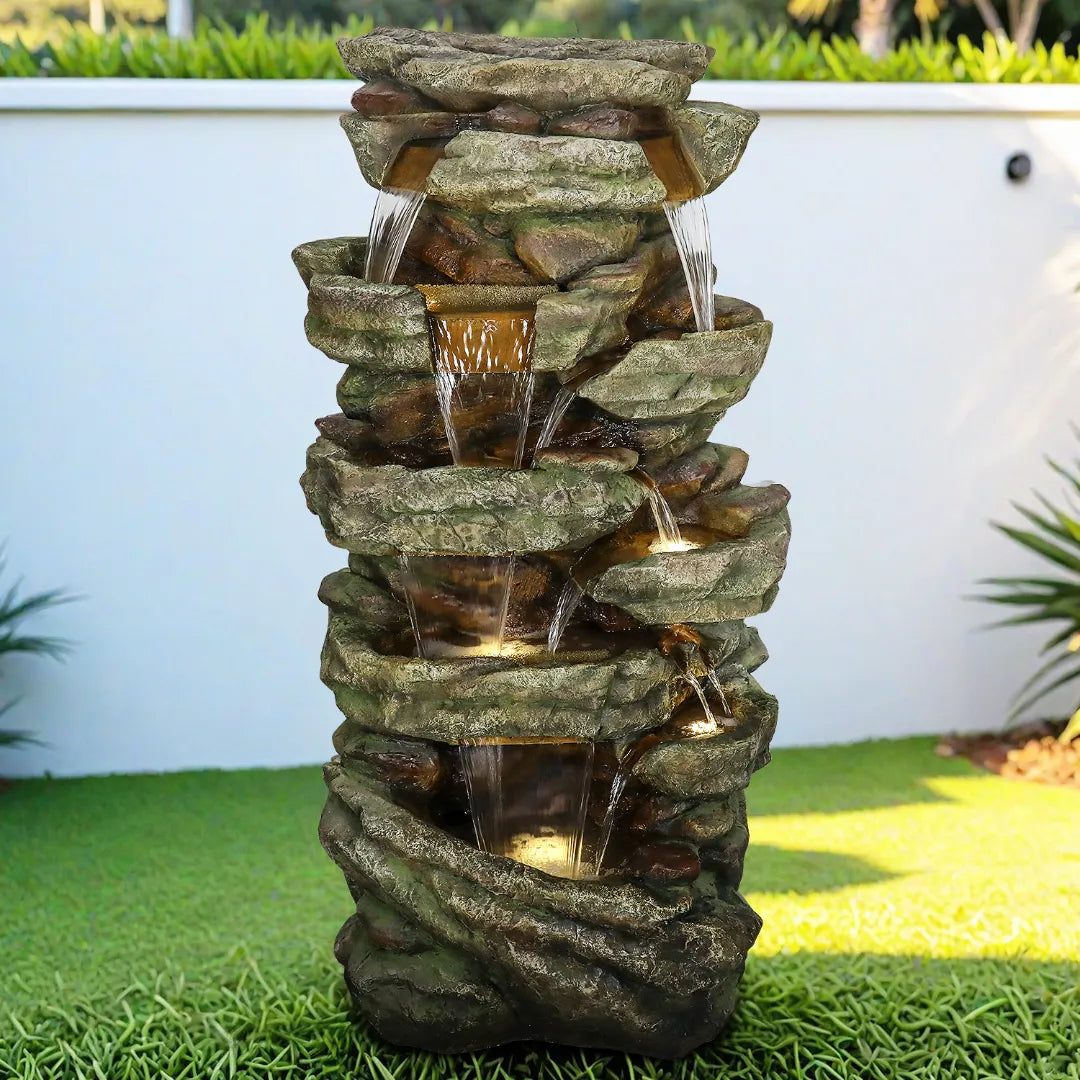
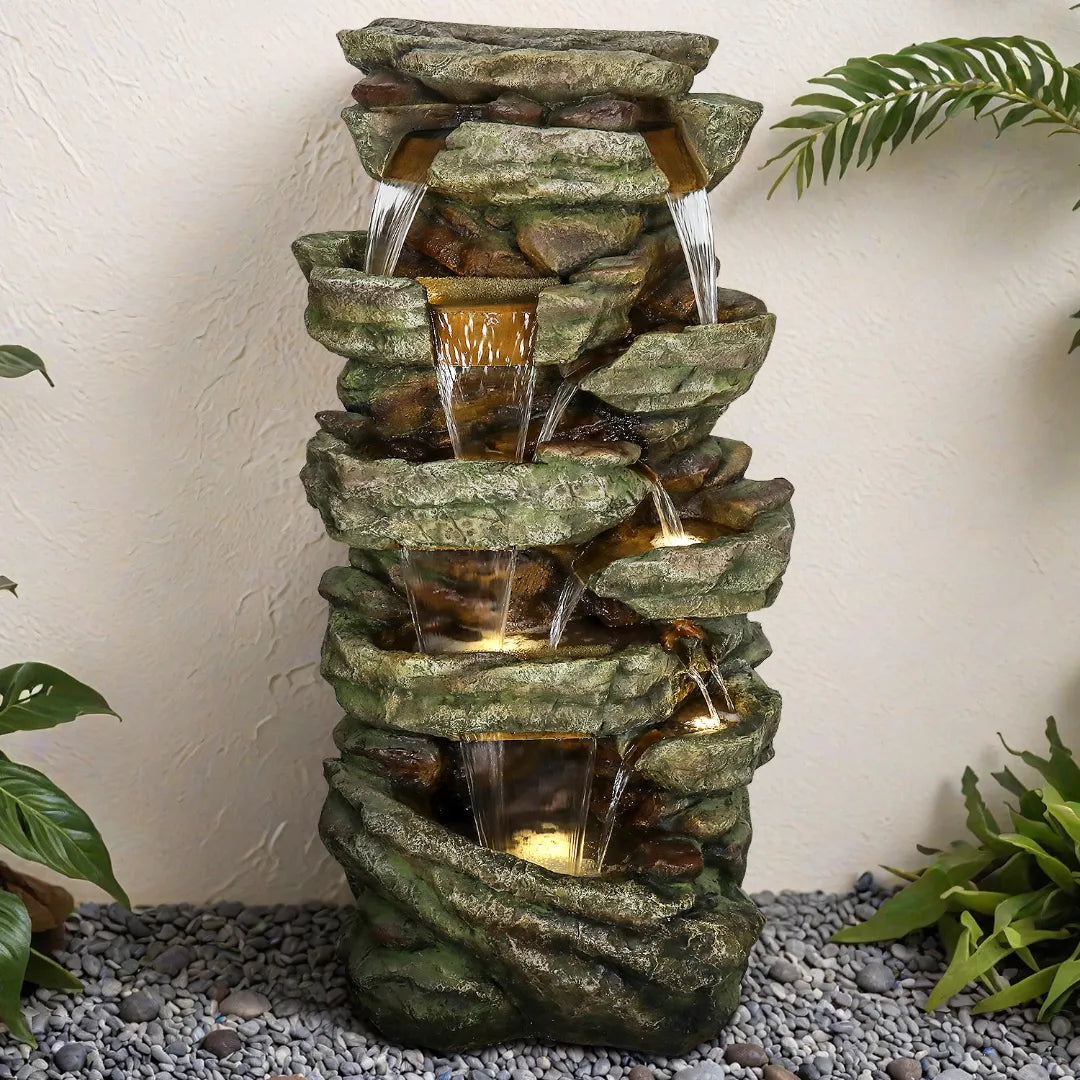
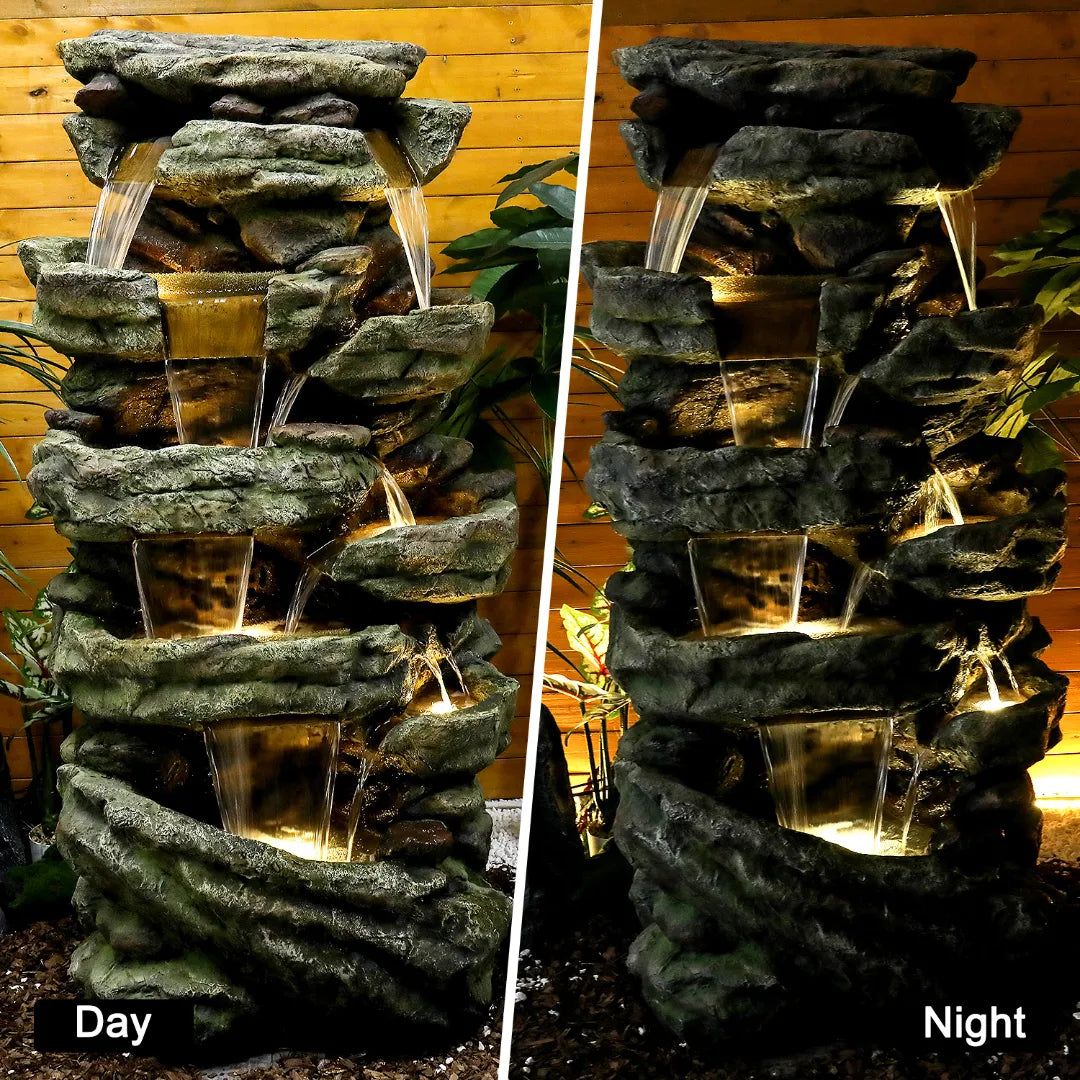

STACKED STONE WATERFALL
Fifty Nine Inches, and Two People Can Carry It
The reason to pay attention to the height is the same reason most people never get a piece like this. A stacked stone fountain at fifty nine inches, cut from actual rock, weighs enough to need a prepared foundation and equipment to set it. That is a landscaping project with a contractor attached. This one is resin cast from stone, so it goes where you decide it goes, and you can change your mind next spring.
The stack is deliberately asymmetric. The slabs offset left and right so the water never falls the same way twice on the way down, leaving in wide sheets from the broad ledges and in narrow threads from the tight ones. That winding route is the whole design, and it is what makes a piece this size read as a rock formation instead of a stack of trays.
The rock is finished in earth tones with green worked into the crevices, the way lichen settles on stone that has sat outside for years. Every basin has a warm light in it, so after dark the whole face glows amber from within rather than being lit from the front.

What You Get With This Stacked Stone Fountain
-
01
Fifty nine inches without a foundation.
A stacked stone fountain this tall in real rock needs machinery to place and a pad poured under it. This one sits on level ground and can be repositioned by two people.
-
02
The water takes a different route at every level.
The slabs are offset, so you get wide sheets off the broad ledges and narrow threads off the tight ones. A symmetrical stack gives you the same fall five times over.
-
03
Warm light in every basin.
The glow comes from inside the piece rather than from a spotlight in front of it, so after dark the face lights up and the outline goes soft.
-
04
Green worked into the crevices.
Earth toned rock with color settled into the joints, which is what separates it from a fresh gray cast at a distance of ten feet.
At nearly five feet this is the piece in the yard, not an accent beside something else. A courtyard fountain position with walls on two sides suits it, and so does the end of a lawn where you see it from the house. Give it level ground, keep the outlet in reach, and set it where you pass in the evening since the lit basins are half of what you paid for. Planting close to the base makes the transition from ground to rock look deliberate.
Stacked Stone Fountain Size, Weight, and Materials
| Dimensions | 59 in. tall |
|---|---|
| Material | Resin |
| Finish | Natural earth tones with green in the crevices |
| Design | Multi level asymmetric stacked rock waterfall |
| Pump | Included, recirculating |
| Power | AC plug in, 110V |
| Water flow | Changes direction at every offset ledge |
| Lighting | Warm light in every basin |
| Water connection | Self contained, no plumbing required |
| Assembly | Tiers seat together, assemble in place |
| Recommended use | Outdoor |

Keeping This Stacked Stone Fountain in Good Order
Stacked Stone Fountain upkeep, in three lines
- Every few days Top up. The water must always cover the pump.
- Every 2 to 3 weeks Empty, rinse, wipe the pump screen, refill.
- Before the first frost Drain it completely and bring the pump indoors.
Top the basin up every few days, because lifting water to fifty nine inches works the pump harder than a small fountain does and running dry is wha...
- 3 years Warranty against manufacturing defects
- 60 days Returns, no restocking fee
- Free shipping Continental US, from California or New Jersey
Questions About This Stacked Stone Fountain
Is it real stone
How loud is a fountain this tall
What does it look like at night
Can two people really move it
Ships free from California or New Jersey, and it is covered for three years.
Add to cart