



Wood and Iron Barrel Pump Fountain Planter 23 Inch
- Regular price
-
$168.99 - Regular price
-
$196.99 - Sale price
-
$168.99
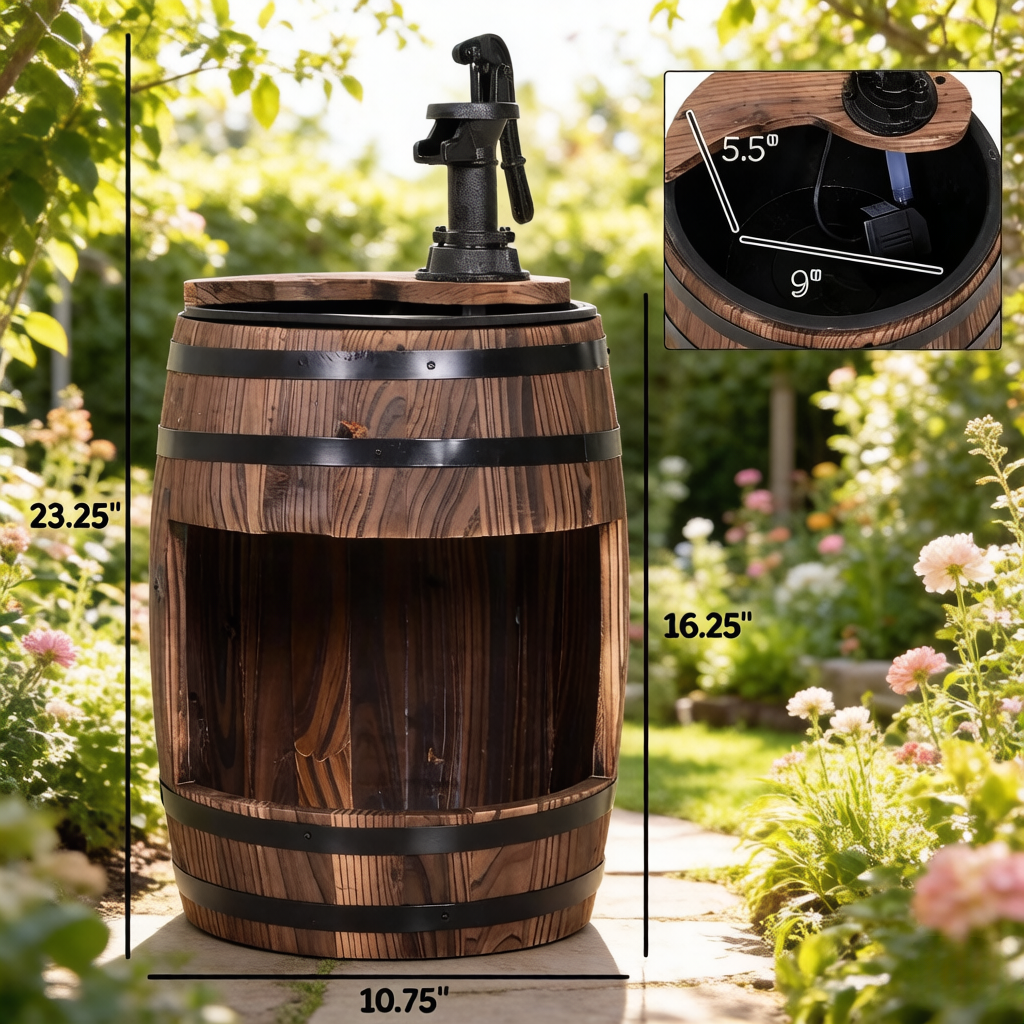
- 23 in. high, 12.5 in. square footprint, 7.7 lb
- Fill it, plant it and plug it in
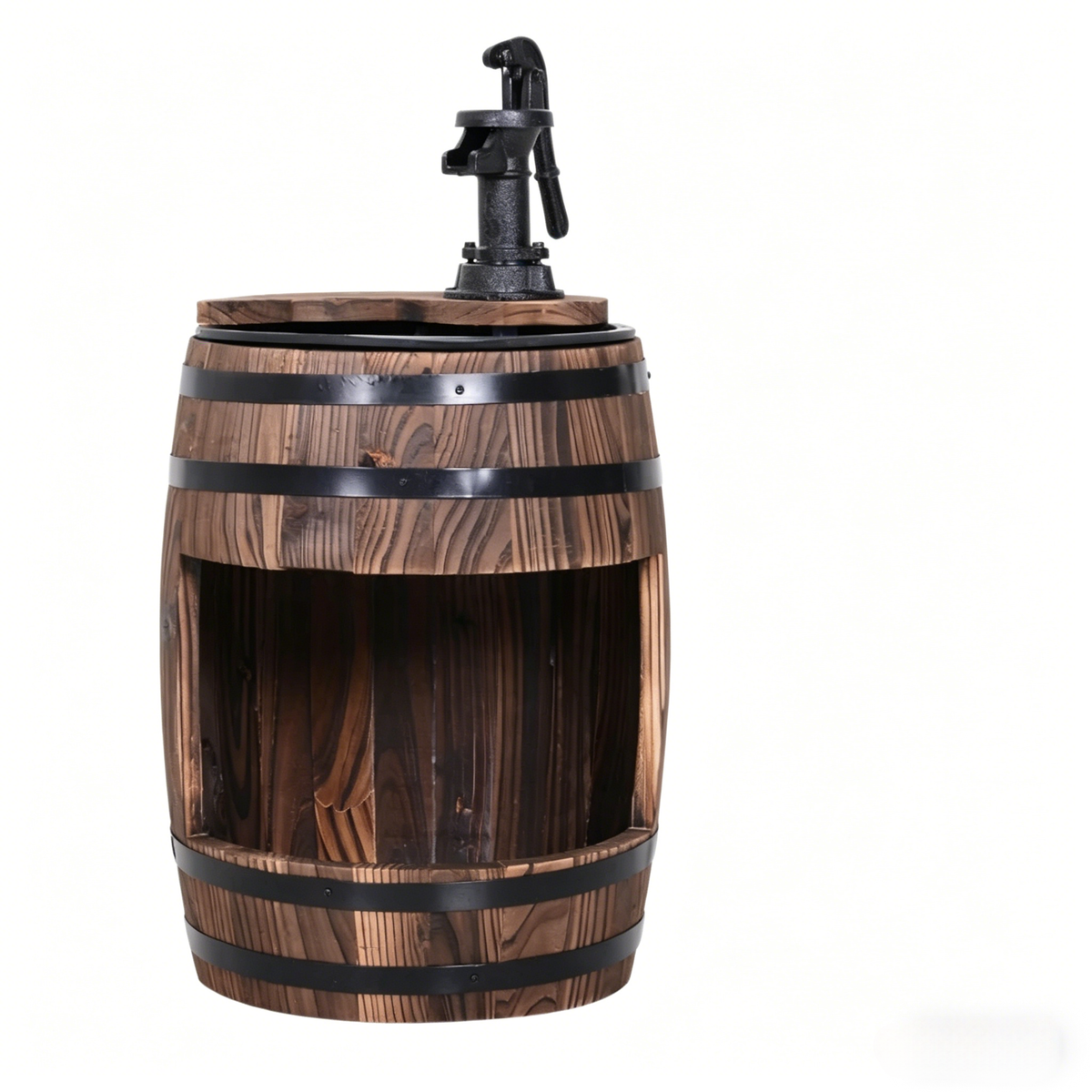
- Natural timber staves, black ironwork
Couldn't load pickup availability
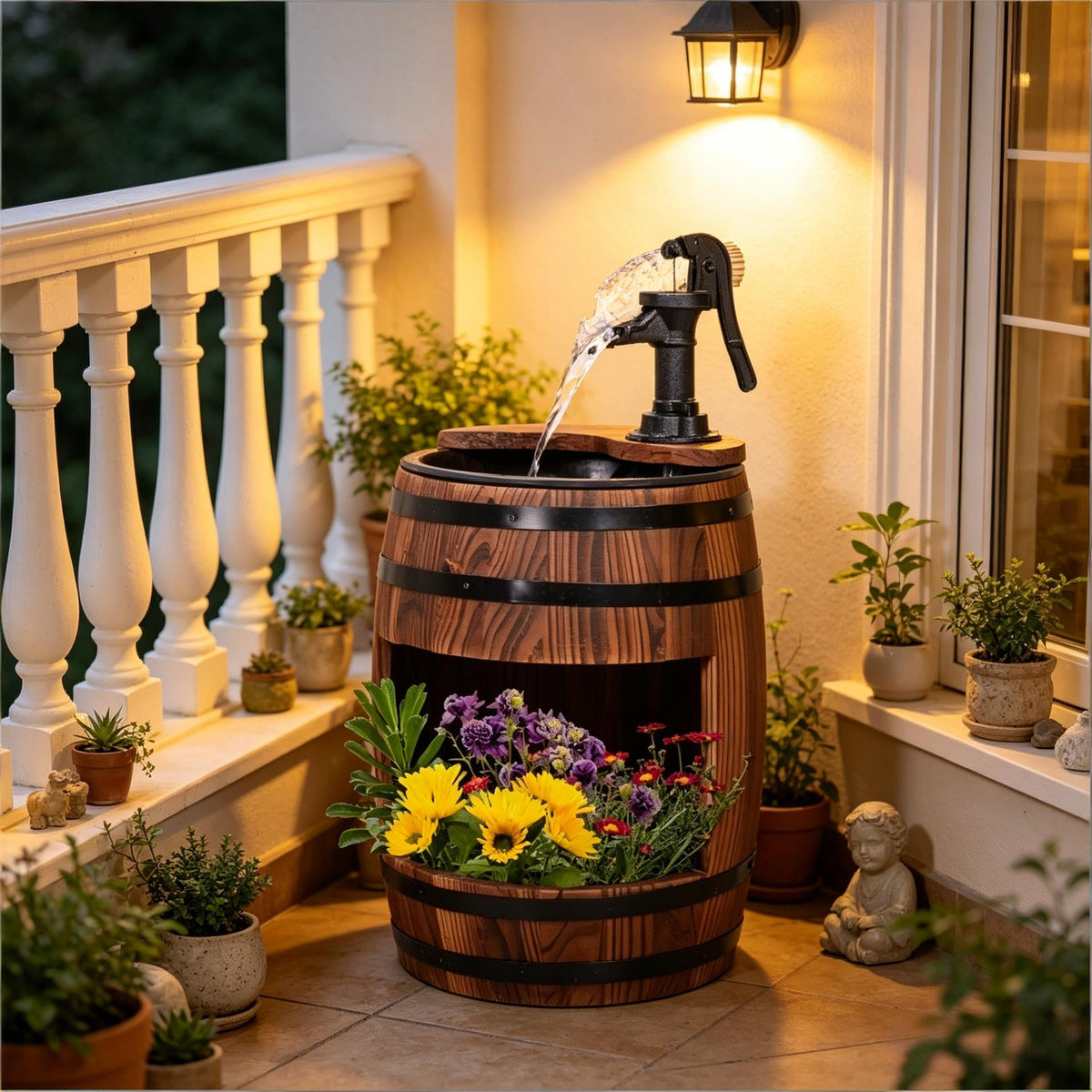
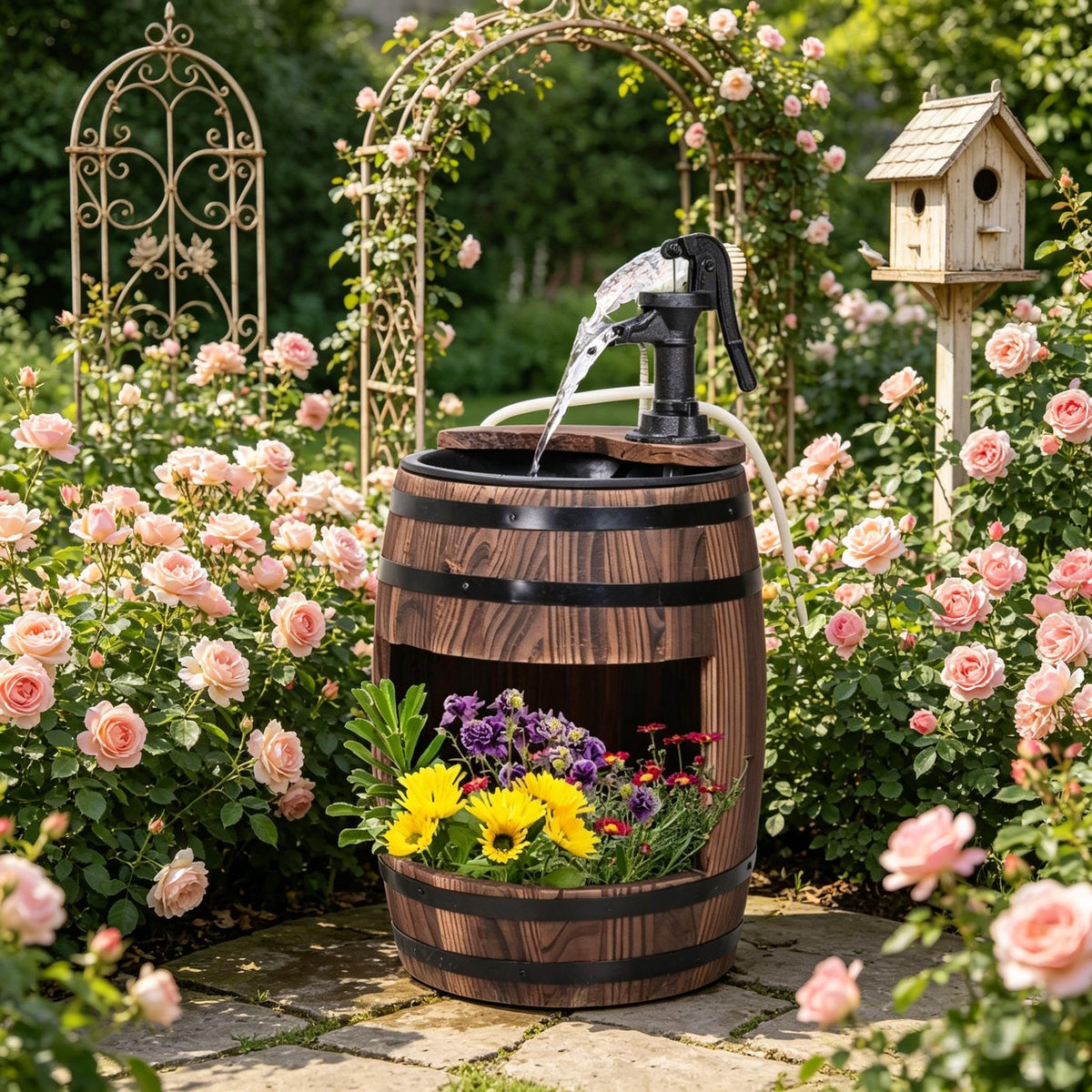
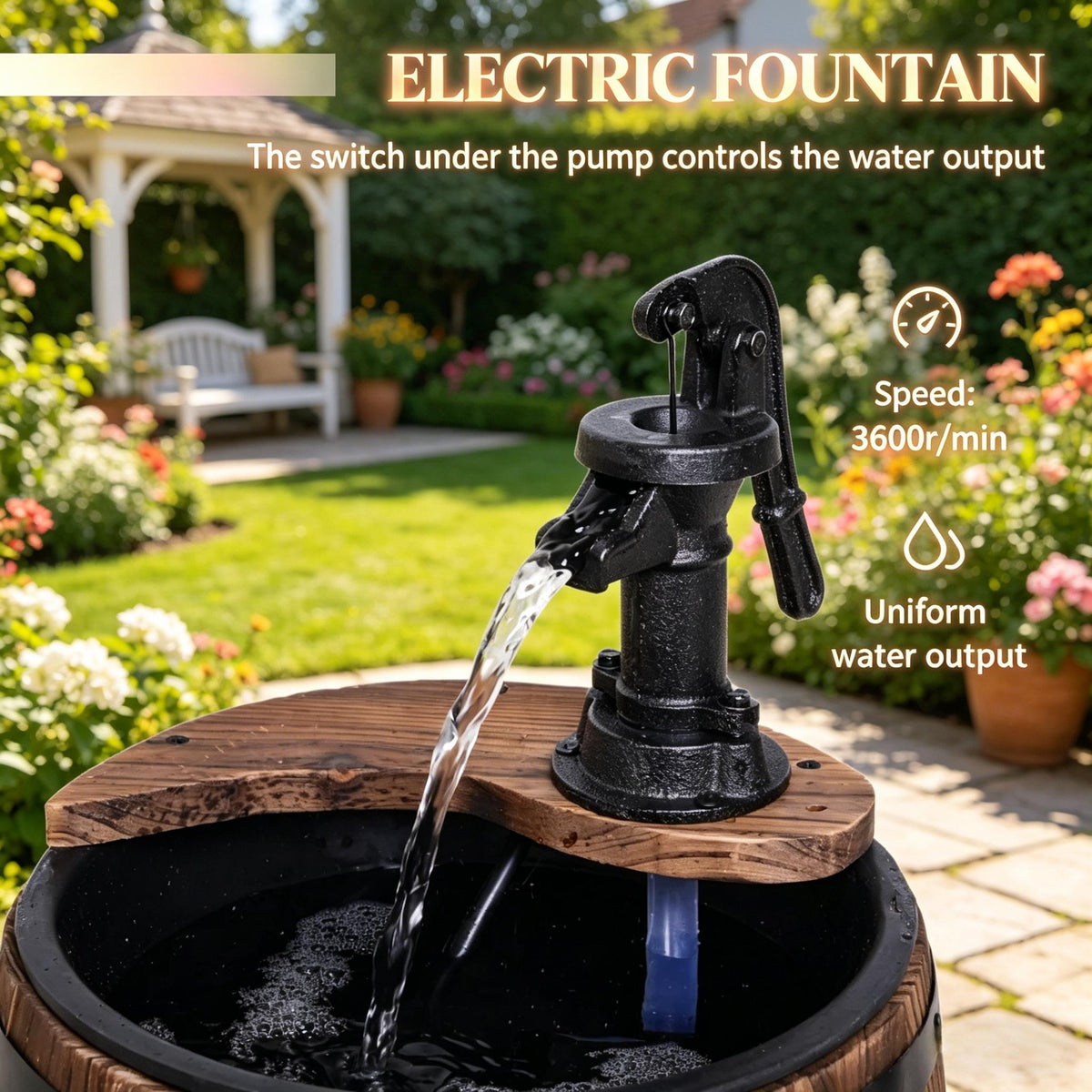
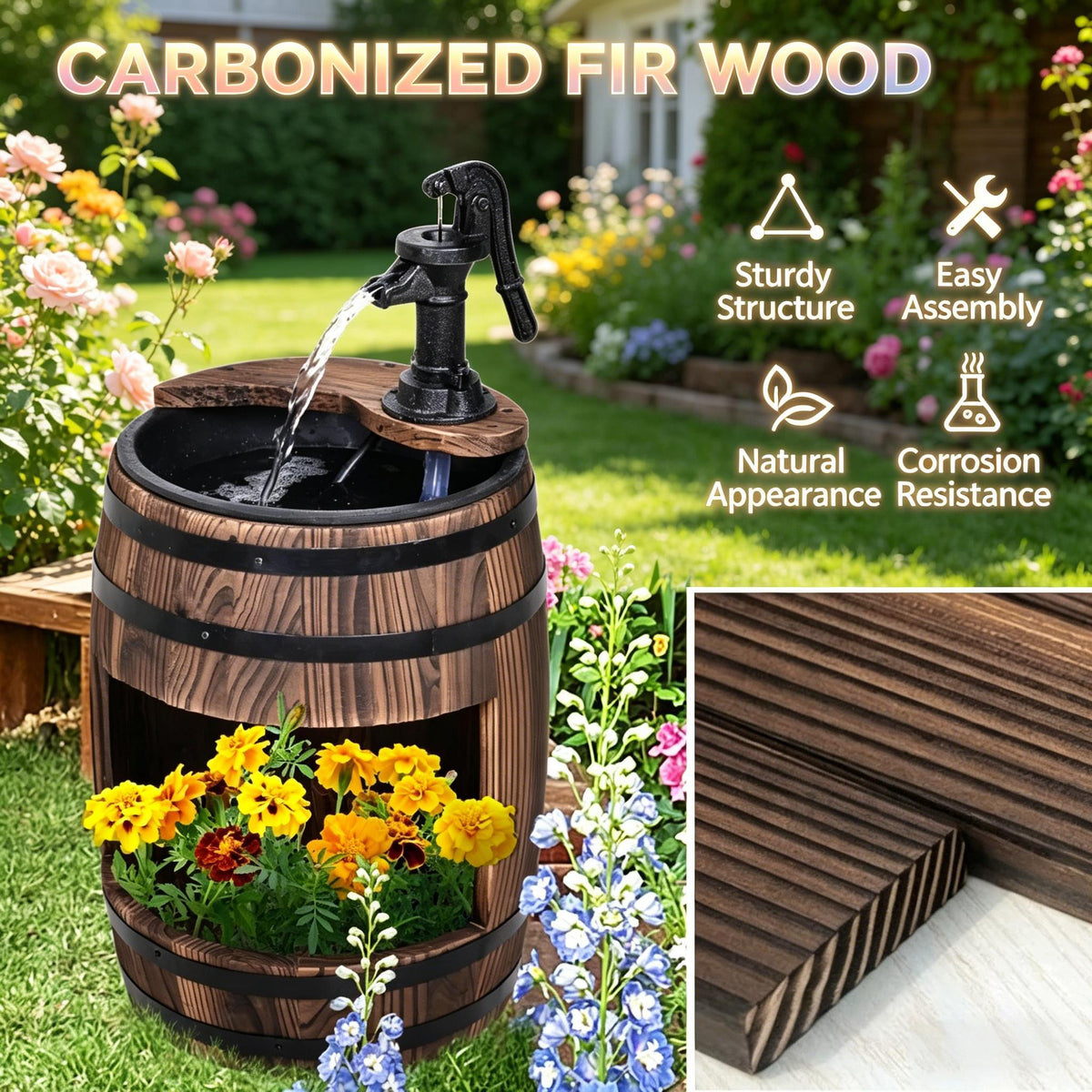

BARREL PUMP AND PLANTER
Real Timber, a Cast Iron Pump, and Under Eight Pounds
Seven and three quarter pounds. That is the number, and it is what happens when a piece is made of actual timber staves and a hollow barrel rather than cast solid. You carry this one out with one hand, and there is no piece in the range that is easier to move.
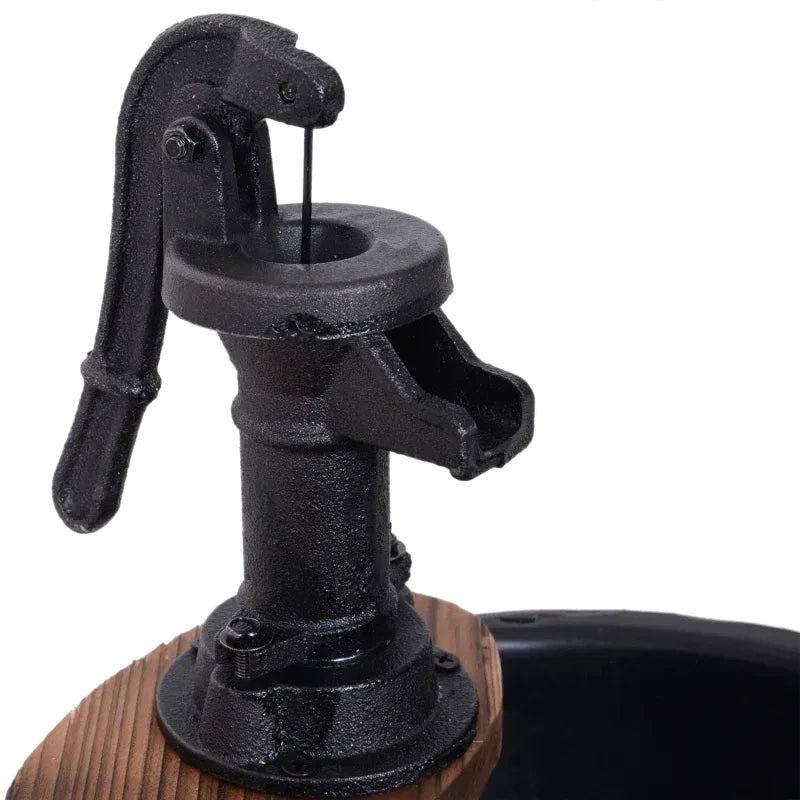
It is real wood with real iron. Natural timber staves, black iron hoops around them, and a cast iron pump on top that the water comes out of. Nothing here is resin pretending, which puts it in a very small group in this category.
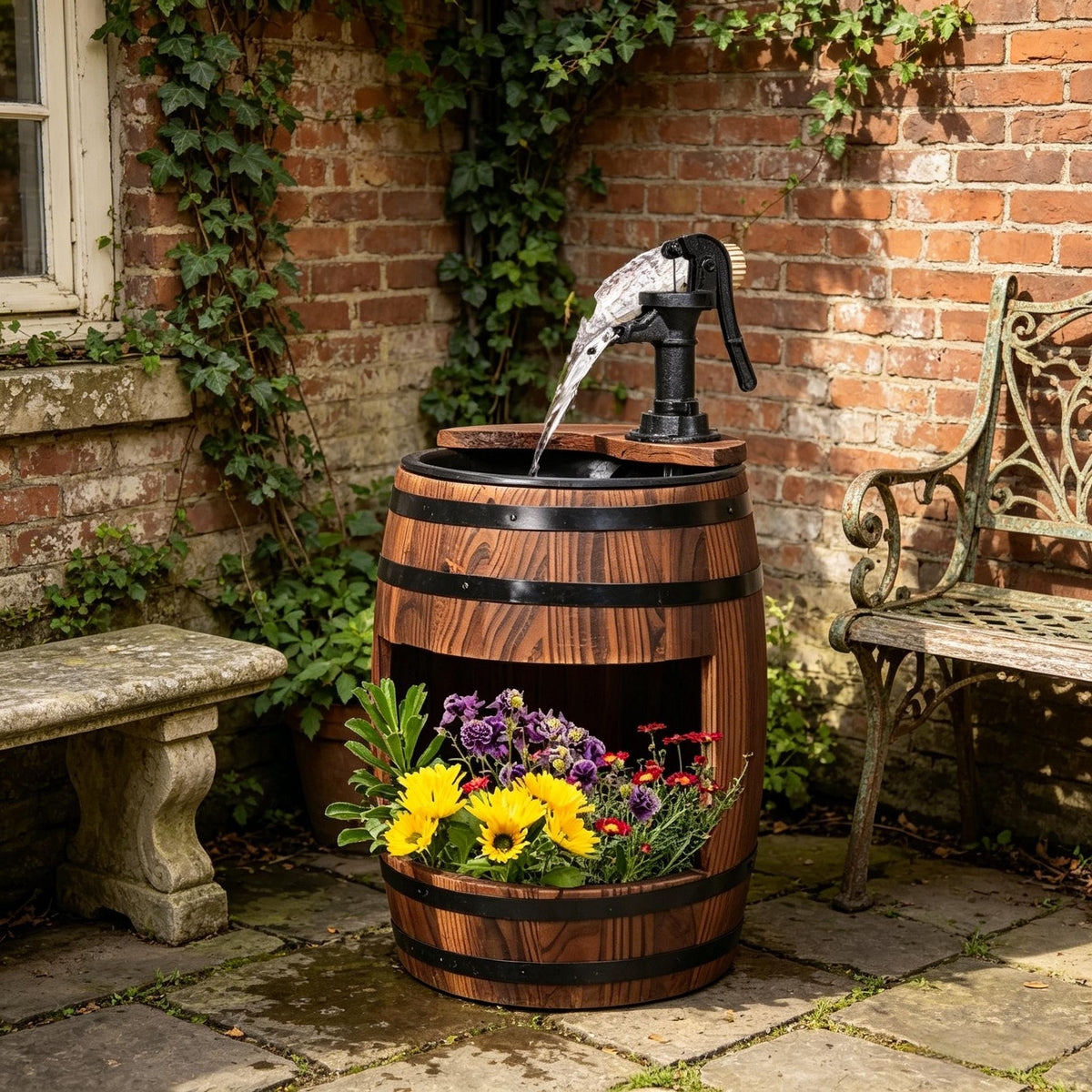
And there is an open bed cut into the barrel wall for planting, so it is a fountain and a planter at once. The water side runs in the barrel top, the planting bed is separate, and you end up with greenery growing out of the side of a working pump barrel.

What You Get With This Wood Barrel Fountain
-
01
Seven and three quarter pounds.
The lightest piece in the range by a clear margin. One hand, one trip, and winter storage is a shelf.
-
02
Actual timber and actual iron.
Natural wood staves, black iron hoops and a cast iron pump. Very little in this category is made of what it looks like.
-
03
A planting bed cut into the barrel.
It is a fountain and a planter in one piece, with the growing bed separate from the water side, so you get greenery out of the barrel wall.
-
04
Twelve and a half inches square.
It fits a balcony, a porch step, a doorway or a table, which almost nothing with this much character does.
A porch, a balcony, a doorstep, a cottage border, or beside a shed. It suits timber, brick and planting rather than modern render and glass. Think about the plant when you pick the spot, since the bed needs the light that plant wants. Being real wood and very light, keep it somewhere that dries out after rain rather than a permanently damp corner, and out of exposed wind. The pump faces one way, so point it toward the approach.
Wood Barrel Fountain Size, Weight, and Materials
| Dimensions | 23 in. high, 12.5 in. square footprint, 7.7 lb |
|---|---|
| Material | Wood with iron hoops and a cast iron pump |
| Finish | Natural timber staves, black ironwork |
| Design | Barrel fountain with a cast iron pump and an open planting bed |
| Pump | Included, recirculating |
| Power | AC plug in, 110V |
| Water flow | From the pump spout into the barrel top |
| Lighting | No lighting |
| Water connection | Self contained, no plumbing required |
| Assembly | Fill it, plant it and plug it in |
| Recommended use | Outdoor |
Keeping This Wood Barrel Fountain in Good Order
Wood Barrel Fountain upkeep, in three lines
- Every few days Top up. The water must always cover the pump.
- Every 2 to 3 weeks Empty, rinse, wipe the pump screen, refill.
- Before the first frost Drain it completely and bring the pump indoors.
Top the barrel up as the water evaporates and flush the pump every two or three weeks. Real timber wants different treatment from cast resin, so le...
- 3 years Warranty against manufacturing defects
- 60 days Returns, no restocking fee
- Free shipping Continental US, from California or New Jersey
Questions About This Wood Barrel Fountain
Is it really wood and iron
How does the planting bed work
How light is it really
Does real wood need more care
Ships free from California or New Jersey, and it is covered for three years.
Add to cart