


One fountain can serve a room and a patio when the exact model is listed for indoor and outdoor use and both locations meet its setup requirements. Start with three decisions: whether both uses are allowed, whether the complete running setup fits each spot, and whether you can refill and clean it in both places.
Bringing a fountain inside for winter adds a separate question: will it stay drained in storage, or will you refill it and run it in a room? Decide which job you need before you move it.
Read the intended-use statement first
Find the intended-use statement for the exact model, then read the conditions for the body and its supplied equipment. Water inside the basin and weather outside it are different exposures. A pump designed to sit underwater may come with a power adapter that must stay dry; lights and connections can have their own placement limits. An allowance for one component does not automatically cover the whole fountain. A stone-like finish or a garden photograph cannot settle these questions.
| What the model says | Your next decision |
|---|---|
| Indoor use only | Keep operation indoors. A covered outdoor spot does not change that instruction. |
| Outdoor use only | Do not assume indoor operation is included. Confirm it for this exact model. |
| Indoor and outdoor | Check the conditions for each location, including the supplied electrical parts. |
| Use is not stated | Get a clear model-specific answer before choosing a new operating location. |
Keep the original instructions with the fountain. If you have replaced a pump or added lights, check those changes as part of the complete setup. For an unclear listing, ask about the planned use and supplied parts rather than asking only whether the fountain is waterproof:
“Can [model name], with its supplied pump, lights and power supply, operate in [my planned indoor or outdoor location]? Which parts need shelter or must stay dry, and what seasonal shutdown does this setup require?”
Bringing it inside: storage or running water?
A drained fountain waiting in storage and a fountain running beside a sofa need different plans. For storage, follow the shutdown, draining, cleaning, drying, and storage instructions. Check the storage location too: an unheated garage is not necessarily free from freezing temperatures. For indoor operation, confirm that use first, then work through the room checks below before refilling and starting it.
Before moving a used fountain indoors, inspect and clean it as instructed, and check the condition of the original parts. Do not put a leaking or damaged unit into service in a room. For the actual move, use our before-and-after moving checklist to organize the condition record and restart checks.
What changes when the fountain moves into a room?
Listen again from the chair or desk where you will spend time. Water that seemed gentle beside a breezy patio may be much more noticeable in a quiet room. Separate the falling-water sound from motor hum and vibration. Do not choose the indoor position from a photograph or assume an outdoor recording predicts what you will hear at night.
Separate the body footprint from the running area. The body has to fit first; then leave the specified space for the water path, refilling, and cleaning access. Keep books, electronics, curtains, and vulnerable finishes outside the actual splash and overflow path. Ask whether you can reach the filling point and pump without shifting a full fountain or dragging furniture aside each time.
Use firm, level support suitable for the complete filled load. A surface that holds the dry fountain is not automatically suitable once water and any approved accessories are added. Keep a floor model on a suitable floor location unless its instructions allow another arrangement. Our indoor fountain guide covers choosing by room; here, the extra task is checking the new spot rather than relying on the old setup.
What changes when it moves outside?
A roofed porch is still outdoors. Check the model's exposure limits against the actual spot: wind can carry water beyond the basin, rain can change the reservoir level, and leaves can reach the water. Shelter may reduce one exposure while leaving others. It does not change an indoor-only instruction. Relearn the refill and cleaning routine after a move; do not assume a schedule that worked inside will also suit a sunny or windy patio.
Plan the power route before settling the fountain in place. CPSC's Home Electrical Safety Checklist calls for GFCI protection and suitable weatherproof outlet covers outdoors. Have a qualified electrician assess a missing or unsuitable supply, and follow the fountain's instructions for its connections.
Do not make a cord through the patio door your permanent solution. ESFI's extension-cord guidance treats these cords as temporary and advises against routing them through doorways. Check whether the fountain permits an extension at all; a longer cord does not solve every location problem.
Also check the seasonal plan. Indoor-and-outdoor use does not mean operation in freezing weather. Follow the selected model's draining and storage instructions before frost. For a broader first-time garden purchase, use the outdoor buying guide; changing environments adds these checks to that original choice.
Two real models listed for indoor and outdoor use
Our Cut Away Urn and Glazed Cutout Urn listings both state indoor and outdoor use. Both are resin fountains with an included recirculating pump and no permanent water connection. That gives them the same starting point for this comparison, but their body dimensions and water paths lead to different placement decisions.
| Listed detail | Cut Away Urn | Glazed Cutout Urn |
|---|---|---|
| Height | 17.9 in. | 30.7 in. |
| Overall width and depth | 19.7 × 19.7 in. | 13.7 in. wide × 12.5 in. deep |
| Material | Resin | Resin |
| Water path | Center bubbler with rim overflow | Water emerges from the cutout and runs down the body |
| Recommended use | Indoor and outdoor | Indoor and outdoor |
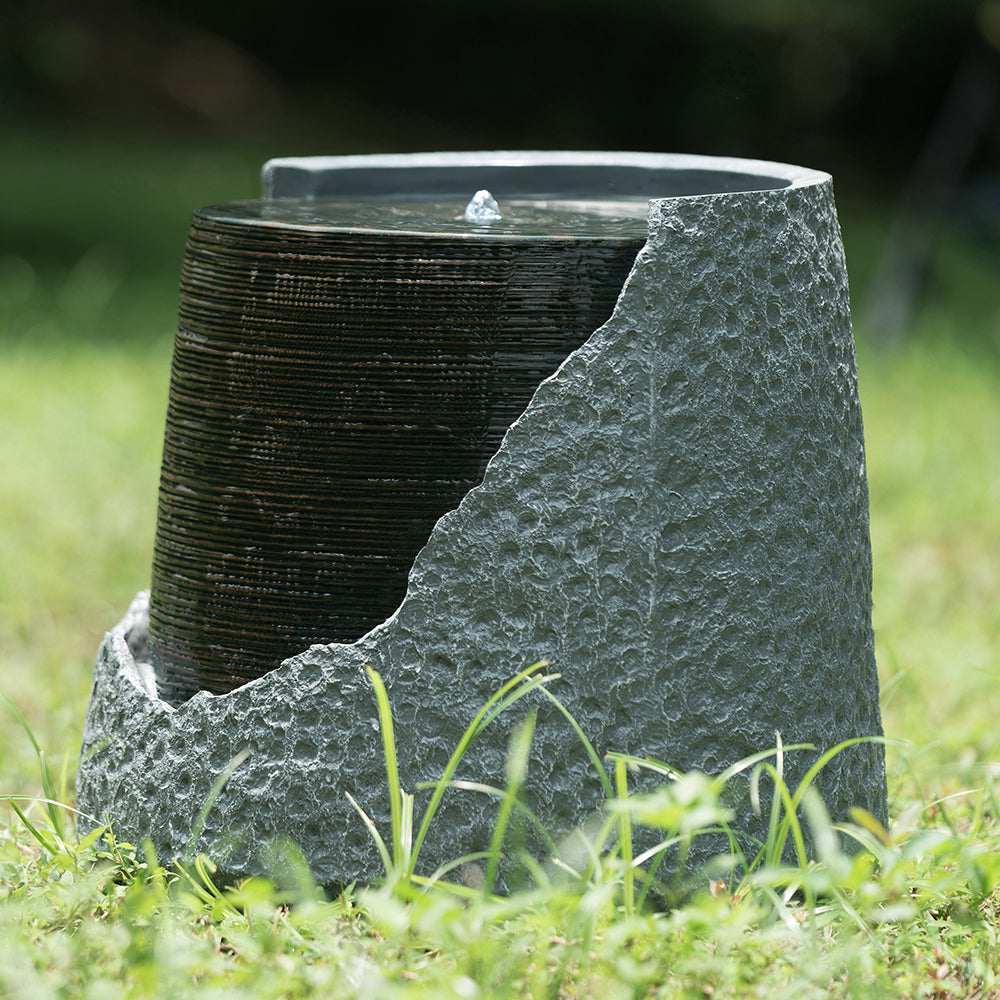
Cut Away Urn: check the width and the view into it
The Cut Away Urn is low and broad, with a diagonal opening in its textured gray shell and a dark ribbed core. Mark its full 19.7-inch width, and face the cut side toward your seat or walking route. Indoors, make sure the low position still gives you the view you want; outside, keep surrounding plants from hiding the opening.
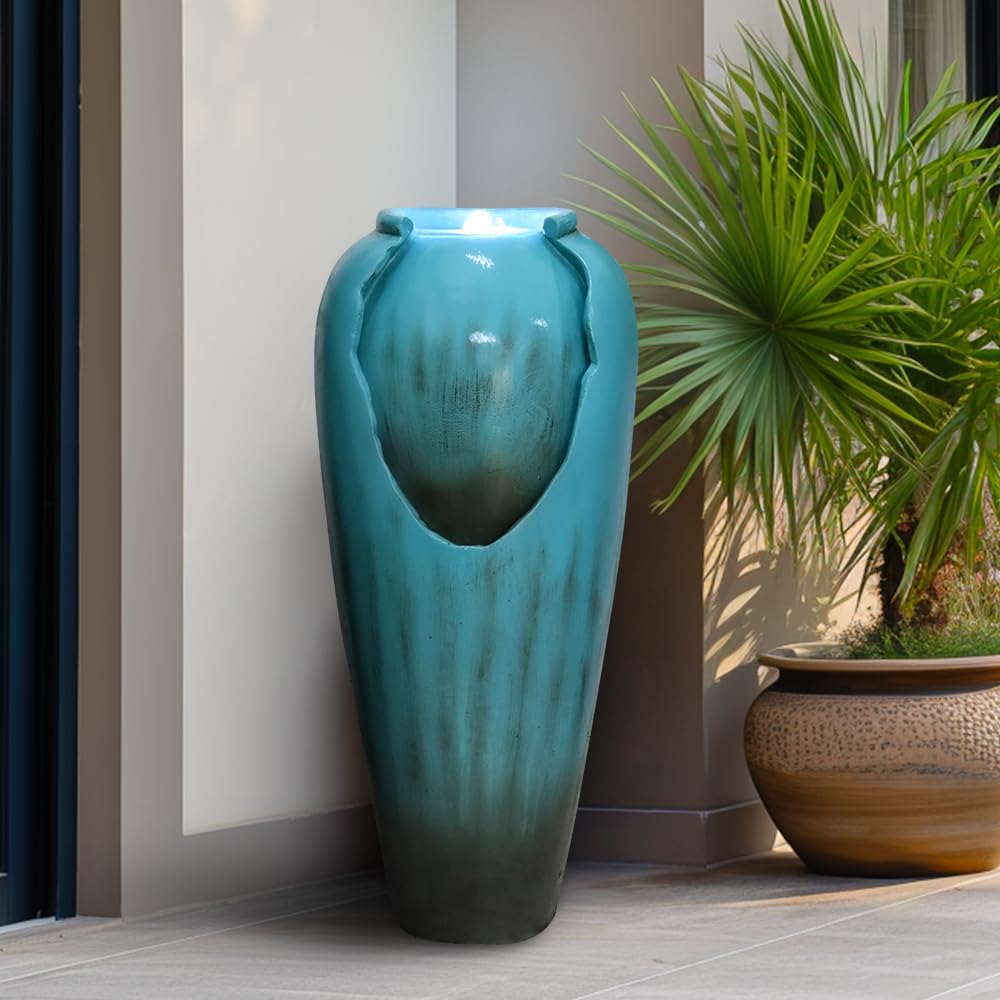
Glazed Cutout Urn: turn the water-facing side toward you
The Glazed Cutout Urn is taller, with a long front opening and a teal finish that darkens toward the foot. Its 13.7-by-12.5-inch overall plan is narrower than the low urn, but it still needs access around the body. Turn the opening toward the room or patio seat, then check the walking route. The glazed appearance is a finish on resin, not a ceramic construction.
For example, an 18-inch-wide gap rules out the gray urn's 19.7-inch body. The teal model's 13.7-inch width clears that body-width check, but you still need the required running and service space. A lower fountain is not necessarily the easier one to fit indoors, and a narrow plan is not proof that a model can be tucked tightly into a corner.
Use these dimensions to compare fit, not sound or splash. The narrower body does not establish which model will be quieter or keep surrounding surfaces drier. Those decisions still depend on the complete running fountain in the proposed location.
Check the new location in this order

Keep a short note of the model, allowed locations, original parts, and the spot you intend to use. Then work through the following order. It separates permission to operate from whether the particular placement is workable.
- Confirm the use and parts. Match the exact model to its permitted locations. Check whether a previous repair, replacement pump, or added light has changed the supplied setup.
- Check the space before filling. Mark the complete body outline and height, keep the walking route clear, and confirm support for the filled load. Locate the filling point, pump access, and suitable power route.
- Set up and start as instructed. At the specified water level and settings, watch where the water returns and listen from your usual seat. Observe surrounding surfaces as well as the fountain itself.
- Decide from what you find. If water escapes the intended area, parts appear damaged, or the supply is unsuitable, stop use and resolve the issue before restarting. A trial run checks the placement; it does not establish a new use rating.
If one location fails these checks, keep the fountain in a suitable permitted location, choose another model for the second spot, or use the move as a storage plan. You do not have to make one fountain serve two places at the expense of access, power, or moisture control.
Questions before you switch locations
Does an outdoor product name rule out indoor use?
Read the exact model's intended-use field and instructions. The two urns above have outdoor in their product names, while their specifications state indoor and outdoor use. A title alone gives you less information than those model-specific conditions.
Is one dual-use fountain practical for frequent moves?
Count the work each move requires: shutdown, draining, handling, setup, and refilling. If you plan to switch locations often, check the complete model’s handling instructions and whether the route is workable each time. A seasonal move may fit your routine; using both places every day may make separate fountains more practical. Indoor-and-outdoor use describes allowed locations, not how easy the fountain is to move.
Will changing the pump make it suitable for both places?
A new pump alone does not change the intended use of the whole fountain. The body, lights, power supply, connections, and replacement compatibility still matter. Confirm the complete model and setup before changing where it operates.