

Texture Carries the Character
Up close, the layered ridges, irregular edges, and stone and timber grain are what read as rustic. The character sits in the surface itself, so the fountain looks at home without any added ornament.

22 products


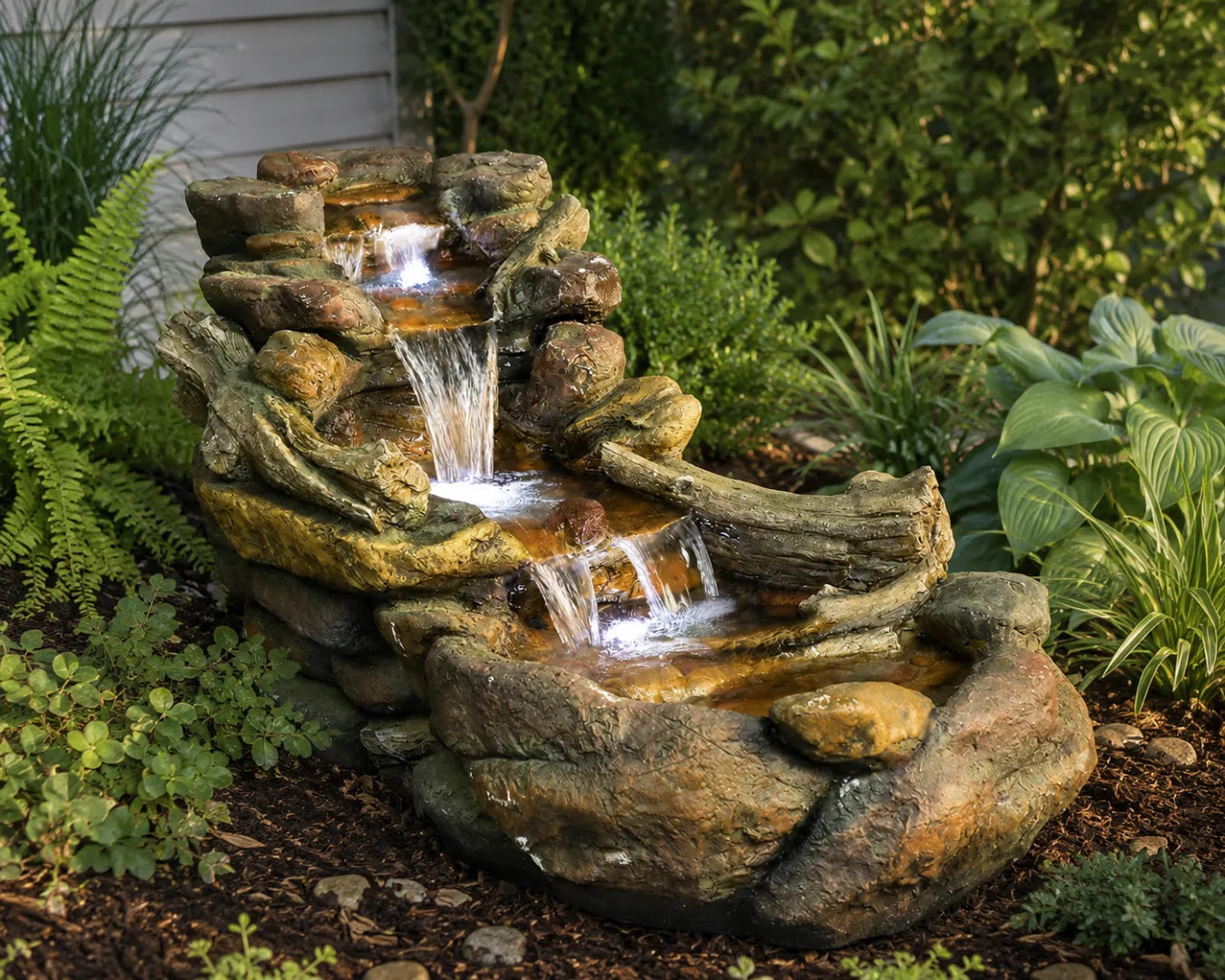
A rustic fountain looks best when it does not feel dropped into the garden but like part of it. Stone and timber textures, irregular edges, and layered surfaces tie it in with the planting, mulch, gravel, and stone already around it.
From across the yard you read a low, spreading shape or an uneven rising one. Step closer and the ridges, crevices, and shifts in color come out, and where the water runs over the surface it darkens and catches the light, so the texture gains depth the nearer you get.
We favor designs where the water looks like part of the piece, not something added on. Every ledge, channel, and basin should carry the flow clearly, while the fountain still looks complete, and worth looking at, even with the pump switched off.
Design Principles
A rustic fountain feels right when its surface, its water, and the garden around it all belong together. These are the three things to picture as you choose one for your space.
Up close, the layered ridges, irregular edges, and stone and timber grain are what read as rustic. The character sits in the surface itself, so the fountain looks at home without any added ornament.
The water never feels added on. It slips over ledges, through narrow channels, and into shallow basins, so every drop looks like it belongs to the shape in front of you.
Set among low planting, mulch, gravel, and a few stones, a rustic fountain stops looking like an object set down in the yard and starts to feel like it grew there. Leave a little open space around it so the full shape, and the water moving over it, stays easy to take in.
Natural Forms
A rustic fountain may settle close to the ground, rise through narrow rock-inspired layers, or spread across the edge of a planting bed. Choose by the viewing distance, available ground space, and amount of visual presence your garden needs.

Layer Water Through a Compact Footprint
Irregular ledges create several visible drops without requiring a wide installation area. This form works naturally beside a planting bed, patio edge, or garden path.

Add Height Where Ground Space Is Limited
A rising rock-inspired form creates a stronger focal point while using less ground space than a wide creek or basin design.

Let the Fountain Sit Closer to the Landscape
Low, spreading forms connect naturally with planting, mulch, gravel, and stone while keeping the water route close to the surrounding ground.
Placement in the Garden
The transition between planting and paving, lawn and mulch, or shade and open ground gives a rustic fountain a natural position. Build the setting in three simple layers while keeping the water and complete silhouette easy to see.
Behind
Place taller shrubs, ferns, and layered foliage behind or beside the fountain. They provide depth without hiding the outline or competing with the moving water.
At the Base
Low groundcover, mulch, gravel, and a small amount of natural stone help the fountain settle into the garden. Keep plants away from the pump access and lower water basin.
In Front
Leave enough clear space to see the full water route and to reach the fountain for refilling, cleaning, pump adjustments, and seasonal care.
Everyday Use and Care
A fountain becomes easier to enjoy when refilling, pump access, cleaning, power, and seasonal care are considered before the final location is chosen.
Evaporation, wind, and splashing gradually reduce the water level. Refill the fountain before the pump intake becomes exposed and check it more frequently during hot or windy weather.
Plan the cable route and leave enough room to reach the pump, lighting connections, and controls. Follow the product instructions for outdoor power and electrical connections.
Remove leaves and debris from the basins, ledges, and pump intake. Periodic cleaning also helps control mineral deposits and buildup that may become more visible on textured surfaces.
Drain the fountain completely before freezing conditions and follow the product-specific instructions for the pump, lighting, surface finish, covering, and seasonal storage.
Care requirements vary by material, finish, climate, pump, lighting, and product construction. Always follow the instructions provided with the individual fountain.
Questions Before You Choose
Review the form, material, water route, sound, installation, and care requirements before choosing a rustic fountain for your space.
Rustic fountains commonly use irregular silhouettes, layered ledges, weathered finishes, and stone-inspired or wood-inspired textures. The water route is often visible as it passes through channels, shallow basins, and uneven surfaces.
Not always. Most rustic designs use a molded outdoor material with stone-inspired or wood-inspired surfaces, shaped to reproduce the character of layered rock, driftwood, or aged timber rather than being cut from the raw material. Review the individual product page for how each fountain is made.
A compact terraced cascade or narrow stacked form can provide visible water movement without requiring a wide installation area. Review the complete height, width, depth, and maintenance clearance before choosing the location.
Sound varies according to the number and length of the water drops, pump setting, water level, basin shape, and surrounding surfaces. Shallow channels usually sound gentler, while multiple ledges and longer drops tend to create a more noticeable layered sound.
Many outdoor fountains recirculate water through a pump and do not require a permanent water line. Water must still be added as it is lost through evaporation and splashing. Confirm the setup on the individual product page.
Pump and lighting packages vary by product. Some fountains include both, while others may include only a pump or require separate components. Review the included items, power requirements, and assembly instructions before purchase.
Place the fountain on a flat, level, and stable surface that can support its complete operating weight. Avoid soft, uneven, or shifting ground that may allow the fountain to lean or place stress on the structure.
Refilling frequency depends on temperature, wind, splashing, and the size of the water reservoir. Remove leaves and debris regularly, keep the pump intake clear, and clean the water route when mineral deposits or buildup become visible.
Cold-weather requirements vary by material and construction. Drain the fountain completely before freezing conditions and follow the product instructions for the pump, lighting, finish, covering, and seasonal storage.
Stability depends on the fountain’s height, width, total operating weight, shape, assembly, and installation surface. There is no universal wind rating for every design. Use a level, stable surface, follow the installation instructions, and consider a more sheltered location where strong winds are common.
Find Your Fountain
Compare the full dimensions, water route, sound, lighting, material, installation surface, and care requirements before choosing your final design.