


16 products
-

 Resin Spinning Orb Tabletop Fountain 8 Inch Color LEDResin Spinning Orb Tabletop Fountain 8 Inch Color LED
- Regular price
-
$59.99 - Regular price
-
$0.00 - Sale price
-
$59.99
-

 Resin Broken Barrel Rustic Outdoor Fountain 25 Inch LEDResin Broken Barrel Rustic Outdoor Fountain 25 Inch LED
- Regular price
-
$149.99 - Regular price
-
$199.00 - Sale price
-
$149.99
-

 Resin Tree Trunk Outdoor Fountain 39 Inch with LEDResin Tree Trunk Outdoor Fountain 39 Inch with LED
- Regular price
-
$333.99 - Regular price
-
$290.99 - Sale price
-
$333.99
-

 Resin Hand Pump Cascading Outdoor Fountain 32 InchResin Hand Pump Cascading Outdoor Fountain 32 Inch
- Regular price
-
$278.99 - Regular price
-
$259.99 - Sale price
-
$278.99
-

 Wood and Iron Barrel Pump Fountain Planter 23 InchWood and Iron Barrel Pump Fountain Planter 23 Inch
- Regular price
-
$168.99 - Regular price
-
$196.99 - Sale price
-
$168.99
-

 Resin Wishing Well Outdoor Fountain 39 Inch with LEDResin Wishing Well Outdoor Fountain 39 Inch with LED
- Regular price
-
$209.99 - Regular price
-
$219.99 - Sale price
-
$209.99
-

 Resin Squirrel Tree Stump Outdoor Fountain 30 Inch LEDResin Squirrel Tree Stump Outdoor Fountain 30 Inch LED
- Regular price
-
$578.99 - Regular price
-
$430.99 - Sale price
-
$578.99
-

 Resin Rustic Barrel Outdoor Water Fountain 24 Inch LEDResin Rustic Barrel Outdoor Water Fountain 24 Inch LED
- Regular price
-
$291.99 - Regular price
-
$266.99 - Sale price
-
$291.99
-

 Resin Small Outdoor Water Fountain Fallen Log FormResin Small Outdoor Water Fountain Fallen Log Form
- Regular price
-
$39.90 - Regular price
-
$99.00 - Sale price
-
$39.90
-

 Resin Hand Pump Barrel Farmhouse Outdoor Fountain 32 inResin Hand Pump Barrel Farmhouse Outdoor Fountain 32 in
- Regular price
-
$178.99 - Regular price
-
$178.99 - Sale price
-
$178.99
-

 Carbonized Wood Wishing Well Outdoor Fountain 44 InchCarbonized Wood Wishing Well Outdoor Fountain 44 Inch
- Regular price
-
$213.99 - Regular price
-
$222.99 - Sale price
-
$213.99
-

 Resin Bear Fountain Two Cubs on Timber PostResin Bear Fountain Two Cubs on Timber Post
- Regular price
-
$181.99 - Regular price
-
$203.99 - Sale price
-
$181.99


The Numbers That Matter
- 14 to 44 inches Heights
- Included with every one Pump
- Warm LED on nearly all of them Lighting
- Weathered oak, iron banding, bark and stone Look
- Recirculates, no plumbing Power
- Nothing here is over 35 pounds Weight
Made to Look Like It Was Always There
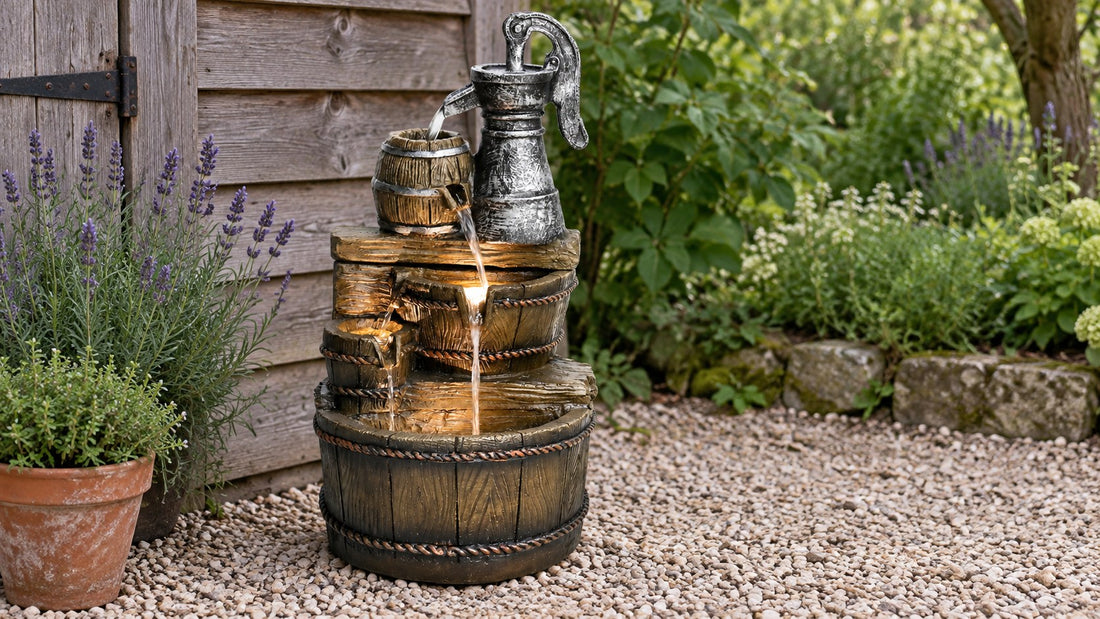
Barrels, and why they are cast rather than coopered
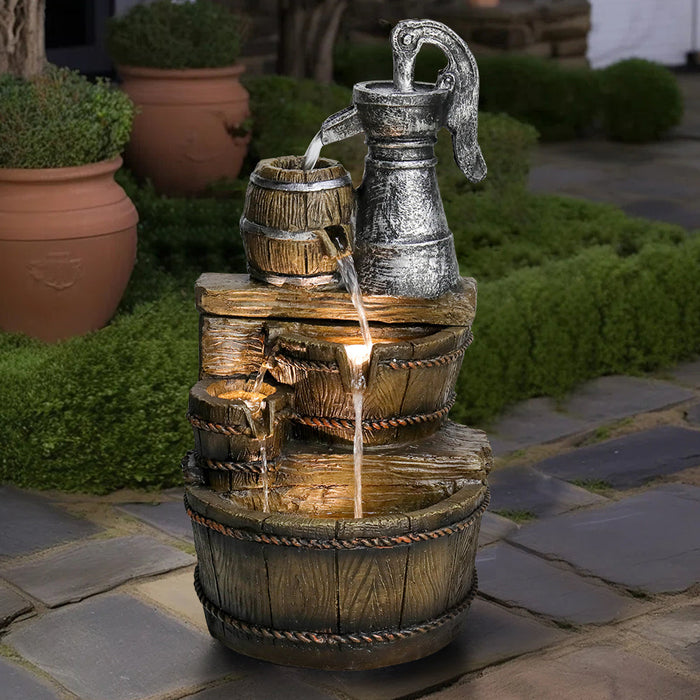
A whiskey barrel is the shape people picture first when they hear rustic, and for good reason. Oak staves, iron hoops, a wide open top. The barrels here are cast rather than built from real staves, and that is deliberate. A coopered barrel holds liquid because the wood swells tight against the hoops, and a barrel that sits outside half full of water will swell, dry, shrink and eventually weep at the seams. A cast piece takes the grain, the stave lines and the banding from a real barrel and simply holds water. Some are open topped with a single spout, some are split down one side so the water runs across a ribbed inner face.
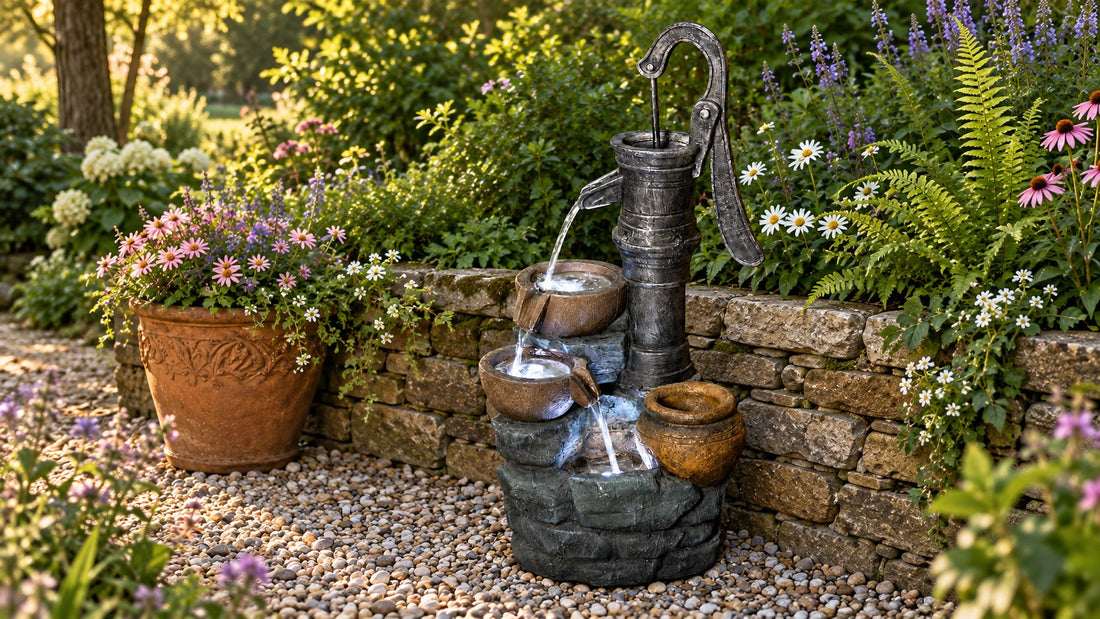
Hand pumps, and the trough they pour into
The cast iron hand pump is the other shape that reads as rustic immediately, partly because the silhouette is so specific. A long curved handle, a heavy spout, a body that tapers. On a fountain the pump is the outlet, so water leaves it exactly where it would have, and falls into a barrel, a trough or a stack of basins below. What sells the illusion is the finish on the metal rather than the shape, so look at whether the rust tone sits in the low spots and the raised edges are worn brighter, which is how a real pump ages.
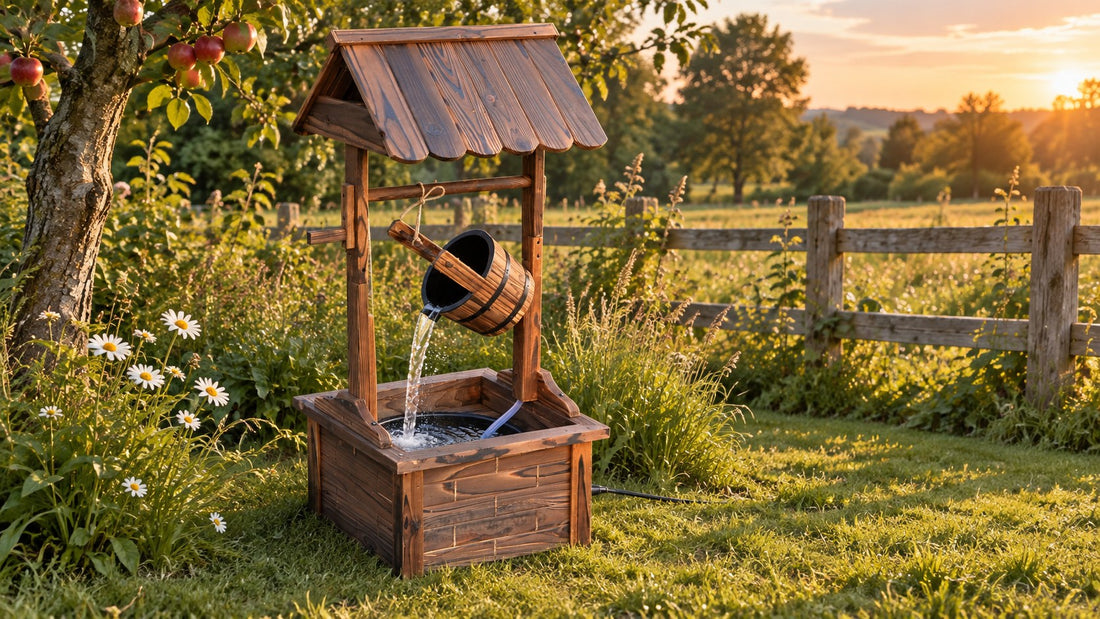
Wishing wells and tree trunks
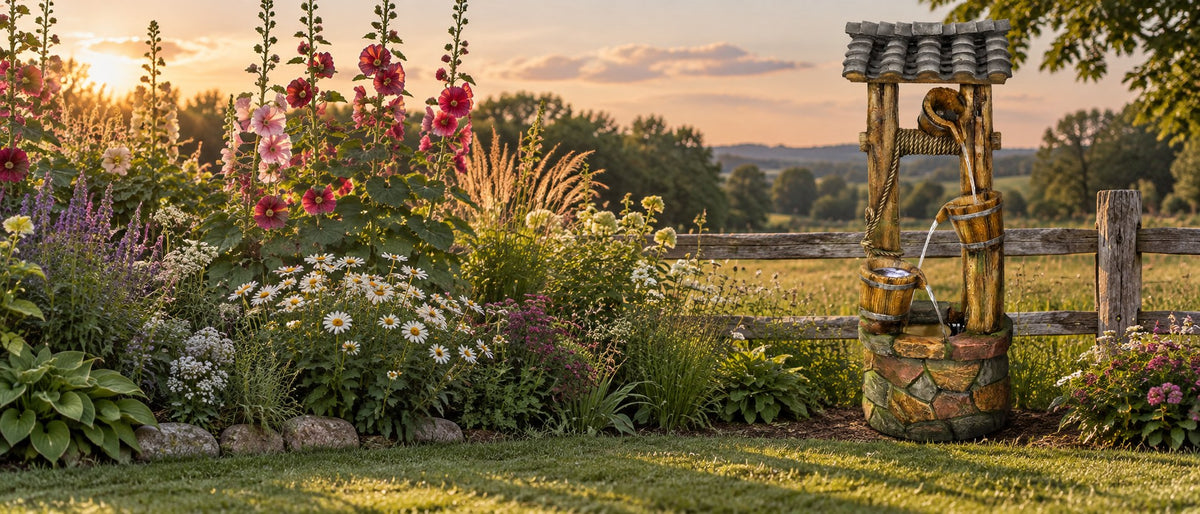
These are the taller pieces in the collection, three to four feet, and they read from further away. A wishing well gives you a shingled roof, two posts, a rope and a hanging bucket, and the bucket is where the water comes from. A hollow tree trunk does something quieter, with water crossing cut ends and running down bark. The difference in how they sit is worth thinking about. A well is architecture and wants a bit of open ground around it. A trunk is planting and disappears into a bed of ferns and hostas until you notice the water.
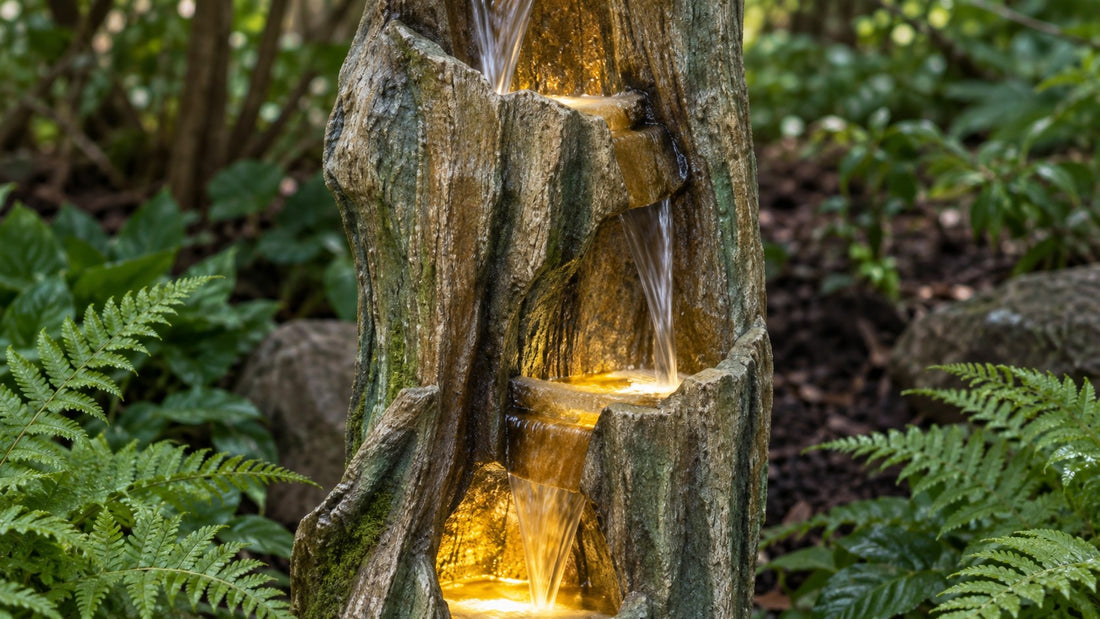
The finish is applied, not earned
Everything here arrives already looking weathered. The silver gray in the timber, the rust on the iron, the darker shading in the hollows of the bark, all of it is applied by hand before the piece ships. That is the point, because the alternative is buying something that looks new for three years. What does happen with time is that real moss finds the shaded hollows and the color deepens slightly where water runs constantly, which is a change almost everyone is happy with.
Light after dark
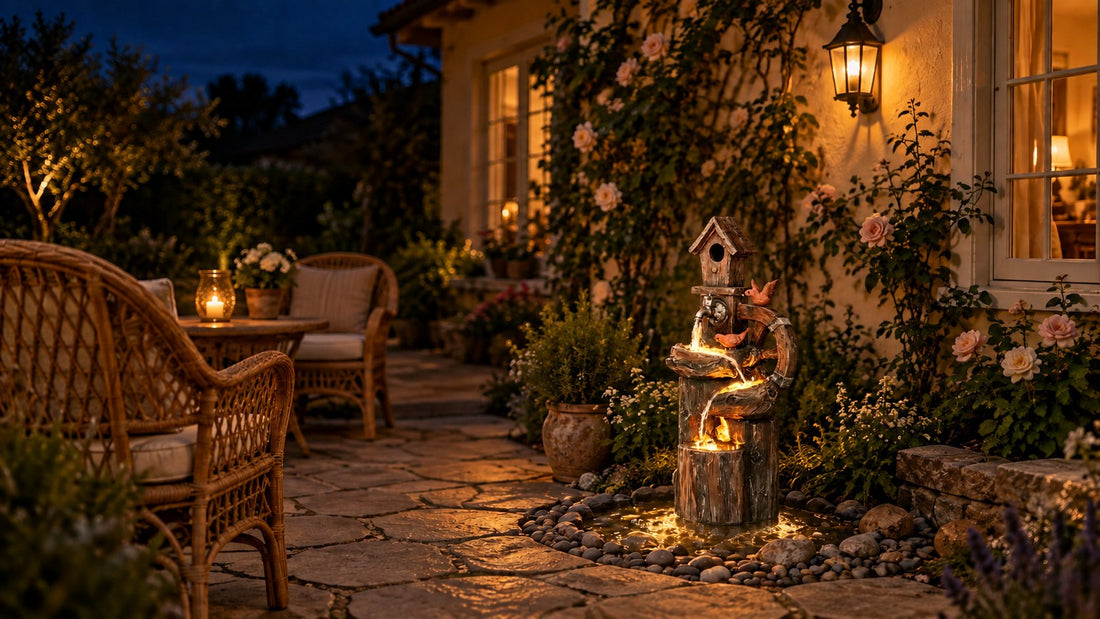
Nearly every piece in this collection has warm LED built in, and on rustic shapes it is usually hidden somewhere that makes sense. Inside the open top of a barrel, under the lip of a trough, behind the sheet of water on a split stave face. Warm light is the right choice for these in a way cool white would not be, because the whole look rests on oak and iron and old timber, and a cold light makes those read as gray plastic after dark.
Light enough to move, and easy to winter
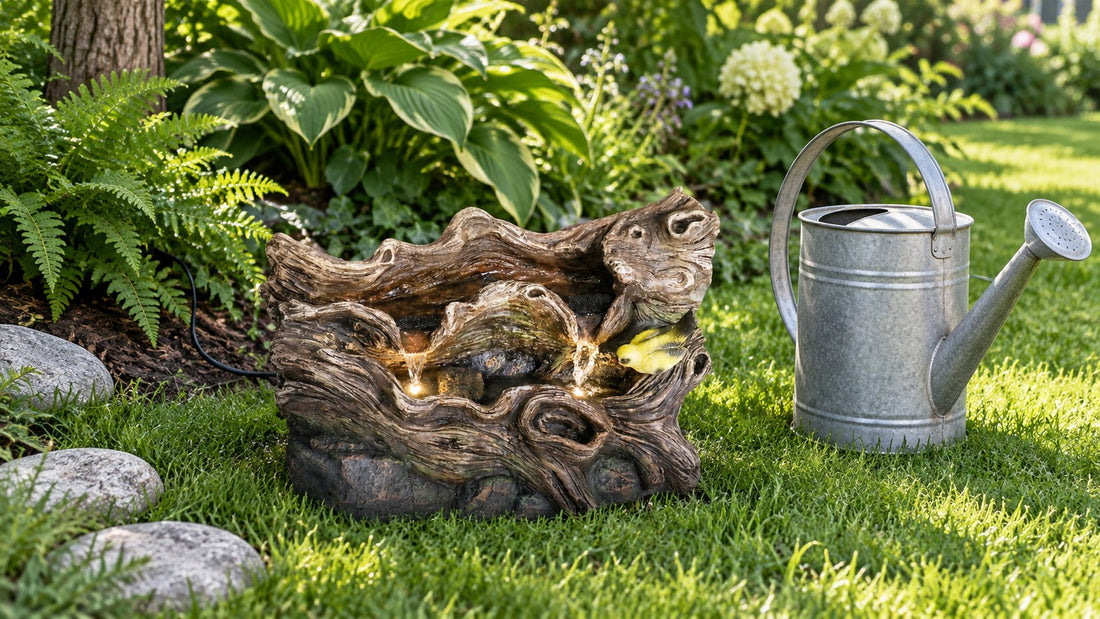
Nothing in this collection weighs more than thirty five pounds and most of it is under twenty. That is worth saying plainly because these pieces look heavy, and the look is the point. What it means in practice is that one person can carry any of them out, set them down, and move them again a week later when the spot turns out to be wrong. It also makes winter easy. Drain the basin, take the pump indoors, and carry the whole piece into a shed until spring rather than covering it where it stands.
Comparing Your Rustic Outdoor Fountain Options
| Barrels and pumps | Wells and tree trunks | |
|---|---|---|
| Reads as | A working yard object | A piece of the woods |
| Typical height | About two feet | Three to four feet |
| Sits best | On gravel, beside a shed or a porch step | In a planted bed or at the edge of a lawn |
| Sound | A single spout into an open top | Water crossing bark and ledges |
| Detail to look for | Iron hoops and the grain of the staves | Knots, cut ends and moss in the hollows |
| Planting around it | Lavender, grasses, anything cottage | Ferns, hostas, shade planting |
Five shapes in this collection
 01
01
Barrels
Oak staves and iron hoops, open topped or split
4 pieces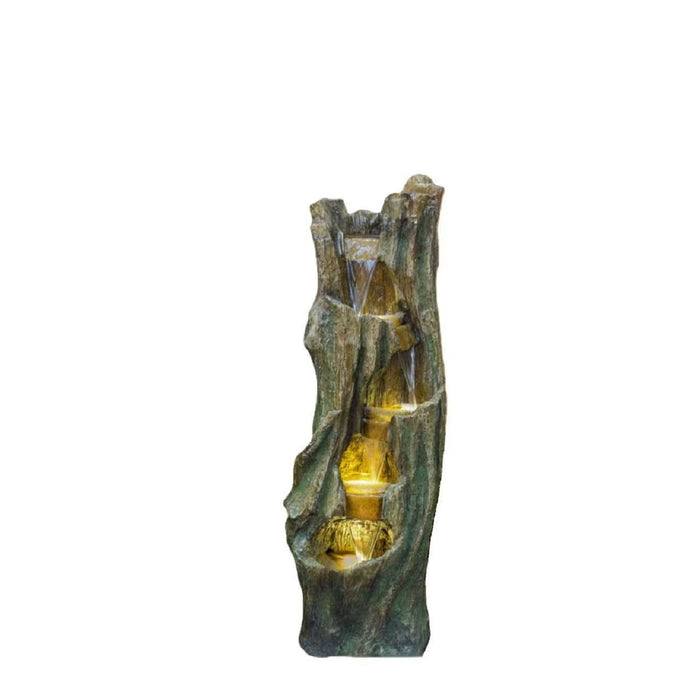 02
02
Hand pumps
A cast iron pump pouring into a trough or barrel
15 pieces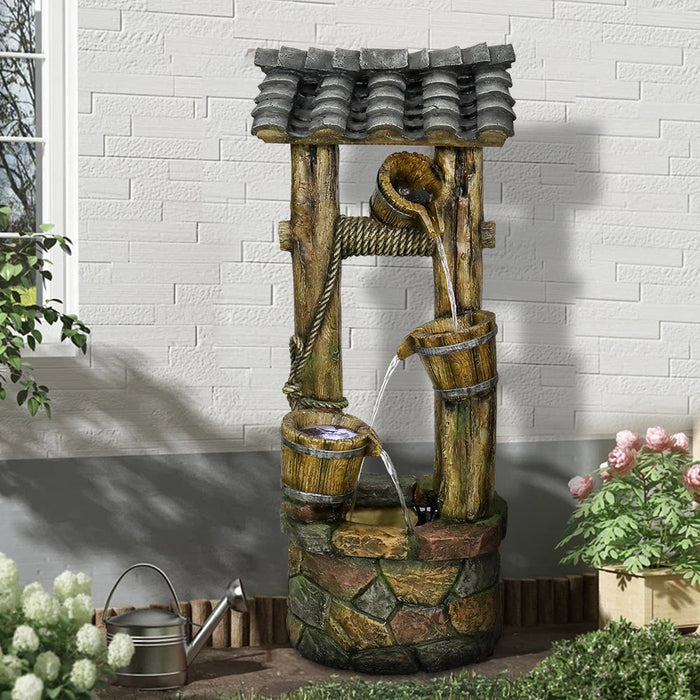 03
03
Wishing wells
A shingled roof, a rope and a hanging bucket
2 pieces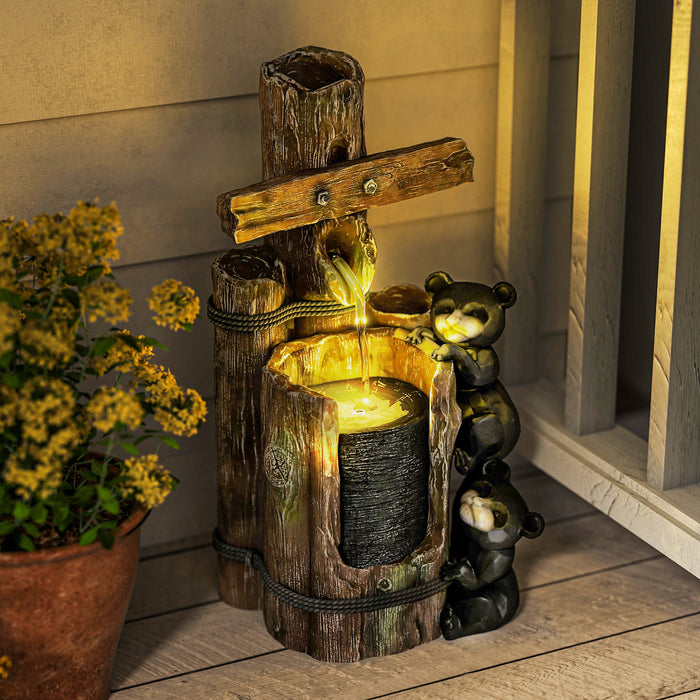 04
04
Tree trunks and logs
Hollowed bark with water crossing the cut ends
1 pieces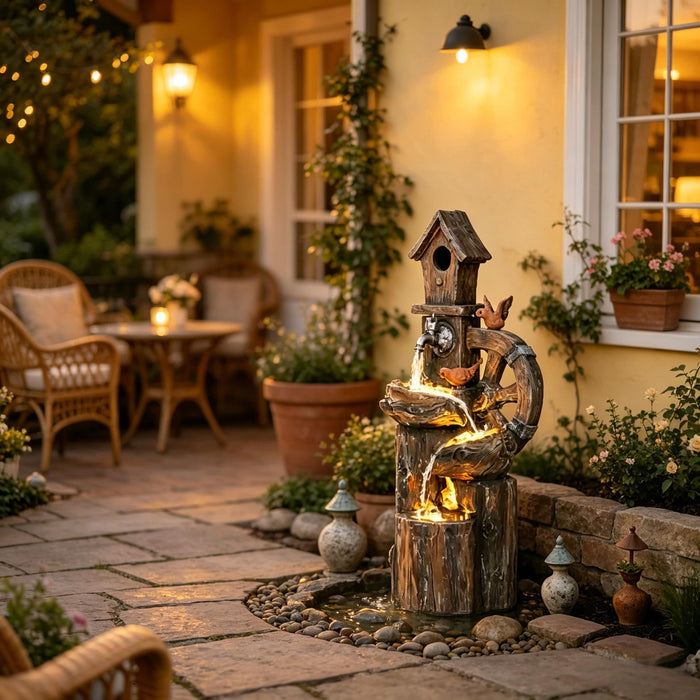 05
05
Birdhouses and animals
A bear, a squirrel, a birdhouse on a post
1 pieces
Before You Order a Rustic Outdoor Fountain
What makes a fountain rustic rather than traditional
Are whiskey barrel fountains made from real barrels
Do rustic fountains need to look weathered to work
How heavy are they
Where does a barrel or hand pump fountain look right
How do you get one through winter
Related collections
Everything here ships free in the continental US, carries a 3-year warranty, and can go back within 60 days with no restocking fee if it is not right in the space.