

18 products
-

 Resin Serpentine Slate Column Cascading Outdoor FountainResin Serpentine Slate Column Cascading Outdoor Fountain
- Regular price
-
$679.99 - Regular price
-
- Sale price
-
$679.99
-

 Resin Sandstone Outdoor Wall Water Fountain with Warm LEDResin Sandstone Outdoor Wall Water Fountain with Warm LED
- Regular price
-
$263.99 - Regular price
-
$250.99 - Sale price
-
$263.99
-

 Resin Slate Water Wall Fountain 3 Column Top LitResin Slate Water Wall Fountain 3 Column Top Lit
- Regular price
-
$331.99 - Regular price
-
$289.99 - Sale price
-
$331.99
-

 Resin Stepped Shale Outdoor Rock Fountain with Warm LEDResin Stepped Shale Outdoor Rock Fountain with Warm LED
- Regular price
-
$629.99 - Regular price
-
- Sale price
-
$629.99
-

 Resin Modern Outdoor Fountain 39 Inch Tilted ChutesResin Modern Outdoor Fountain 39 Inch Tilted Chutes
- Regular price
-
$359.99 - Regular price
-
$305.99 - Sale price
-
$359.99
-

 Resin Slate Outdoor Water Wall Fountain with LED LightsResin Slate Outdoor Water Wall Fountain with LED Lights
- Regular price
-
$263.99 - Regular price
-
$250.99 - Sale price
-
$263.99


The Numbers That Matter
- Resin, shaped as stone, slate or trays Material
- From about two feet to just over four Heights
- Built in on every piece Lighting
- Included and already fitted Pump
- Plugs into a standard outlet Power
- Recirculates, no plumbing Water
Step by Step, Ledge by Ledge, and Lit at Every Drop
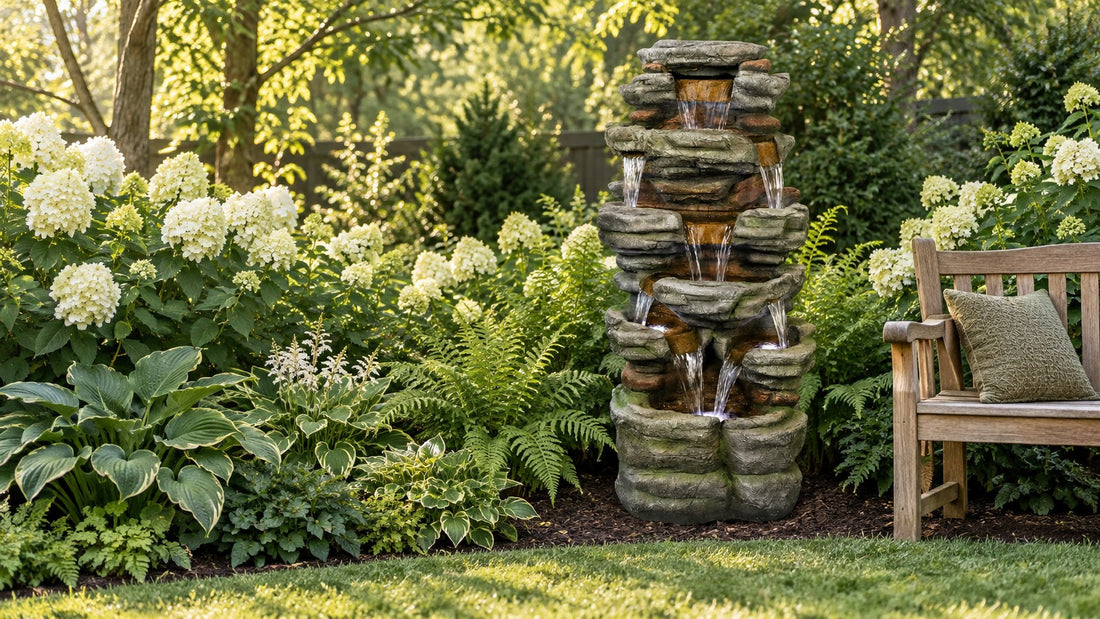
What makes it a waterfall
A waterfall fountain is defined by stages. The water does not just rise and spill once. It leaves the top, falls onto a ledge or into a tray, gathers and falls again, several times on its way to the basin at the bottom. Some pieces have three drops, the tallest have a dozen or more streams running at once.
That is the look people mean when they search for an outdoor waterfall fountain or a water fall fountain for the garden. Others call it a cascading water fountain or simply a fountain with a waterfall. The shape of the ledges changes the character, but the idea stays the same, water you can follow from top to bottom with your eye.
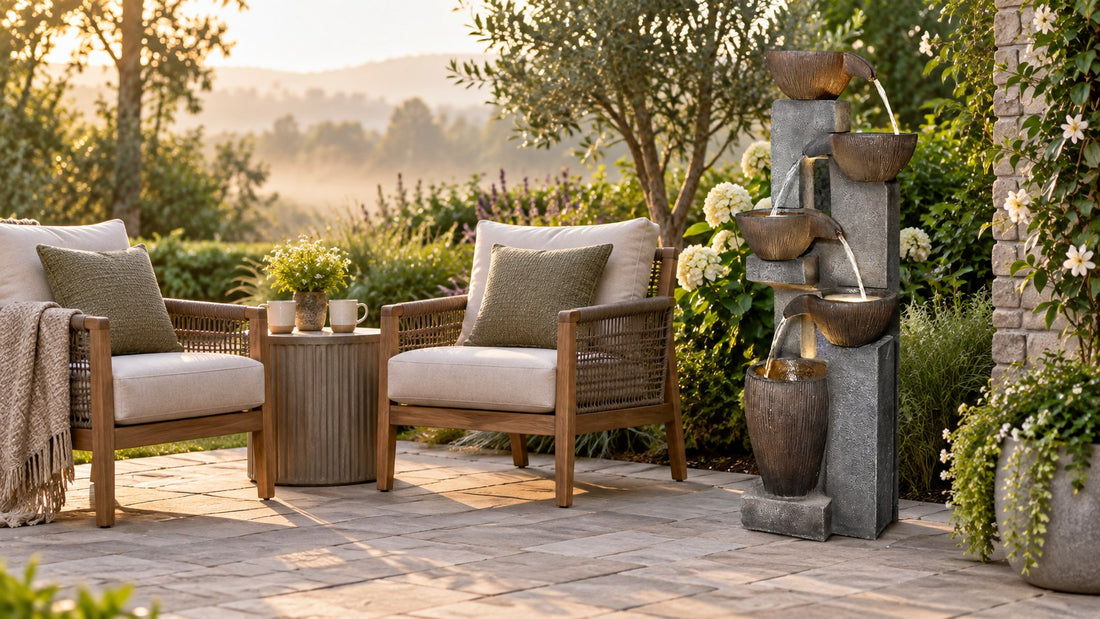
The sound is the reason
More falls mean more sound, and it is a better kind of sound. Each drop lands at a slightly different height and speed, so instead of a single tap of water you hear a layered, running sound that stays pleasant for hours. It is the closest thing to having a small creek beside the patio, which is why a garden waterfall fountain is so easy to sit beside.
Height matters too. A two foot cascade murmurs beside a chair. A tall waterfall fountain, four feet or more, fills a courtyard and softens the background noise of a street or a neighbor's air conditioner. Many of these have an adjustable pump, so you can turn the flow down for a quiet evening and up when you want more.
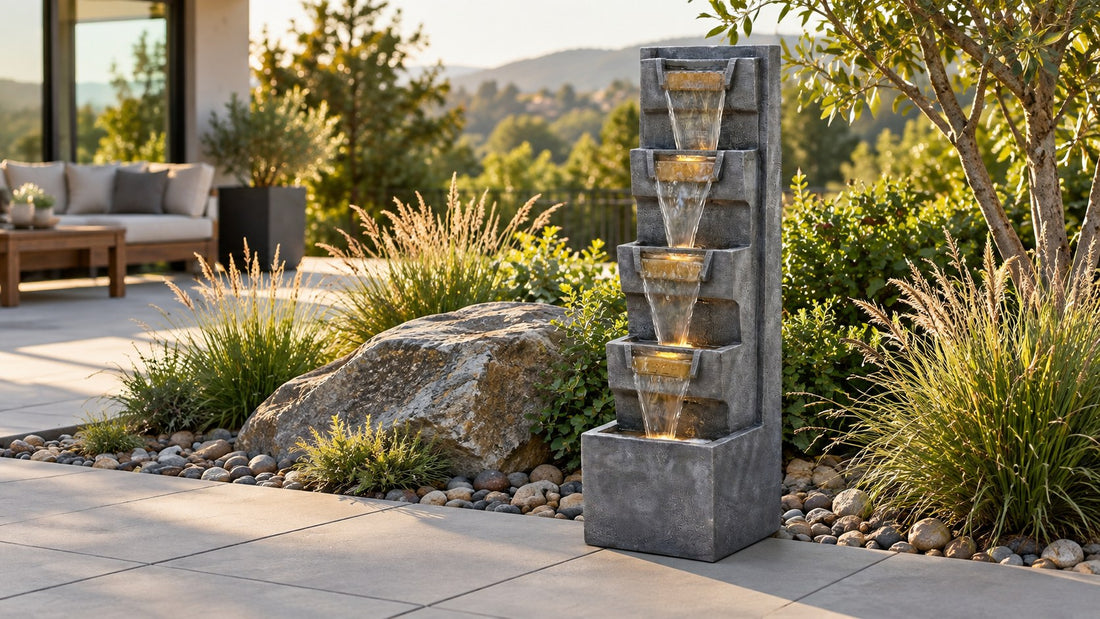
Natural ledges or clean lines
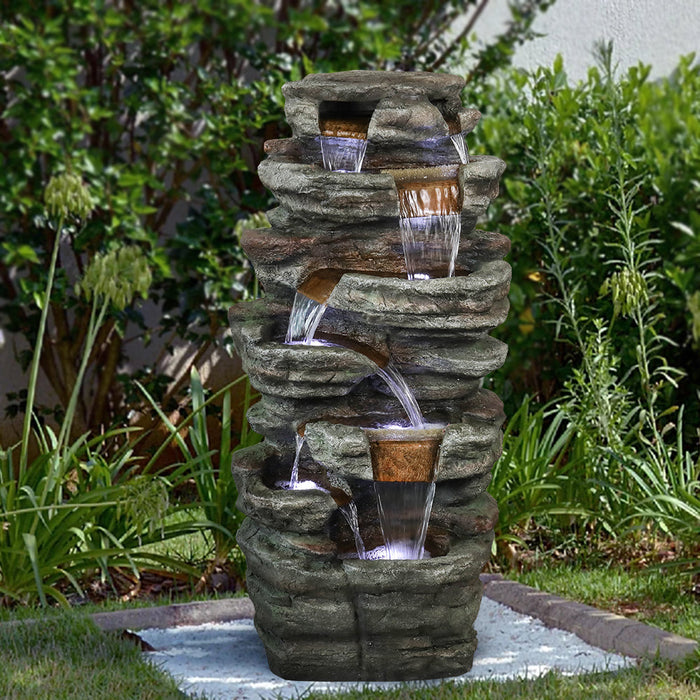
The range splits into two looks. Natural waterfalls stack shale, slate and rock so the water finds its own path, spilling off uneven edges and running down textured faces. A stone waterfall fountain like this settles easily into planting beds, rock gardens and cottage style yards.
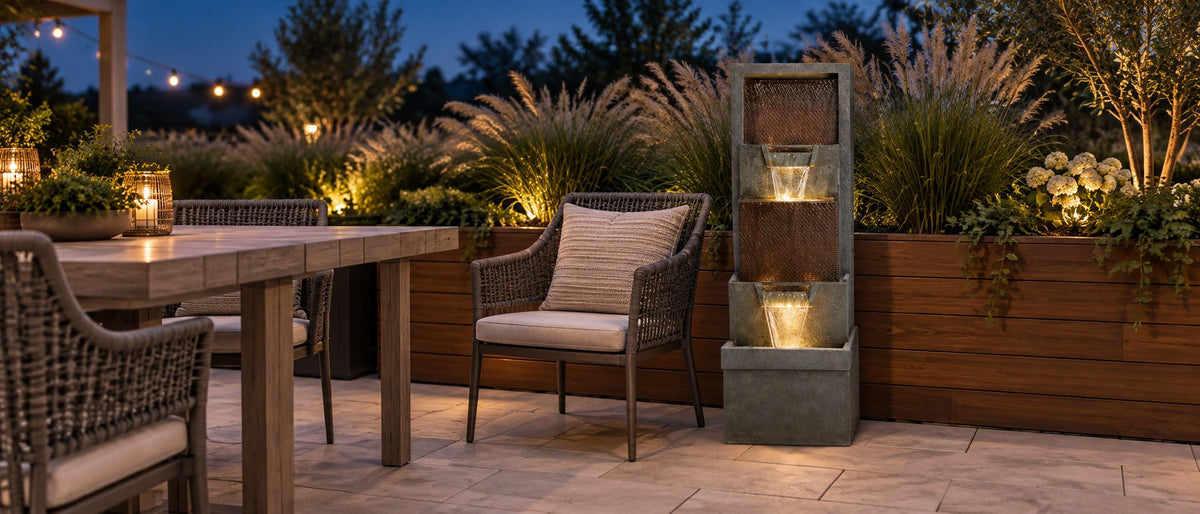
Modern waterfalls use trays, spouts and slotted channels, so each fall is a clean sheet or a single smooth stream. A modern waterfall fountain suits patios, entries and newer homes. Both are cast in resin, which captures the grain of real slate or the crisp edge of a tray and stays light enough to move into place.
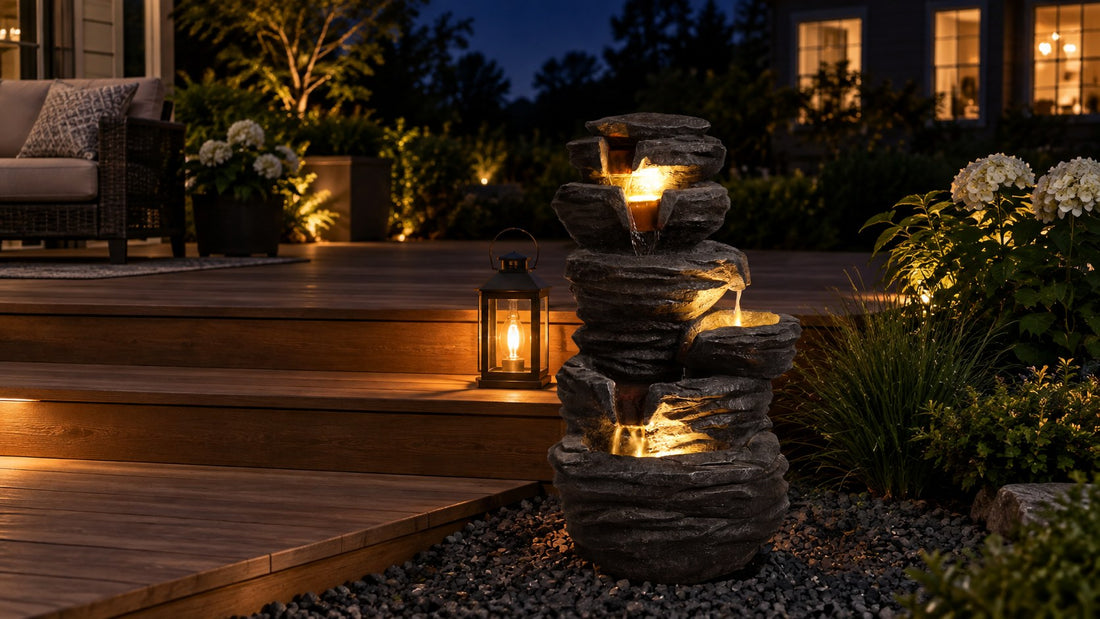
Light at every drop
Every waterfall fountain here has light built in, and on a cascade it has more to work with. The lights sit under each fall, behind the sheets or among the ledges, so after dark the whole path of the water glows from top to bottom. A waterfall lit this way is one of the best things to look at from a window on a summer night.
When you choose a spot, think about where you sit in the evening as well as where you walk by day. A fountain that faces the back door or the living room window earns its place twice.
Where to put it
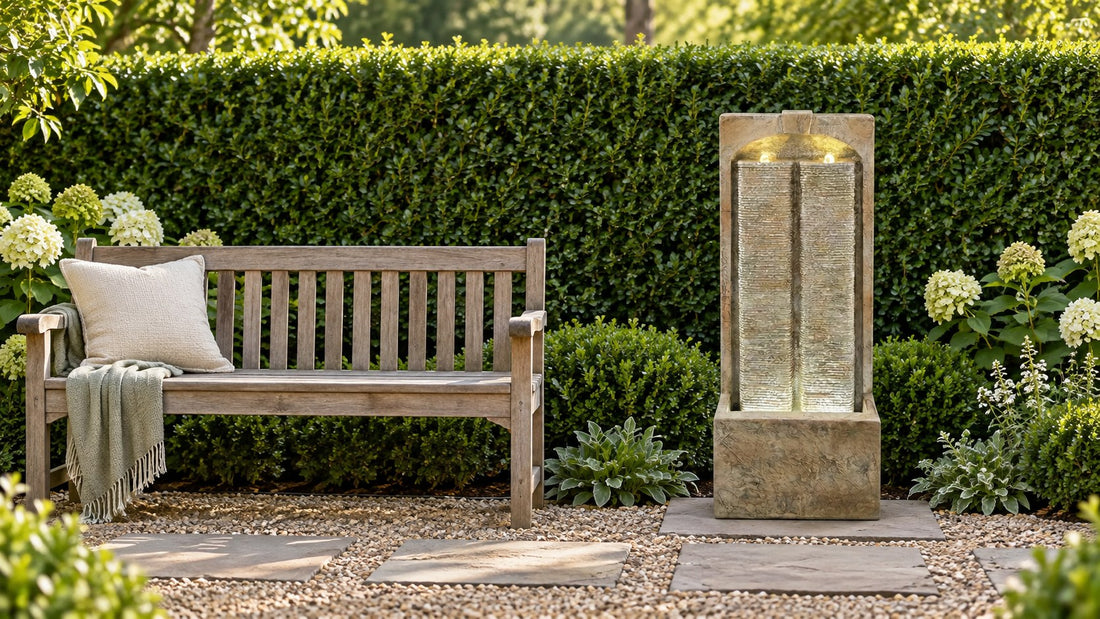
A waterfall fountain has a front, and in a backyard that decides where it goes. The ledges and falls face one way, so set it where that face points at the people who will enjoy it, a seat, a path or a window. Backing it against a wall, a fence or a hedge frames the cascade and also bounces the sound forward toward you.
Set it level on a firm surface such as pavers, a concrete pad or a flat stone on compacted gravel. If it leans, water runs to one side of each ledge and splashes past the basin. Keep it within reach of an outdoor outlet and plan the cord path behind the fountain so it stays out of sight.
Water, wind and winter
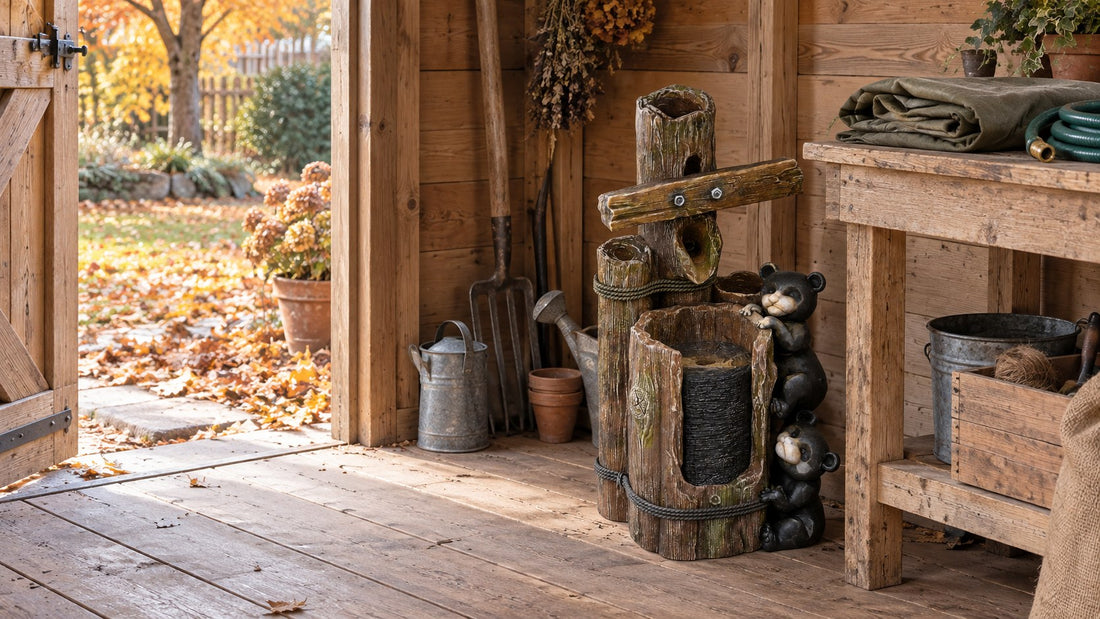
Because a cascade spreads water across many falls, it loses a little more to evaporation than a simple bubbler, and wind can blow some off each drop. Check the level every day or two in hot or breezy weather and top it up so the pump never runs dry. A sheltered spot out of strong wind keeps more water in the basin.
Every few weeks, rinse the ledges and wipe the lips of each tray so leaves and mineral spots do not break up the falls. Before the first hard freeze, drain the fountain, dry the pump and bring it into a garage or shed. Resin makes that an easy job, and in spring it is ready again with fresh water.
Comparing Your Waterfall Fountain Options
| Natural rock | Modern trays | |
|---|---|---|
| Look | Stacked shale, slate and rock ledges | Squared trays, spouts and slotted channels |
| Water | Finds its own way over each ledge | Falls in clean, even sheets |
| Sound | Busy and varied, like a stream | Steady and even |
| Lighting | Tucked among the ledges | Set under each fall or tray |
| Suits | Planting beds, rock gardens, cottage gardens | Patios, entries, modern yards |
| Care | Rinse the ledges now and then | Wipe each lip to keep the sheet smooth |
Five ways into the waterfall range
 01
01
Rock waterfalls
Shale and stone ledges with water running over them
20 pieces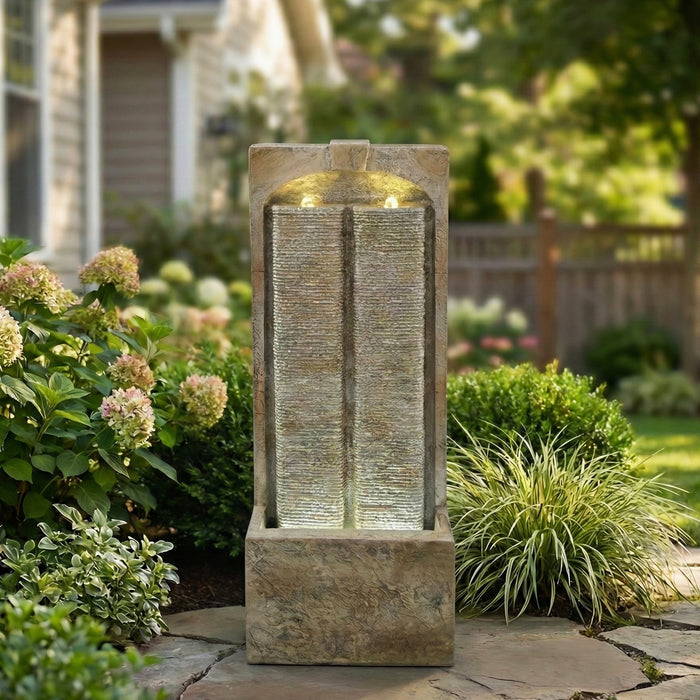 02
02
Modern cascades
Trays and sheets of water in clean lines
26 pieces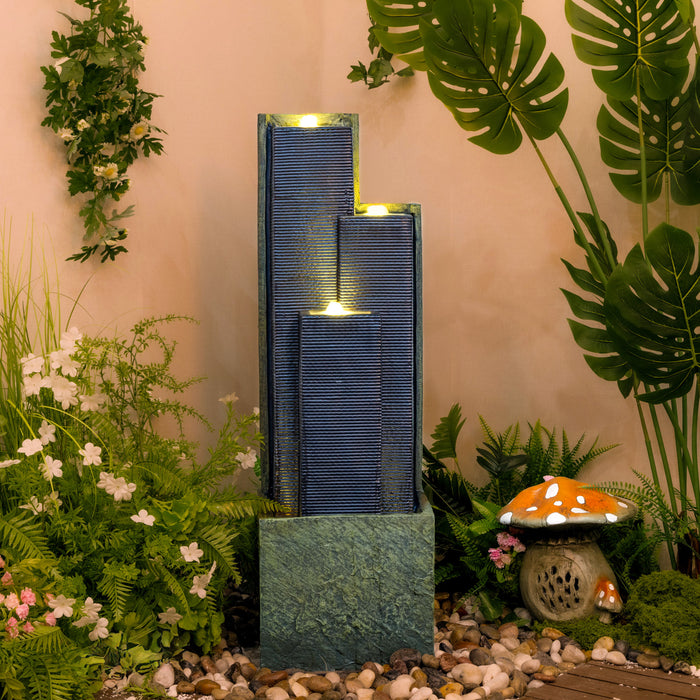 03
03
Water walls
A flat face with a curtain of water
9 pieces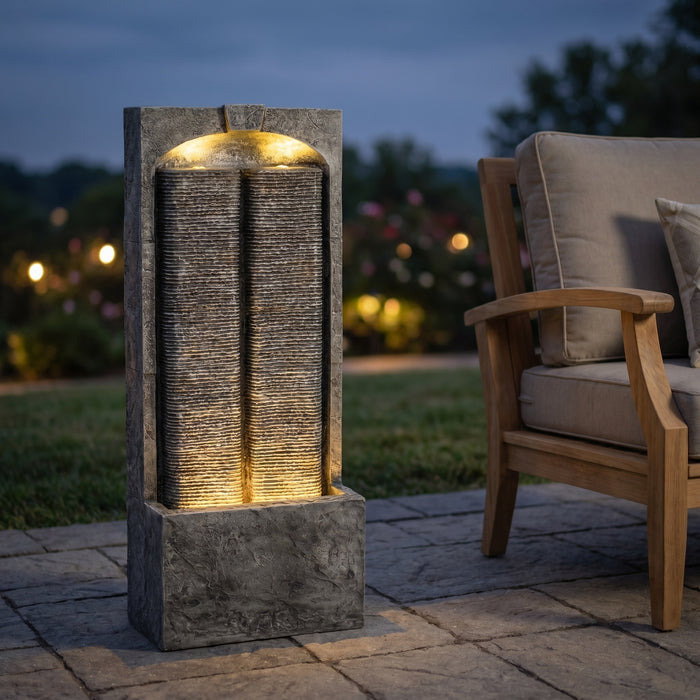 04
04
Columns
Tall, slim cascades for a narrow spot
9 pieces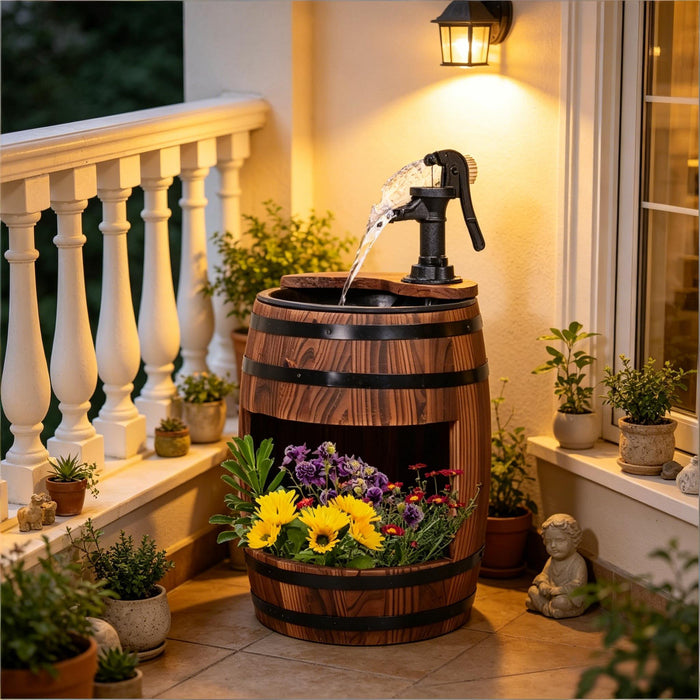 05
05
Rustic cascades
Logs, pots and weathered textures
16 pieces
Before You Buy a Waterfall Fountain
What is a waterfall fountain?
Are outdoor waterfall fountains loud?
Do these waterfall fountains have lights?
Do I need plumbing for a waterfall fountain outdoor?
Why does a waterfall fountain need more topping up?
What should I do with it in winter?
Related collections
Guides and how tos
Put it where you will hear it most, set it level so every ledge spills evenly, and let the sound of falling water become part of the garden.