

01
Start with the View You Use Most
Begin with the window, patio seat, or garden path you use most, then choose a height that remains clearly visible from that position.

9 products


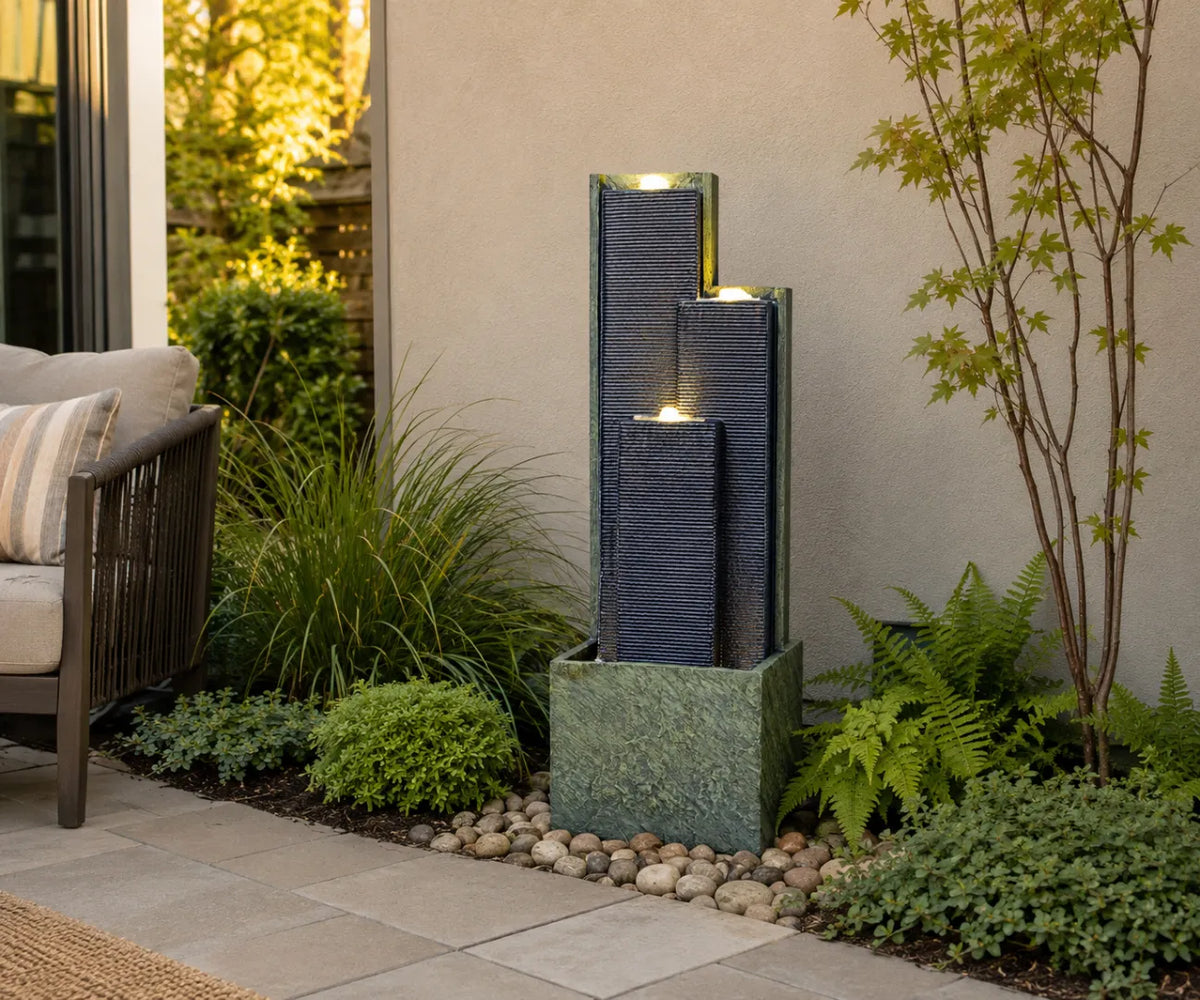
WHEN THE GARDEN NEEDS HEIGHT
A lower water feature can disappear behind summer growth or patio furniture. A column fountain raises the water to a more visible level, allowing you to notice its movement from a patio seat, through a kitchen window, or while walking along the garden path.
It does not require an entire planting bed to be cleared. A space beside a patio door, in front of a garden wall, or between two areas of planting can be enough to hold its vertical silhouette. Even as the garden grows around it, the upper structure and main water route can remain part of the view.
Begin with the window, patio seat, or garden path you use most, then choose a height that remains clearly visible from that position.
Planting can grow around the base, but the front should remain open enough for the water and lighting to stay visible.
Leave enough access beside or behind the fountain for adding water, adjusting the pump, and cleaning the reservoirs.
Choose the Water Journey
Height determines where a fountain sits within the view. The route of the water determines how the fountain feels during everyday use. Consider how far away you will usually see it, how much movement you want to notice, and whether the fountain should remain quietly in the background or become a stronger part of the garden.

Water follows a textured face in a relatively continuous path, creating reflection and subtle movement across the surface instead of making several open-air drops.
This movement is usually easiest to appreciate from closer range. Its appearance feels more restrained, and the sound may be gentler than a fountain with several open drops.

Water travels from one projecting level to the next, creating several visible drops across the full height of the column.
The movement remains easier to follow from farther away. Repeated drops often create a more noticeable, layered sound, while lighting can reveal water at several points.

Water begins around a sphere or another recognizable upper form before entering the column or reservoir below. The top shapes both the silhouette and the first stage of the flow.
When the pump is running, the upper water and lighting draw attention first. When the water is still, the complete sculptural form remains part of the garden.
Water movement and sound vary by product design, pump setting, water level, placement, wind, and surrounding surfaces. Review the dimensions and operating details on the individual product page before choosing a final position.
Ready to Choose?
Compare the complete height, front width, and water route to find a column fountain that fits naturally beside a patio, within a narrow planting border, or against a quiet garden wall.
Practical Questions
Review the power, water, placement, access, and seasonal-care requirements before deciding where the fountain will stay.
Many column fountains are self-contained. Water collects in an internal reservoir and is returned to the top by a recirculating pump, so a permanent water line is usually unnecessary. Product construction varies, so confirm the pump and reservoir details on the individual product page.
Most powered column fountains need access to an electrical outlet for the pump and any integrated lighting. Use an outdoor-rated, GFCI-protected outlet and review the listed cord length before choosing the final position.
An uneven surface can cause water to favor one side, miss a receiving basin, or flow differently across a textured face. Place the fountain on a flat, firm, level surface and check the water route before adding surrounding planting or decoration.
Leave enough room to reach the reservoir, pump, cord, and any removable panels. Avoid pressing the fountain tightly against a wall unless the product instructions allow it. The complete product depth should be included when measuring the space.
Stability depends on the product weight, base dimensions, construction, and installation surface. Always use a firm, level position and any stakes or anchoring components supplied with the product. Follow the manufacturer’s guidance during severe weather rather than relying on height or weight alone.
Water is gradually lost through evaporation, splashing, and wind. Check the level frequently during the first week so you can learn how the fountain behaves in its location. Keep the pump adequately submerged and add water before the level becomes too low.
Some fine splashing is possible, especially with stronger pump settings, low water levels, open drops, or crosswind. Begin with the recommended water level, keep the fountain level, and adjust the pump gradually while watching where each stream lands.
Drain the fountain completely, disconnect and clean the pump, and prevent water from remaining inside basins, tubing, or enclosed cavities. Follow the storage or protection instructions provided for the specific material and product construction.