


12 products
-

 Resin Curved Sculptural Outdoor Water Fountain 40 InchResin Curved Sculptural Outdoor Water Fountain 40 Inch
- Regular price
-
$269.99 - Regular price
-
- Sale price
-
$269.99
-

 Resin Stacked Clay Pot Outdoor Water Fountain 40 InchResin Stacked Clay Pot Outdoor Water Fountain 40 Inch
- Regular price
-
$209.99 - Regular price
-
$229.99 - Sale price
-
$209.99
-

 Resin Classical 3 Tier Tabletop Garden Fountain 16 InchResin Classical 3 Tier Tabletop Garden Fountain 16 Inch
- Regular price
-
$119.99 - Regular price
-
$129.99 - Sale price
-
$119.99
-

 Resin Diagonal Cascading Floor Fountain Outdoor 40 inResin Diagonal Cascading Floor Fountain Outdoor 40 in
- Regular price
-
$239.99 - Regular price
-
- Sale price
-
$239.99
-

 Resin Fluted Basin Tiered Outdoor Water Fountain 650 GPHResin Fluted Basin Tiered Outdoor Water Fountain 650 GPH
- Regular price
-
$405.99 - Regular price
-
$331.99 - Sale price
-
$405.99
-

 Resin 6 Tier Outdoor Water Fountain Pottery Bowls 53 inResin 6 Tier Outdoor Water Fountain Pottery Bowls 53 in
- Regular price
-
$449.99 - Regular price
-
- Sale price
-
$449.99
-

 Resin Offset Bowl Cascading Outdoor Water Fountain with LEDResin Offset Bowl Cascading Outdoor Water Fountain with LED
- Regular price
-
$318.99 - Regular price
-
$281.99 - Sale price
-
$318.99
-

 Resin Zen Bowl Pedestal Outdoor Fountain 44 InchResin Zen Bowl Pedestal Outdoor Fountain 44 Inch
- Regular price
-
$919.99 - Regular price
-
$625.99 - Sale price
-
$919.99
-

 Resin Tiered Outdoor Fountain 4 Bowl Two ToneResin Tiered Outdoor Fountain 4 Bowl Two Tone
- Regular price
-
$291.99 - Regular price
-
$266.99 - Sale price
-
$291.99
-
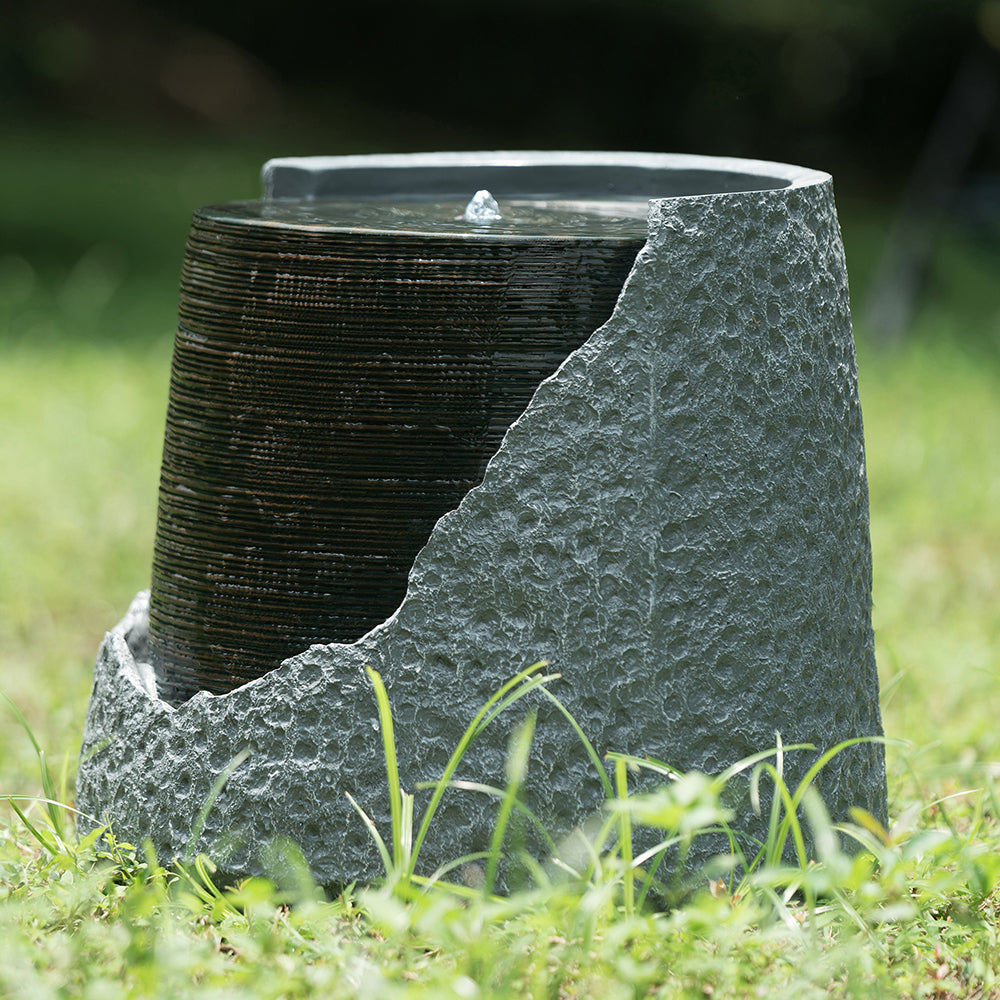
 Resin Cut Away Urn Outdoor Water Fountain 18 InchResin Cut Away Urn Outdoor Water Fountain 18 Inch
- Regular price
-
$396.99 - Regular price
-
$326.99 - Sale price
-
$396.99
-

 Resin Bubbler Fountain Outdoor Rippled DrumResin Bubbler Fountain Outdoor Rippled Drum
- Regular price
-
$180.99 - Regular price
-
$203.99 - Sale price
-
$180.99
-

 Resin Zen Bowl Pedestal Outdoor Fountain 35 InchResin Zen Bowl Pedestal Outdoor Fountain 35 Inch
- Regular price
-
$442.99 - Regular price
-
$353.99 - Sale price
-
$442.99


The Numbers That Matter
- 13 to 53 in, every size published Height
- Included with every one Pump
- Warm LED on ten of the twelve Lighting
- Resin throughout, 12 to 45 lb Material
- Plugs into a standard outlet, no plumbing Power
- A table, a patio, the end of a border Where
The Water Surface Is the Whole Design
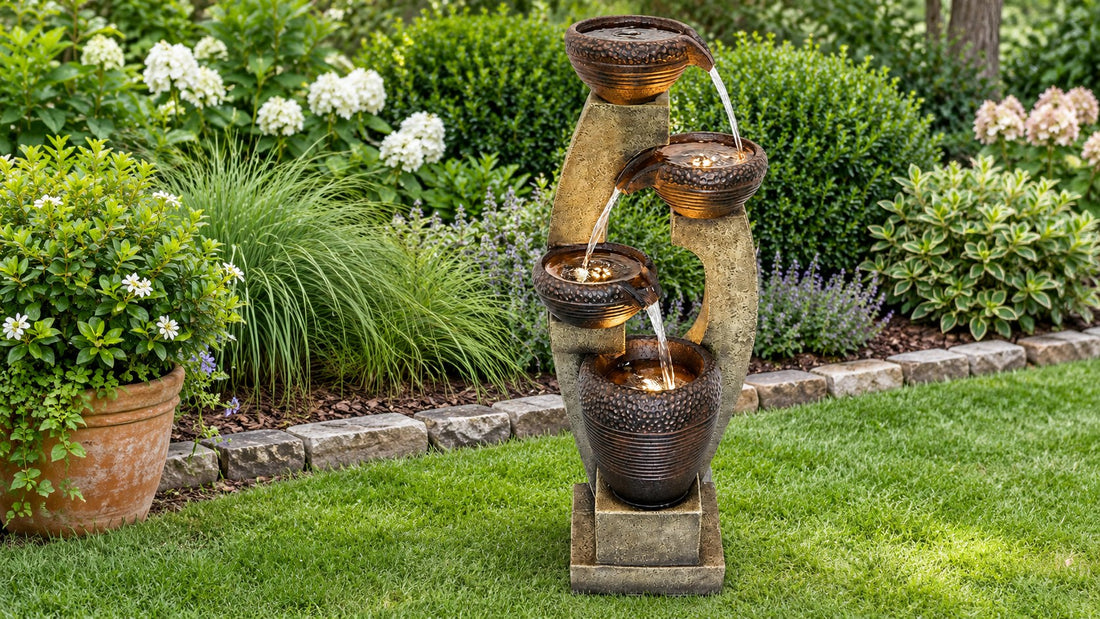
Why the bowl is the point
Most fountains hide the water inside the structure and let you see only the part that falls. A bowl does the opposite. It holds an open surface at a fixed height and leaves it in view, so the piece changes through the day as the light moves across it and settles again every time the wind drops.
That open surface also sets the sound. A single basin with a low rise at the center is about as quiet as moving water gets. The more rims the water has to cross on its way down, the more it has to say.
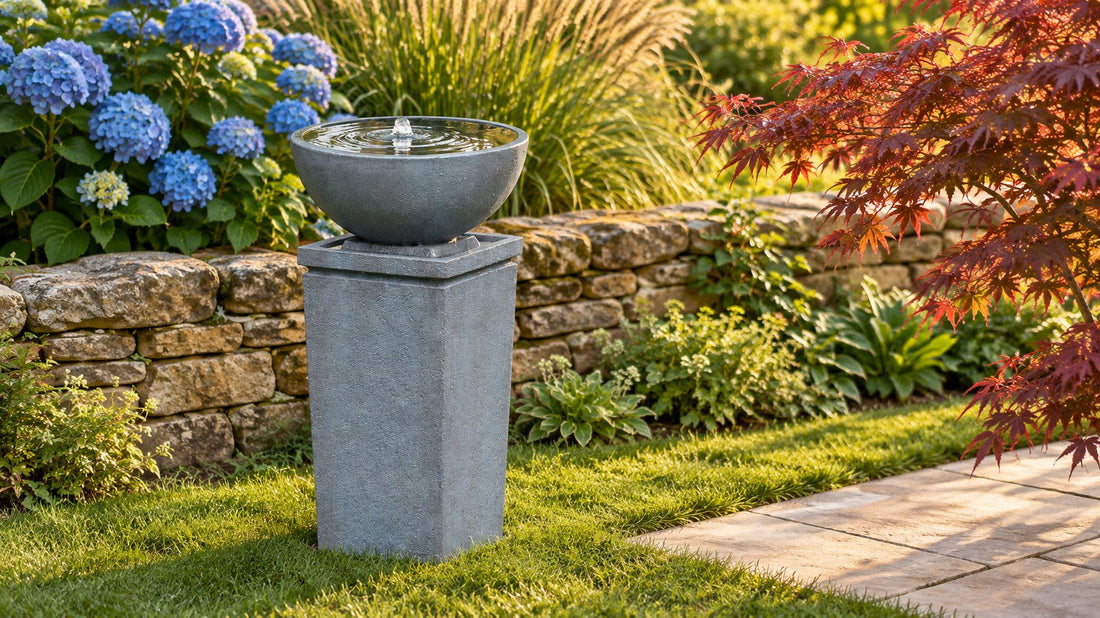
One wide basin
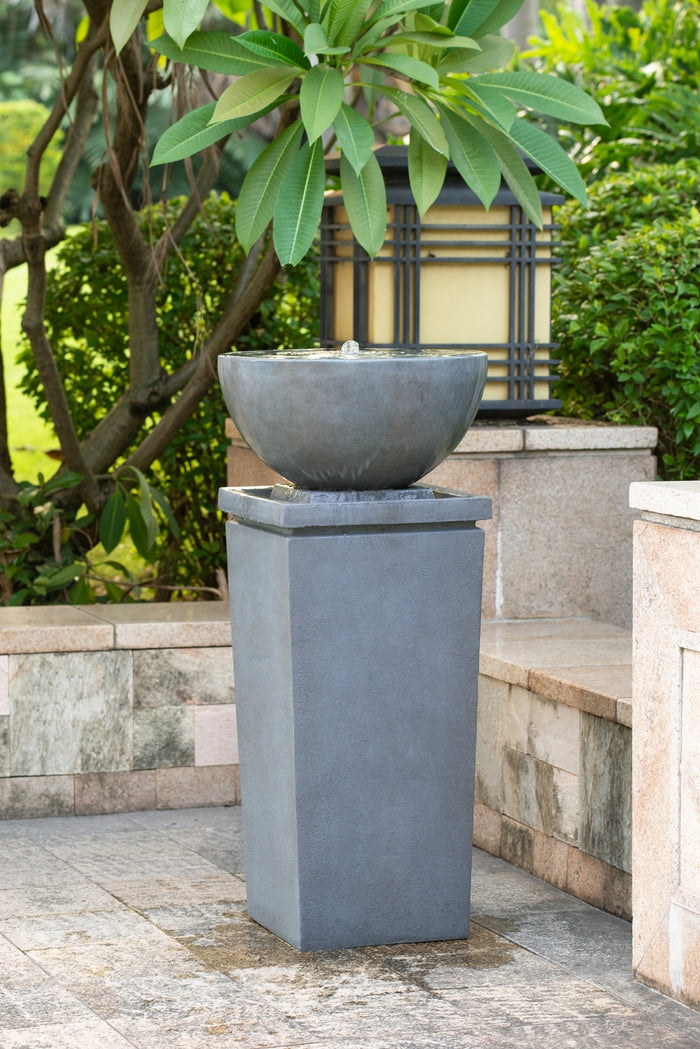
The simplest version is a single broad bowl raised on a plain stem. Water rises a little at the center and returns over the rim, so the surface stays almost level and holds a reflection of the sky and whatever is planted behind it.
These want to be out where you can look down into them, at the end of a path or in the middle of a small courtyard rather than pushed against a wall. They are also the quietest things here, which makes them easy to sit next to.
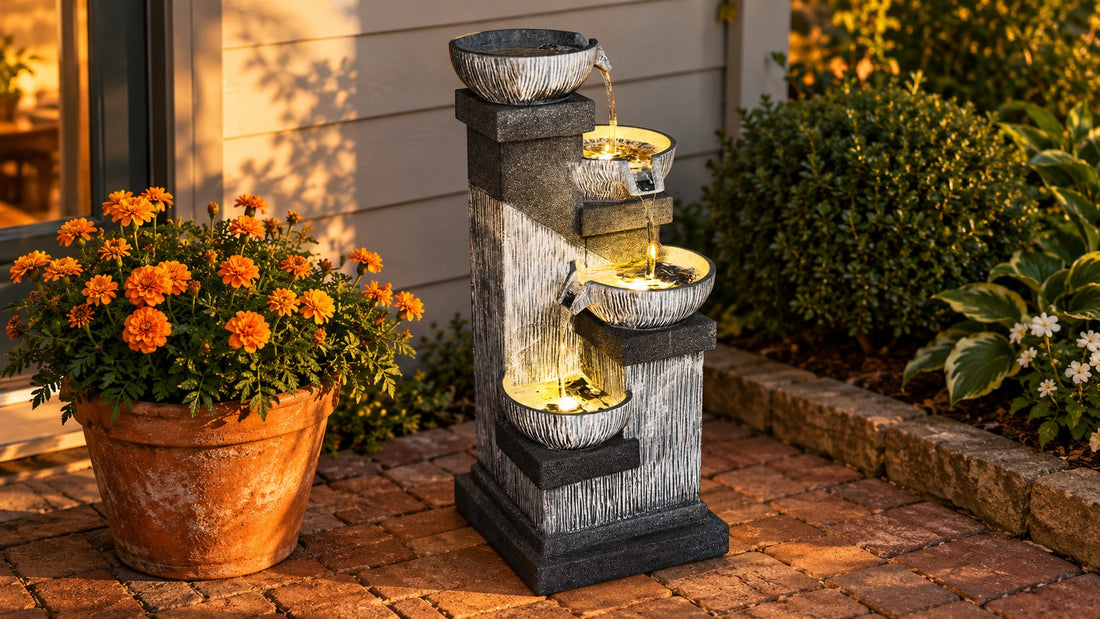
Bowls that stack
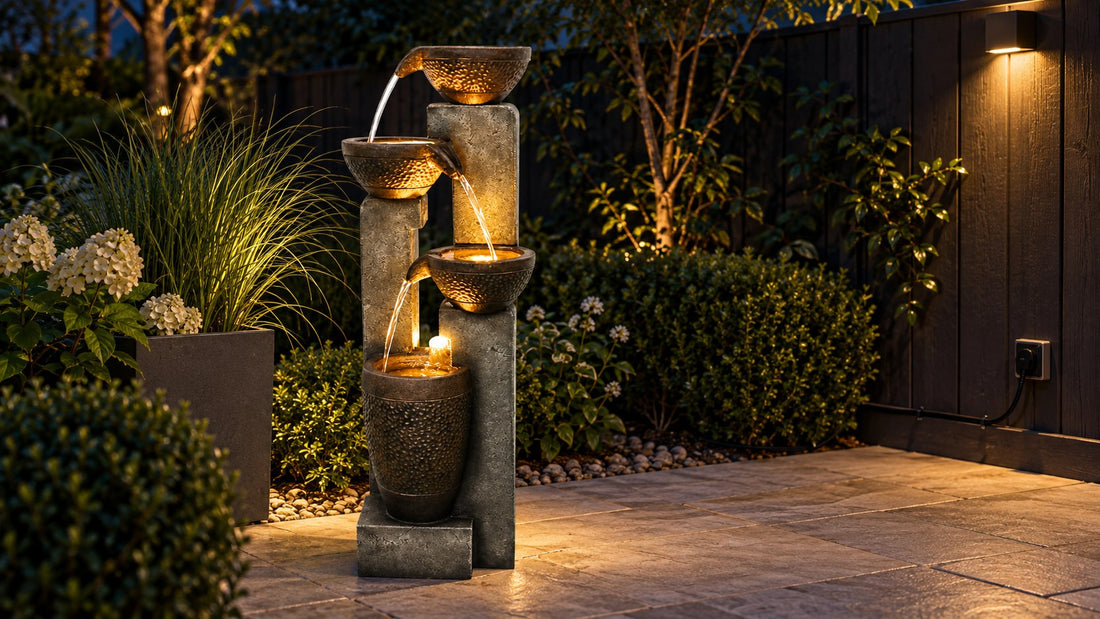
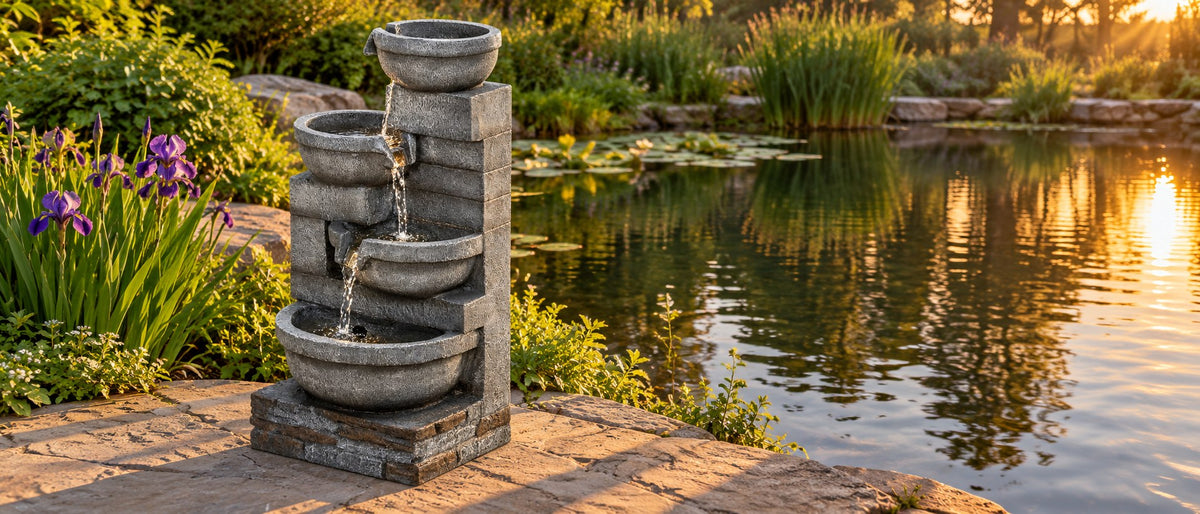
Put one bowl above another and the water has somewhere to go. Three bowls, four, six, each one filling until it spills to the next. The sound builds with every level, and so does the height, which is how this collection reaches 53 inches.
Stacked designs read well from the side, so they suit a position against a hedge, a fence or a wall where you see the whole profile at once. They also hold less water per bowl, so they need topping up a little more often than a single basin.
Pots, urns and offset shapes
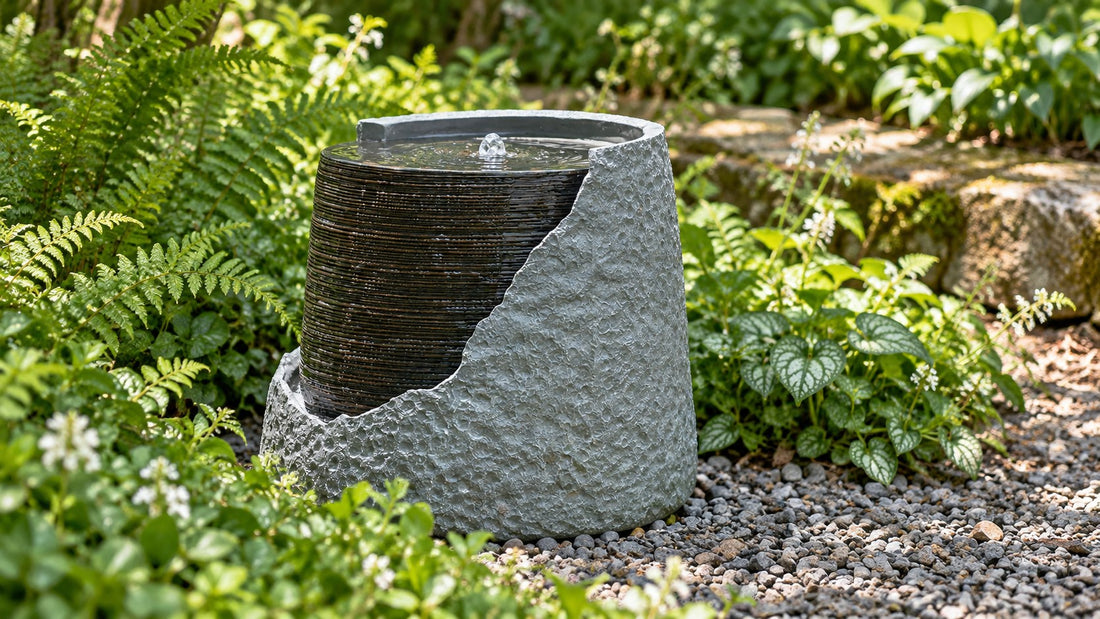
Between those two there is a group that treats the bowl as a vessel rather than a basin. A clay pot tipped and stacked, an urn with a cut away face so you can see the water moving inside, a set of bowls offset so each one pours past the one below rather than straight down.
These are the ones to choose when the fountain needs to be the thing people notice. They carry more shape than a plain basin and still keep the open water that defines the group.
Small enough for a table
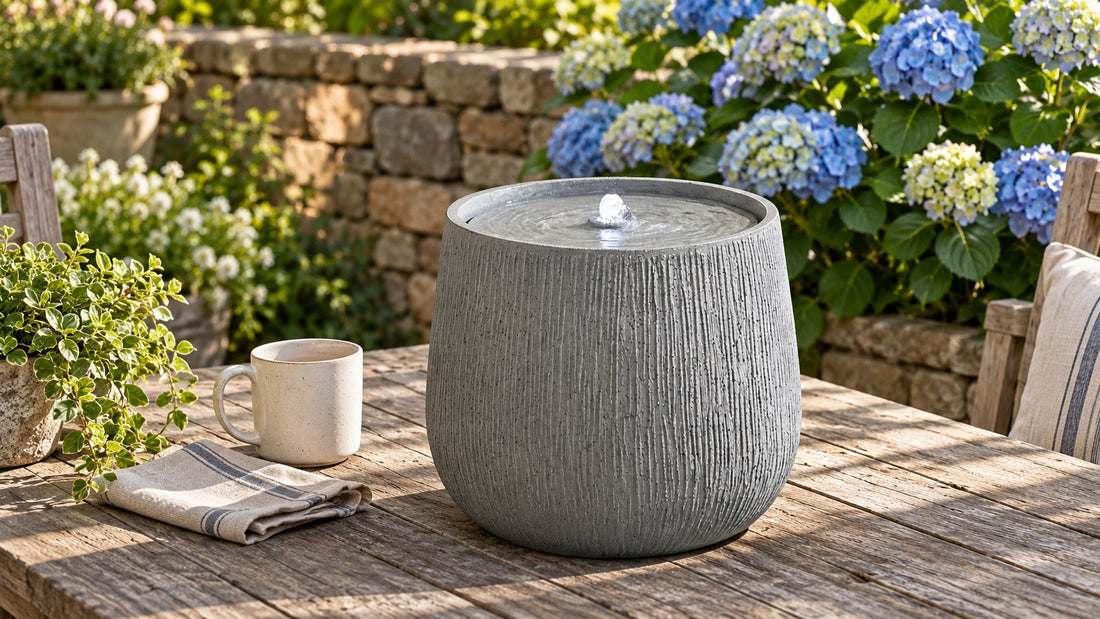
Three pieces here are under 20 inches, down to a 13 inch drum. At that size a fountain stops being garden furniture and becomes something you put on a table, a wide step, a porch rail or a kitchen windowsill.
The behavior is the same, just scaled down. The basin is smaller so it needs topping up more often, and the sound carries only as far as the table, which is usually exactly what people want from one.
Setting one up and keeping it running
Every fountain here carries its own pump and recirculates, so there is no plumbing. It needs an outlet within reach of the cord and an outdoor rated cord if the run is long. Level ground matters more on a bowl than on most shapes, because a basin sitting off level spills over one edge and empties itself.
Ten of the twelve have warm LED in the water. On an open basin that light reads as a glow across the whole surface rather than a spotlight, which is why it is worth having on this shape. For winter, drain the bowl before the first hard freeze and store the pump dry.
Comparing Your Bowl Fountain Options
| One wide basin | Bowls that stack | |
|---|---|---|
| What you see | A single still surface holding a reflection | Water moving from one rim to the next |
| Sound | A soft rise at the center, very quiet | A clear fall at every level, busier |
| Usual height | Around 30 to 45 in | Around 16 to 53 in |
| Basin | One large volume, holds its level longer | Several small ones, tops up more often |
| Where it works | Out in the open where you look down into it | Against a wall or a hedge where you see it side on |
| Birds | They land on the rim and use it | They drink from the lowest bowl |
Six ways into the collection
 01
01
Single pedestal bowls
One broad basin raised on a plain stem
20 pieces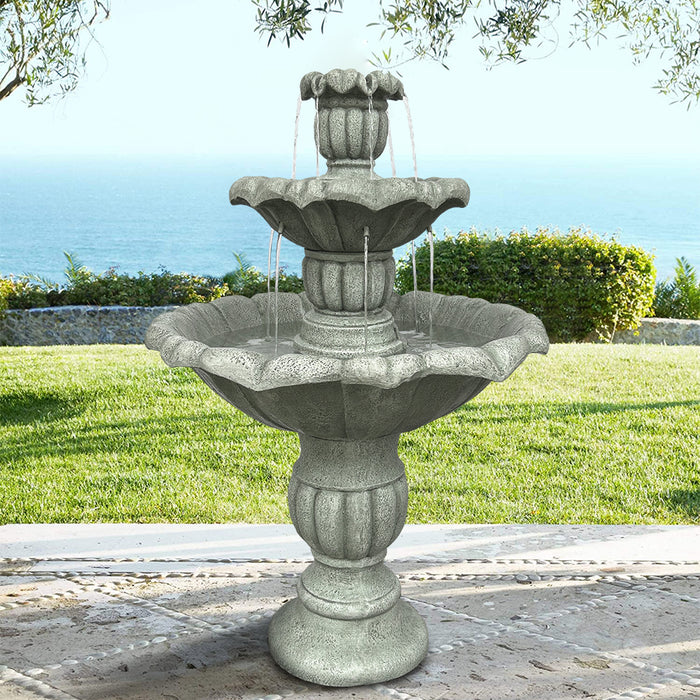 02
02
Tiered and stacked
Water stepping down three or more bowls
17 pieces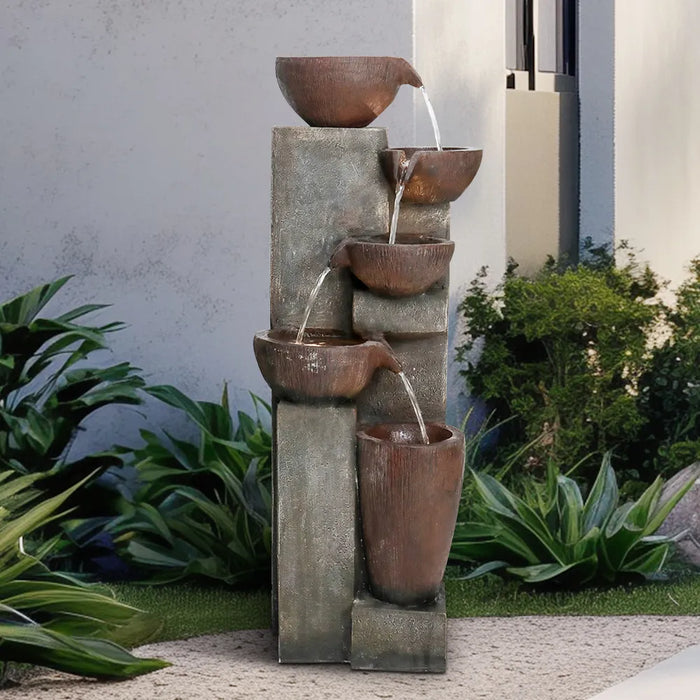 03
03
Pots and urns
Pouring vessels with a cut away face
11 pieces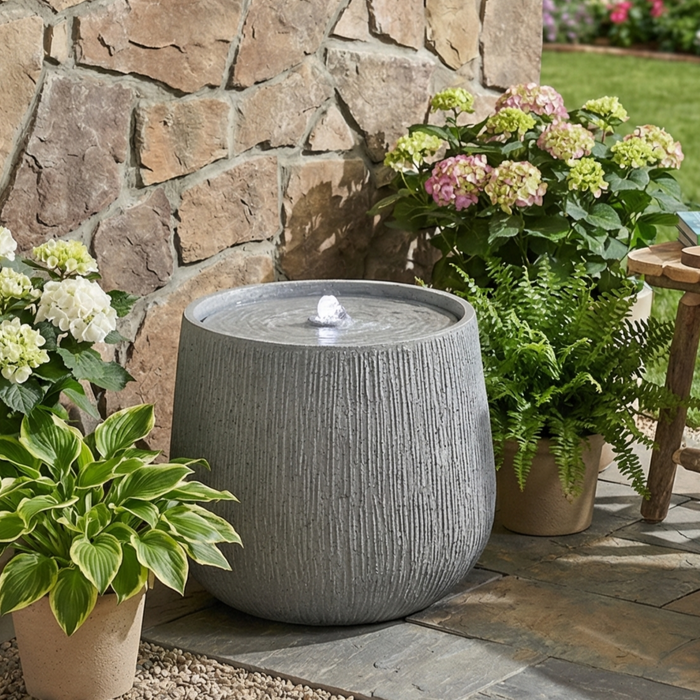 04
04
Bubblers
A low rise at the center, almost no splash
8 pieces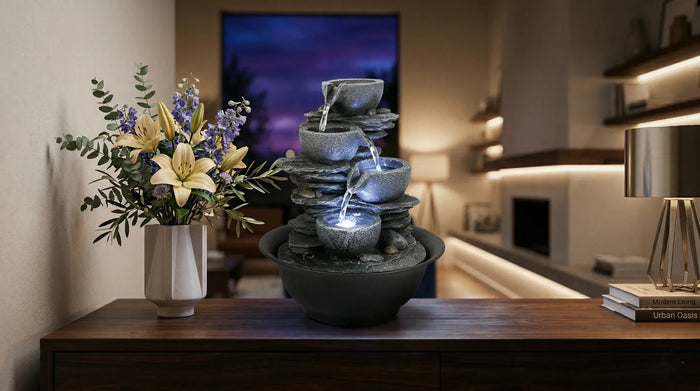 05
05
Small enough for a table
Under 20 inches, for a step or a sill
9 pieces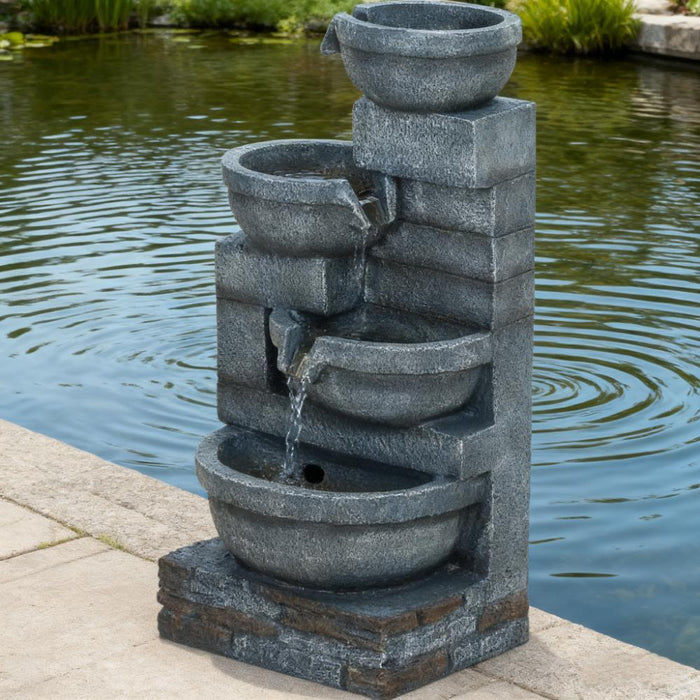 06
06
Everything in resin
The light material across the whole range
61 pieces
Before You Order a Bowl Fountain
What is a bowl fountain
How high should the water sit in the bowl
Does an open bowl mean more maintenance
Will birds use it
Do these need plumbing or a special outlet
What happens in winter
Related collections
Everything here ships free in the continental US, leaves California or New Jersey in one to two business days, carries a 3-year warranty, and can go back within 60 days with no restocking fee if it is not right in the space.