


20 products
-

 Concrete Turquoise Cracked Jar Outdoor Fountain 38 InchConcrete Turquoise Cracked Jar Outdoor Fountain 38 Inch
- Regular price
-
$199.99 - Regular price
-
$219.99 - Sale price
-
$199.99
-

 Resin Glazed Cutout Urn Outdoor Water Fountain 30 InchResin Glazed Cutout Urn Outdoor Water Fountain 30 Inch
- Regular price
-
$169.99 - Regular price
-
- Sale price
-
$169.99
-

 Resin Modern Outdoor Fountains 4 Pillar 39 InchResin Modern Outdoor Fountains 4 Pillar 39 Inch
- Regular price
-
$199.99 - Regular price
-
$219.99 - Sale price
-
$199.99
-

 Resin Moon Gate Outdoor Water Fountain 39 Inch Warm LEDResin Moon Gate Outdoor Water Fountain 39 Inch Warm LED
- Regular price
-
$209.99 - Regular price
-
$229.99 - Sale price
-
$209.99
-

 Resin Slim Outdoor Wall Fountain 39 Inch 11 Inch DeepResin Slim Outdoor Wall Fountain 39 Inch 11 Inch Deep
- Regular price
-
$239.99 - Regular price
-
$239.99 - Sale price
-
$239.99
-

 Resin Geometric Outdoor Wall Fountain 39 Inch LEDResin Geometric Outdoor Wall Fountain 39 Inch LED
- Regular price
-
$239.99 - Regular price
-
- Sale price
-
$239.99
-

 Concrete Trumpet Flower Outdoor Fountain 33 InchConcrete Trumpet Flower Outdoor Fountain 33 Inch
- Regular price
-
$149.99 - Regular price
-
$189.99 - Sale price
-
$149.99
-

 Resin Angled Pillar Outdoor Floor Fountain 39 in 14 lbResin Angled Pillar Outdoor Floor Fountain 39 in 14 lb
- Regular price
-
$199.99 - Regular price
-
$219.99 - Sale price
-
$199.99
-

 Resin 3 Tier Fountain Modern Outdoor with LEDResin 3 Tier Fountain Modern Outdoor with LED
- Regular price
-
$189.99 - Regular price
-
$229.99 - Sale price
-
$189.99
-

 Resin Modern Outdoor Fountain 39 Inch Tilted ChutesResin Modern Outdoor Fountain 39 Inch Tilted Chutes
- Regular price
-
$359.99 - Regular price
-
$305.99 - Sale price
-
$359.99
-

 Resin Slate Water Wall Fountain 3 Column Top LitResin Slate Water Wall Fountain 3 Column Top Lit
- Regular price
-
$331.99 - Regular price
-
$289.99 - Sale price
-
$331.99
-

 Metal Sphere Water Fountain Outdoor with LEDMetal Sphere Water Fountain Outdoor with LED
- Regular price
-
$187.99 - Regular price
-
$207.99 - Sale price
-
$187.99


The Numbers That Matter
- 26 to 44 in on the pieces with published sizes Height
- Included with every one Pump
- Warm LED on eighteen of the twenty Lighting
- Resin, concrete and one in powder coated metal Material
- Plugs into a standard outlet, no plumbing Power
- A courtyard, a patio corner, against a plain wall Where
Water You Can Follow All the Way Down
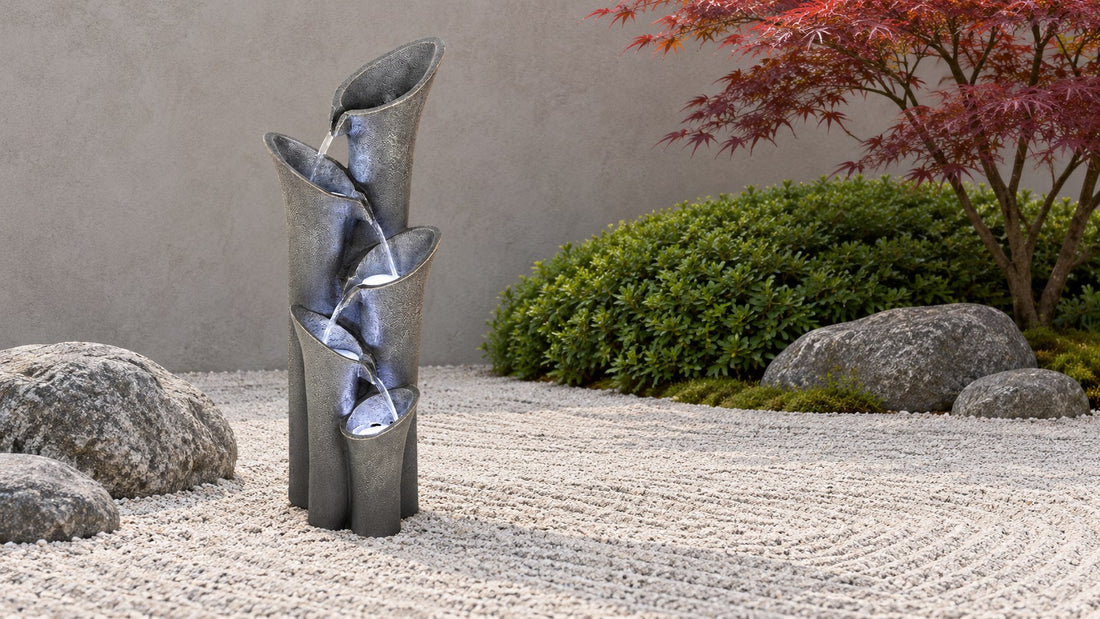
What makes a fountain feel zen
It comes from subtraction. A zen fountain is one shape with very little attached to it, and the water takes a single path you can follow from the top to the bottom. There is no scene to read and nothing to count.
That changes how the piece behaves in a garden. An ornamental fountain asks you to look at it. A plain upright panel or a wide shallow bowl does the opposite, it gives the eye somewhere to rest, and the space left empty around it is doing as much work as the object itself.
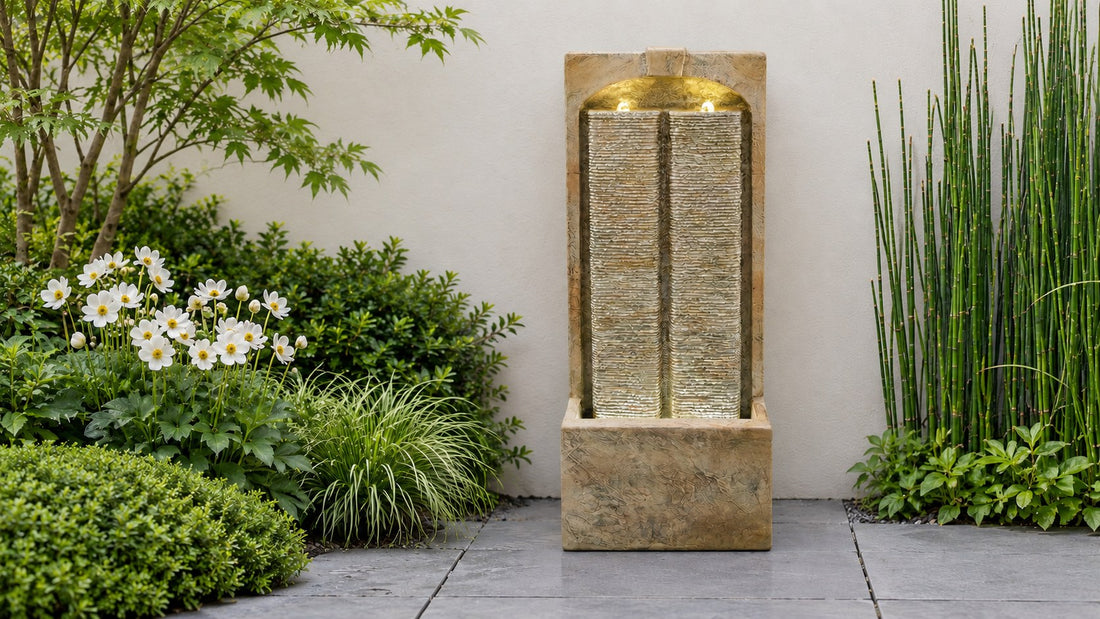
Water walls and panels
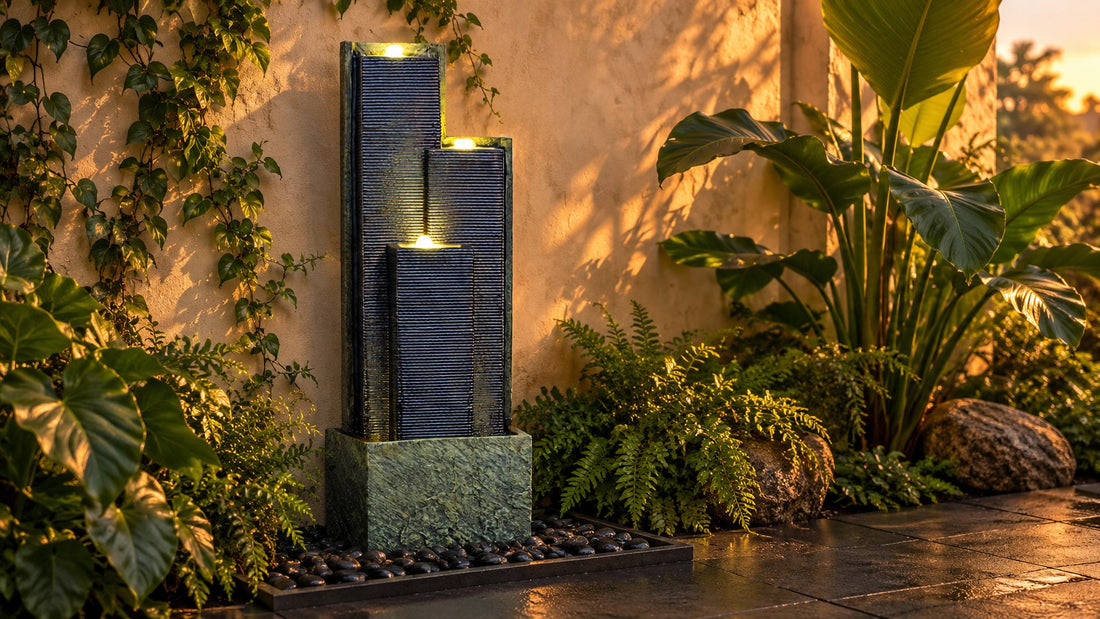
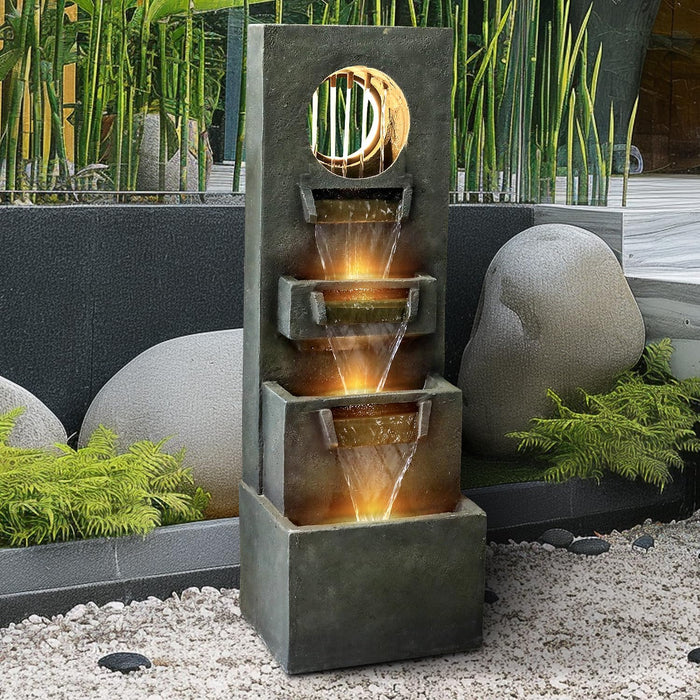
This is the largest group here and the most strongly zen of the shapes. A flat upright face, water released along the top edge, and a thin film that clings to the surface the whole way down instead of falling through air.
Because they are shallow front to back, often under a foot, they suit places where a round fountain would not fit, flat against a courtyard wall, at the end of a narrow side return, in front of a fence or a clipped hedge. They want a plain surface behind them. The quieter the background, the better the sheet of water reads.
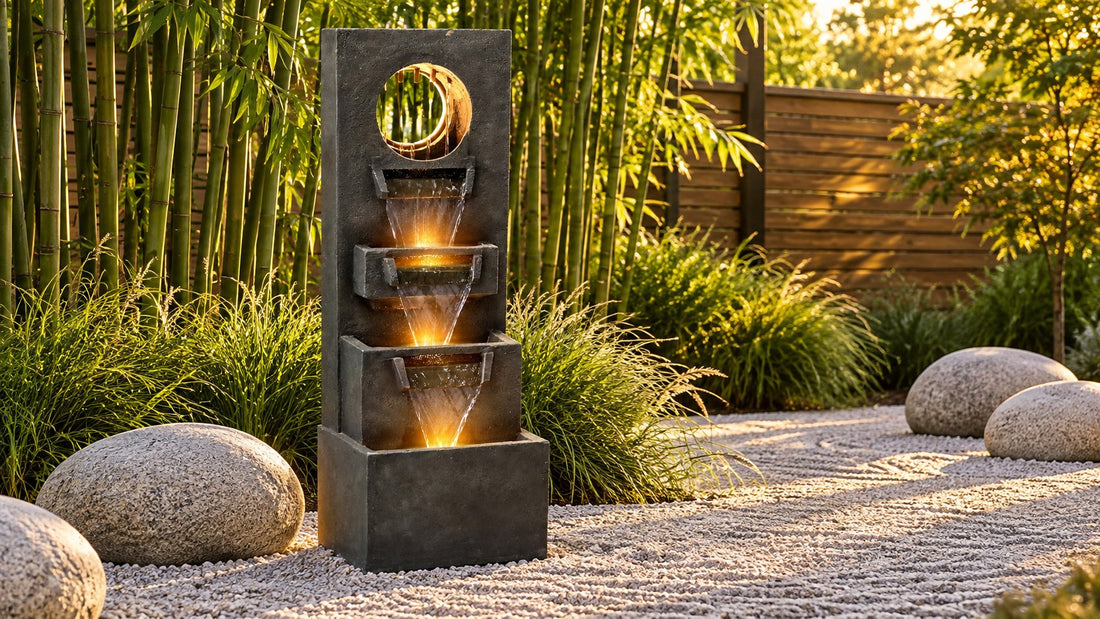
Rings, moons and spheres
A circle does something a panel cannot, it frames what is behind it. The moon gate is the clearest version, an open ring standing in the garden with the planting showing through the middle, which is an idea borrowed directly from Asian garden walls.
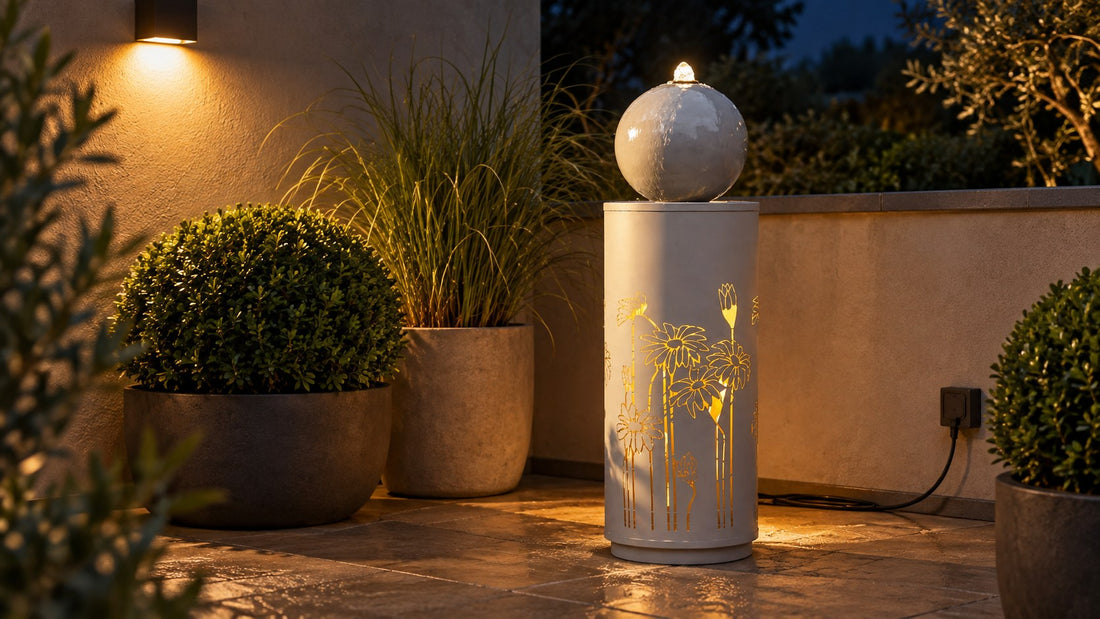
Spheres work the other way, closed instead of open. Water rises at the top of a smooth ball and runs down every side at once, so there is no front and no back and the piece looks the same from wherever you approach it. Both shapes want clear ground around them rather than a wall behind them.
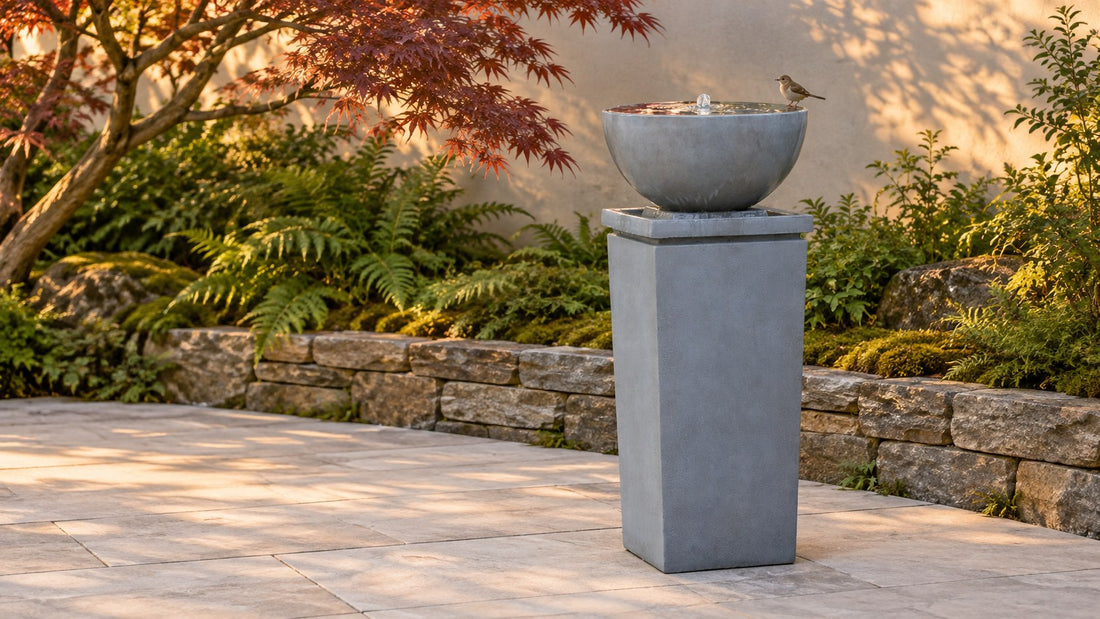
Bowls, jars and pedestals
A wide shallow bowl raised on a plain stem is one of the oldest quiet forms there is, and it does two jobs at once. The surface stays broad and still enough to hold a reflection, and birds use it.
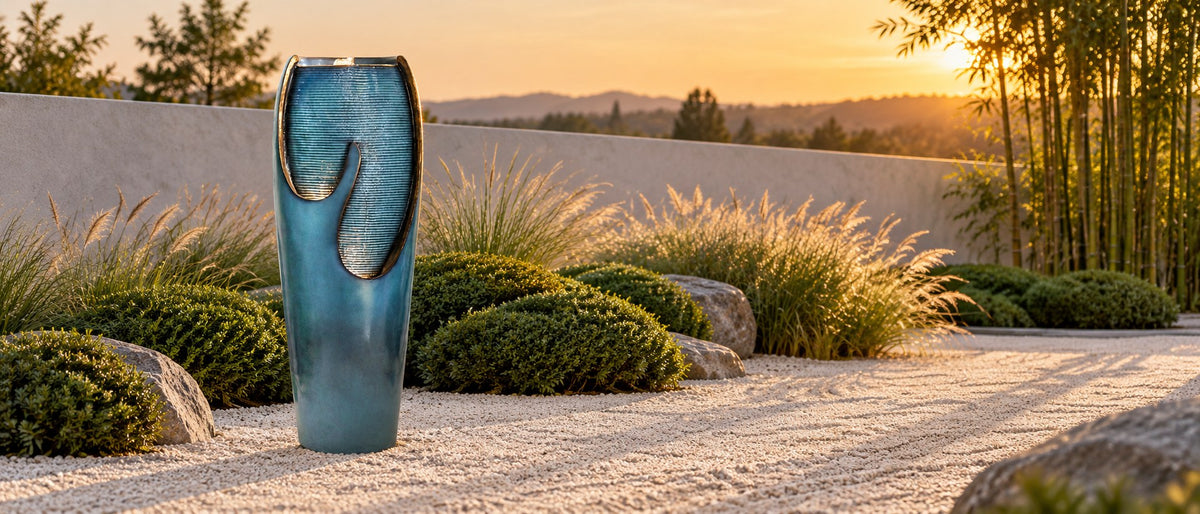
The glazed jars take the same restraint and put the interest into the surface instead of the shape, deep turquoise and teal over a plain vessel, with a cut away opening so you can see the water move inside. These are the pieces to choose when a space needs one spot of color rather than another neutral object.
The sound of a quiet fountain
Zen fountains are built to be heard without being listened to. How quiet one is comes down to how far the water falls and what it lands in. A sheet clinging to a panel barely falls at all, so it produces a soft even wash with almost no splash. A bowl or a jar gives one clear note where the water meets the surface.
Two things change it after it arrives. The water level matters most, since a basin filled closer to the top shortens the drop and runs quieter. Most of these also have a way to slow the flow, so turn it down before deciding the piece is wrong for the spot.
Where it goes, and how it runs
Every fountain here carries its own pump and recirculates, so nothing needs plumbing. It needs an outlet within reach of the cord and an outdoor rated cord if the run is long. Level ground matters more than it sounds, because a base sitting off level sends water over one edge and the basin empties faster than it should.
Eighteen of the twenty have warm LED in the water, which matters more on these shapes than on busier ones, since a single sheet or a single bowl lit from within is the whole effect after dark. For winter, drain the basin before the first hard freeze and store the pump dry.
Comparing Your Zen Fountain Options
| Panels and walls | Bowls, rings and jars | |
|---|---|---|
| Shape | A flat upright face, water sheeting down it | A rounded standing object you walk around |
| Depth | Often under 12 in front to back | Usually as deep as it is wide |
| Sound | A soft even wash, very little splash | A clearer single fall into the basin |
| Where it goes | Flat against a wall, a fence or a hedge | Out in the open, at the center of a space |
| What it needs behind it | A plain surface for the water to read against | Clear ground on every side |
| After dark | Light grazes down the whole face | Light sits inside the bowl or the ring |
Six shapes to choose between
 01
01
Water walls and panels
A plain upright face with water sheeting down
9 pieces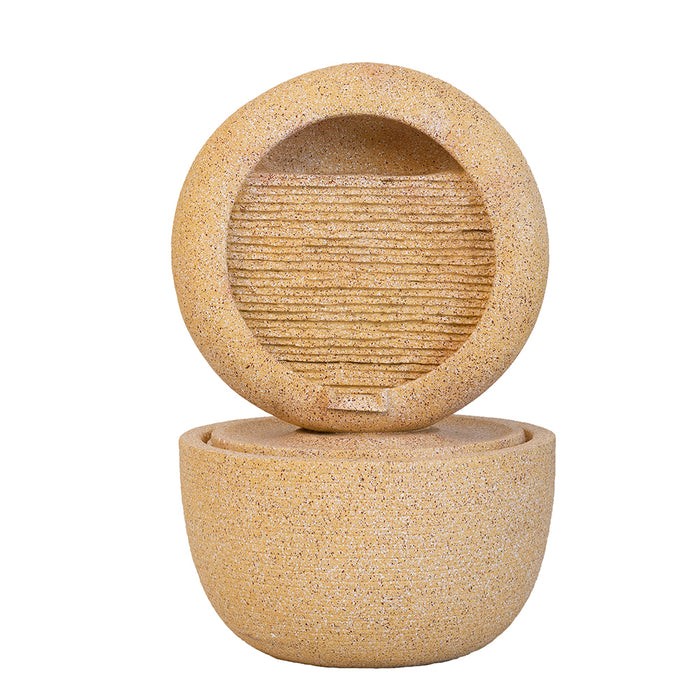 02
02
Rings and moon gates
An open circle with the garden showing through
2 pieces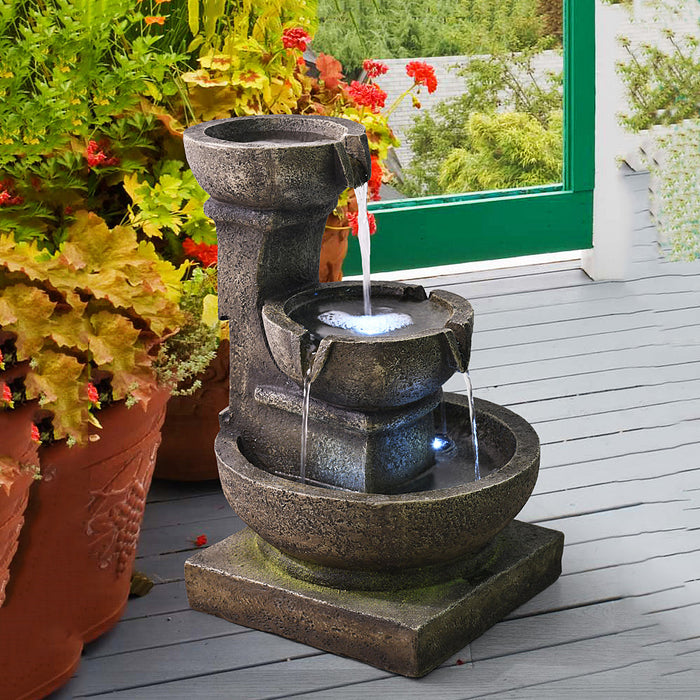 03
03
Bowls and pedestals
A single wide basin raised on a plain stem
12 pieces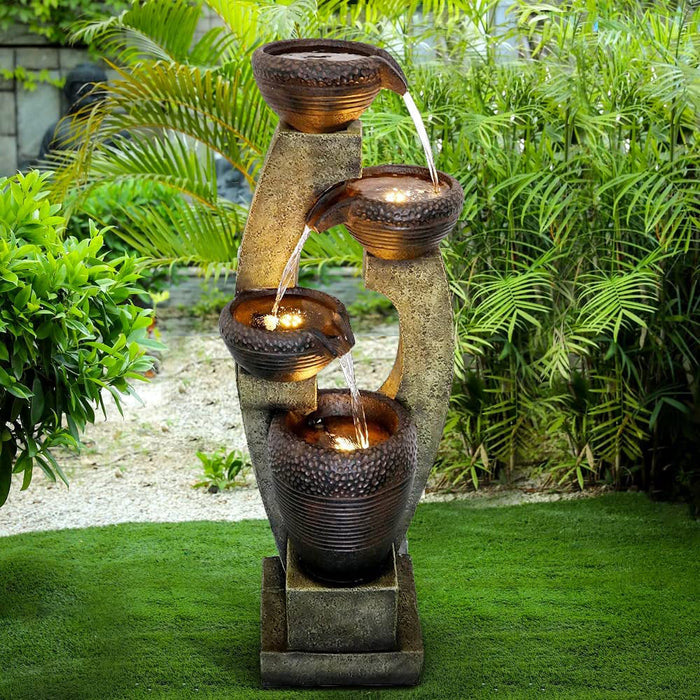 04
04
Glazed jars and urns
Deep color on a simple pouring vessel
11 pieces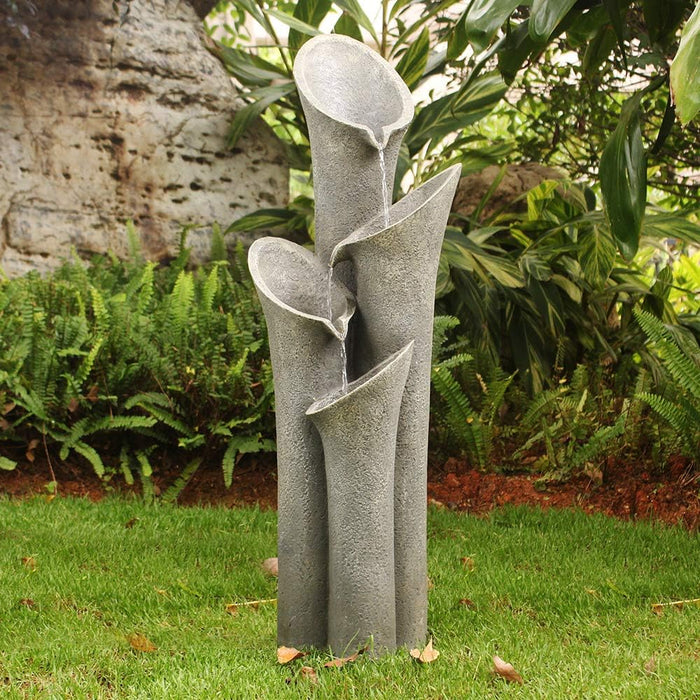 05
05
Plain columns
Straight sides and level edges, nothing added
9 pieces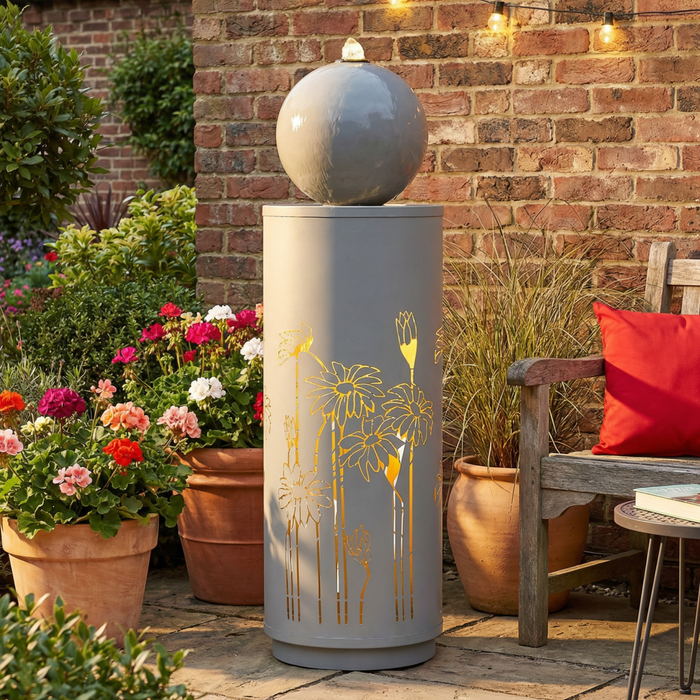 06
06
Spheres
A smooth ball with water running all around it
8 pieces
Before You Order a Zen Fountain
What makes a fountain a zen fountain
Is a zen fountain the same as a Japanese fountain
How loud is a zen fountain
Can a zen fountain go indoors
Do these need plumbing or special wiring
What happens in winter
Related collections
Everything here ships free in the continental US, leaves California or New Jersey in one to two business days, carries a 3-year warranty, and can go back within 60 days with no restocking fee if it is not right in the space.