

Clear from a Distance
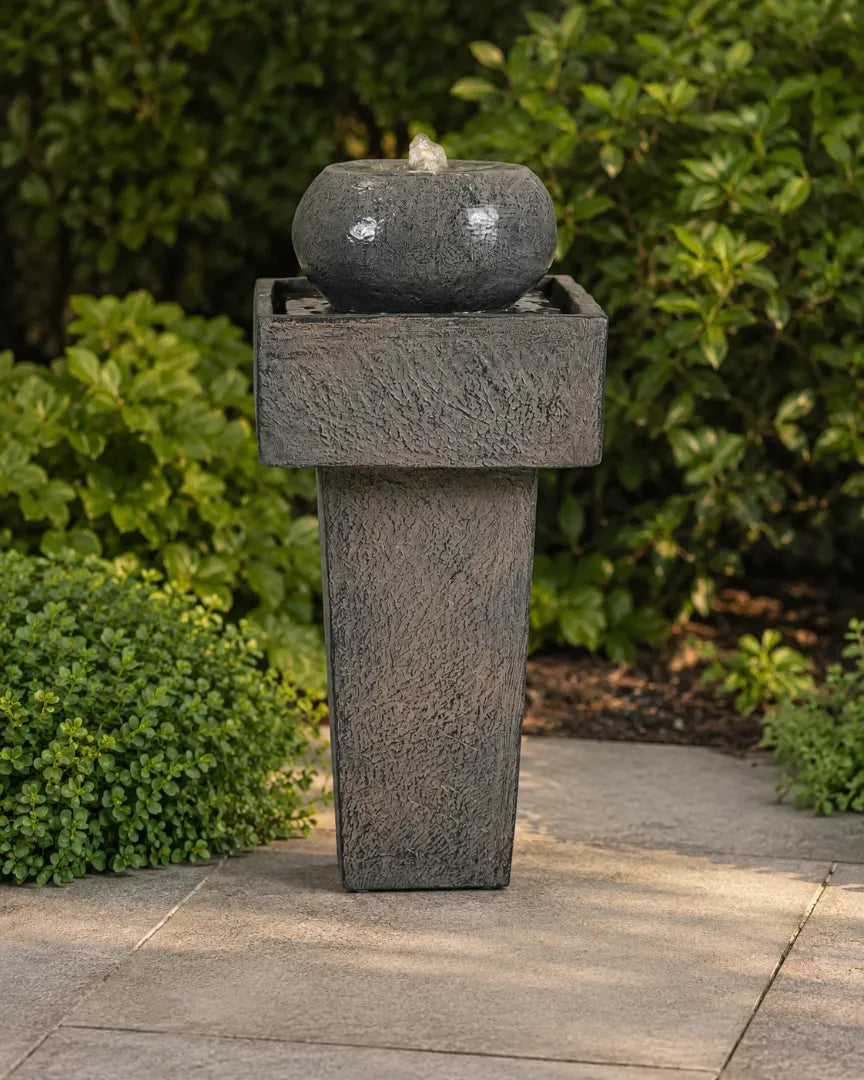
Tiered bowls, defined pedestals, and substantial bases retain a recognizable silhouette across a lawn or courtyard.

17 products


WHY CONCRETE
Concrete is often chosen when a fountain needs to hold its place visually in an open lawn, courtyard, or structured garden. Its weight and mineral surface give tiered bowls, pedestals, columns, and basins a more substantial presence.
That presence also requires practical planning. Review the complete dimensions, assembled weight, delivery access, and ground support before deciding where the fountain will stay.
Tiered bowls, defined pedestals, and substantial bases retain a recognizable silhouette across a lawn or courtyard.
Moving water can deepen the appearance of the finish, while changing daylight reveals edges, texture, and subtle surface variation.
Many concrete fountains are substantial. Confirm the delivery route, supporting surface, power source, and final viewing position before installation.
Choose by Form
The shape of a fountain affects how it is seen, how the water moves, and how much visual space it occupies. Start with the role you want the fountain to play in the garden.

A taller, more recognizable silhouette makes this form well suited to open lawns, courtyards, entrances, and spaces that need a clear focal point.

Cleaner geometry and a more compact footprint make these designs easier to place beside patios, paths, entry walls, and structured planting.

Lower profiles, textured surfaces, and changing water paths help these fountains settle naturally into planting beds and less formal garden corners.
Plan the Scale
A fountain can appear smaller on a screen than it will in the garden. Compare the complete height and width with nearby planting, furniture, walls, and the distance from which it will usually be seen.
A compact fountain can hold attention beside a patio or seating area. Across a larger lawn or courtyard, a taller and more defined silhouette is usually easier to see.
Use the widest basin or base when measuring, not only the pedestal. Leave enough surrounding space for filling, cleaning, and routine access.
Some fountains arrive in separate sections, but the complete assembled weight still affects delivery, ground support, and how easily the location can be changed later.
Placement and Seasonal Care
Concrete fountain placement affects stability, maintenance, and how comfortably the fountain fits into daily use. Confirm the surface, routine access, water needs, and seasonal plan before assembly.
Place the fountain on a level, stable surface that can support the complete assembled weight. Avoid loose soil, shifting gravel, and noticeably uneven ground.
Leave enough room to reach the basin, pump compartment, power cord, and filling area. Planting should soften the setting without blocking routine care.
Check the water level regularly, especially during warm or windy weather. After installation, observe where the water falls and whether repeated splashing reaches nearby walls or sensitive surfaces.
Remove standing water from the basin and water channels before freezing conditions arrive. Disconnect the pump as directed and follow the winter care instructions provided for the individual product.
Are all concrete fountains made the same way?
No. Depending on the design, a fountain may use cast concrete, cast cement, fiber reinforced concrete, or GFRC. Construction, weight, finish, and care requirements can vary, so review the material details on the individual product page.
How heavy is a concrete outdoor fountain?
Weight varies considerably by size and construction. A compact fountain may be manageable in sections, while a larger tiered design may require more than one person or suitable moving equipment. Check both the complete assembled weight and the weight of individual sections when available.
What surface should a concrete fountain stand on?
Use a flat, stable, and supportive surface that can carry the complete assembled weight. Avoid visibly uneven ground, loose soil, and surfaces that may shift after rain. If the product is especially large or heavy, confirm the site requirements before installation.
Do concrete fountains require assembly?
Many concrete fountains arrive in separate sections, but assembly requirements vary by model. Review the product page and included instructions before delivery so the route, equipment, and number of people needed can be planned in advance.
Do concrete outdoor fountains need electricity?
Many recirculating fountains use an electric pump, although pump specifications vary. Confirm the power requirements, cord location, and available outdoor power source before choosing the final position.
How often should I add water?
Check the water level regularly. Warm weather, wind, splashing, and the size of the basin can all affect how quickly water is lost. Keep the pump properly covered with water according to the product instructions and do not allow it to run dry.
How should I clean a concrete fountain?
Remove leaves and visible debris before they reach the pump. Cleaning methods depend on the finish, pump, and water conditions, so follow the instructions supplied with the product. Avoid using unapproved abrasive tools or cleaning products on the finished surface.
Can a concrete fountain stay outside during winter?
Cold weather requirements vary by product and climate. Before freezing conditions arrive, remove standing water from the basin and water channels, disconnect the pump as directed, and follow the winter care instructions for the specific model.
Can I move a concrete fountain after installation?
It may be possible, but the complete weight can make repositioning difficult. Drain the fountain, disconnect the pump, and review the approved assembly and lifting instructions before moving any section.