

19 products
-

 Resin Driftwood Creek Horizontal Outdoor Fountain 39 inVendor:Resin Driftwood Creek Horizontal Outdoor Fountain 39 inResin
- Regular price
-
$366.99 - Regular price
-
$419.99 - Sale price
-
$366.99
-

 Concrete Orb Column Outdoor Water Fountain with LEDVendor:Concrete Orb Column Outdoor Water Fountain with LEDConcrete
- Regular price
-
$162.99 - Regular price
-
$192.99 - Sale price
-
$162.99
-

 Resin Bear and Beehive 3 Tier Outdoor Fountain 22 InchVendor:Resin Bear and Beehive 3 Tier Outdoor Fountain 22 InchResin
- Regular price
-
$187.99 - Regular price
-
$206.99 - Sale price
-
$187.99
-

 Resin Buddha Wall Panel Outdoor Fountain 28 Inch LEDVendor:Resin Buddha Wall Panel Outdoor Fountain 28 Inch LEDResin
- Regular price
-
$233.99 - Regular price
-
$233.99 - Sale price
-
$233.99
-
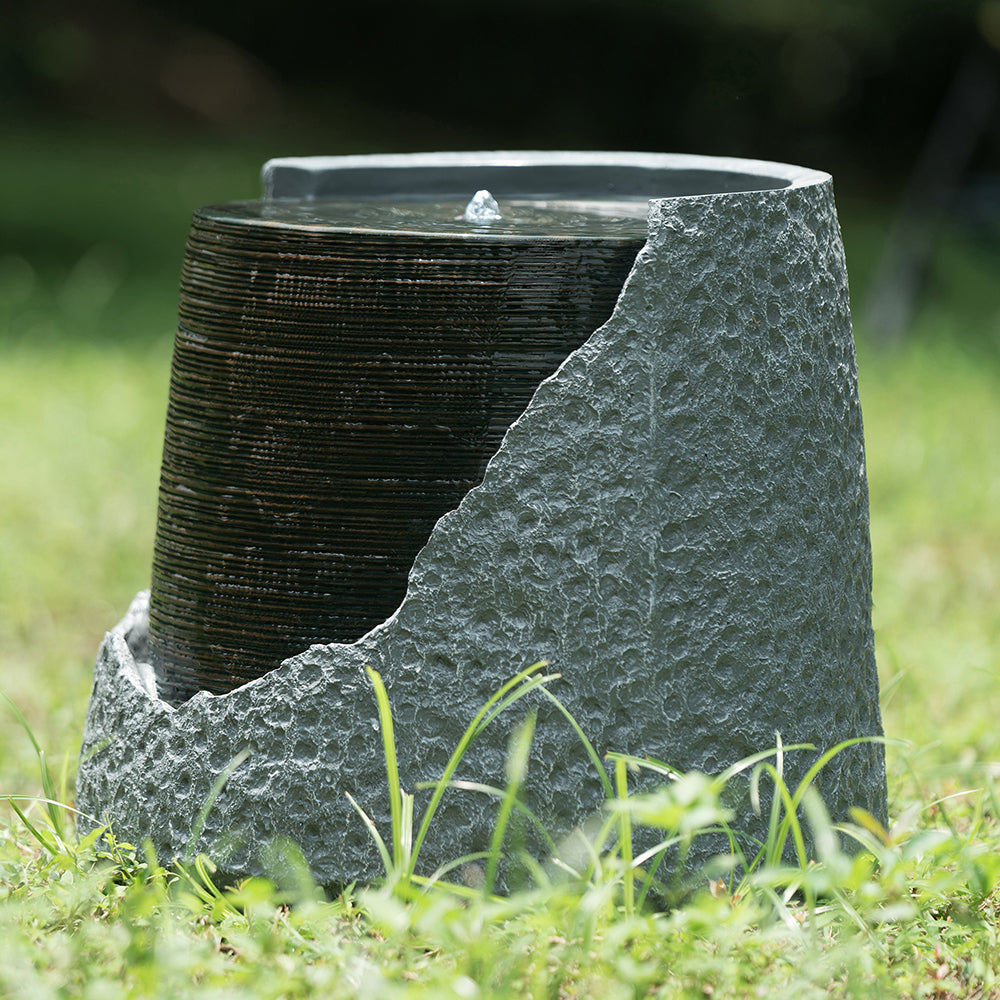
 Resin Cut Away Urn Outdoor Water Fountain 18 InchVendor:Resin Cut Away Urn Outdoor Water Fountain 18 InchResin
- Regular price
-
$396.99 - Regular price
-
$326.99 - Sale price
-
$396.99
-

 Resin Bubbler Fountain Outdoor Rippled DrumVendor:Resin Bubbler Fountain Outdoor Rippled DrumResin
- Regular price
-
$180.99 - Regular price
-
$203.99 - Sale price
-
$180.99
-

 Resin Stacked Rock Fountain Outdoor with LED LightsVendor:Resin Stacked Rock Fountain Outdoor with LED LightsResin
- Regular price
-
$194.99 - Regular price
-
$211.99 - Sale price
-
$194.99


The Numbers That Matter
- Under thirty inches Height
- One person, no help needed Moving it
- Already inside Pump
- One ordinary outlet Power
- Built in on nearly every piece Lighting
- Recirculates, none plumbed in Water
Small Enough to Move Yourself, Loud Enough to Notice
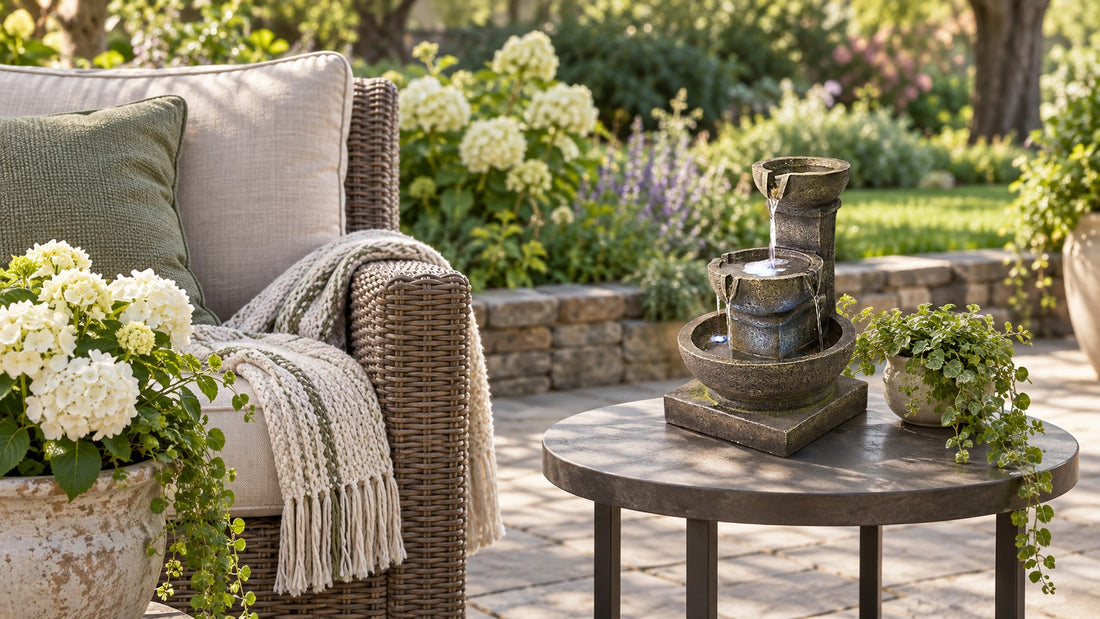
What small actually means once it is outside
Indoors, a two foot object is a piece of furniture. Outdoors it is smaller than you think. Grass, sky and planting absorb scale, and a fountain that looked substantial in a photograph can disappear into a border.
The useful way to picture it is against something you already own. A piece around sixteen to twenty inches is roughly the height of a table lamp, and it belongs on a surface where it can be seen from above. A piece in the mid twenties is about the height of a dining chair seat, and it holds its own standing on paving or at the front of a bed.
What a small outdoor fountain does not do is fill an open lawn. If the space is wide and empty, water at this size reads as an accessory rather than a feature. That is not a fault, it is just a different job, and it is the reason the taller range exists.
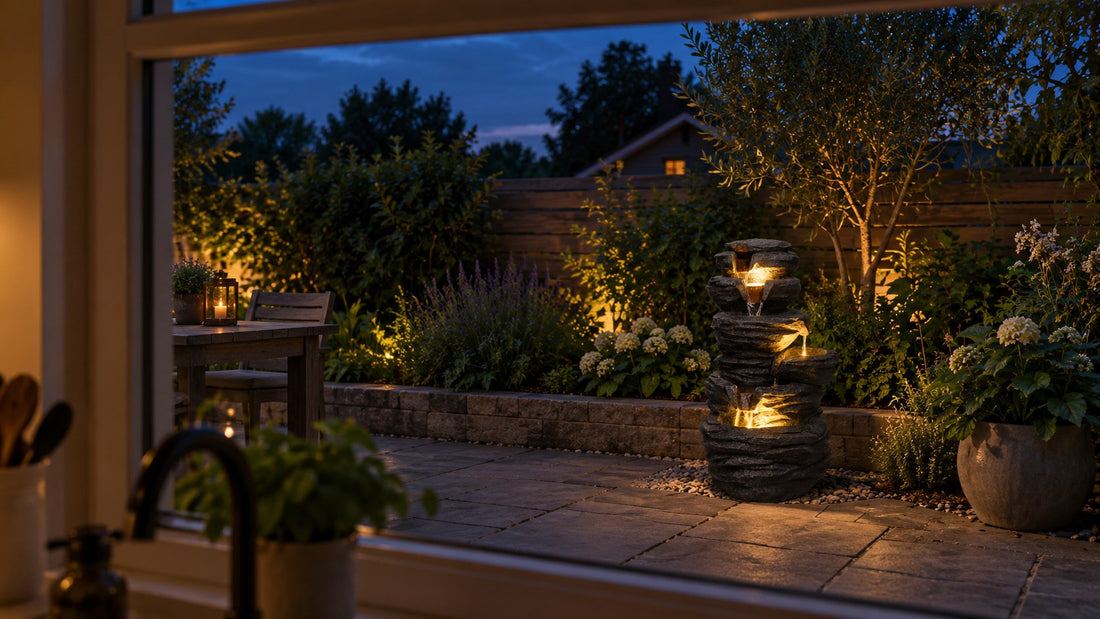
Nearly every one of these is lit, and that is deliberate
On tall fountains, lighting is a genuine choice. Down here it is almost standard, and there is a good reason for it.
A small fountain is usually placed where people already are. Beside a door, on a patio table, at the edge of a deck. Those are places you look at in the evening, often from inside through a window, at the exact hours when the piece would otherwise vanish. A light set under a ledge or inside a bowl turns falling water into the brightest thing in a dark garden, and it does it from a few feet away where the detail actually registers.
The light sits inside the piece rather than shining at it, so what you see is water carrying the glow rather than a bulb pointed at an object. Warm light is the common choice and reads as candlelight on stone. A few pieces use cool blue, which reads as moonlight and suits a modern setting.
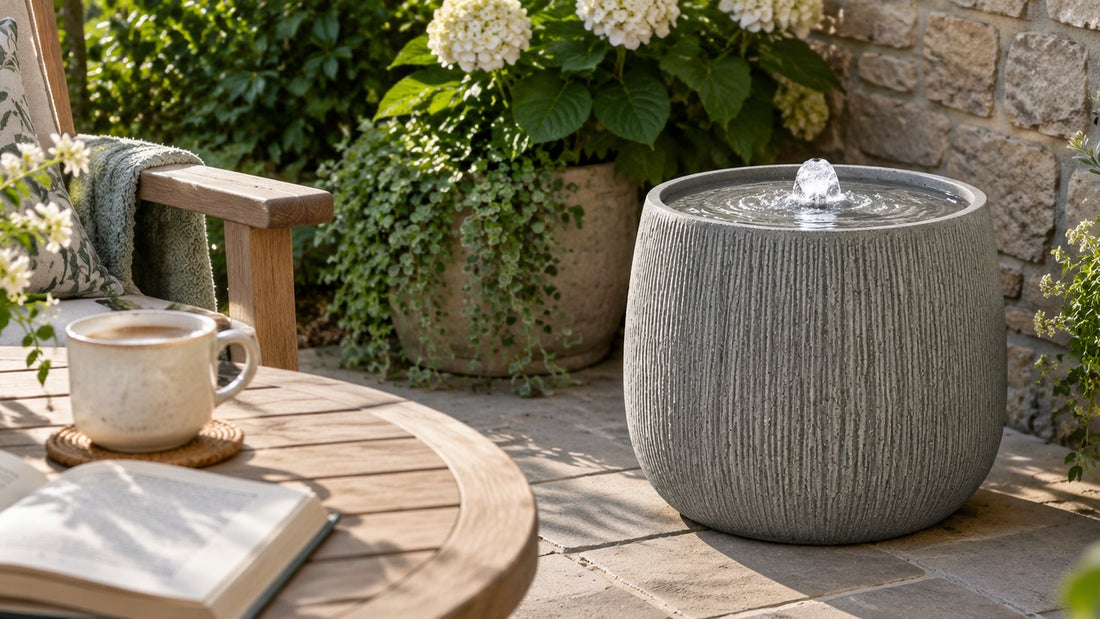
What it actually sounds like
This is where honesty helps more than enthusiasm.
Sound comes from the height water falls and the surface it lands on. A small fountain has a short drop, so it produces a trickle rather than a rush. Sitting next to it, that is exactly right, and it is the sound most people are picturing when they buy one. What it will not do is mask traffic or a neighbor's conversation. Covering road noise takes a taller drop and more water, and no piece under thirty inches will manage it.
Within the range there is still a choice. Water breaking over several stacked ledges makes a busier, brighter sound than water rising through a bubbler into a still, level pool. A rock cascade is the livelier one. A bowl or a bubbler is the quieter one, closer to a held note than a patter.
Where these actually end up
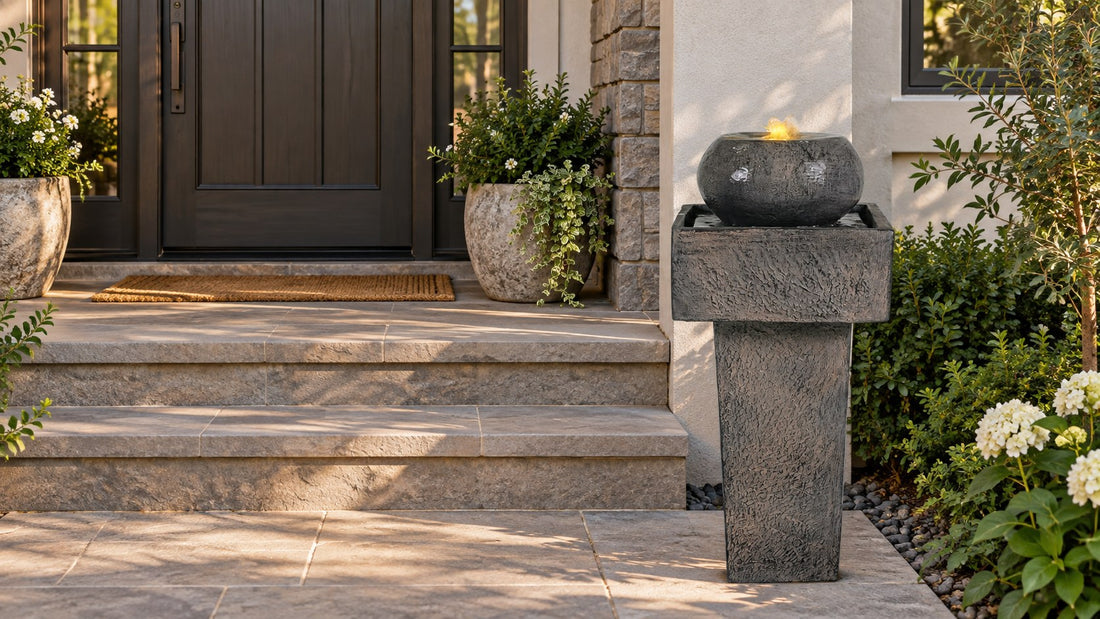
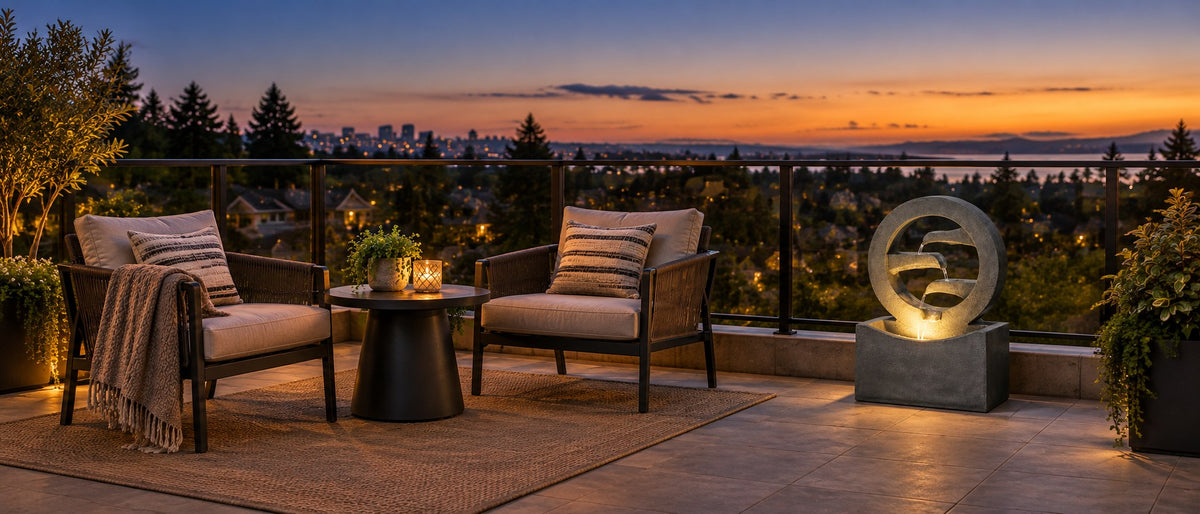
The most common spot is a patio table, where the fountain sits among the things already on it and gets looked at over a meal.
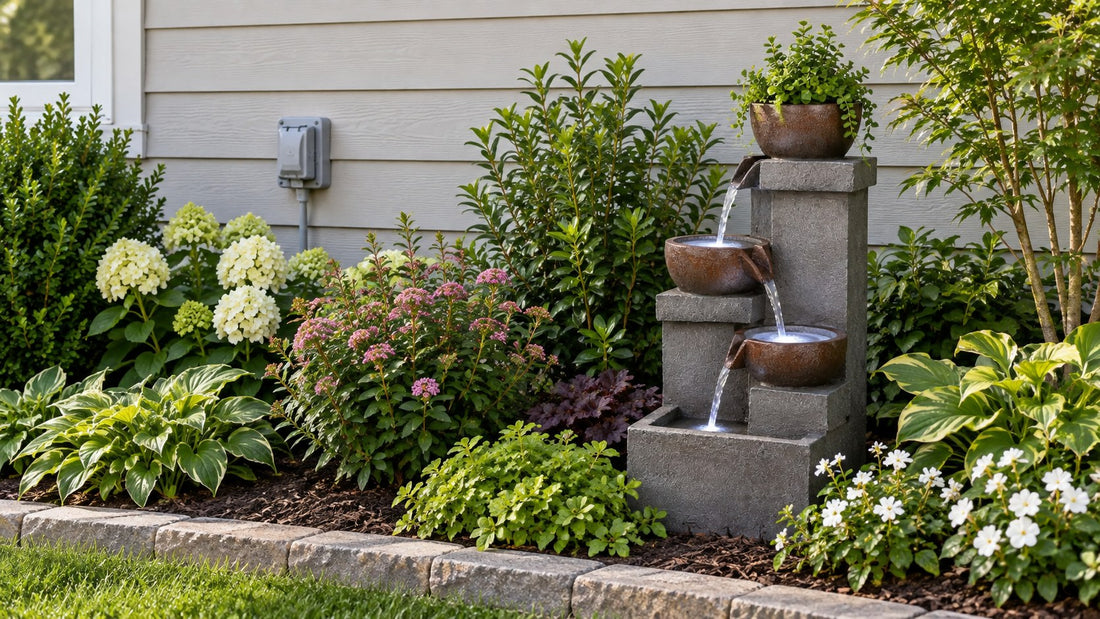
After that comes beside a door, where a piece on a step or a small plinth marks the entrance and is heard every time someone comes and goes. Then the front of a planted bed, where a fountain at the edge of the planting reads as part of the garden rather than an object placed on it, and the surrounding leaves hide the cord.
A fourth spot is worth mentioning because people forget it. A small water fountain works on a balcony or a roof terrace in a way a tall one cannot, because the weight is manageable and the whole thing is self contained. There is no plumbing to arrange and nothing to bolt down.
The cord is the part people forget
Every fountain on this page plugs into an ordinary outlet. Nothing needs wiring in and nothing needs an electrician.
What does need thinking about is the distance. At this size the piece is small and the cord is not, so a long run of cable across a patio is visible in a way it would not be on a tall fountain standing in a bed. Measure from where you want the fountain to the nearest outdoor outlet before you buy, and if you need an extension lead, use one rated for outdoor use and keep the joint off the ground and out of standing water.
On a table, the cord usually runs down a leg and disappears. On the ground, the easiest fix is to run it along an edge, a bed line or the back of a step where the eye does not follow it.
Winter is genuinely easy at this size
Cold air does not damage a fountain. Water sitting in a basin does, because it expands as it freezes and pushes against whatever is holding it.
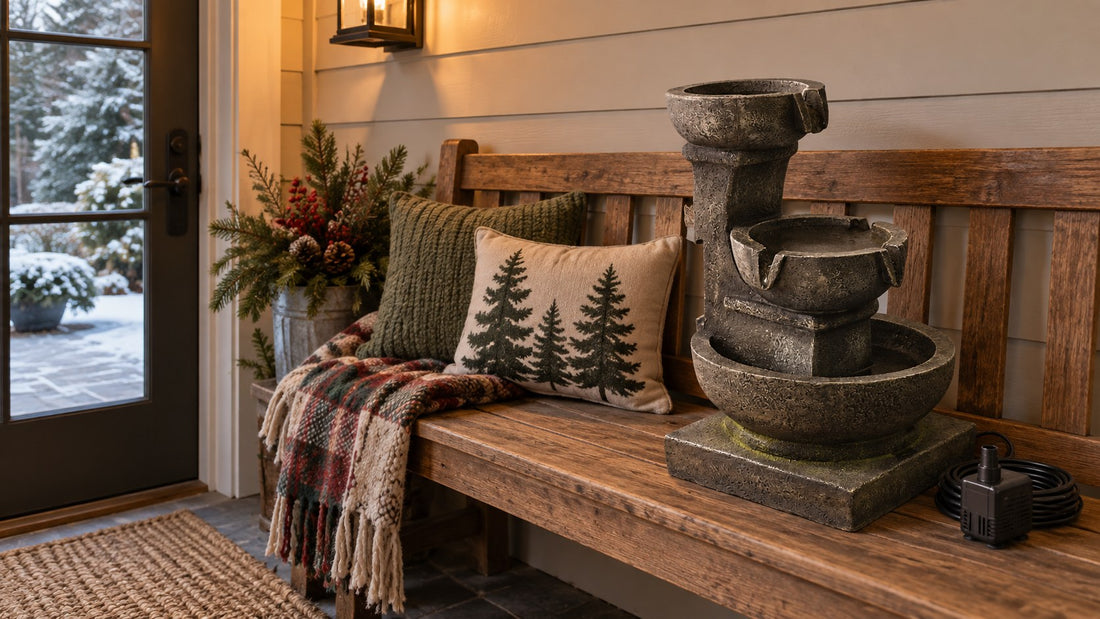
On a tall fountain that is a real chore. Down here it is a ten minute job. Unplug it, tip the water out, lift out the pump and rinse it, and carry the piece into a garage, a shed or a porch. It will be ready to run again in spring with nothing needed but a refill.
If it has to stay outside, drain it completely, take the pump indoors and cover it so rain and snow cannot put water back in. A fountain left full and switched off through a freeze is the one scenario worth avoiding, and it is the only real way to damage a piece this size.
Comparing Your Small Outdoor Fountain Options
| Sits on a surface | Stands on the ground | |
|---|---|---|
| Height | Under two feet | Two feet and over |
| Where it reads from | Close up, from a chair beside it | Across a patio or a planted bed |
| Placing it | Lift it with two hands | Walk it into place |
| Sound | A trickle you hear when you are near | A soft fall you hear across the space |
| Cord | Runs down the table or wall | Runs along the ground to the outlet |
| Winter | Drain it and carry it indoors | Drain it and cover it, or move it in |
Five ways into the small range
 01
01
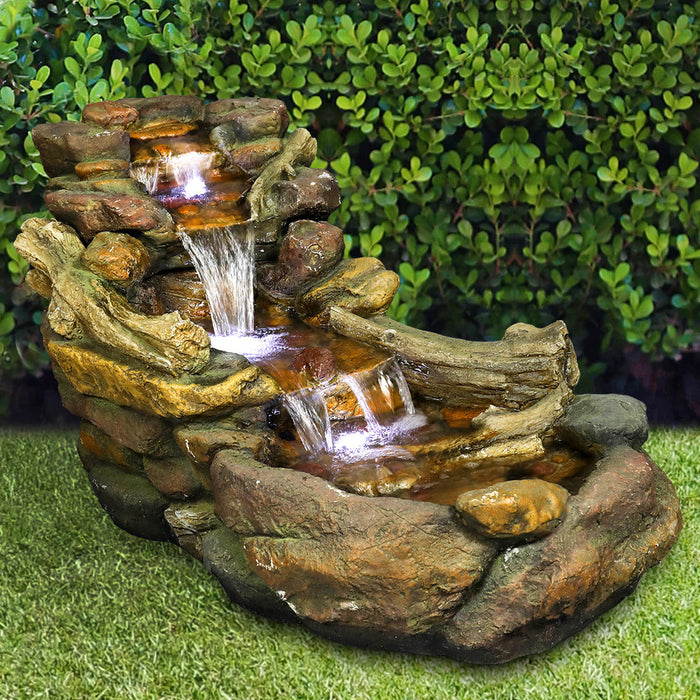
Rock and ledge
Stacked stone faces with the water breaking over every step
20 pieces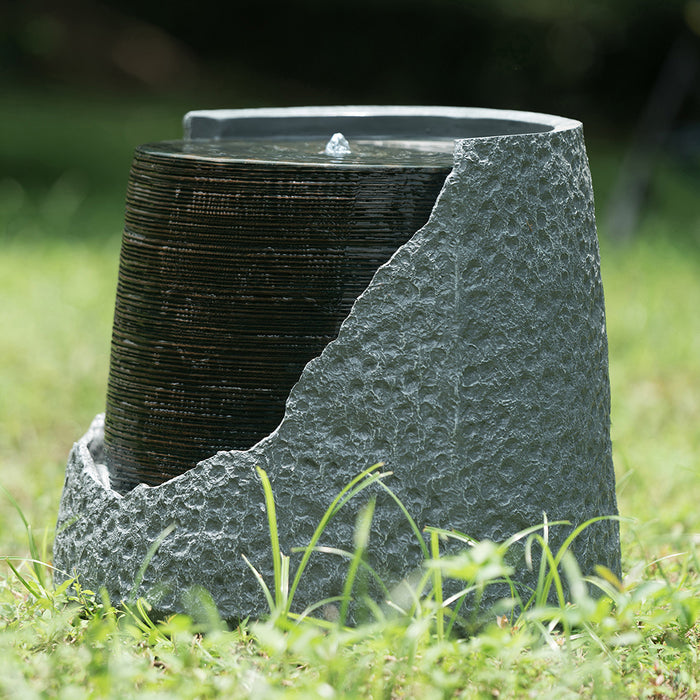 02
02
Bowls and basins
A single vessel with the water rising and folding over the rim
12 pieces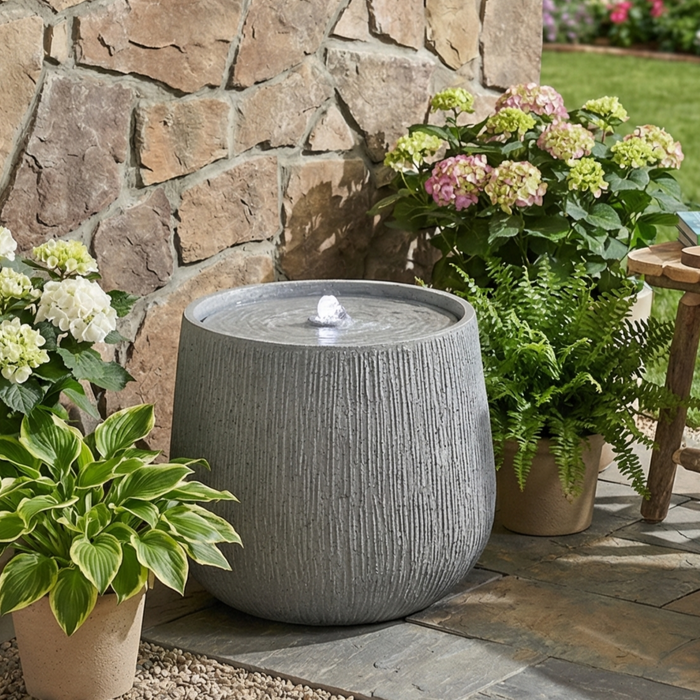 03
03
Bubblers
A quiet dome of water over a sphere or a flat top
8 pieces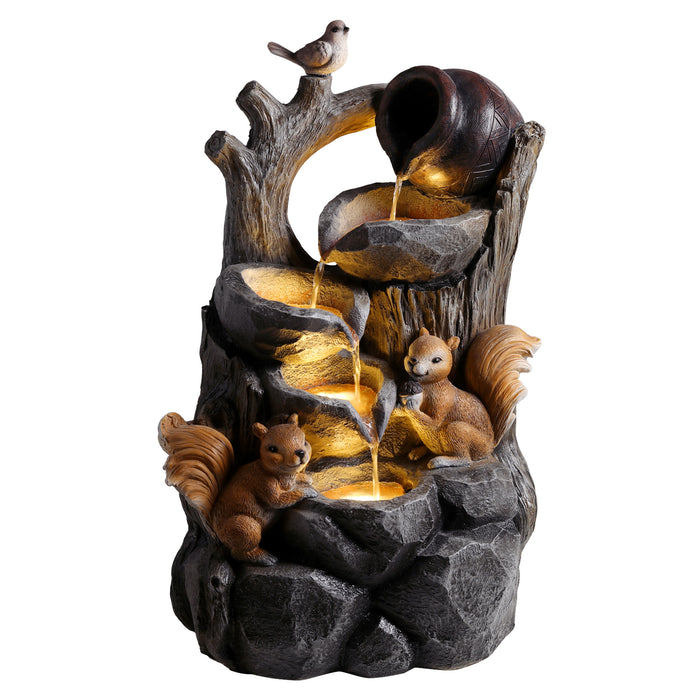 04
04
Animals and figures
Bears, birds and dogs built into the piece rather than set beside it
6 pieces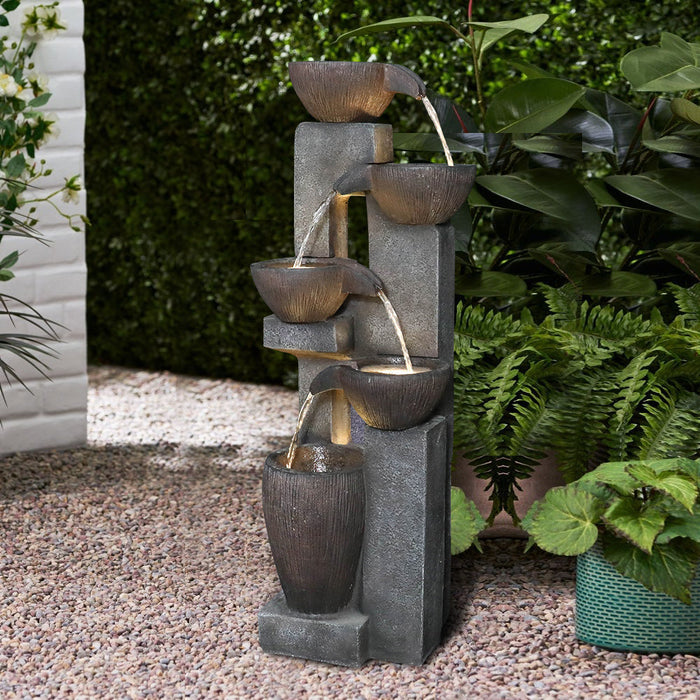 05
05
Small tiered
Classical bowls and pedestals scaled down to a tabletop
17 pieces
Before You Buy a Small Outdoor Fountain
How small is too small to hear?
Can a small outdoor fountain sit on a table?
Do these need any plumbing?
How often does the water need topping up?
Can it stay outside over winter?
Where does the cord go?
Related collections
Guides and how tos
If you are choosing between two pieces and cannot decide, pick the one you will walk past every day rather than the one that photographs best. A small fountain earns its keep by being close enough to hear.