

15 products
-

 Resin Ribbed Slate Outdoor Water Fountain Quiet 50 inResin Ribbed Slate Outdoor Water Fountain Quiet 50 in
- Regular price
-
$339.99 - Regular price
-
$379.99 - Sale price
-
$339.99
-

 Concrete 3 Tier Water Fountain Large EstateConcrete 3 Tier Water Fountain Large Estate
- Regular price
-
$449.99 - Regular price
-
$549.99 - Sale price
-
$449.99
-

 Resin Cliffside Rock Large Outdoor Water Fountain with LEDResin Cliffside Rock Large Outdoor Water Fountain with LED
- Regular price
-
$1,899.99 - Regular price
-
- Sale price
-
$1,899.99
-

 Resin Serpentine Slate Column Cascading Outdoor FountainResin Serpentine Slate Column Cascading Outdoor Fountain
- Regular price
-
$679.99 - Regular price
-
- Sale price
-
$679.99
-

 Concrete Pedestal Fountain Ornate 3 Tier OutdoorConcrete Pedestal Fountain Ornate 3 Tier Outdoor
- Regular price
-
$499.99 - Regular price
-
$549.99 - Sale price
-
$499.99
-

 Resin Stacked Stone Rock Waterfall Outdoor Fountain with LEDResin Stacked Stone Rock Waterfall Outdoor Fountain with LED
- Regular price
-
$1,499.99 - Regular price
-
- Sale price
-
$1,499.99
-

 Resin 6 Tier Outdoor Water Fountain Pottery Bowls 53 inResin 6 Tier Outdoor Water Fountain Pottery Bowls 53 in
- Regular price
-
$449.99 - Regular price
-
- Sale price
-
$449.99
-

 Concrete Carved 2 Tier Outdoor Water Fountain 48 InchConcrete Carved 2 Tier Outdoor Water Fountain 48 Inch
- Regular price
-
$499.99 - Regular price
-
- Sale price
-
$499.99
-

 Resin Bohemian 6 Tier Tall Outdoor Water Fountain with LEDResin Bohemian 6 Tier Tall Outdoor Water Fountain with LED
- Regular price
-
$2,469.35 - Regular price
-
- Sale price
-
$2,469.35
-

 Concrete Heritage 3 Tier Outdoor Water Fountain 63 in.Concrete Heritage 3 Tier Outdoor Water Fountain 63 in.
- Regular price
-
$1,399.99 - Regular price
-
- Sale price
-
$1,399.99
-

 Resin River Rock Outdoor Fountain Pillar 51 Inch 52 lbResin River Rock Outdoor Fountain Pillar 51 Inch 52 lb
- Regular price
-
$499.99 - Regular price
-
- Sale price
-
$499.99
-

 Concrete Fluted 3 Tier Outdoor Water Fountain 51 InchConcrete Fluted 3 Tier Outdoor Water Fountain 51 Inch
- Regular price
-
$539.99 - Regular price
-
- Sale price
-
$539.99


The Numbers That Matter
- Check each model’s height, width and depth Dimensions
- Firm, level support for the filled fountain Ground support
- Check included parts and setup instructions Pump
- Check the model’s connection requirements Power
- Availability and controls vary by model Lighting
- Check water level and keep the pump submerged Water care
Choosing a Large Outdoor Fountain for Your Garden
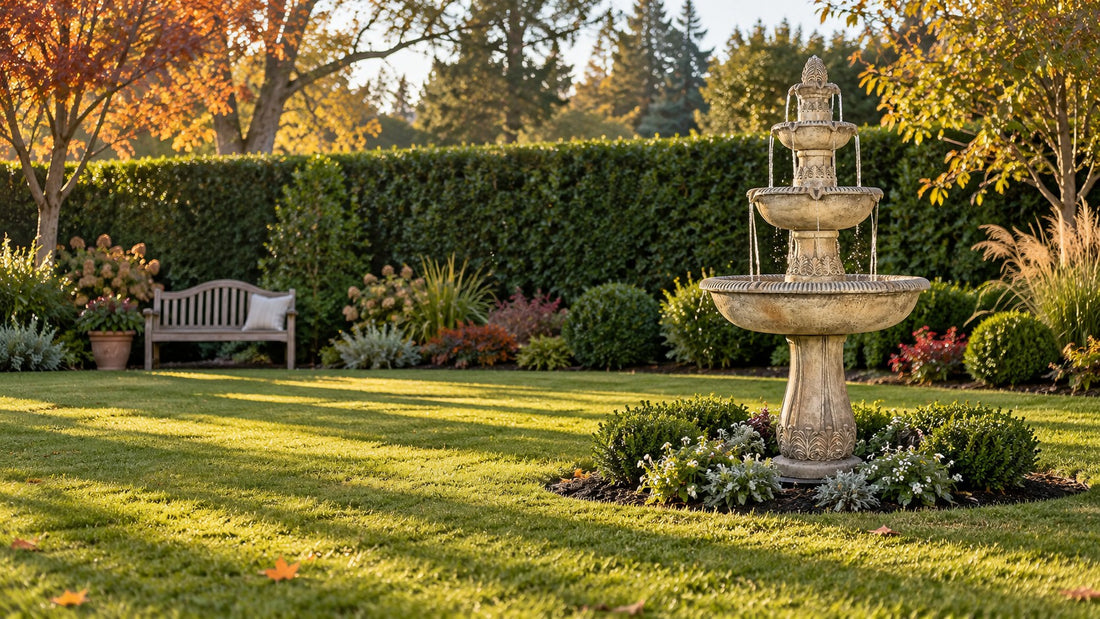
Choose the Height and Footprint Together
Measure the fountain’s full width and depth, including any bowls or ledges that extend beyond the base. Then check its height from your usual seating area or window. Leave room for walking, nearby furniture and access to the pump. For a detailed comparison, see our large outdoor fountain buying guide below.
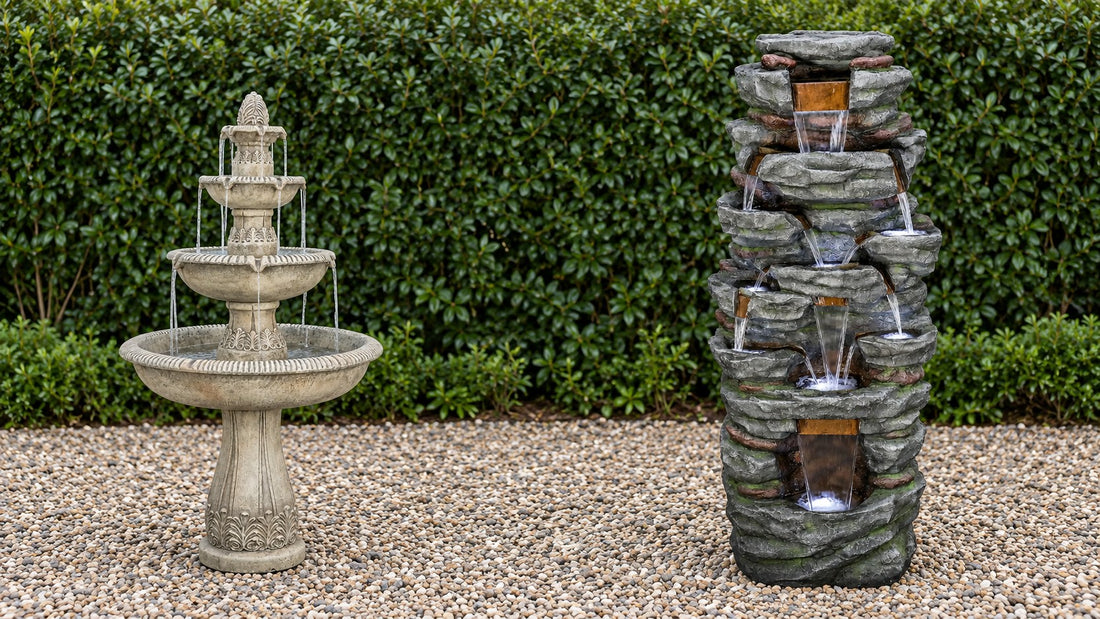
Check Weight, Access and Ground Support
Choose a firm, level surface that can support the fountain when filled with water. Ground preparation depends on the model and the condition of the site. Before delivery, check the product’s weight, assembly requirements and the route through your gate or garden. Contact us if a weight or package measurement you need is not listed.
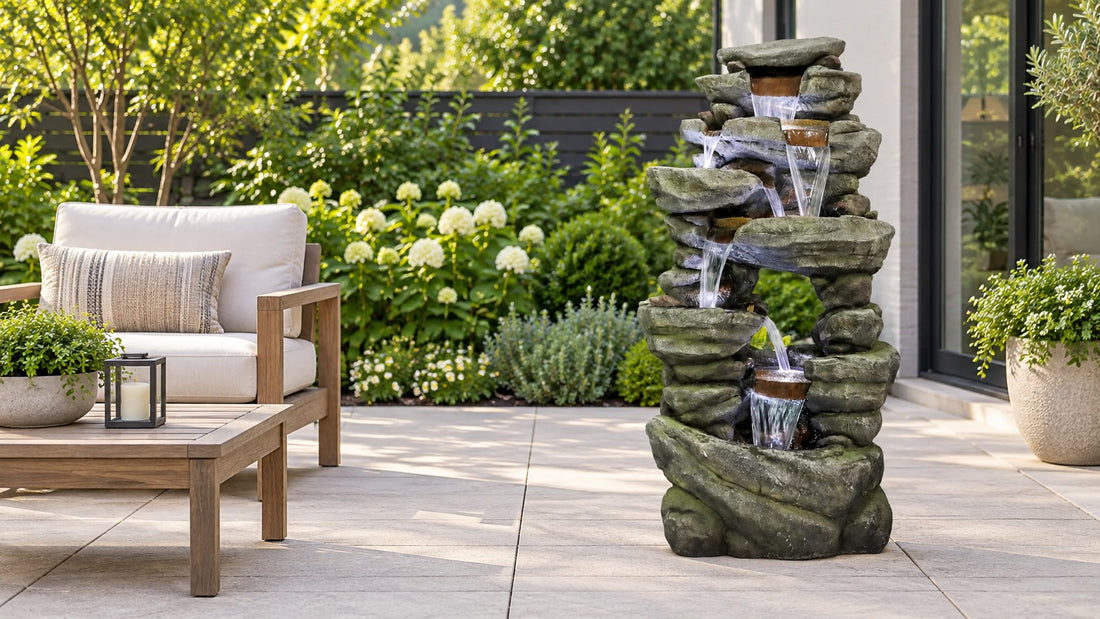
Compare the Design and Features of Each Model
Our concrete range includes pedestal and tiered bowl designs, while our resin range includes rock waterfalls and cascading forms. Compare the finish, weight and assembly details of the models you like. If lighting matters to you, check whether it is included and how it is controlled. Separate pump and light controls are a feature of the individual model, not the material.
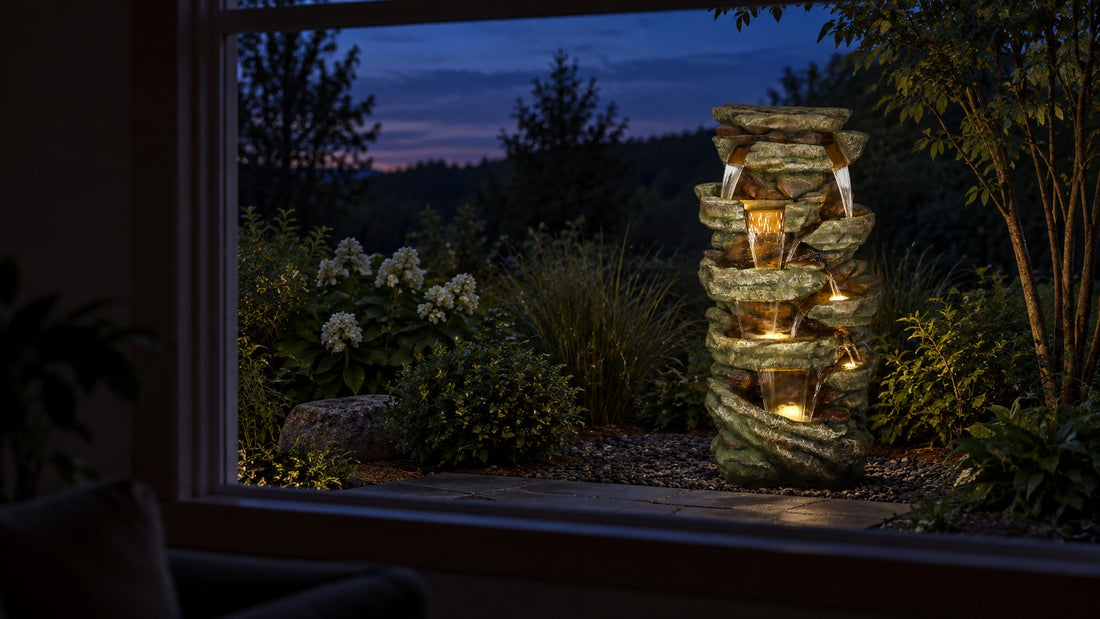
Compare the Water Sound
Water flowing over rock ledges sounds different from water falling between bowls. Watch a running video where available to compare the character of the sound. Loudness depends on the flow, drop distance, basin shape and placement. A fountain may make background noise less noticeable near your seating area, but we cannot promise that it will cover traffic noise throughout a yard.
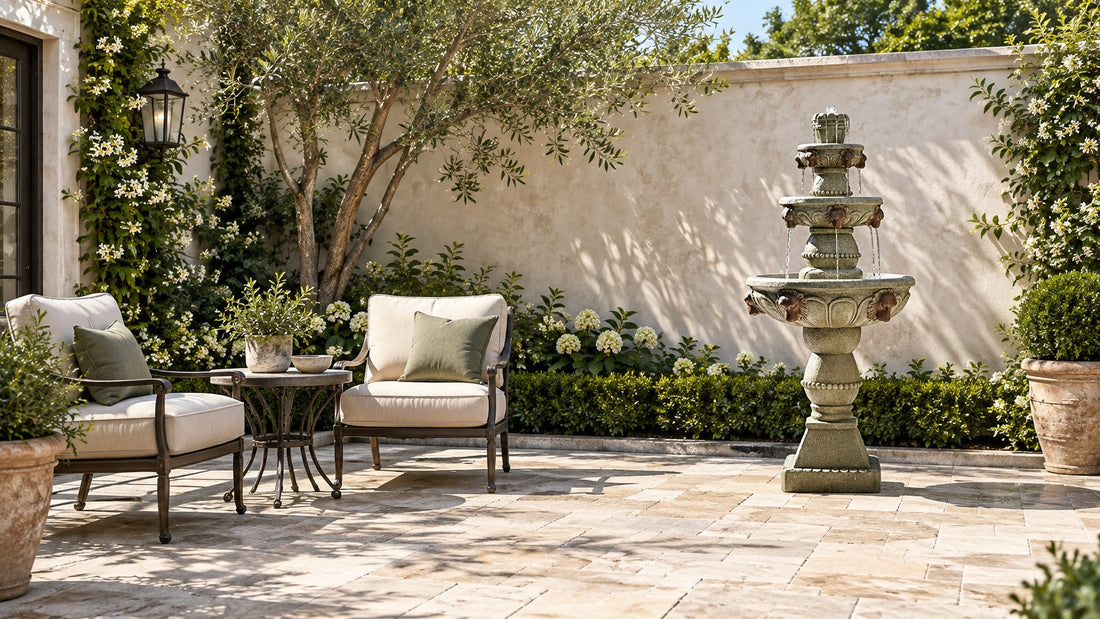
Plan for Regular Care and Freezing Weather
Check the water level regularly and keep the pump submerged while it is running. Clean the basins and pump intake as needed. Before freezing weather, switch off and unplug the fountain, drain all bowls and channels, and protect or store the fountain and pump according to the model’s care instructions. A cover alone does not prevent trapped water from freezing.
Comparing Your Large Outdoor Water Fountain Options
| Cast concrete | Resin | |
|---|---|---|
| Designs in this range | Pedestal and tiered bowl designs | Rock waterfalls and cascading forms |
| Lighting | Check the individual model | Check the individual model |
| Weight | Check listed weight and access needs | Check listed weight and access needs |
| Finish care | Follow the model’s cleaning instructions | Follow the model’s cleaning instructions |
| Assembly | Check parts and assembly requirements | Check parts and assembly requirements |
| Winter care | Drain fully; protect or store as instructed | Drain fully; protect or store as instructed |
Five ways into the tall range
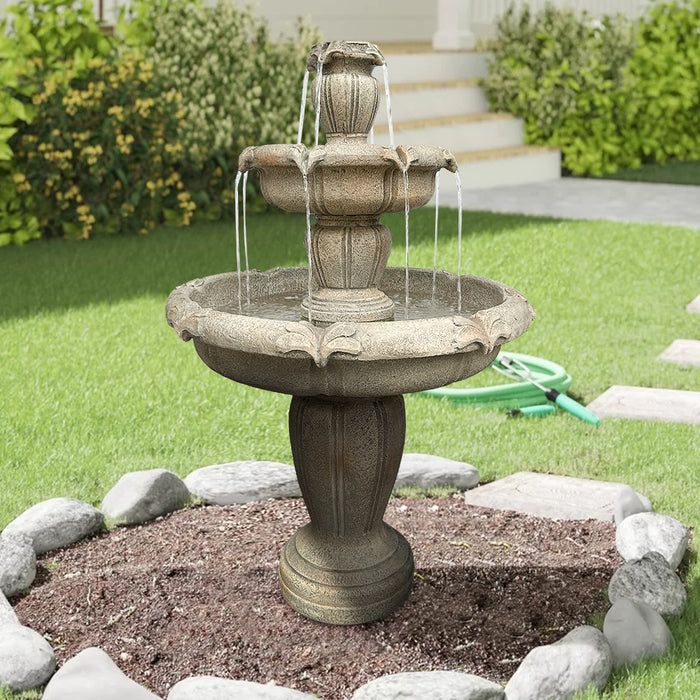 01
01
Cast concrete
Explore pedestal and tiered bowl designs
16 pieces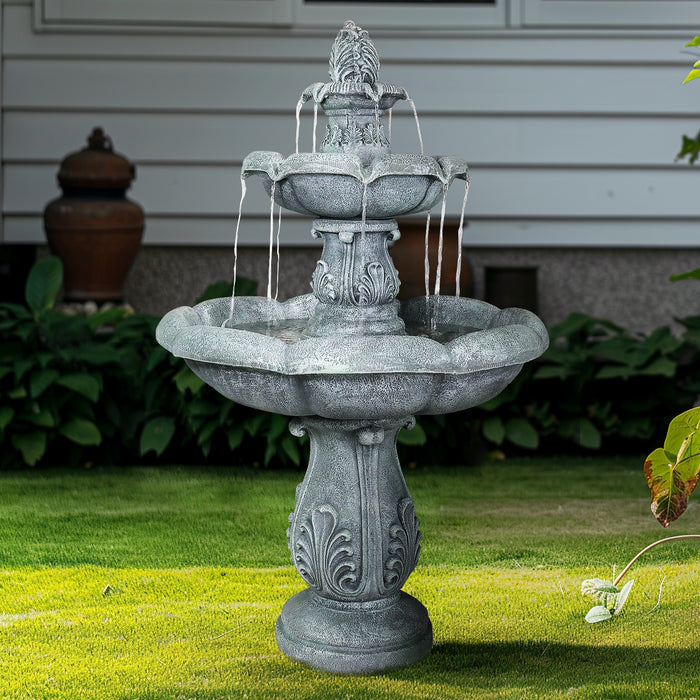 02
02
Classical tiered
Compare stacked bowls, pedestal shapes and finishes
17 pieces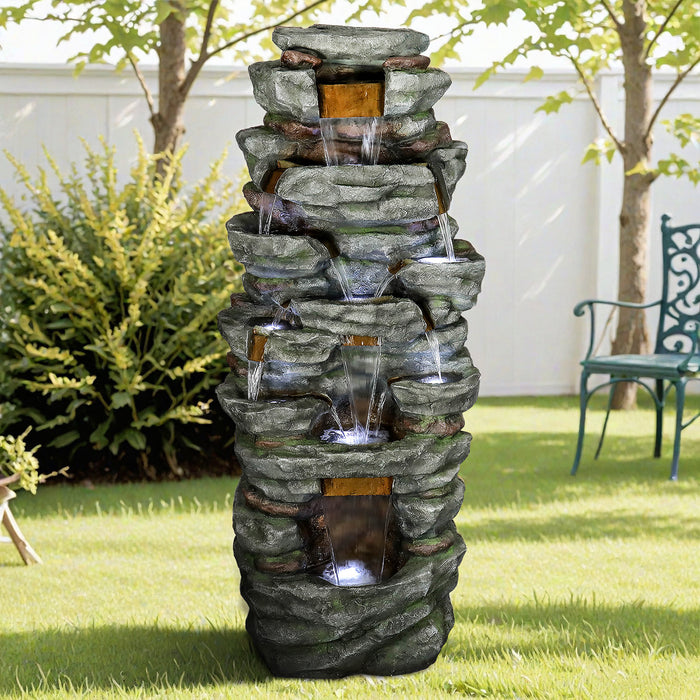 03
03
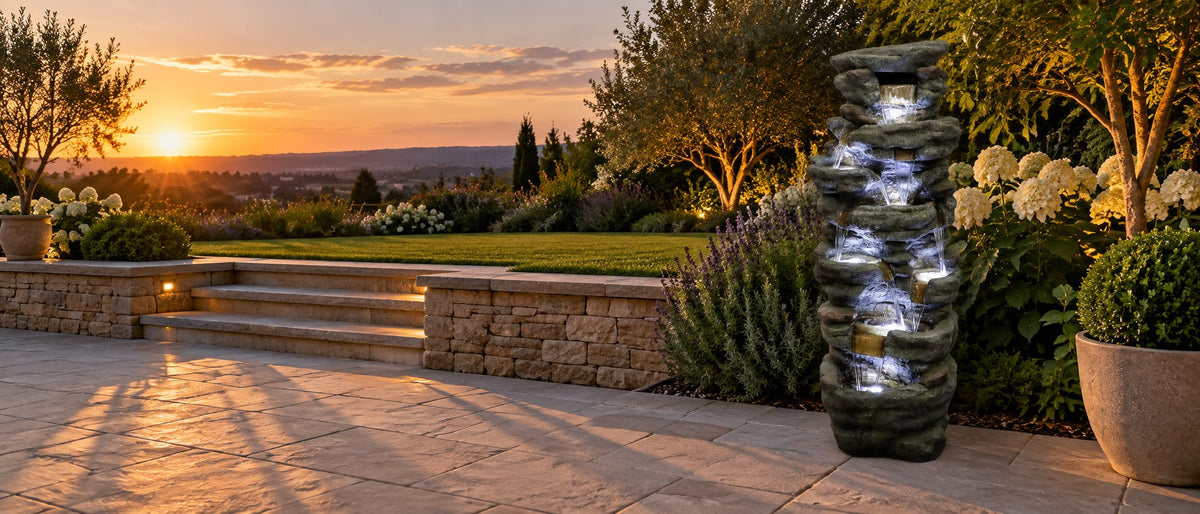
Rock and slate
Explore rock ledges and cascading water designs
20 pieces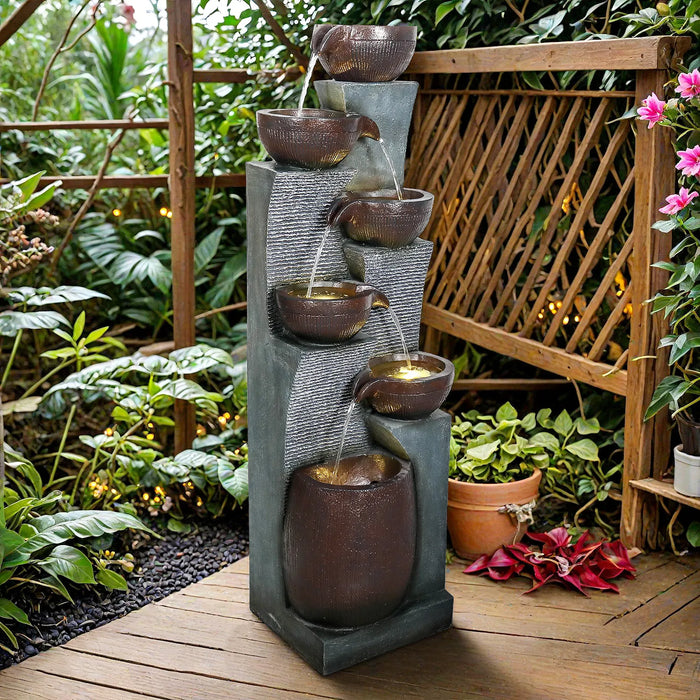 04
04
Pottery and urn
Compare vessel shapes and flowing water designs
11 pieces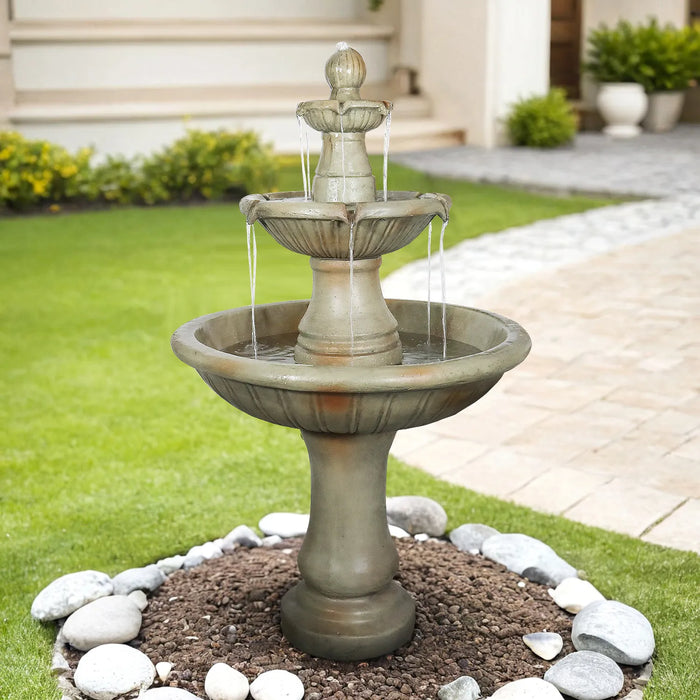 05
05
Modern and geometric
Explore columns, geometric forms and clean lines
26 pieces
Before You Order a Large Outdoor Fountain
How tall should a large outdoor fountain be
Do any of these need plumbing or a foundation
Which are lit and which are not
How loud is a fountain this size
How do these get delivered and assembled
What do I have to do before winter
Related collections
Guides and how tos
Measure your space and check the model’s dimensions before ordering. Leave room for access, and contact us if you need a specification that is not listed.