

17 products
-

 Concrete Antique Black 3 Tier Outdoor Water FountainConcrete Antique Black 3 Tier Outdoor Water Fountain
- Regular price
-
$429.99 - Regular price
-
- Sale price
-
$429.99
-

 Concrete Lotus Fountain Tiered OutdoorConcrete Lotus Fountain Tiered Outdoor
- Regular price
-
$429.99 - Regular price
-
- Sale price
-
$429.99
-

 Concrete 3 Tier Water Fountain Large EstateConcrete 3 Tier Water Fountain Large Estate
- Regular price
-
$449.99 - Regular price
-
$549.99 - Sale price
-
$449.99
-

 Concrete 2 Tier Fountain Acanthus Relief 47 InchConcrete 2 Tier Fountain Acanthus Relief 47 Inch
- Regular price
-
$439.99 - Regular price
-
- Sale price
-
$439.99
-

 Resin Tiered Fountain Stacked Pots with LEDResin Tiered Fountain Stacked Pots with LED
- Regular price
-
$239.99 - Regular price
-
$0.00 - Sale price
-
$239.99
-
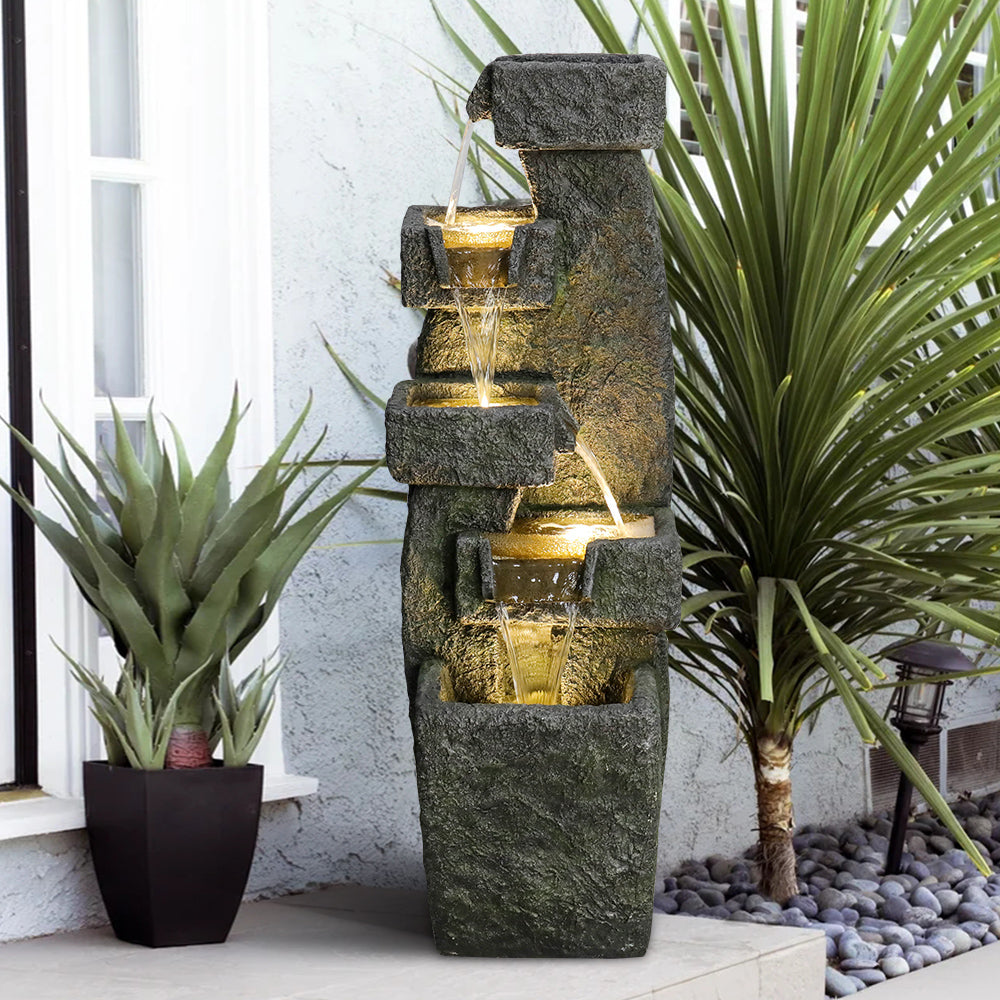
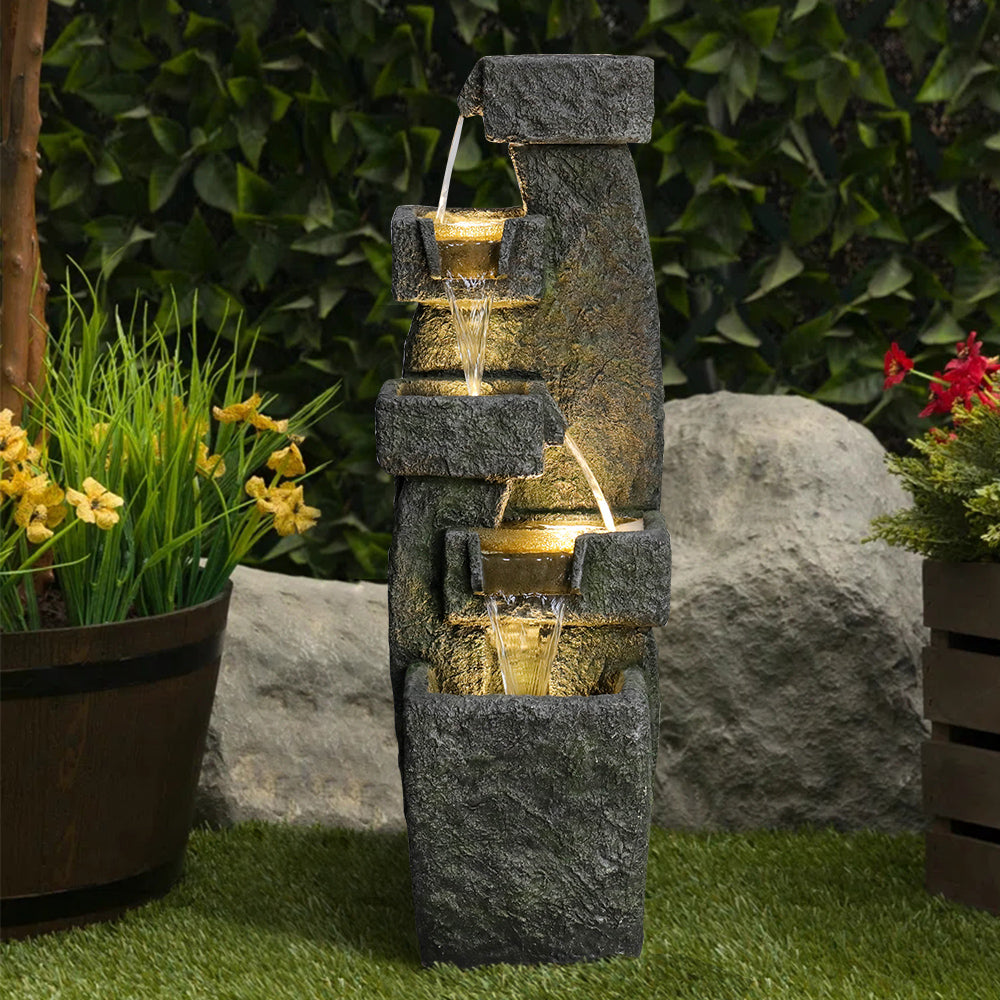 Resin Tiered Outdoor Fountain 5 Tier Modern LEDResin Tiered Outdoor Fountain 5 Tier Modern LED
- Regular price
-
$249.99 - Regular price
-
$0.00 - Sale price
-
$249.99
-

 Concrete 3 Tier Fountain Classical Pineapple FinialConcrete 3 Tier Fountain Classical Pineapple Finial
- Regular price
-
$259.99 - Regular price
-
- Sale price
-
$259.99
-

 Resin Bohemian 6 Tier Tall Outdoor Water Fountain with LEDResin Bohemian 6 Tier Tall Outdoor Water Fountain with LED
- Regular price
-
$2,469.35 - Regular price
-
- Sale price
-
$2,469.35
-

 Resin Bear Fountain Two Cubs on Timber PostResin Bear Fountain Two Cubs on Timber Post
- Regular price
-
$181.99 - Regular price
-
$203.99 - Sale price
-
$181.99
-

 Resin Rustic Outdoor Fountain Birdhouse and Iron TapResin Rustic Outdoor Fountain Birdhouse and Iron Tap
- Regular price
-
$263.99 - Regular price
-
$250.99 - Sale price
-
$263.99
-

 Resin 3 Tier Fountain Modern Outdoor with LEDResin 3 Tier Fountain Modern Outdoor with LED
- Regular price
-
$189.99 - Regular price
-
$229.99 - Sale price
-
$189.99
-

 Concrete Fluted 3 Tier Outdoor Water Fountain 51 InchConcrete Fluted 3 Tier Outdoor Water Fountain 51 Inch
- Regular price
-
$539.99 - Regular price
-
- Sale price
-
$539.99


The Numbers That Matter
- Two or three bowls, some with more Tiers
- Reads from every side Viewing
- Already inside Pump
- One ordinary outlet Power
- Recirculates, none plumbed in Water
- Drain every bowl before frost Winter
The Fountain Shape Every Garden Recognizes
Why the tiered shape lasts
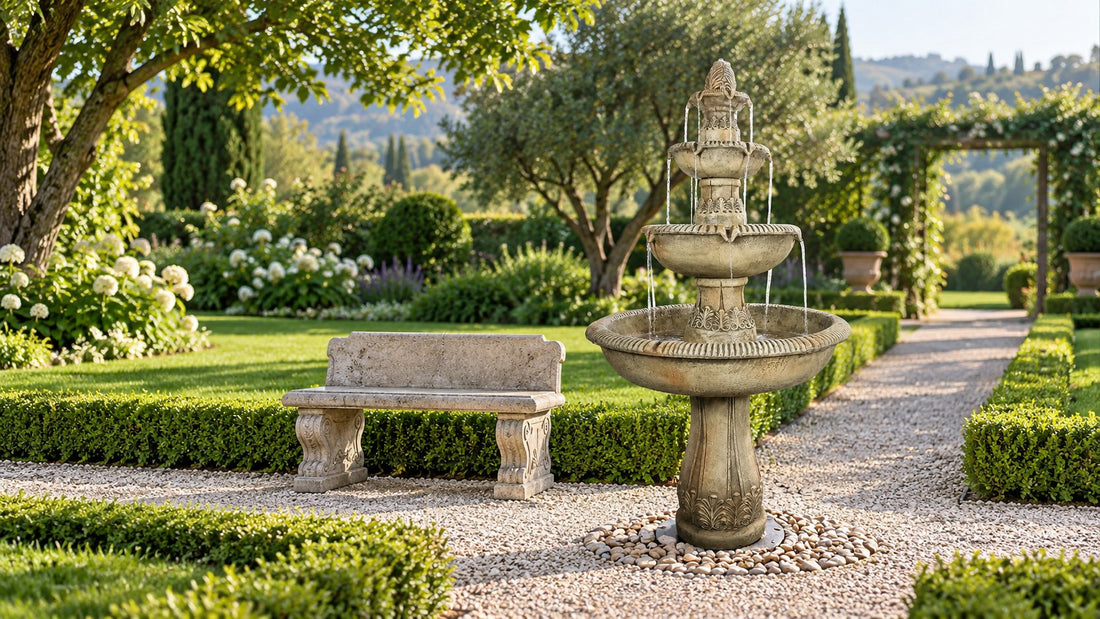
Most fountain shapes have a front and a back. A tiered fountain does not. The bowls are round, the pedestal is centered and the water falls evenly all the way round, so it looks the same from every direction you approach it.
That is what makes it the natural choice for open positions. The crossing of two paths, the middle of a courtyard, the turning circle of a drive, the center of a lawn. Places where people walk around the fountain rather than past it. A rock or wall fountain wants something behind it. A tiered fountain wants space around it.
Two tiers, three tiers and how tall
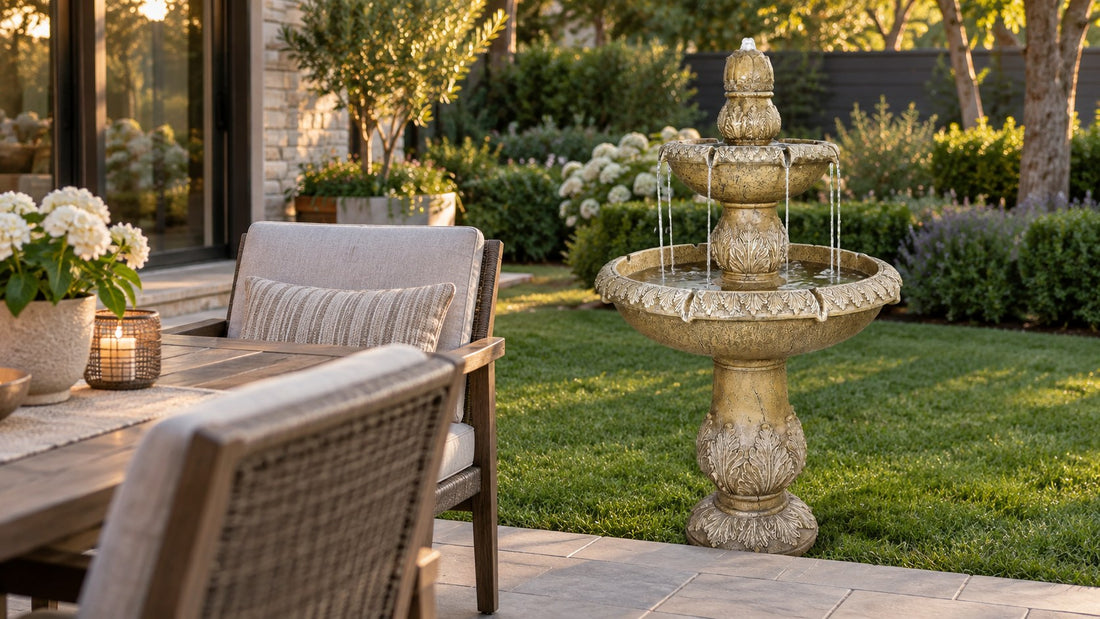
The number of tiers sets the character. Three tiers make a taller, more formal outline with a lot of falling water. Two tiers feel calmer and more open, often with a wider lower basin.
Height is the other decision. Stand where you will usually see the fountain from and picture the top bowl. If it sits at or just below eye level, you see water falling from every rim. Much taller than that and the top tier disappears from view, and the fountain starts to read from a distance rather than up close. Most tiered fountains here sit between waist and shoulder height, which is right for a garden seen from a patio or a path.
Concrete or resin
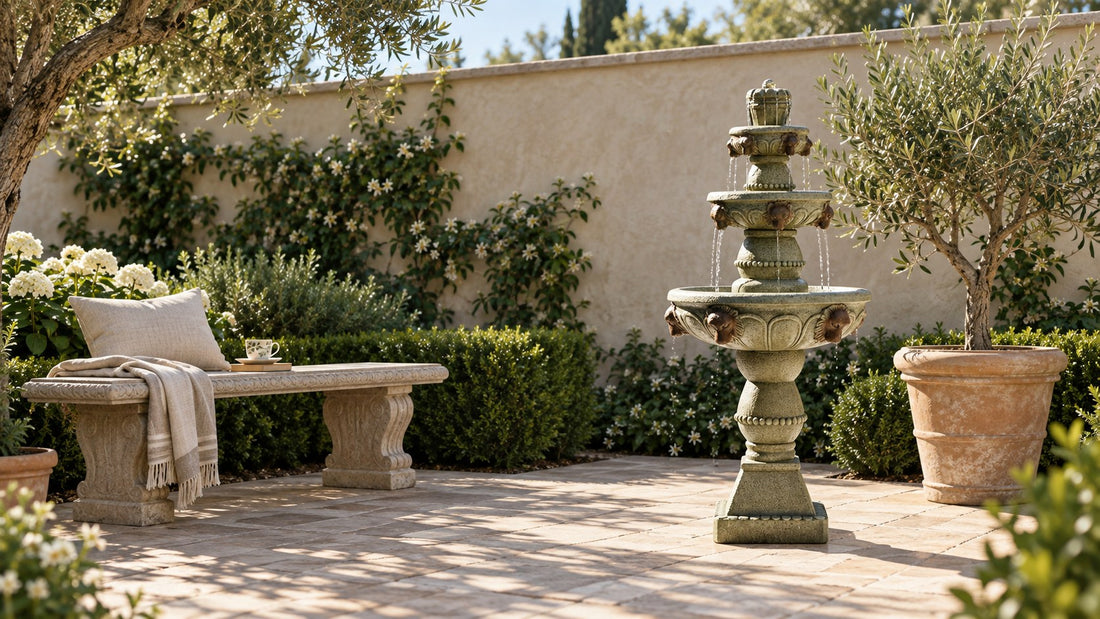
The classical tiered pedestal is a concrete shape, and most of the concrete pieces here are exactly that. Carved bowls, acanthus relief, lion heads, scalloped rims and finials. They are heavy, they arrive in sections and they gain a patina outdoors that makes them look older every year. Most are unlit by design, since the look is traditional stone.
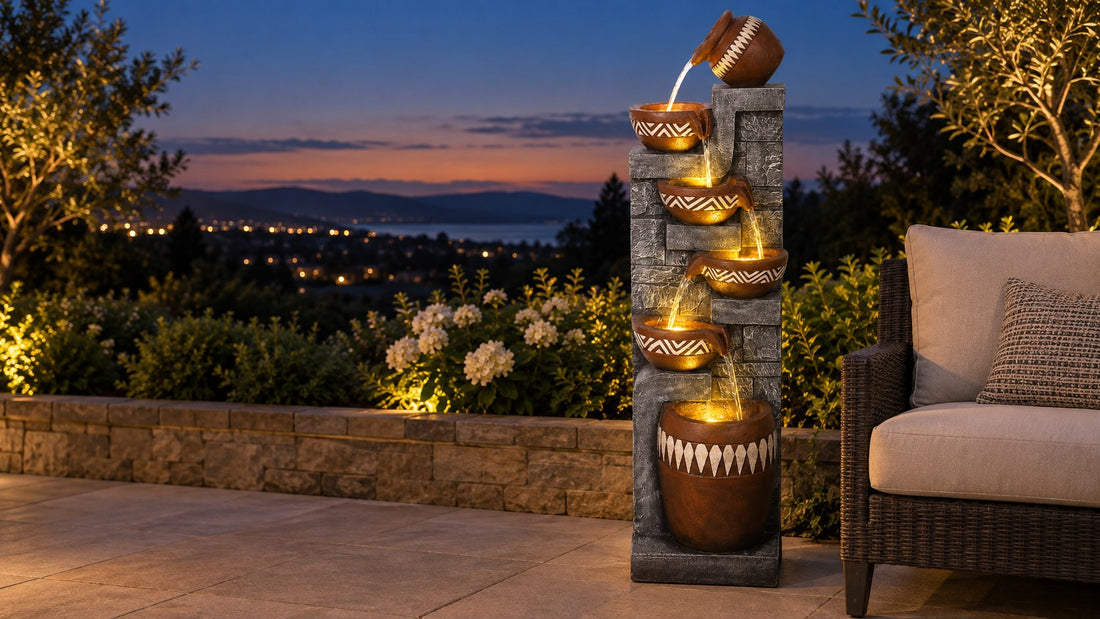
The resin tiered fountains take the idea somewhere else. Stacked pots pouring one into the next, modern squared bowls, rustic forms. They are lighter, easier to move and most have warm light built into the bowls, so the falling water glows after dark.
Level is everything
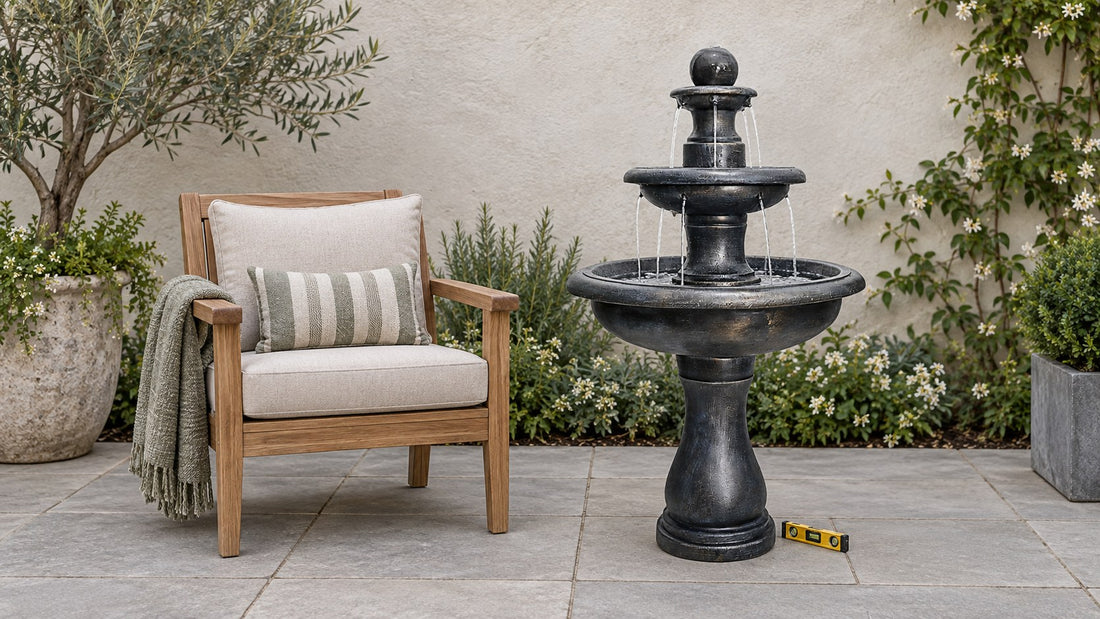
A tiered fountain has one requirement that other shapes do not. Every rim has to be perfectly flat. Water leaves a bowl at its lowest point, so a base that tilts even slightly sends the whole flow over one side of each tier and leaves the rest dry.
Set the base on firm, level ground such as paving, compacted gravel or a few level pavers. Avoid soft lawn or fresh soil, which settle unevenly over a season. Check each piece with a small spirit level as you stack it, and use thin shims under the base if you need to. Five minutes of care during setup is the difference between an even curtain of water and a fountain that looks broken.
The sound of falling rings
A tiered fountain sounds different from a rock or a bubbler. The water falls as a thin, even sheet from each rim rather than breaking over ledges, so the sound is a steady, soft wash rather than a patter.
More tiers and a longer drop between bowls carry further. Three tiers across an open courtyard are clearly audible from a seat several steps away. Two tiers close to a window stay gentle. If the pump has a flow control, turning it down narrows the curtain and softens the sound without stopping the water reaching every bowl.
Keeping every bowl clean and winter ready
Each tier holds a thin layer of water in sun, which is where algae and mineral marks start. Top up the water often so the pump never runs dry, change it every few weeks in warm weather and wipe each bowl with a soft brush when you do. Using rainwater or distilled water in hard water areas keeps white rings off the rims.
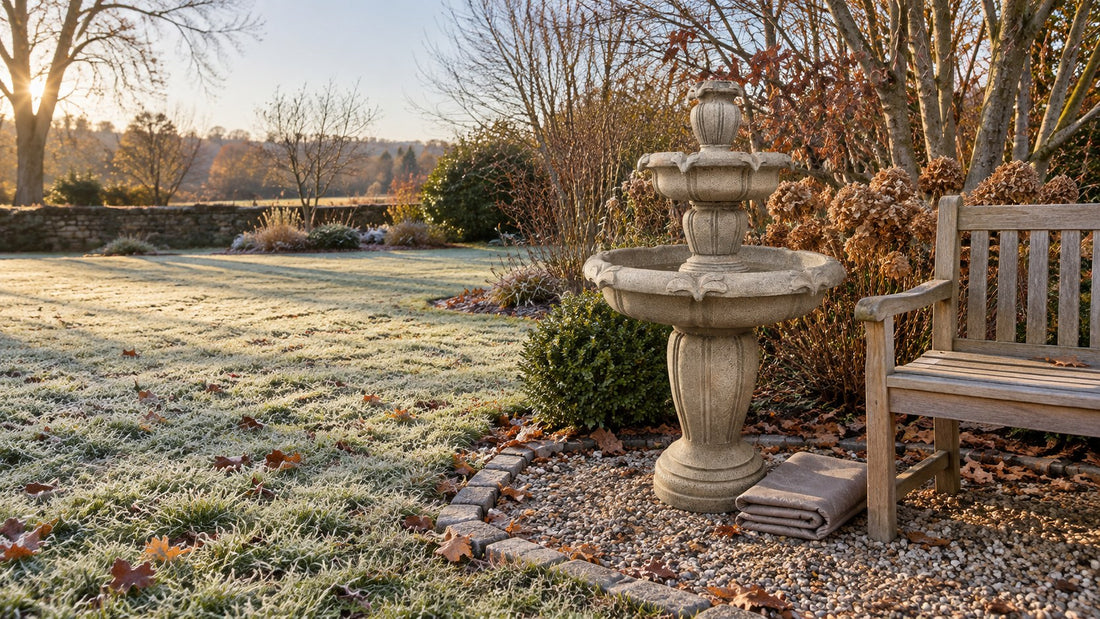
Before the first frost, drain every bowl, not just the basin. Lift out the pump and store it indoors, then cover the fountain with a breathable cover. Concrete pieces can stay in place once they are empty and covered. In spring, reset the level, refill and it will run as before.
Comparing Your Tiered Fountain Options
| Cast concrete | Cast resin | |
|---|---|---|
| Style | Classical pedestals, finials and carved detail | Stacked pots, modern shapes, rustic forms |
| Lighting | Usually none, the look is traditional stone | Built in on most resin pieces |
| Weight | Heavy and planted where it stands | Light enough to move around |
| Delivery | Arrives in sections, stacked on site | Usually one or two pieces |
| Finish | Gains patina outdoors over the seasons | Holds the color it arrived with |
| Winter | Drain and cover in place | Drain it, or move it under shelter |
Five ways into the tiered range
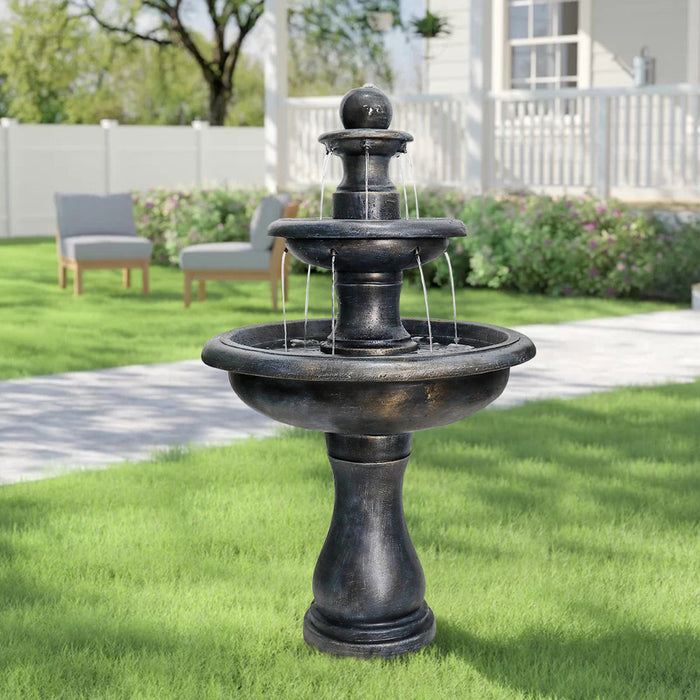 01
01
Concrete classics
Heavy pedestals with carved bowls and finials
16 pieces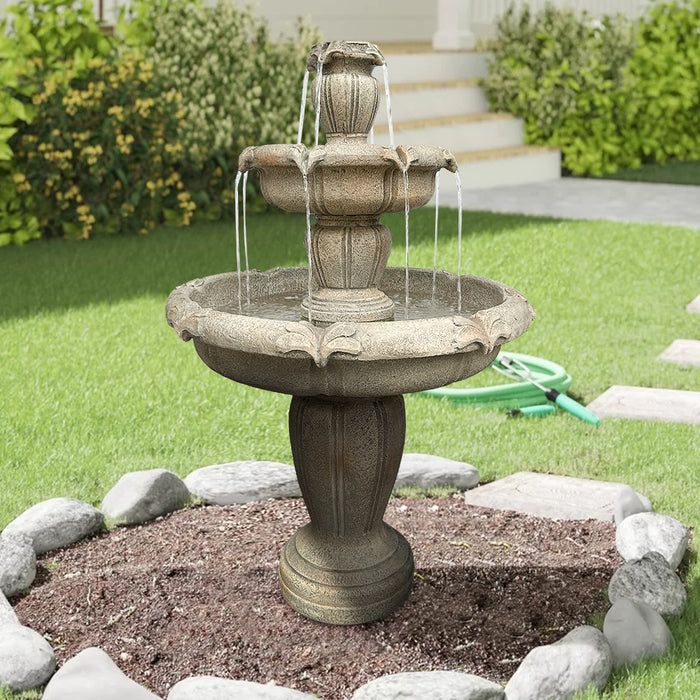 02
02
Tall centerpieces
Four feet and taller for a courtyard or a lawn
15 pieces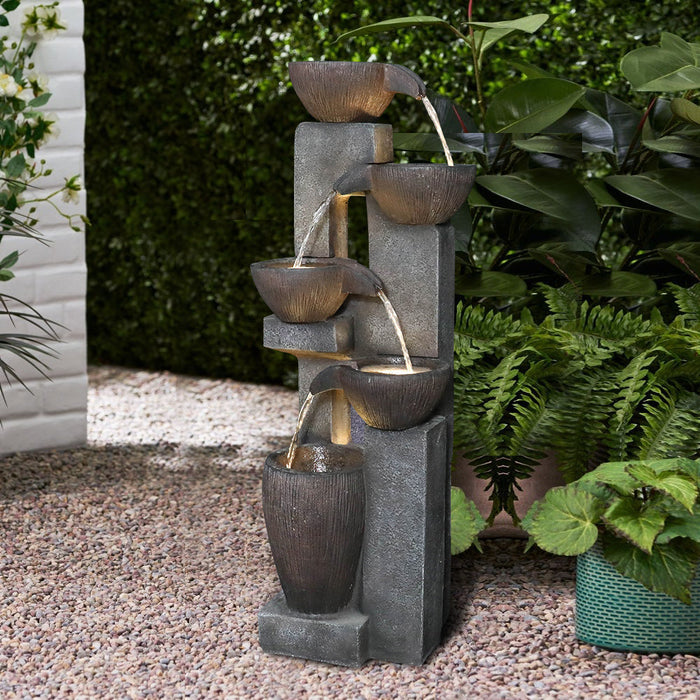 03
03
Stacked pots and urns
Vessels pouring one into the next
11 pieces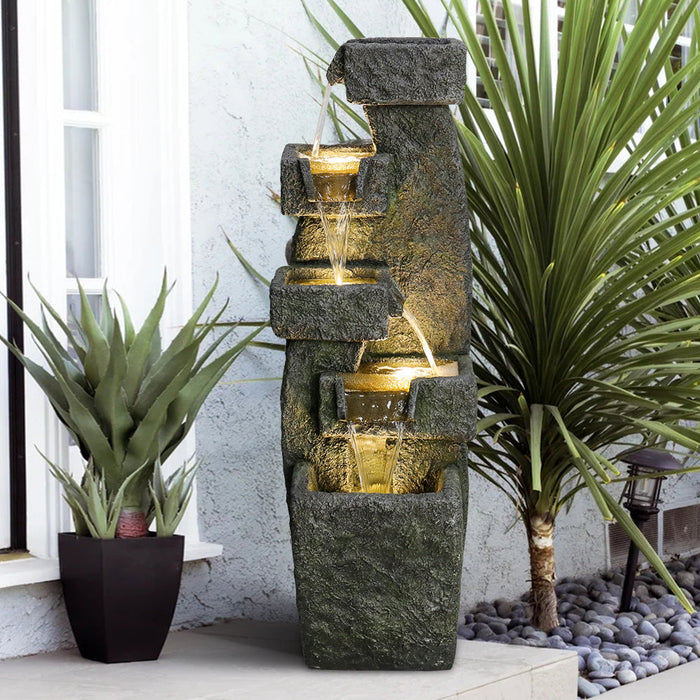 04
04
Modern tiers
Clean lines and squared bowls
26 pieces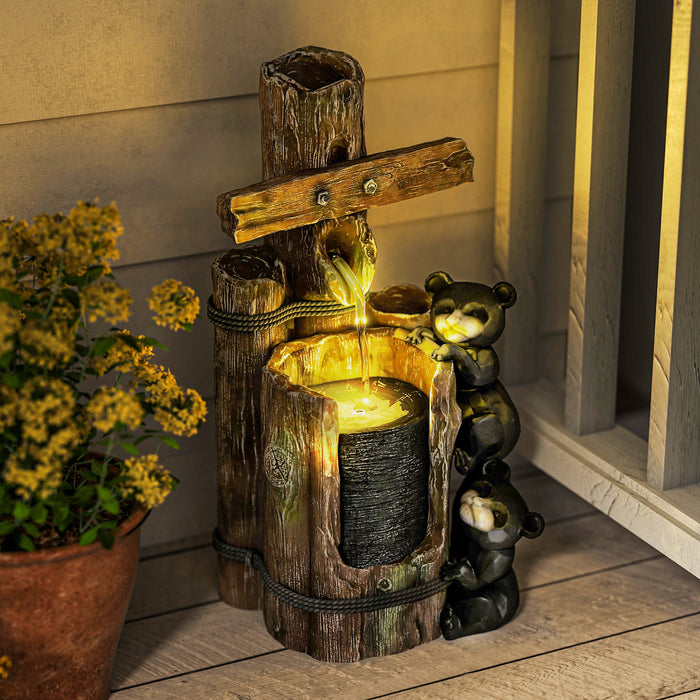 05
05
Small and patio sizes
Pots and bowls under thirty inches
19 pieces
Before You Buy a Tiered Fountain
Two tiers or three?
Why does the water only spill from one side?
Does a tiered outdoor fountain need a foundation?
How much does a concrete tiered fountain weigh?
Are tiered fountains loud?
What do I do in winter?
Related collections
Guides and how tos
If you are torn between two pieces, stand where you will usually see it from and imagine the top bowl at eye level or below. A tiered garden fountain looks its best when you can see the water falling from the highest rim, not just the basin.