

82 products
-

 Resin Terracotta 5 Tier Tabletop Fountain 15 Inch LEDResin Terracotta 5 Tier Tabletop Fountain 15 Inch LED
- Regular price
-
$69.99 - Regular price
-
$69.99 - Sale price
-
$69.99
-

 Resin Wishing Well Outdoor Fountain 39 Inch with LEDResin Wishing Well Outdoor Fountain 39 Inch with LED
- Regular price
-
$209.99 - Regular price
-
$219.99 - Sale price
-
$209.99
-

 Resin Stepped Shale Outdoor Rock Fountain with Warm LEDResin Stepped Shale Outdoor Rock Fountain with Warm LED
- Regular price
-
$629.99 - Regular price
-
- Sale price
-
$629.99
-

 Resin Stacked Rock Outdoor Fountain 32 Inch Lit WaterResin Stacked Rock Outdoor Fountain 32 Inch Lit Water
- Regular price
-
$219.99 - Regular price
-
$239.99 - Sale price
-
$219.99
-

 Resin Driftwood Creek Horizontal Outdoor Fountain 39 inResin Driftwood Creek Horizontal Outdoor Fountain 39 in
- Regular price
-
$366.99 - Regular price
-
$419.99 - Sale price
-
$366.99
-

 Concrete Trumpet Flower Outdoor Fountain 33 InchConcrete Trumpet Flower Outdoor Fountain 33 Inch
- Regular price
-
$149.99 - Regular price
-
$189.99 - Sale price
-
$149.99
-

 Resin Copper Bowl Cascading Column Fountain 39 InchResin Copper Bowl Cascading Column Fountain 39 Inch
- Regular price
-
$209.99 - Regular price
-
$229.99 - Sale price
-
$209.99
-

 Resin Overhanging Ledge Rock Waterfall Fountain OutdoorResin Overhanging Ledge Rock Waterfall Fountain Outdoor
- Regular price
-
$279.99 - Regular price
-
$299.99 - Sale price
-
$279.99
-

 Resin Flagstone Outdoor Water Fountain with Moss 40 inResin Flagstone Outdoor Water Fountain with Moss 40 in
- Regular price
-
$279.99 - Regular price
-
$299.99 - Sale price
-
$279.99
-
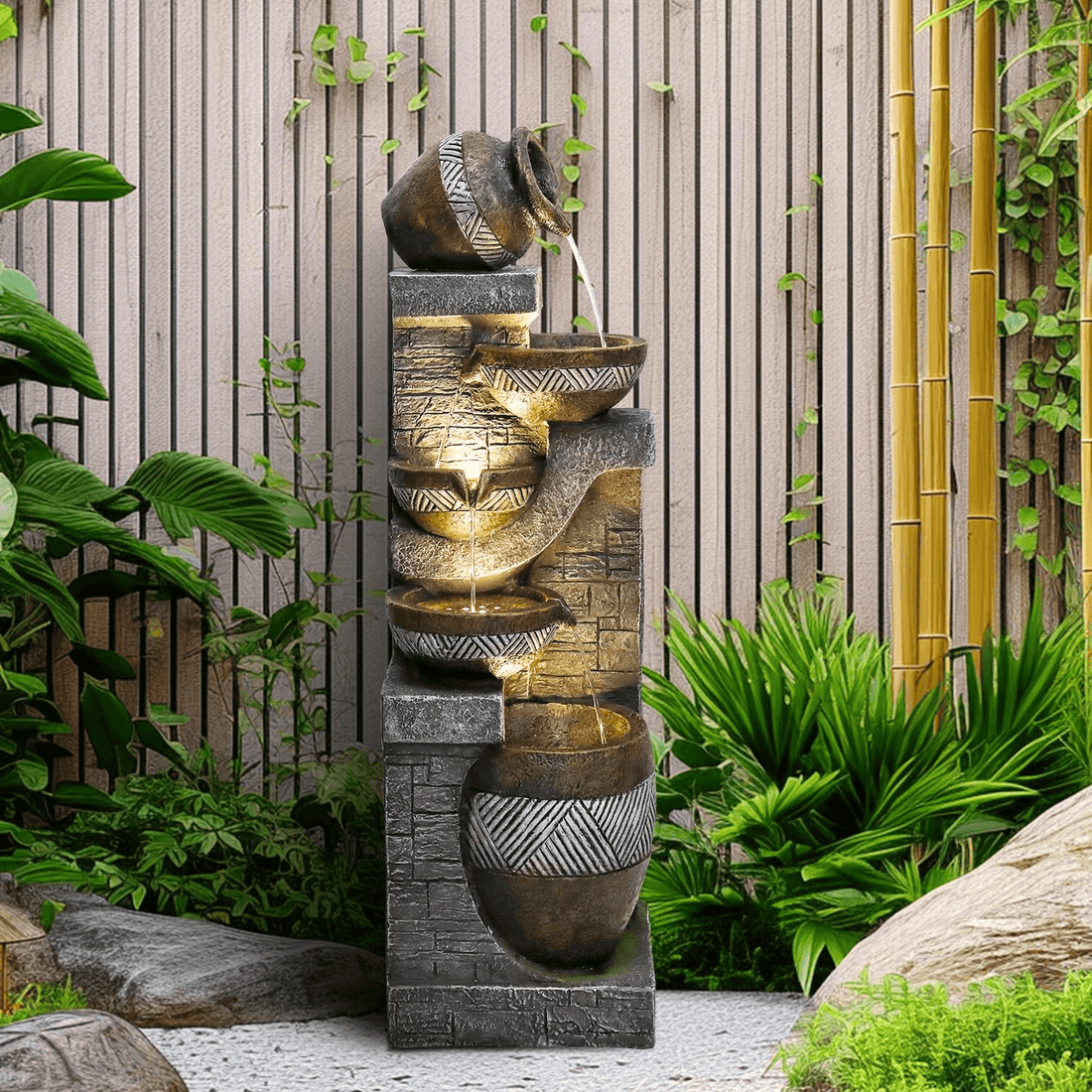
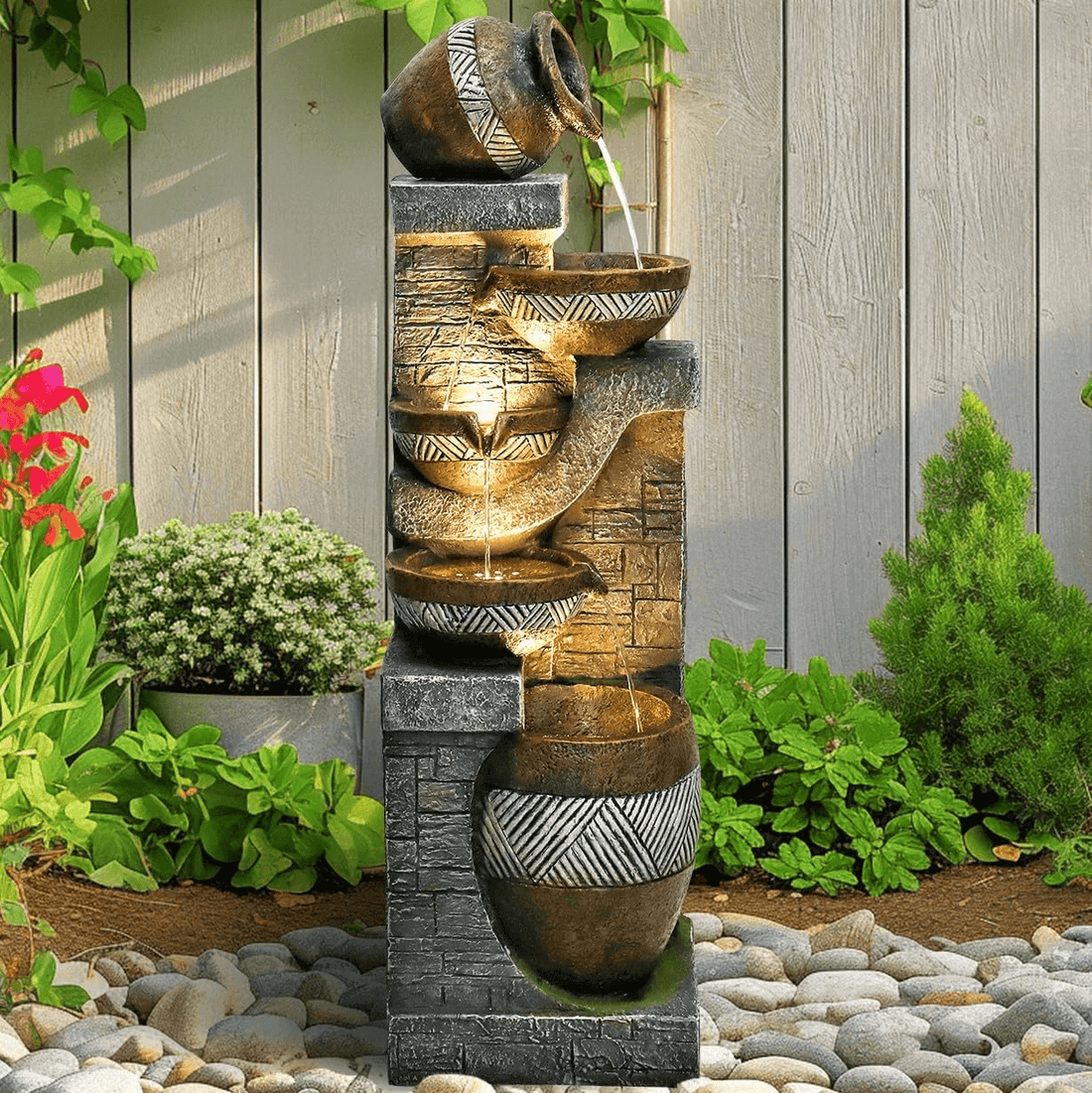 Resin Carved Clay Urn Outdoor Water Fountain 42 InchResin Carved Clay Urn Outdoor Water Fountain 42 Inch
- Regular price
-
$279.99 - Regular price
-
$309.99 - Sale price
-
$279.99


The Numbers That Matter
- 13 to 79 inches, most around 39 Heights
- Included and recirculating Pump
- Warm LED on most of the range Lighting
- Resin, concrete and metal Materials
- Plugs in, no plumbing Power
- Patios, gardens, walls and lawns Where
From a Corner Bubbler to a Six Foot Tier
What an outdoor water fountain has to do
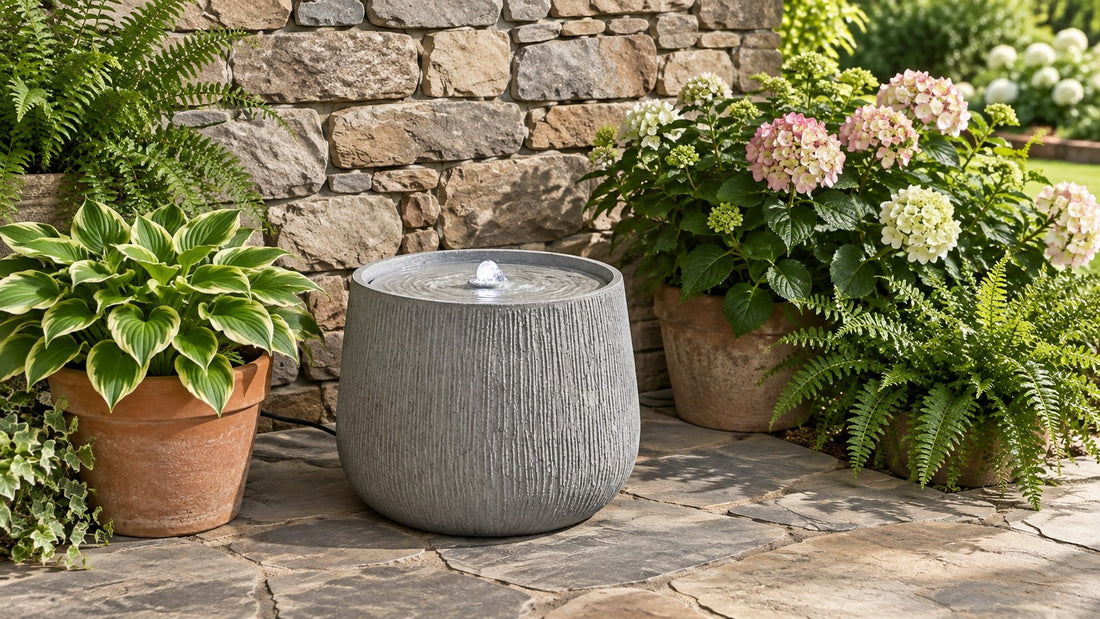
It has to hold water, move it, and survive a winter outside. Everything else is a choice. The range here runs from 13 inches to 79, with most pieces near 39, and the whole of it recirculates the same water through a pump in the basin. No water line, no drain, no trench. You set it level, fill it, and plug it in. That is the reason a fountain can go in the middle of a lawn as easily as against a wall.
Choosing by the space rather than the style
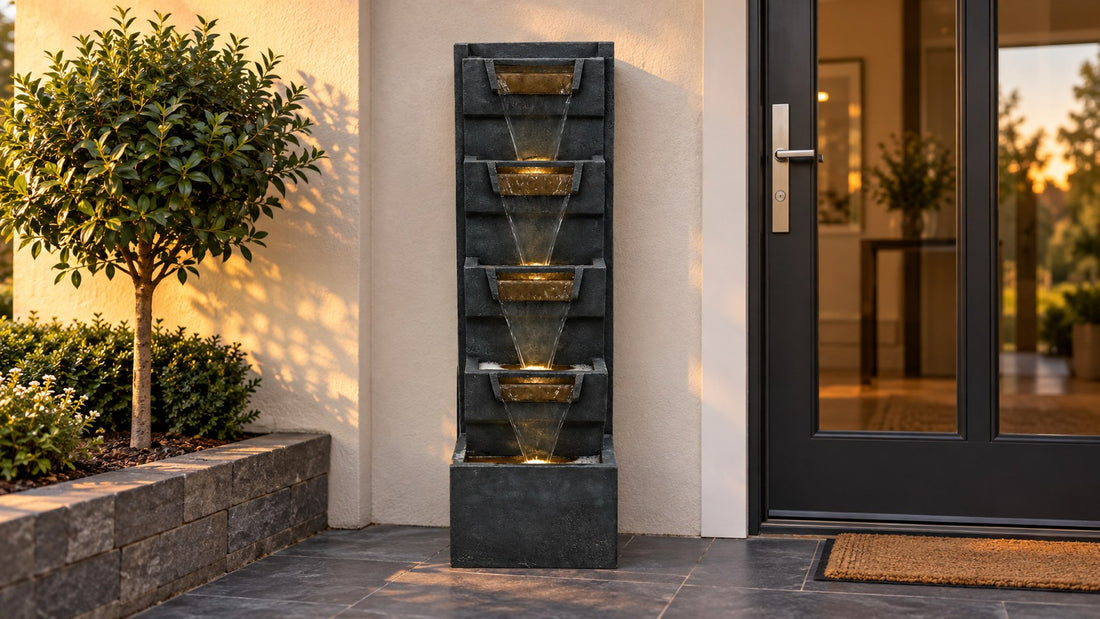
A patio or a deck usually wants something narrow, because the constraint is floor rather than height. A planted bed can take a wider piece, since the planting hides the base and the fountain only has to clear the foliage. A blank wall suits a slim upright piece that sits flat against it and takes almost no ground. An open lawn is the only place where a large tiered fountain makes sense, because it needs to be seen from all sides and from a distance. Decide where it goes before you decide what it looks like, and most of the range rules itself out for you.
Sound is a function of drop, not size
Water makes noise when it falls a distance and lands on something. A short fall into a shallow bowl is a trickle. A long fall into a deep basin is closer to a running tap. Pieces that break the fall into several small steps tend to read as softer and more even than one long drop, which is why a tiered fountain next to seating often sounds better than a single sheet of the same height. If the fountain is going where people talk, look at the number of steps as much as the number of inches.
Light after dark
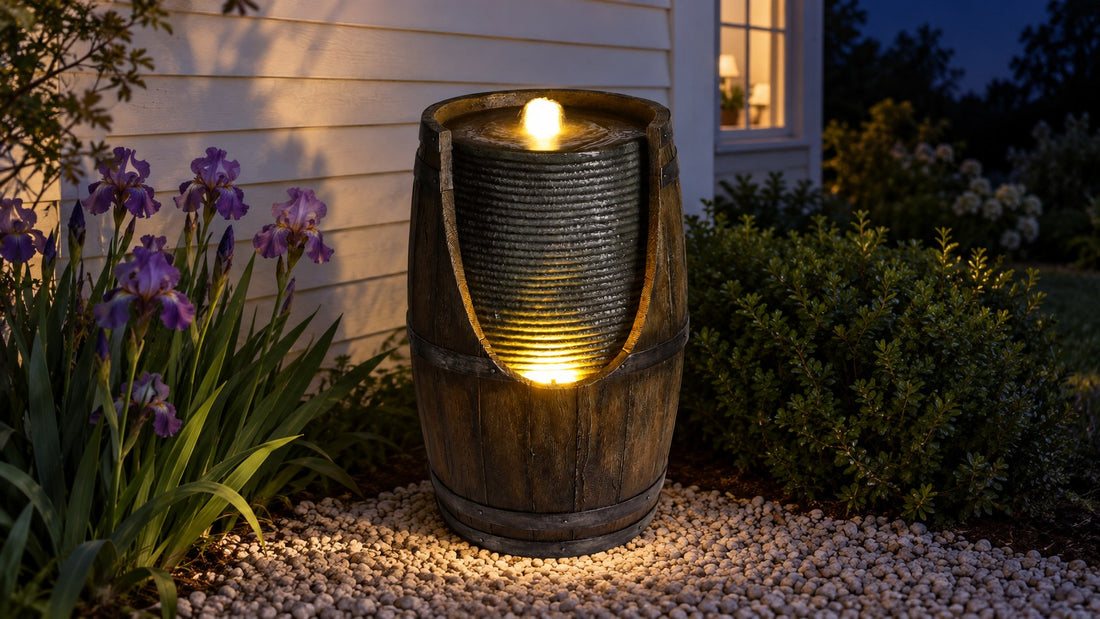
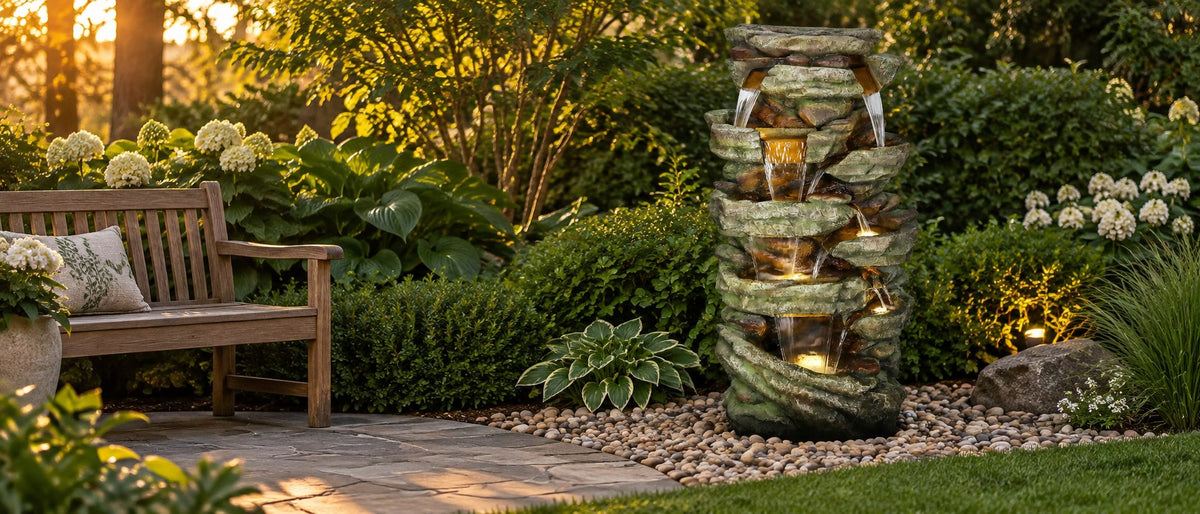
Most of the range has warm LED built in, usually set under the rim of a bowl or behind the falling water rather than aimed outward, so what you see is lit water and not a bulb. Outdoors this matters more than it does inside, because after sunset a lit fountain is often the only thing in the garden with any light on it. Some pieces have no lighting at all, which is the right choice where path or wall lights already do that job.
Resin, concrete and metal
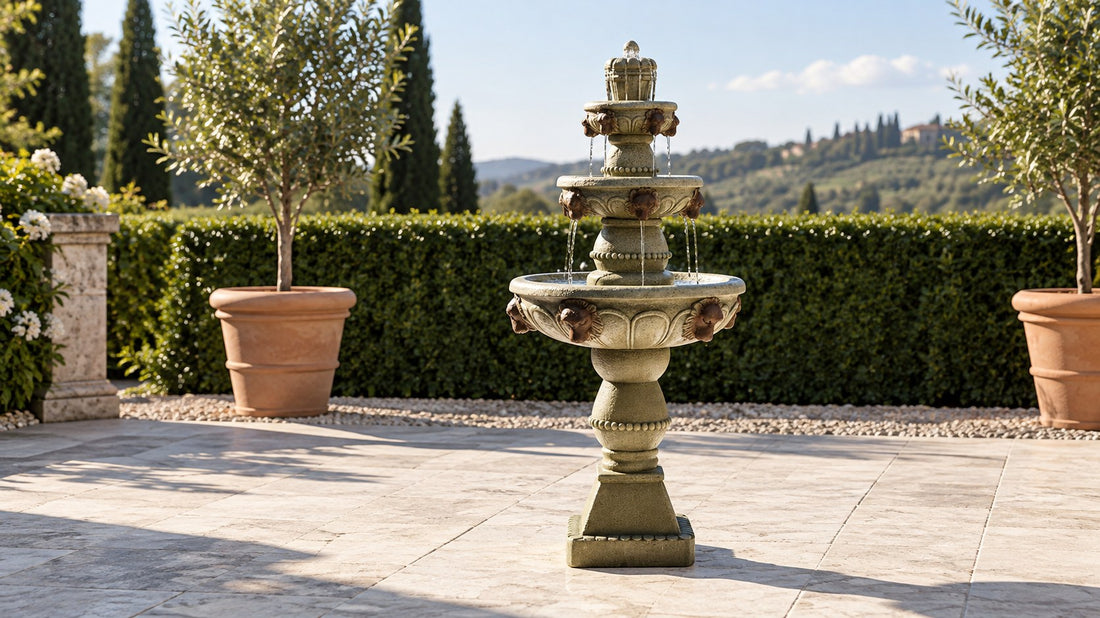
Most of this range is cast resin. It holds fine carving, takes an aged stone or weathered bronze finish, and is lighter than stone of the same size, so where it sits stays a decision you can change. Concrete gives real mass and a dense mineral surface that weathers slowly and gains patina, and it holds its position in an open windy yard without help. Metal sits between the two, with cut and folded faces that neither of the others can do. None is better than the others. It comes down to whether you want the weight or the finish.
Running it, and getting it through winter
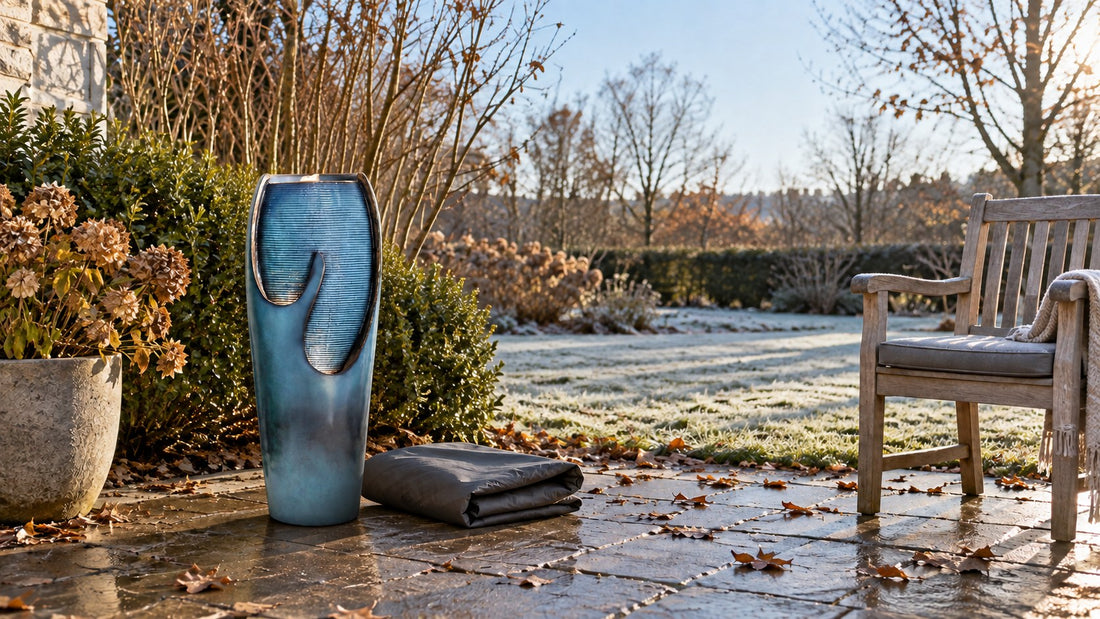
Top the basin up as water evaporates, and never let the pump run dry, which is the single most common way a fountain fails. Empty and wipe the basin every few weeks in summer. Rinse the pump when the flow drops. Before the first hard freeze, drain the basin and bring the pump indoors, then cover the piece where it stands or move it under shelter if it is small enough to lift. Water left in a basin over winter expands when it freezes, and that is what does the damage, not the cold itself.
Comparing Your Outdoor Water Fountain Options
| Resin | Concrete | |
|---|---|---|
| What you get | Fine detail and applied finish | Mass and a dense mineral face |
| Moving it | Lighter, so the spot stays a choice | Heavier, so pick the spot first |
| In an open windy yard | Fill the basin or anchor it | Its own weight holds it |
| Surface over time | Keeps its color | Weathers and takes patina |
| Suits | Decks, porches, balconies, indoors | Lawns, beds, driveways, a permanent spot |
| Winter | Drain it and store the pump inside | Drain it and keep it dry |
Six ways into the range
 01
01
Small, under 30 inches
Beside a chair, on a porch, in a tight corner
19 pieces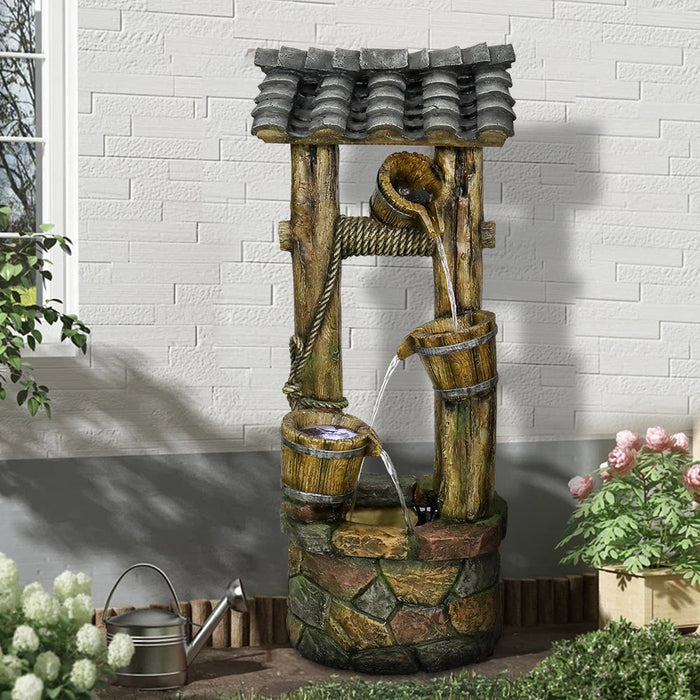 02
02
Medium, 30 to 48 inches
The deepest part of the range
47 pieces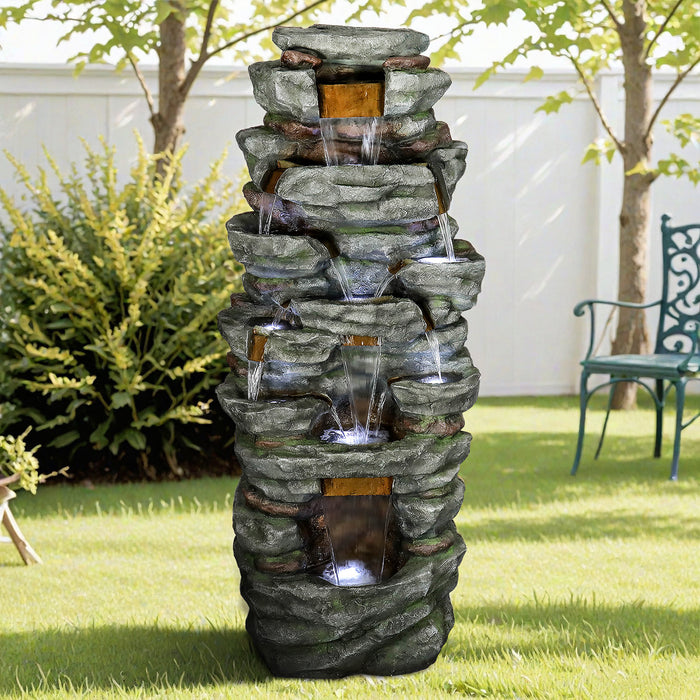 03
03
Large, four feet and taller
The piece a garden is arranged around
15 pieces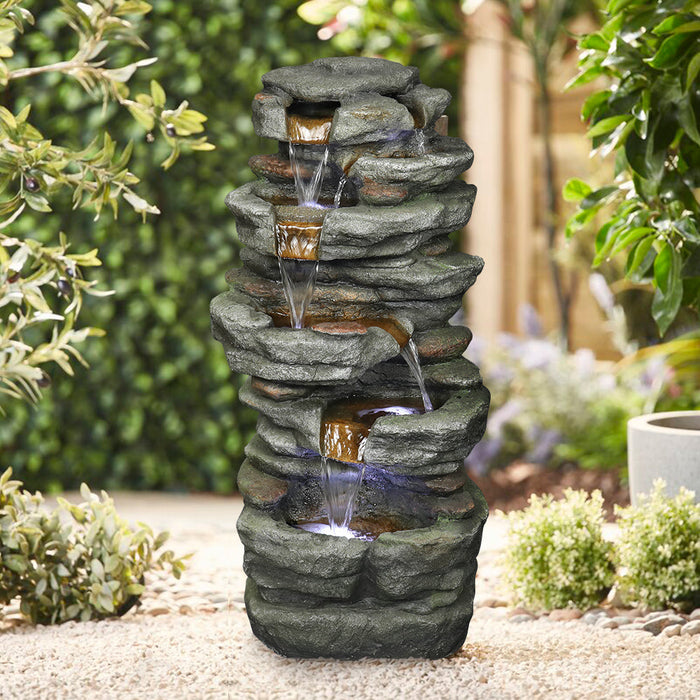 04
04
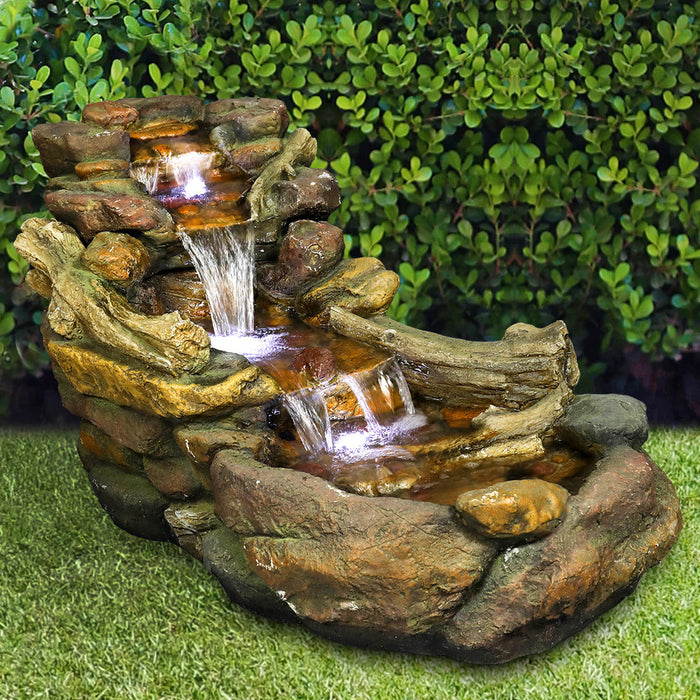
Waterfalls
Water stepping down several shelves
18 pieces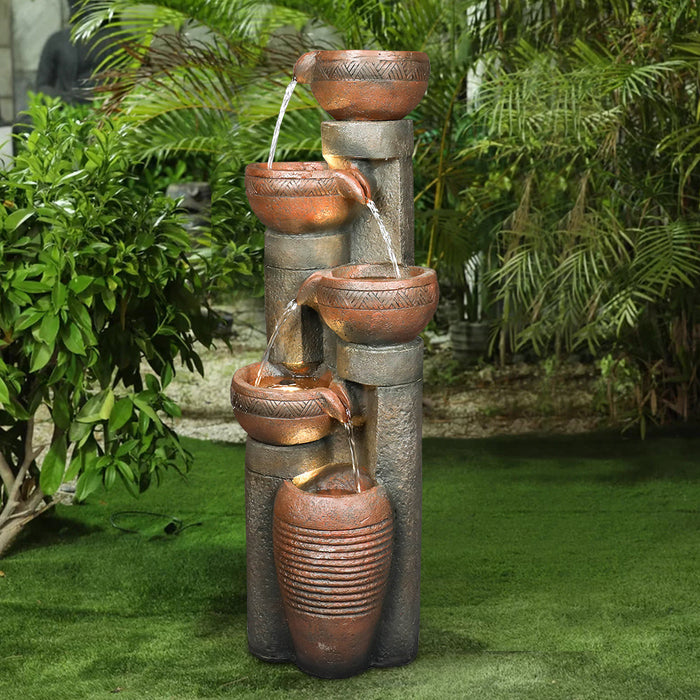 05
05
Cast resin
Detail and finish, lighter to place
61 pieces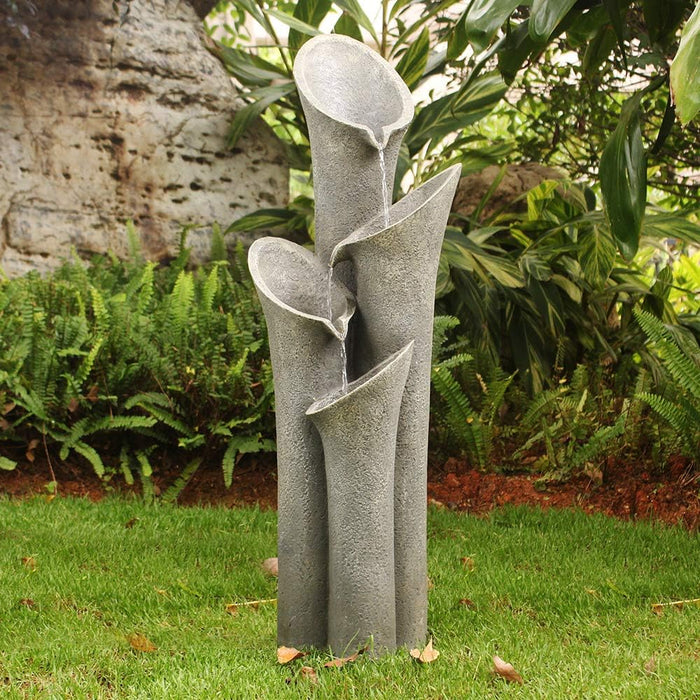 06
06
Cast concrete
Real mass and a stone surface
16 pieces
Before You Order an Outdoor Water Fountain
How do you winterize an outdoor water fountain
Do outdoor water fountains need electricity
How do outdoor water fountains work
How do you keep the water clean in an outdoor fountain
Do outdoor fountains attract mosquitoes
How do you install an outdoor water fountain
Related collections
Guides and how tos
Everything here ships free in the continental US, carries a 3-year warranty, and can go back within 60 days with no restocking fee if it is not right in the space.